
How to Write Podcast Show Notes (With a Reusable Template)


Good show notes are six short blocks in a fixed order: a one-line title, a two-to-three sentence hook, timestamps, links, a guest line, and a single call to action. Write them as a fill-in-the-blanks form, not a blank page, the form below takes about ten minutes per episode and gives you a description that a listener will skim and a search engine can actually read. Total length: 150 to 300 words plus your timestamps.
That "search engine can read" part is the whole point. Your audio is invisible to Google and Apple, show notes and the title are the text those systems index. And the text you write is increasingly where shows get found: 57% of listeners now look to social media for their next podcast, the first time it edged out friends and family (54%) as the top discovery source (InsideRadio, citing the 2025 Coleman Insights/Amplifi study of 1,000 U.S. listeners). A blank or lazy description throws away the one indexable, shareable surface every episode gives you for free.
This is the system I use to write notes that get read instead of skipped: the template block by block, a word-count target for each, the common mistakes that make notes useless, and a before/after rewrite of a real weak example so you can see the difference on the page.
What goes in podcast show notes?
Show notes contain six things, in this order: a clear episode title, a two-to-three sentence hook that sells the episode, timestamped chapters, the links mentioned, a one-line guest bio (for interviews), and one call to action. Everything else, full transcripts, sponsor blocks, hashtags, is optional and goes below the fold.
The order matters because most people read the first two lines and stop. Apple Podcasts, Spotify, and your website all truncate the description after a sentence or two on mobile, so the hook has to do its work before anyone taps "more." Put the payoff first; put the housekeeping last.
The reusable show-notes template
Copy this and fill the brackets. Keep the block labels in your draft until the last pass, then delete them. The whole thing should take ten minutes once you've done it twice.
``` TITLE: [Topic or guest], [the specific payoff] (Aim under 60 characters so it doesn't truncate in apps.)
HOOK (40–70 words): [One sentence on what this episode is about.] [One sentence on the single most useful thing the listener gets.] [Optional: one line of tension or a surprising claim from the episode.]
IN THIS EPISODE: 00:00, [Cold open / what hooked you] 0X:XX, [First main point] 0X:XX, [Second main point] 0X:XX, [The best moment] 0X:XX, [Practical takeaway]
LINKS MENTIONED: - [Thing 1 you named on mic], [URL] - [Thing 2], [URL]
GUEST (interviews only): [Name] is [one-line credential]. Find them at [link].
DO THIS NEXT: [One ask: follow, leave a review, or grab the free resource.] ```
A few rules that make the template work in practice:
- Write the hook last, after you've listened back. You can't sell the episode's best moment until you know which one it is. Scrub the recording, mark the line that made you sit up, and lead with that.
- Use real timestamps, not round guesses. They become clickable chapters on most players, and they let listeners and search engines jump to a topic. Getting them right is its own small job, the step-by-step in adding chapters to your podcast covers the formats each platform expects.
- Front-load the keyword naturally. If your episode is about cold email, the word "cold email" should appear in the title and the first sentence of the hook, because that text is what gets matched in Apple and Spotify search. Don't keyword-stuff; say the thing plainly once.
- One call to action, never a stack. "Follow the show, leave a review, join the newsletter, and check the sponsor" gets zero of those done. Pick the single action that matters most this episode.
How long should podcast show notes be?
Aim for 150 to 300 words in the readable part, plus your list of timestamps and links. That's long enough to give a search engine real text to index and short enough that a listener actually reads it. Go shorter and you forfeit discoverability; go much longer and the description becomes a wall nobody skims.
Length should scale with episode type. A solo tips episode might need 150 words and five timestamps. A two-hour interview justifies 300-plus words, eight chapters, and a fuller guest bio. The text in your notes is also the raw material for an episode page that can rank on its own, if you want that, the longer-form route is to turn the episode into a proper article, which pairs naturally with getting your show submitted everywhere it should live so the same notes feed every directory.
What does not count toward "good length": padding. Three sentences of "in this fascinating conversation we discuss many topics" is worse than one sentence that names the actual topic.
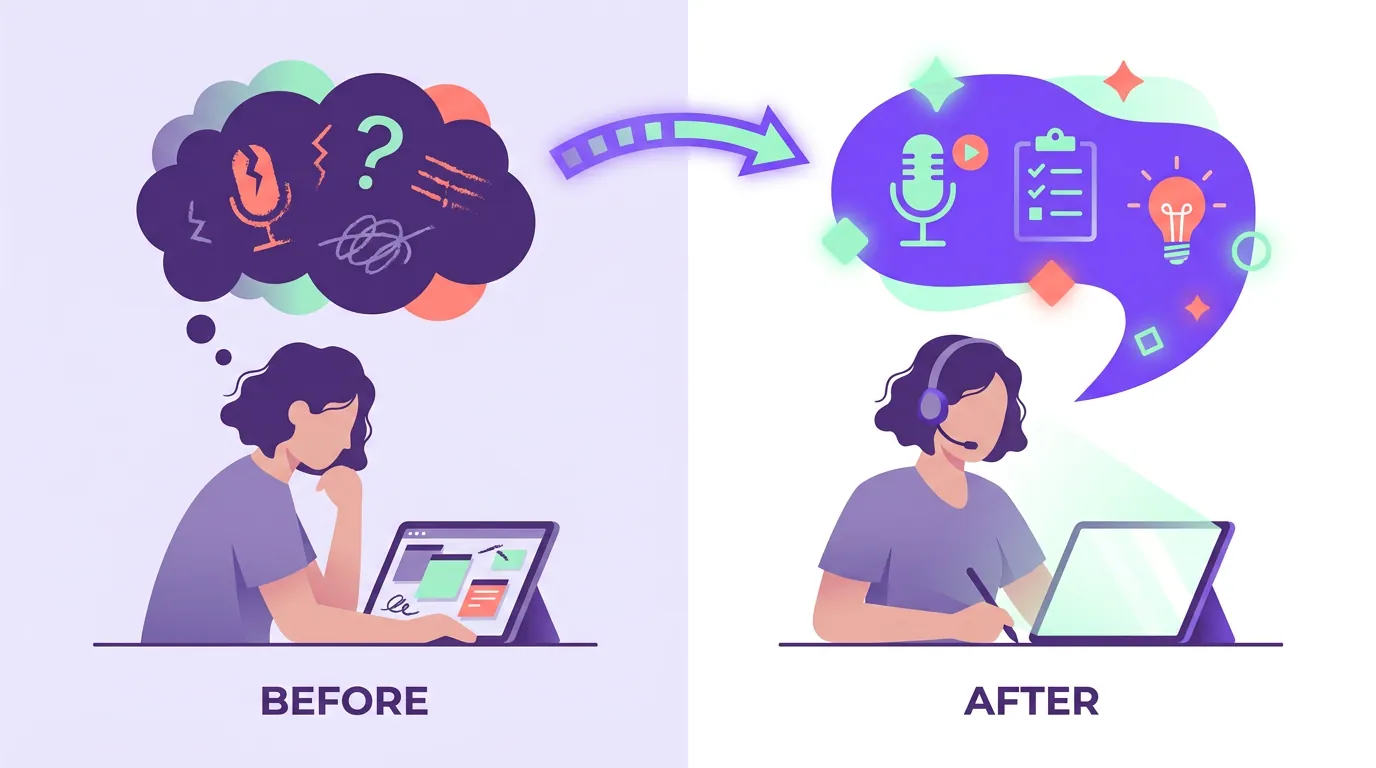
Before and after: rewriting a weak example
Here is the kind of show note most new shows publish, and the same episode rewritten with the template. Read the first line of each and notice which one earns the tap.
The fix wasn't more words, both versions are short. The "after" leads with the keyword ("cold email"), promises a specific outcome ("30% to a call"), and teases a real moment ("the one subject line she'll never send again"). It would read just as well as a clip caption, which is the tell of a good hook.
Common show-notes mistakes (and the fix)
- Burying the topic below filler. "In this episode we discuss..." wastes the only two lines most people read. Fix: open with the topic and the payoff, like a headline.
- No timestamps. You lose clickable chapters and the ability to let people jump to the part they came for. Fix: add five to eight; see how to set chapters up properly.
- Pasting a raw transcript as the description. A 4,000-word wall buries the hook and reads as spam to both humans and crawlers. Fix: keep the description tight; if you want the full transcript, put it lower on a dedicated episode page.
- Broken or missing links. You named a tool on mic and never linked it, so the listener can't act. Fix: keep a running links doc while recording and paste it straight into the template.
- Five calls to action. Asking for everything gets nothing. Fix: one ask per episode.
- Notes that don't match the feed. Editing the title or links on your website but not in the RSS feed your players actually read means apps show the old version. Fix: update the feed source, not just the site.
- Never checking what works. If you don't know which episodes get clicked from search, you're guessing at titles forever. Fix: wire up episode-level analytics from day one and let the data shape your hooks.
FAQ
Do show notes help podcast SEO? Yes, they are most of what Apple and Spotify can index for an episode, since the audio itself isn't searchable. A clear title and a hook that names your topic in plain language are the highest-leverage SEO moves you have at the episode level. Timestamps and a linked transcript page extend that further.
Should I write show notes before or after recording? After. You can draft the title and rough beats before, but the hook and the timestamps both depend on what actually happened on the recording. Listen back, mark the best moment, and write the hook around it. The template makes the after-the-fact write-up fast.
Can AI write my show notes? It can draft them from a transcript, and that's a reasonable starting point for the timestamps and a rough summary. But the hook, the line that names the single best moment and sells the tap, usually needs a human who heard the episode. Edit every AI draft against the six-block template before publishing.
How are show notes different from a podcast description? The "description" is usually the short text shown in apps; "show notes" is the fuller version on your website with timestamps, links, and a guest bio. In practice the first two blocks of your show notes, title and hook, should also be your app description, so write them to survive truncation.
Do solo episodes need show notes too? Yes, and they're easier. Drop the guest block, keep the title, hook, timestamps, links, and one call to action. Solo episodes often have the cleanest hooks because there's a single throughline to summarize.