
Managing Stage Fright on a Live-Recorded Podcast


To manage stage fright on a live podcast, do the calming work before the light turns on. Run a fixed pre-show routine, relabel the adrenaline as readiness instead of fear, and keep one silent grounding move you can run mid-sentence. You cannot edit a live recording, so aim for a stable baseline, not a perfect take.
A pre-recorded interview has a safety net: a flubbed answer can be cut, a long pause trimmed, a nervous tangent edited out. A live or streamed show removes that net entirely. Whatever happens goes out as it happens, and your brain knows it, which is exactly why the nerves feel sharper than they do for a regular recording. The fix is not to feel less. It is to build a baseline calm enough that the adrenaline sharpens you instead of swamping you, and to carry one tool you can deploy without stopping the conversation. That is what this guide gives you: a routine for before, a reframe for the spike, and a reset for the moment it hits you live.
How do you overcome stage fright on a live podcast?
You overcome it by front-loading the work. Run a fixed pre-show routine so your body has a known sequence, reframe the racing heart as readiness rather than danger, and rehearse one grounding move you can run silently while you talk. With no retake on a live show, a stable baseline beats a single brave moment.
The reason front-loading matters more for live shows is timing. In a pre-recorded interview you can stop, breathe, ask to start an answer over, and trust the editor to clean it up. Live, there is no stop. Every tool has to either run before the show or run invisibly during it. So the live-show playbook is different from the general "calm your nerves" advice: it leans hard on preparation and on techniques that survive being done in public, with the mic open and the camera on.
What should your pre-show routine be?
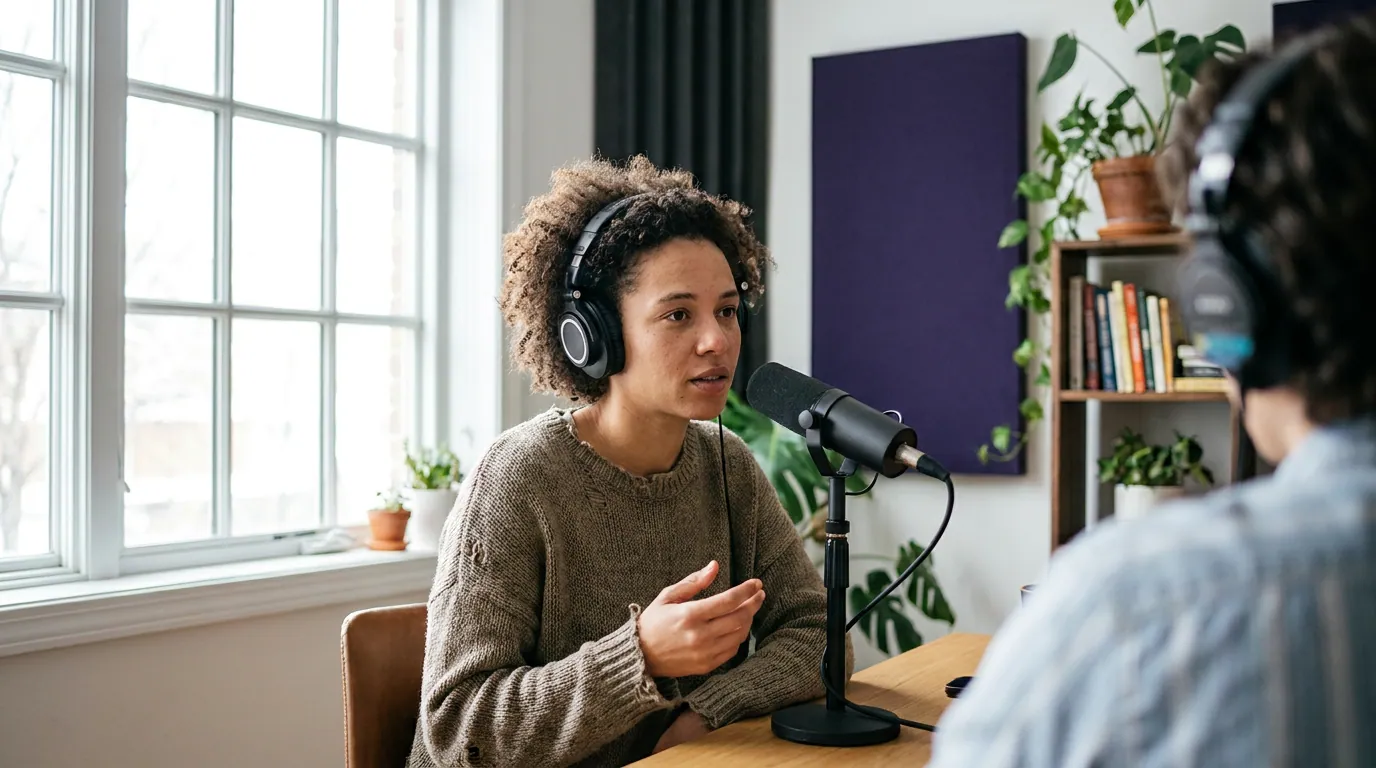
Your pre-show routine should be a fixed sequence you run identically every time, so your nervous system has a familiar groove instead of an open question. I coach guests to use ANCHOR as the order: Arrive early, Name the feeling, Choose one job, Hum to warm your voice, Opening line ready, Ride the first ninety seconds. Same six steps, every show.
The point of a fixed routine is that it removes a decision when you have the least capacity to make one. Improvising your way to calm in the ten minutes before a live stream rarely works, because that is the window when adrenaline is loudest. A sequence you have run before is something your body recognizes, and recognition itself is calming. Here is the order, mapped to the minutes before you go live.
Two of those steps do most of the work. Choose one job is the antidote to live-show perfectionism: when you are trying to be flawless on a recording you cannot edit, every word feels like a test, and that pressure is what makes you freeze. Swap "be impressive" for "explain this one idea clearly to one listener" and the stakes drop to something a human can carry. Opening line ready removes the single scariest moment, the blank that hits right after the host says your name, by making your first sentence automatic. You are not winging the part you are most afraid of.
How do you reframe the adrenaline instead of fighting it?
You reframe it by relabeling the same physical signals. A pounding heart, quick breath, and a hum of energy are not proof you are about to fail, they are your body delivering fuel for a high-focus task. Fear and readiness feel nearly identical; the only difference is the story you tell about them. Tell the helpful one.
This is not a pep-talk trick. Anxiety and excitement share the same arousal state, and trying to force yourself from a keyed-up "I'm terrified" to a flat "I'm totally calm" is a long, losing jump. Reframing it as "I'm ready, I'm fired up for this" is a short, believable one, and it keeps the alertness that actually makes you sharper on a live show. The flat, over-relaxed version of you is not the better interviewee. Here is the swap I have guests practice out loud before they go live.
Say your reframe out loud during the ANCHOR routine's "name the feeling" step. "My heart's going, I'm fired up for this" is more honest than pretending you are relaxed, and your body believes honest. The aim is not zero adrenaline; it is to bring it from a 9 down to a 5 and point it at the work.
What can you do in the moment, while you're still talking?
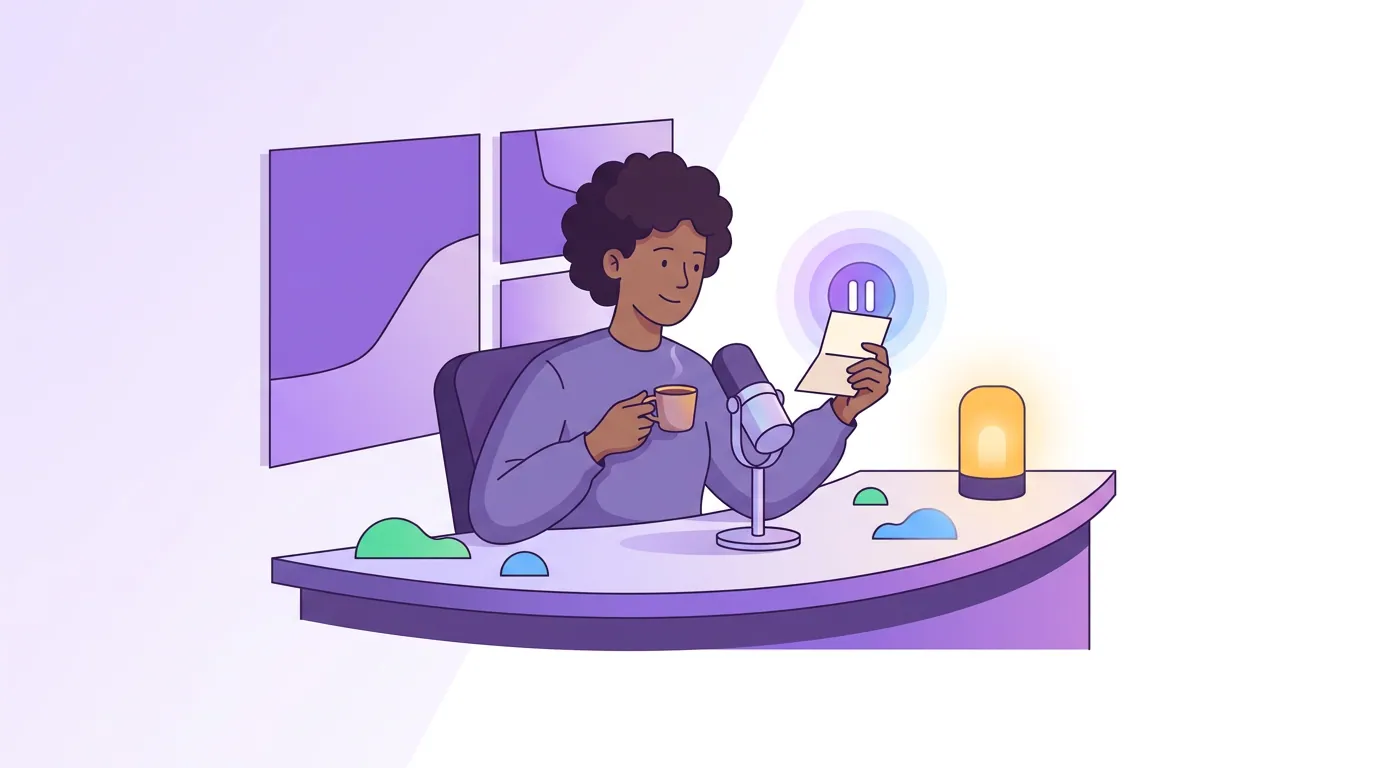
Run a silent 3-2-1 reset: re-establish three points of physical contact, take two slow breaths in the natural gaps after the host's questions, and repeat one anchor phrase in your head. None of it is visible or audible, so you can do it live, mid-conversation, without anyone knowing your pulse just jumped.
The live-show problem is that the usual rescue moves, stopping, taking a big visible breath, asking to start over, are all off the table when you are streaming. So the in-the-moment tool has to be invisible. The 3-2-1 reset is built to run underneath the conversation while you keep answering. Here is how each part works on a live recording.
The breaths matter most, and the trick is where you take them. Grabbing air mid-sentence on a live mic is audible and makes you sound more rattled. Taking your breaths in the gap right after the host asks a question is invisible, a short, deliberate pause there actually helps the conversation, and it gives you a full tank before you answer. For the mechanics of breathing without it landing on the recording, the breathing techniques to calm nerves before recording guide goes deeper.
Common mistakes that make live nerves worse
The instinct to over-control a live show backfires in predictable ways. These five are the ones I see most.
- Over-scripting every answer. Memorizing full answers feels safe but sets a trap: the moment you lose your place live, you go blank, because you were reading from memory instead of thinking. Script only your opening line and your two or three key points. The rest should sound like a real conversation, not a recitation.
- Treating the goal as "feel no nerves." Aiming for zero adrenaline on a live show is aiming for the wrong thing, a flat, under-energized delivery is its own failure. Bring the nerves down to a working level and use the rest as fuel.
- Watching your own video feed. On a streamed show, staring at your own thumbnail spikes self-consciousness and pulls your eyes off the lens. Hide your self-view, and put your eyes where the camera actually wants them instead of monitoring your face.
- Skipping the warm-up because it's "just talking." A cold voice on a live show climbs into a thin, fast pitch under adrenaline, and there is no edit to fix it. Run a five-minute vocal warm-up so your first live words land in your natural range.
- Believing the audience can see what you feel. The shaky hands and racing heart are loud inside your head and nearly invisible to listeners. What reads on a live show is your pace and your pitch, both of which the routine above keeps steady. The gap between how nervous you feel and how nervous you sound is enormous, and on your side.
Why a steadier live take is worth the prep
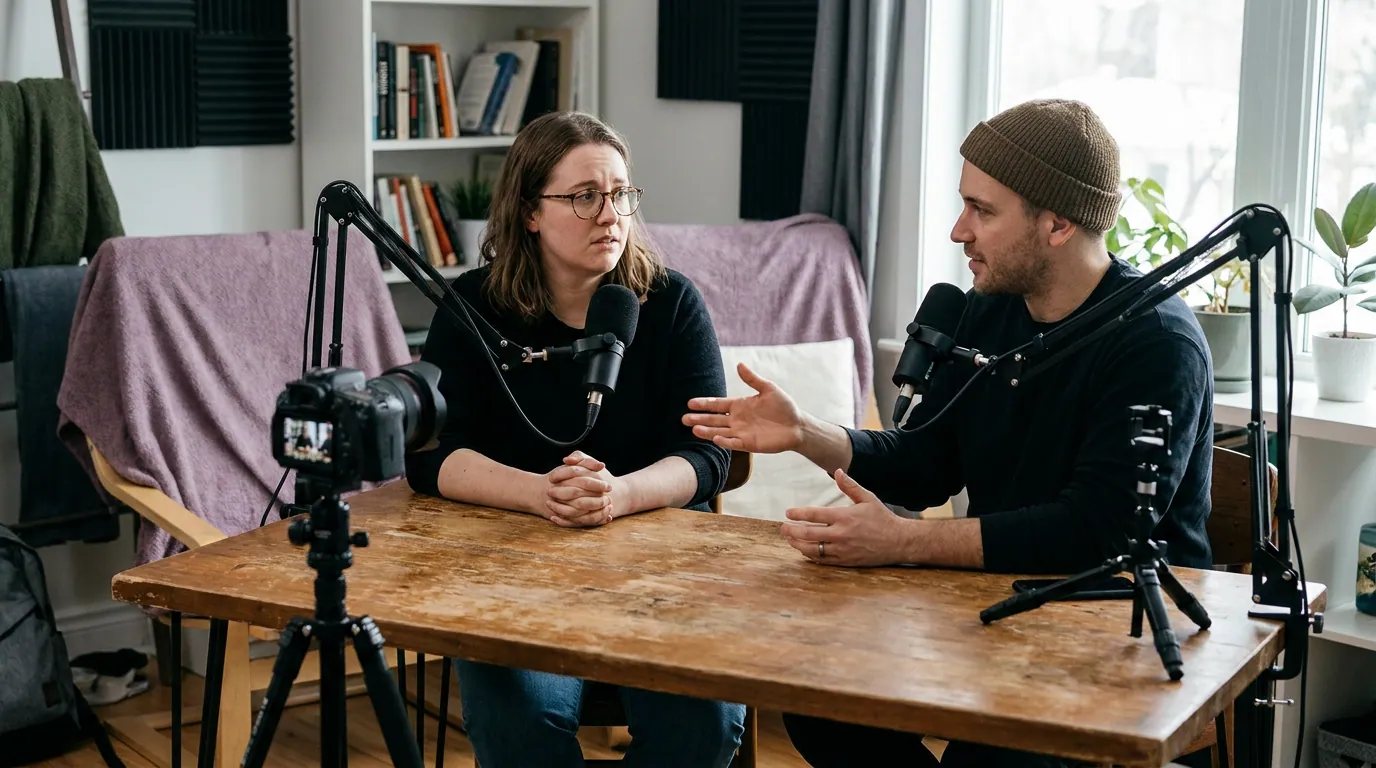
The work pays off twice: a calmer live recording is a better listen in the moment, and it gives you cleaner material afterward. When your pace slows and your pitch settles, you finish your thoughts, and finished thoughts make shareable clips. 57% of listeners now rely on social media for podcast recommendations, the first time that source passed friends and family (InsideRadio), and **53% of new US weekly listeners now prefer to watch a podcast, up from 30% in April 2022** (Backlinko). A composed sixty seconds from a live show is exactly the kind of clip that brings a new listener to the whole episode, and the same composure carries into looking confident on camera as a first-time guest.
Frequently asked questions
How do you overcome stage fright on a live podcast specifically? Front-load the calming work, because a live show gives you no edit to hide behind. Run a fixed pre-show routine so your body has a known sequence, reframe the adrenaline as readiness rather than danger, and keep one silent grounding move, like the 3-2-1 reset, that you can run mid-conversation. The goal is a stable baseline, not a flawless take.
Is being nervous on a live recording actually a problem? Usually less than it feels. The shaky hands and pounding heart are loud inside your head and nearly invisible to listeners; what comes through is your pace and pitch. A little adrenaline sharpens your delivery, so aim to bring nerves from a 9 down to a 5 and point that energy at the conversation, not to flatten them to zero.
What if I go blank in the middle of a live answer? Buy a beat without panicking. Take one slow breath, restate the question in your own words ("So the real question is whether…"), and that pause usually surfaces your next point. This is why you pre-write only your opening line and key points rather than full answers, a flexible outline survives a blank; a memorized script does not.
How is calming live nerves different from a normal recording? A pre-recorded interview lets you stop, restart an answer, and trust the edit. Live, there is no stop, so every tool has to run before the show or run invisibly during it. That is why the live playbook leans on preparation and on silent techniques like reframing and the 3-2-1 reset, instead of visible resets you would use off-air.
Should I tell the host I get nervous before going live? Often yes. A quick "I get a bit keyed up at the start, give me an easy first question" lets a good host set you up gently, that is exactly the kind of thing hosts do to make a guest comfortable. Naming it also defuses it, the same way the ANCHOR routine's "name the feeling" step does.