
How to Make a Guest Comfortable in the First 5 Minutes


To make a guest comfortable in the first five minutes, run a fixed off-record sequence: welcome them by name with one specific reference to their work, say plainly that the episode is edited and stumbles get cut, name your first question before asking it, then start recording mid-laugh. Comfort is a process you trigger, not a mood you wait for.
Most hosts treat the opening minutes as throat-clearing, a mic check and a "so, how are you" while the real interview waits. That's the mistake. The guest's nervous system makes its decision about whether this is safe in those first few minutes, and a recorded answer carries the temperature of the moment it was given in. Below is the exact pre-roll comfort sequence I coach hosts to run, the lines to say about editing and mistakes, and the body-language and tone cues that signal safety when the only thing between you is a webcam.
Why the first five minutes decide the whole episode
A guest who feels watched gives short, hedged, careful answers. A guest who feels like they're talking to one curious person gives the aside, the unguarded story, the line you end up building the trailer around. The difference between those two recordings is usually settled before question two, which is why the warm-up is not filler, it's the most decisive five minutes you have.
There's a distribution stake too, not just a comfort one. The unguarded moments a relaxed guest produces are exactly the ones that travel as clips, and clips now do the discovery work: 57% of listeners rely on social media for podcast recommendations, the first time that source passed friends and family (InsideRadio). A tense guest gives you a competent interview with nothing to clip. A comfortable one gives you the thirty seconds that brings new listeners to the whole episode.
The five-minute comfort sequence
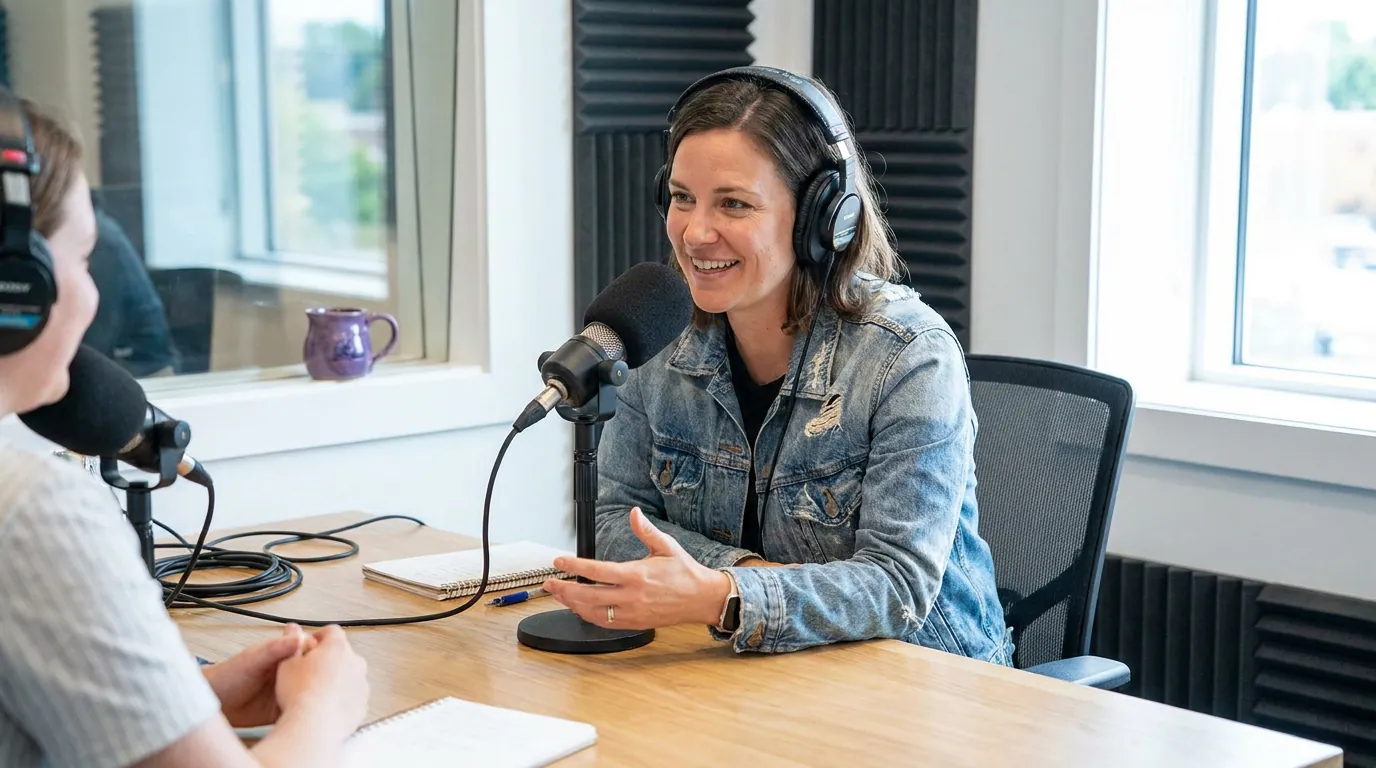
Treat the opening as four deliberate moves, not idle waiting. The whole thing fits in five minutes and you run it the same way every time, so it becomes muscle memory instead of improvisation.
- Open with a specific welcome, not "how are you." Greet by name and lead with one true, exact reference: "I re-listened to your bit on [topic] this morning, the part about [detail] is what got me to book you." Specific beats flattering every time, because it proves you showed up. The target for the first sixty seconds is a single real laugh or a "yeah, exactly." This is the same groundwork covered in building rapport before you record, compressed to its first minute.
- Run the safety briefing. Say it plainly: "This is edited, so if you fumble a sentence just take a breath and start it again, I'll clean it up, nobody hears the seam. There are no trick questions, and you can tell me to cut anything." This single paragraph removes the two biggest fears a guest carries in: that they'll sound stupid and that they'll be ambushed.
- Name your first question before you ask it. "I'm going to open with how you got into this, nothing hard, just so people meet you." Telling a guest what's coming converts the unknown into a known, and the unknown is most of the anxiety. A guest who can see the on-ramp merges smoothly.
- Start recording mid-warmth. Don't end the chat, fall silent, fiddle with settings, then say "okay, recording now." That gap resets the mood to zero. Roll the recorder while the warm conversation is still happening and slide into question one. The relaxed energy of the warm-up should bleed straight onto the tape.
What to say about editing and mistakes (the exact lines)
The single most calming thing you can tell a nervous guest is that perfection isn't the assignment. Say it early, say it concretely, and mean it. Vague reassurance ("don't worry, you'll be great") does nothing; specific permission does the work.
- On mistakes: "If you trip over a word or lose your thread, just pause and start the sentence over. I'd rather you restart ten times than tense up. Editing makes all of it disappear."
- On tangents: "Go on tangents, some of the best moments come from the detour, not the plan. I'll follow you."
- On hard moments: "If I ask something you'd rather not answer, say so and we move on. Nothing is a trap."
- On control: "If you say something and then think 'cut that,' just say 'cut that' out loud. I will."
That last line does the most quiet work of any of them. Handing a guest an explicit veto makes them more candid, not less, because they know they can take anything back. The whole point of these lines is to lower the guard enough that you get real answers, which is exactly what you need for questions that earn honest answers.
The remote cues that signal safety (and the ones that signal threat)
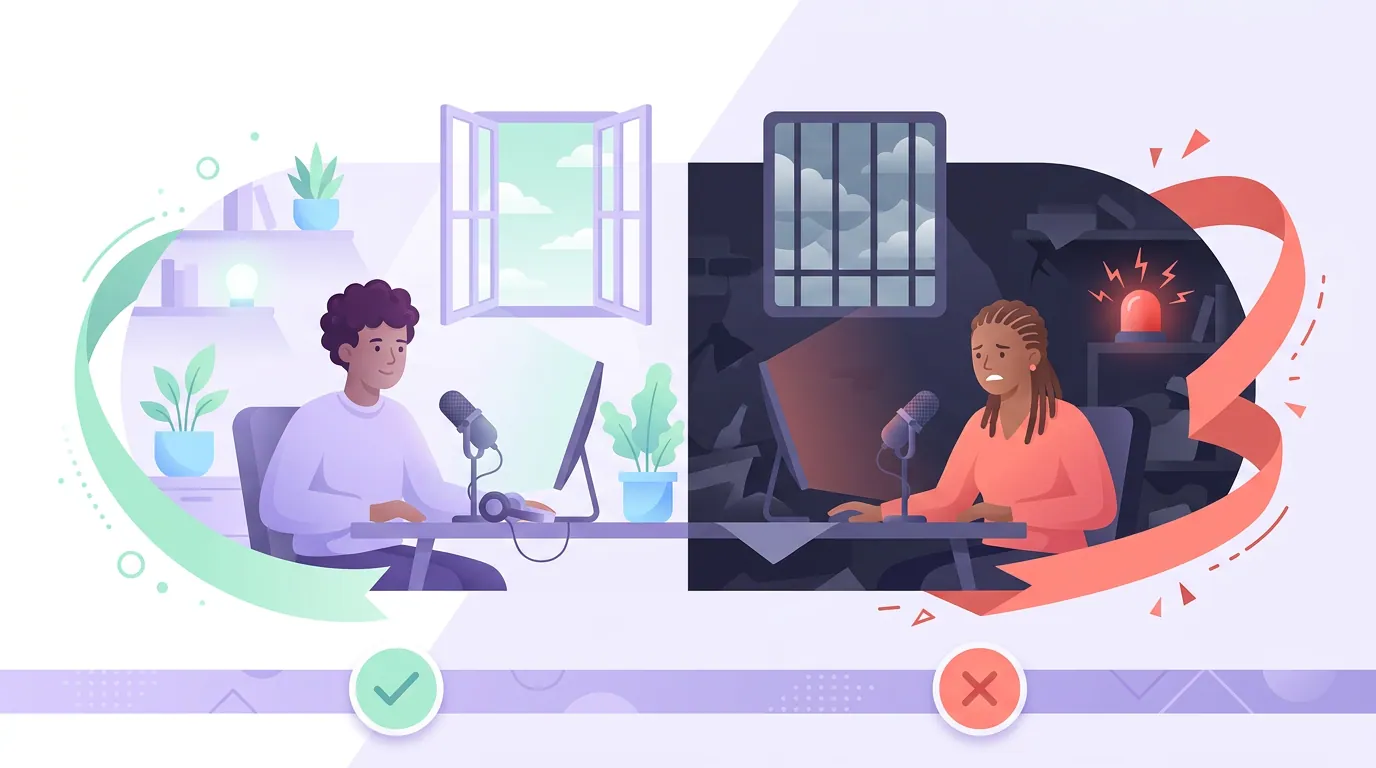
On a video call you lose most of the in-person signals that calm a guest, the shared room, the body angled toward them, the easy eye contact. You have to send those signals deliberately through a webcam. Your face, your posture, and your voice are doing the reassuring now, so make them do it on purpose.
A few of these are worth saying plainly. Keep your camera on during the warm-up even if the audio is all you'll publish, a guest talking to a black rectangle has no one to read, and they tense up filling the void. Watching is also the default mode now: 53% of new US weekly listeners prefer to watch a podcast, up from 30% in 2022 (Backlinko), so on a video show the visual warmth is part of what you're producing, not a courtesy.
Slow your nods down, a slow nod reads as "I'm with you," a fast one reads as "hurry up." Drop your speaking pace and pitch a notch; a calm voice is contagious across a bad connection in a way a tense one is too. And leave the small silences open. The reflex to fill every pause is the most common way hosts steamroll a guest who was about to say the real thing. Sitting in a pause is half of active listening for busy-minded hosts.
Common mistakes that make guests tense
The four ways well-meaning hosts undo their own warm-up, each with the fix.
- The cold open. Hitting record the second the call connects, before any human contact. Fix: never record the first ninety seconds. Spend them on the welcome and the safety brief, always.
- Over-praising. Drowning the guest in flattery ("you're going to be brilliant, this is going to be the best episode we've done") reads as pressure, not warmth, now they have a reputation to live up to on tape. Fix: one specific, true compliment, then move on.
- The surprise hard question. Saving a "gotcha" to "keep it spontaneous." It doesn't make better radio; it makes a guarded guest. Fix: if a topic is sensitive, flag it in the warm-up. You can still ask it; just don't ambush. This is the heart of respecting where a guest's lines are.
- Reciting the bio at them. Reading a long, researched intro to the guest's face makes them sit there being described, which is deeply awkward. Fix: save the formal intro for the edit. In the room, just say the one thing that made you book them. Use the rest of your pre-interview research to ask sharper questions, not to perform it back.
Tools that help (and what doesn't replace the warm-up)
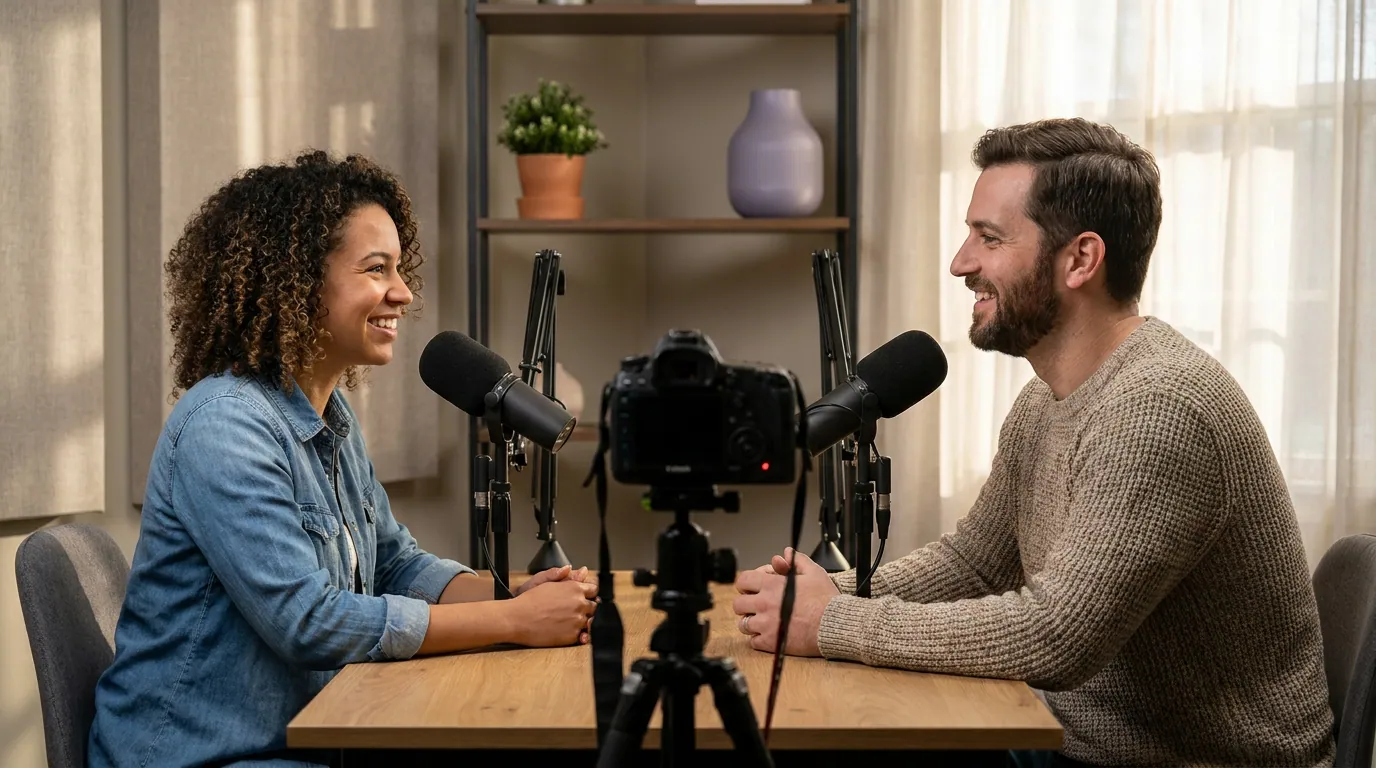
Comfort is mostly behavior, not software, no tool will fix a host who hits record cold. That said, two things lower friction. A recording platform with a clear, visible "we're not recording yet" state (Riverside, SquadCast, Zencastr) keeps a guest from second-guessing whether the warm-up is being captured. And telling the truth about editing only works if editing is actually painless, when stumbles and dead air are genuinely cheap to remove, you can promise "I'll clean it up" without lying.
That second part is where QuickReel fits, lightly: once you've recorded a relaxed, candid episode, it turns the long video into captioned vertical clips you can post, so the unguarded moment the warm-up produced becomes the thing that brings new listeners in. Useful, but it comes after the human part. The five-minute sequence does the work; the clip just carries it further. The same warm-up principles run the other way, too, they shape the follow-up questions that find the real story once the guest is talking.
Frequently asked questions
How long should you spend warming up a podcast guest? Around five minutes, run as a fixed sequence: a specific welcome, the editing-and-mistakes briefing, naming your first question, then rolling the recorder mid-warmth. Less than that and the guest hasn't settled; much more and energy drains before the real conversation starts.
What do you say to relax a nervous guest? Tell them plainly the episode is edited and stumbles get cut, that there are no trick questions, and that they can say "cut that" any time and you will. Concrete permission calms a guest; vague reassurance like "you'll be great" does almost nothing, because it adds a standard to meet.
How do you make a guest comfortable on a remote or video call? Keep your camera on during the warm-up, slow your nods, drop your speaking pace and pitch a notch, react with small audible laughs, and leave short silences open instead of filling them. On a screen the host's face and voice carry all the reassurance a shared room normally would.
Should you record the first few minutes of small talk? Usually no, keep the genuine warm-up off-record so the guest can settle without performing, then roll the recorder while the warm energy is still there. If a great line happens in the chat, ask the guest to say it again once you're recording rather than trying to use a cold-open you captured before they were ready.
Does a relaxed guest actually change the recording? Yes. A comfortable guest gives longer, looser answers and the unguarded asides that become your best clips, while a tense one gives short, hedged ones with little to use. The recorded hour inherits the temperature of the five minutes before it, which is why those minutes are worth running deliberately.