
Using Silence on Purpose in Interviews


Silence is a question you ask without words, so treat it as a tool, not an emergency. When a guest finishes an answer, hold for two to four seconds instead of jumping in. Most of the time they fill it themselves, and the second half, the part they almost didn't say, is the best thing in the episode.
The instinct to rescue a pause is the single most common reason a promising interview stays shallow. The guest gives the polished, public version of an answer, you nod and move to the next question, and the honest version, the one sitting just behind the rehearsed one, never gets out. A held silence gives them room to reach for it. This guide breaks the pause into four distinct types, gives you a rule for exactly how long to hold each one, and shows you how to keep your silences clean so they survive editing instead of becoming a mess of cross-talk and dead air.
Why does silence work in an interview?
Silence works because people are wired to fill it, and the thing they reach for to fill it is usually more candid than the answer they just finished. A two-to-four-second pause after a complete answer signals you're still listening and want more, without asking another question. The guest reads that as permission and keeps going. That second pass is where the real answer lives.
There's a reason this feels harder than it is. The pause that lasts three seconds feels like ten from inside the host's chair, so you cut it off long before the guest would have. From the listener's side, those same three seconds read as a thoughtful beat, not dead air. You're not enduring an awkward gap, you're widening the door. Get comfortable with the gap between how the silence feels to you and how it lands for everyone else, and you've already learned most of the skill.
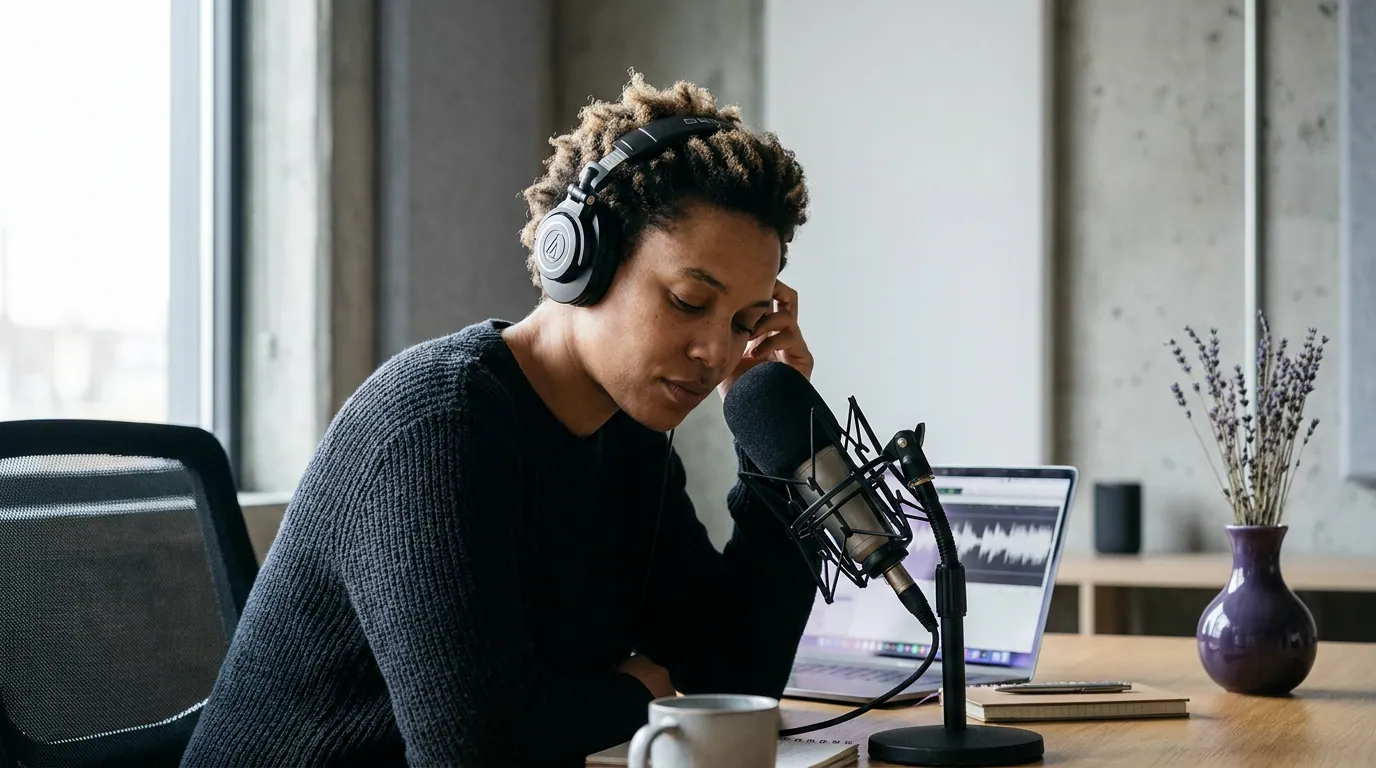
The four kinds of deliberate silence
Not all silence does the same job. There are four distinct pauses worth using on purpose, and confusing them is why "just stay quiet" advice often backfires. Each has a moment it belongs and a moment it ruins. Here's the taxonomy.
The wait is the pause between your question and their first word. A real question, one they haven't answered fifty times, needs a few seconds of thinking. Hosts kill it by re-asking ("or, I guess what I mean is…") the instant it appears, which yanks the guest out of thought and back to the surface. Ask once, then wait.
The after-beat is the one you'll use most. They finish a thought, it sounds complete, and you say nothing for two or three seconds. Roughly half the time the guest treats your silence as a prompt and keeps talking, and that continuation is more specific and less guarded than the part they meant to end on. This is the move that earns the episode.
The reflective pause belongs after a question that genuinely costs the guest something to answer. Holding it communicates that you're not in a hurry and the answer matters more than your schedule. Fill it and you tell them the opposite. This one overlaps with handling sensitive topics with care, the silence is part of how you signal the room is safe.
The weighted silence comes right after a guest says something raw. The temptation is to acknowledge it immediately, "oh, wow", but that verbal reflex talks over the one second of the recording that carries the most weight. Let it sit. The pause does more respect-work than any phrase, and it leaves the moment clean.
How long do you hold a podcast pause?
Hold a pause as long as the job it's doing, not a fixed count. Use two seconds for an ordinary after-beat, three to four when you want a guest to go deeper or you've asked something hard, and up to five after a vulnerable admission. Past five seconds with no movement, gently re-engage. The purpose sets the length, not bravado.
The trap is treating silence as a contest. A pause held past its job becomes genuinely awkward, and the guest starts performing discomfort instead of thinking. Match the hold to what you're trying to pull. Here's the rule I coach.
When the wait genuinely stalls, the guest has been quiet for five-plus seconds and their face says they're stuck, not thinking, re-engage without re-asking the whole question. A small handhold works better than a restart: "Take your time," or repeat the last three words of your own question as a soft prompt. Resist the urge to supply an example answer, because the moment you offer one, they'll take it and you'll never hear theirs.

Keep the silence clean for your editor
A deliberate pause only pays off if it survives the cut, and most don't, because the host quietly sabotages them with sound. The fix is a handful of recording habits that keep a silence editable. Get these right and every pause becomes a clean in-point or out-point your editor can trim to the frame.
The biggest offender is the verbal nod. Hosts hum "mm-hmm" and "right, right" all over a guest's answer out of nervous reassurance, and every one of those is glued to the guest's words on the recording. You can't delete the hum without chopping into their sentence. Replace it with a visible nod and a quiet face. Your warmth comes through on camera; it doesn't need to be on the audio track.
The second offender is the false start, that half-syllable "so, " you let slip when you think the answer is over, just as the guest starts their honest second half. Now both voices overlap on a moment you most wanted clean. Commit to the pause. If you're going to hold, hold all the way, and let them re-enter before you do.
Common mistakes when using silence
Even hosts who know the theory undercut it in practice. Four habits do most of the damage, and each has a fix.
- Confusing your discomfort with the guest's. The pause feels unbearable to you and fine to them. Don't break a silence to relieve your own nerves, wait for a real signal from the guest (a stuck expression, a "I don't know where to go with this") before you step in.
- Filling the wait with a worse version of your question. Asking, then immediately "rephrasing," is the most common silence-killer. It tells the guest the first version didn't count and resets their thinking. Ask the cleanest version once, then close your mouth.
- Using silence as a weapon. A held pause to pressure a guest into an admission they didn't want to give crosses from technique into manipulation. That's a guest-trust line you don't cross. Silence invites; it shouldn't corner.
- Pairing the pause with a closed question. Silence has nothing to pull on after a yes/no answer, they said "yes," and there's no honest second half waiting. Hold your best silences after questions built to open up; the target-first method for asking better questions sets those up.
The thread tying these together is the same one that runs through listening closely while your mind races ahead: silence only works when you're actually present in it. If you spend the pause planning your next question, you'll miss the cue to extend it, and the follow-up the guest just handed you. The pause and the follow-up question are a pair: the silence opens the door, the follow-up walks through it.
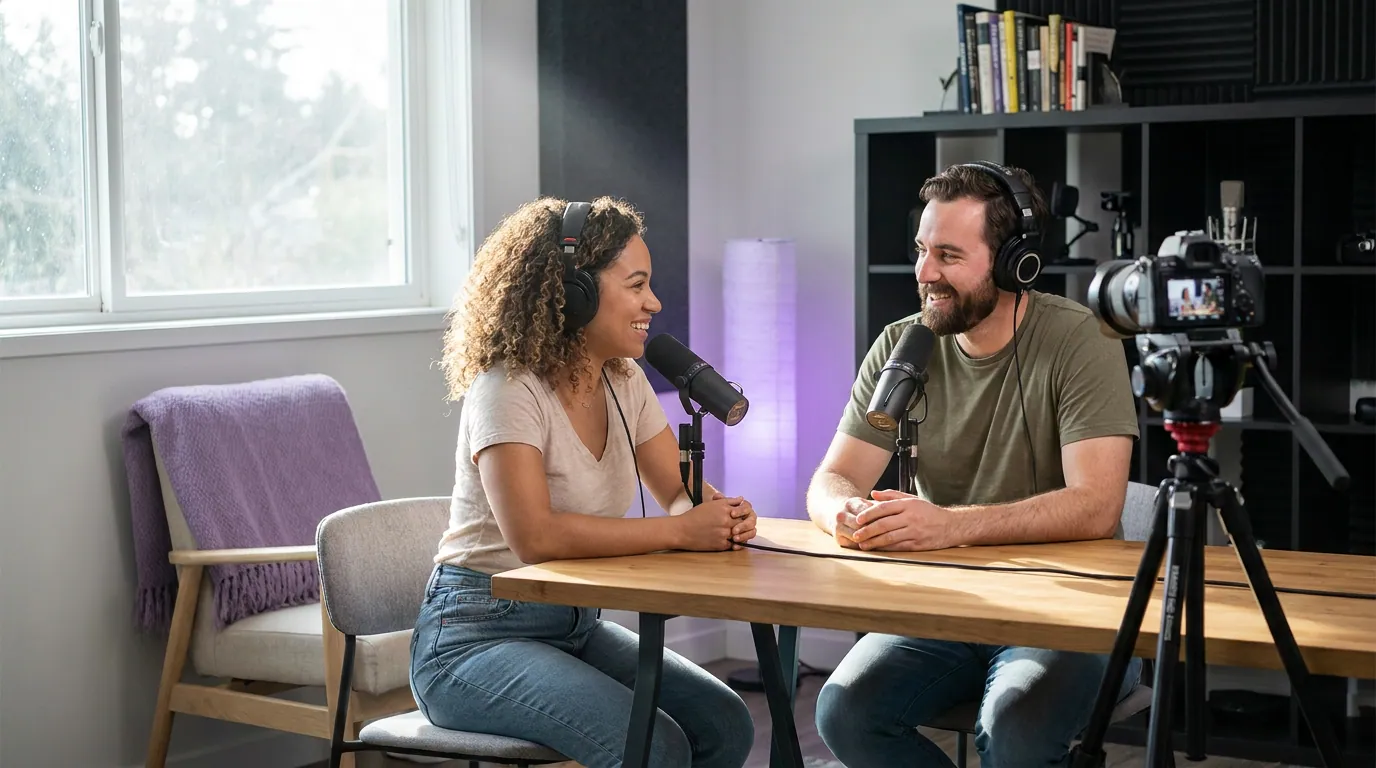
Why the pause is also your best clip
The moments a held silence produces, the unguarded second half, the line a guest says after a long beat, aren't only better interviews. They're the moments that travel. 57% of listeners now rely on social media for podcast recommendations, the first time that source passed friends and family (InsideRadio), and the share of new US weekly listeners who prefer to watch a podcast has reached 53%, up from 30% in April 2022 (Backlinko). A clean pause gives you a clean clip, a self-contained moment with an honest line at its center, and that clip is what does the discovery work.
Frequently asked questions
How long should I stay silent after a guest answers? Two seconds is plenty for a routine answer. Stretch to three or four when you're fishing for a deeper version or the question landed hard, and let it run to five after something raw. If nothing moves past five seconds, re-engage gently, don't restart the question. Let the job of the pause set its length, not your nerve.
Won't silence make the interview awkward? A three-second pause feels much longer from the host's chair than it does to the listener, who reads it as a thoughtful beat. Awkwardness comes from holding a pause past its job or staring the guest down, not from the silence itself. Match the hold to what you want to pull and it lands as patience, not tension.
What do I do if the guest stays silent too long? If their face says they're stuck rather than thinking, offer a small handhold instead of restarting: "Take your time," or repeat the last few words of your question as a soft prompt. Don't supply an example answer, they'll take yours and you'll never hear theirs.
Does holding silence hurt the audio for editing? Only if you fill it with sound. Kill the verbal "mm-hmm"s during answers, don't half-start a sentence into the pause, and keep paper, taps, and loud breaths off the mic. A clean second of silence before you speak gives your editor a precise point to clip to. A pause cluttered with noise is the one that gets cut.
Is using silence ever manipulative? It can be, if you use a long pause to pressure a guest into an admission they were trying to avoid. The honest use of silence invites a fuller answer the guest is willing to give; it shouldn't corner them into one they're not. Read the room, and back off a pause that's clearly making someone uncomfortable rather than thoughtful.