
The Best Tech Podcasts to Learn From, by Format and Depth


The tech podcasts worth studying are the ones that survive a skeptical, technical audience, listeners who will close the tab the second a host fakes expertise. Six do it across three different structures: This Week in Tech and the roundtable model; The Vergecast and Hard Fork on the news-recap; Acquired, Latent Space, and the Dwarkesh Podcast on the deep-dive. Study the structure that matches your show, not the host you happen to like.
Tech is the hardest genre to fake. A true-crime audience cannot fact-check the host mid-episode; a tech audience can, and will, in the replies. That pressure forces tech shows into clearer formats and more honest hosting than most genres ever bother with, which makes them the best free curriculum a new host can get. This page sorts the field by structure, names the one credibility move each format relies on, shows how the good ones handle jargon, and ends with a sourced look at how cadence and panel size actually map to the work.
How to study a tech podcast (sort by structure first)
Pick the structure before you pick the show. A two-person news-recap, a rotating roundtable, and a four-hour deep-dive are three different crafts that happen to share a microphone. Copying the wrong one is how new hosts end up with a format that fights their content, a solo researcher trying to run a panel, or a news host attempting a deep-dive they do not have time to research.
The three structures are not a ranking. They are answers to a different question about your show: how fast does your subject move, and how many credible voices do you have access to. Fast-moving subject plus two reliable hosts points to news-recap. A rotating bench of experts points to roundtable. A subject that rewards depth over speed points to deep-dive. The map below is the decision.
What is the best roundtable tech podcast to learn from?
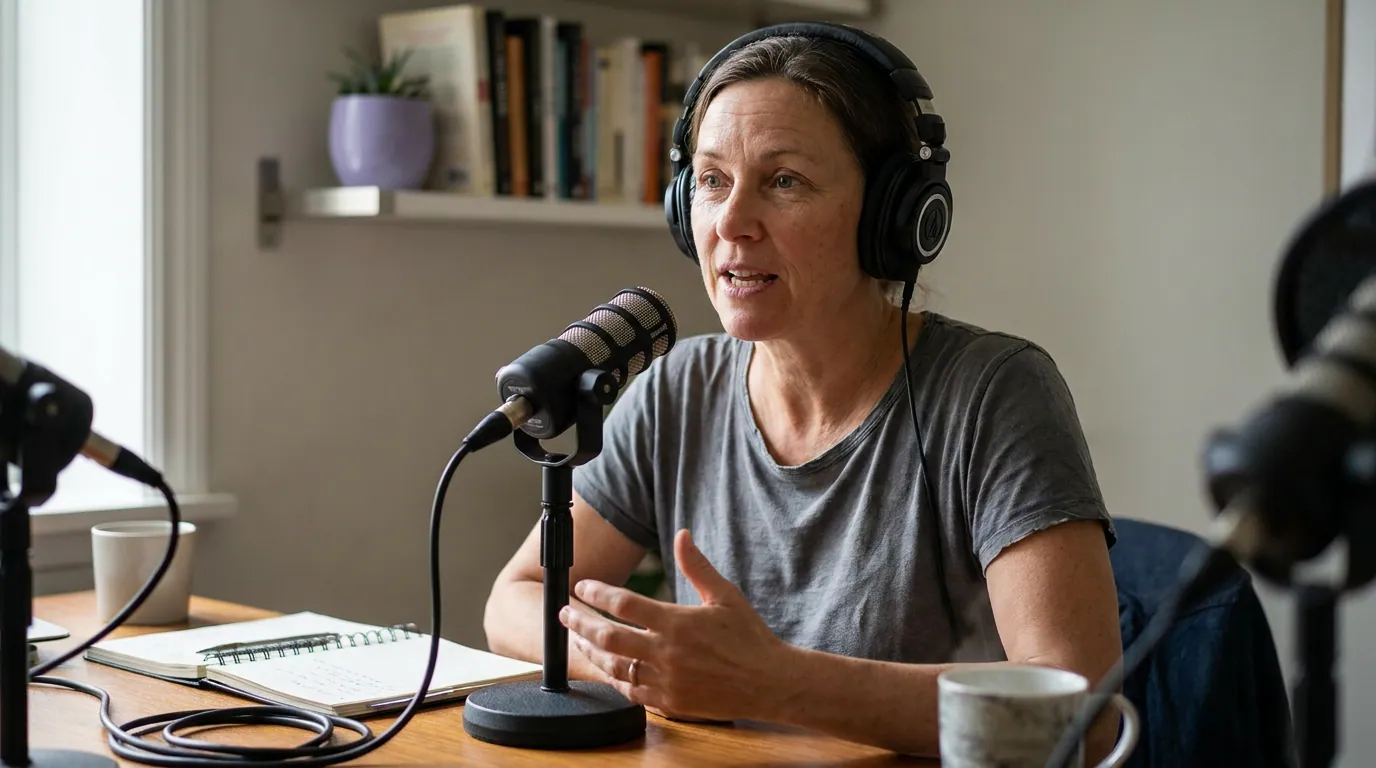
For the roundtable, study This Week in Tech (TWiT). Leo Laporte has run it since 2005 as a Sunday show where he hosts a rotating bench of two to three journalists and industry experts debating the week's headlines for about two hours (TWiT.tv). The format is loose and conversational by design, and the panel changes most weeks, drawing from a pool of regular contributors (Wikipedia: This Week in Tech).
The credibility move in a roundtable is the bench, not the host. Laporte is not the smartest person in the room on any given topic, and the show works because he does not pretend to be. He brings in a futurist for the AI segment, a security researcher for the breach story, a chip reporter for the hardware news, and lets them disagree on air. Skeptical listeners trust a panel that argues precisely because the disagreement proves nobody is reading from a single script.
The hard part of a roundtable is the one new hosts underestimate: it lives or dies on guest booking and traffic control. Laporte's real skill is steering three opinionated people through a two-hour conversation without it collapsing into either chaos or a polite monologue. If you cannot reliably book two credible, available experts most weeks, do not attempt this format, you will end up with a panel of friends who are not qualified to disagree, which a tech audience spots immediately.
On jargon, the roundtable handles it through translation between panelists. When one expert drops an acronym, another asks "for people who don't live in this, what does that mean," and the answer lands naturally. Copy that habit: assign someone in the room to be the audience's proxy, the person whose job is to make the specialist explain the term out loud. For more on running a multi-voice show without losing the thread, our breakdown of the production habits behind the top US podcasts covers the booking-and-pacing problem in depth, and the timing discipline behind comedy podcasts new hosts should steal from applies directly to keeping a panel moving.
What are the best news-recap tech podcasts?
For the news-recap, study The Vergecast and Hard Fork, two shows that solve the same problem in opposite registers. The Vergecast, hosted by Nilay Patel and David Pierce, moved to a daily schedule on June 1, 2026, with a Friday news round-up plus weekday episodes led by Pierce and Verge staffers (The Vergecast on Apple Podcasts). Hard Fork, from The New York Times, runs weekly on Fridays with journalists Kevin Roose and Casey Newton making sense of the week in tech (Hard Fork on Apple Podcasts).
The credibility move in a news-recap is the standing day job. Both shows are anchored by working tech journalists, not commentators, and that distinction is the whole product. When Roose and Newton discuss an AI launch, the audience trusts it partly because Roose is a Times columnist and Newton runs a tech newsletter that breaks its own stories. The lesson for a new host is blunt: a news show borrows its authority from what the hosts do the rest of the week. If you have no beat, no reporting, and no source, you are doing reaction, not recap, and reaction ages badly.
The two shows diverge on tone, and that contrast is the lesson. The Vergecast is the practitioner's frequency, gadget specs, platform mechanics, what to actually buy, pitched at people who care how the thing works. Hard Fork is the curious-outsider frequency, with recurring bits like "HatGPT" that run through headlines in a structured, playful format. Same beat, two postures. A new host should pick a posture and commit, rather than wobbling between "I am the expert" and "I am asking on your behalf" within the same episode.
On jargon, news-recap shows lean on the recurring segment. A structured bit like Hard Fork's headline round forces a tight, plain-language summary of each story, the format itself prevents a host from disappearing into detail. If your subject is dense, build a segment whose rules require brevity, and let the structure do the editing you would otherwise have to do by willpower.

What are the best deep-dive tech podcasts?
For the deep-dive, three shows set the bar, each in a different mode. Acquired, hosted by Ben Gilbert and David Rosenthal, runs three-to-four-hour single-company histories the hosts say they handcraft over 200-plus hours of research and production each, published on an irregular schedule of a month or more between episodes (Acquired, About; Wikipedia: Acquired). Latent Space, hosted by Swyx and Alessio Fanelli, is the weekly briefing for AI engineers, technical, mostly in-person interviews with the people building the tools (Latent Space, About). And the Dwarkesh Podcast runs three-to-five-hour interviews on AI, science, and history, with host Dwarkesh Patel spending about a week preparing each one (Mercury interview).
The credibility move in a deep-dive is visible preparation. These shows do not assert authority; they demonstrate it by knowing more than the audience expected. Acquired's hosts read the financial filings and the founder biographies, then narrate a company's full arc with the receipts attached. Patel uploads a guest's papers and books to a project in Claude before recording, then poses questions to the model to map the field, and trains himself to invite a guest to make a claim so he can push back precisely (Mercury interview). The payoff is reputational: TIME named him to its 100 most influential people in AI for 2024 (TIME100 AI), and The Economist has called him the podcaster who "rose from nowhere to become Silicon Valley's favourite" (Wikipedia: Dwarkesh Patel). That is the entire model, prep so visibly that a skeptical guest cannot coast and a skeptical listener cannot doubt you did the work.
The honest catch is that this format is expensive in a way the others are not. Patel publishes roughly one interview every other week, slow, he admits, for a full-time job, because each one costs a week or two of reading (Dwarkesh, Progress Update); Acquired waits a month or more between episodes because each one is a research project. A new host romanticizing the deep-dive should price the work first. The depth that makes these shows credible is the same depth that makes them slow, and slow is fine only if every episode earns its length.
On jargon, the deep-dive does the opposite of the news show: it slows down and defines terms in line, because it has the runway. Latent Space will spend ten minutes establishing what a term means before using it for an hour, which is why a non-specialist can follow a deeply technical episode. The transferable rule is to define the term the first time at the depth your slowest listener needs, then use it freely. You can only afford that in a long format, another reason structure and content have to match.
What they have in common: cadence matches the news cycle
Here is the pattern that ties the list together, and it is the most useful thing on this page: a credible tech show's release cadence matches how fast its subject changes. News-recap shows publish fast because tech news rots fast; deep-dives publish slowly because their subjects do not expire. The shows get into trouble when cadence and subject disagree.
Run the comparison. The Vergecast went daily in June 2026 because gadget and platform news is a daily firehose (The Vergecast on Apple Podcasts). Hard Fork stays weekly because a thoughtful synthesis needs a few days to form. Latent Space is weekly because the AI tooling cycle moves nearly that fast. Acquired and Dwarkesh are monthly-ish because a company history or a frontier-research interview is worth waiting a month for and worthless if rushed.
The second shared pattern is restraint on panel size. The instinct for a new tech show is to fill the room with experts, but the credible shows keep the room small. Four of the six are essentially two-host shows. Only This Week in Tech runs a real panel, and even that is usually Laporte plus two or three, not a crowd. More voices do not read as more authority; past about four people, a tech conversation turns into cross-talk that a skeptical listener finds harder to verify, not easier.
The third trait is the quiet one: every host here has a reason to be at the mic beyond the podcast. Reporters, engineers, investors, operators. None of these shows is hosted by someone whose only qualification is that they enjoy talking about tech. That is the through-line a new host should internalize before format or cadence, earn the standing first, then choose the structure that displays it.
How we chose these shows
This is an editorial pick, and the bar is worth stating. We required each show to (1) demonstrate credibility a technical audience would accept, not just claim it; (2) represent its structure cleanly enough to study; (3) be hosted by practitioners with standing beyond the show; and (4) check out against current publisher and platform pages for host, format, and cadence. We verified each show's cadence and panel size against its own listing in June 2026, because both move, The Vergecast's shift to daily is recent, and TWiT's panel rotates weekly.
What we left off: pure hype channels with no reporting or research behind them, single-vendor shows that exist to sell a product, and shows whose authority rests entirely on a celebrity guest rather than the host's own work. They get downloads. They will not teach you how to be credible.
One honesty note on the data here. Bar lengths in the charts are illustrative groupings, not measured to scale, and cadence labels reflect each show's stated schedule rather than a count of releases. The patterns, cadence tracking the news cycle, small rooms, practitioner hosts, are the durable findings; treat any single label as a snapshot of a moving schedule.
FAQ
What is the single best tech podcast for someone learning to host? For most new hosts, Hard Fork, because it models the hardest balance: two credible journalists staying conversational and plain-spoken about dense material without dumbing it down. Study how they hand off, how they define terms in passing, and how the recurring segments keep the episode tight.
Are deep-dive shows realistic for a beginner to copy? Rarely, at first. Dwarkesh spends about a week reading per interview and Acquired logs 200-plus hours of research and production per episode, which is why they publish slowly. A new host should usually start with a tighter news-recap or interview format and grow into deep-dives once the research muscle and audience patience exist.
How big should my panel be for a tech roundtable? Three to four people including you, maximum. This Week in Tech, the genre's defining roundtable, almost always runs the host plus two or three. Past four voices, the conversation gets harder for a skeptical listener to follow and verify, which works against the credibility a tech show needs.
How do these shows handle technical jargon without losing people? Three ways, by structure. Roundtables translate between panelists, with one person playing the audience's proxy. News-recaps use tight recurring segments that force plain summaries. Deep-dives slow down and define a term fully the first time, then use it freely for the rest of the episode.
Should I match my release schedule to these shows? Match the news cycle of your subject, not another show's calendar. If your topic changes daily, publish often and short; if it rewards depth, publish less often and longer. The credible shows all align cadence with how fast their subject actually moves, copy that logic, not the specific frequency.
Where can I read more about the hosts and shows? Each show keeps a public archive and host bios on its own site, and entity pages on fanpage.wiki collect the show, hosts, and episode details in one place. Use those for the facts; come back here for what to do with them. For adjacent craft, our guides to business podcasts worth studying as a new host and finance podcasts that teach hosts how to explain hard ideas pull apart explanation technique in neighboring niches; what the best true crime hosts do differently covers credibility in a research-heavy genre; and the UK-versus-US top-ten comparison shows how format norms shift by market.