
Best Long-Form Podcasts to Learn From: Earned Three Hours


The best long-form interview podcasts, The Joe Rogan Experience, the Lex Fridman Podcast, The Diary of a CEO, This Past Weekend with Theo Von, the Shawn Ryan Show, hold an audience for two or three hours by doing one thing most shows get wrong: they let the conversation drift, then anchor it, instead of marching through a question list. Length is not the achievement. Knowing when to stop steering is.
You can find "longest podcasts" lists ranked by runtime anywhere. This one is built to help you make a longer show that people finish: it studies the shows that earn their hours, names the technique they share, and ends with a data cut on real average runtimes, guest-prep signals, and editing density, so you can copy the craft instead of just admiring the duration. The episode histories live on the directory. The reason they work lives here.
What makes a long-form interview podcast worth three hours?
A long episode earns its runtime when the length buys something a short cut cannot: the guest's guard dropping, a tangent that becomes the best part, an answer that needed twenty minutes of trust first. The worst long shows are short interviews stretched thin. The best ones treat time as an asset, steering less, listening more.
There is a real mechanism under this. A BBC Global News neuroscience study found that when people listened to podcasts while active, doing chores, commuting, their engagement was 18% higher and emotional intensity 40% higher than passive listening, with a 22% lift in long-term memory of the content (BBC Global News, via uStudio). Long-form is the format that fits the way people actually listen: hands busy, attention available, hours to fill. The length is not a tax the listener pays. It is the point.
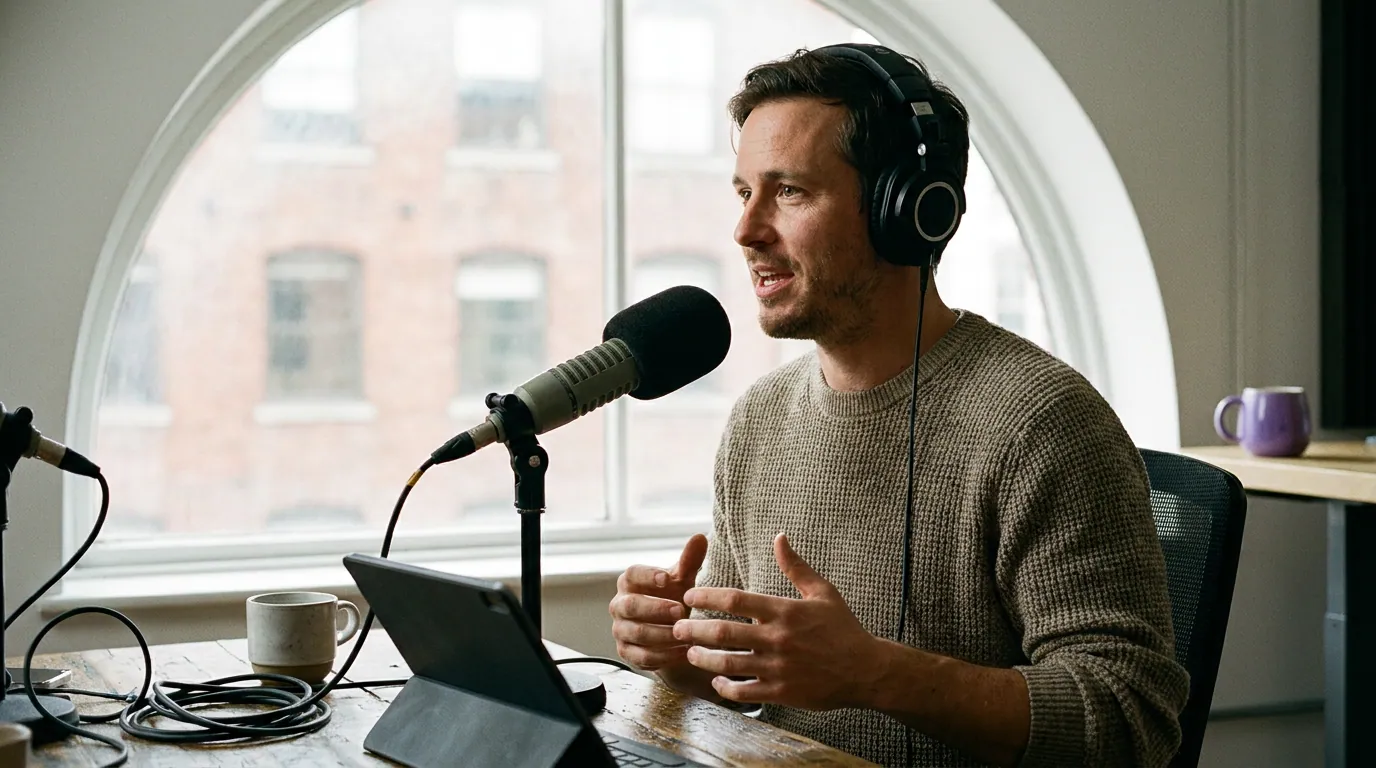
The long-form interview shows worth studying (and what to steal)
These are not ranked by size, though several rank high by reach, Joe Rogan sits at #1, SmartLess at #5, and This Past Weekend with Theo Von at #8 in Edison's Q1 2026 US top 10, with Armchair Expert climbing 12 spots that quarter (Edison Podcast Metrics, Q1 2026). They are here because each one earns its length a specific way you can copy. The full archives live on the directory; the technique breakdown lives below.
- The Joe Rogan Experience, the long-leash tangent. Episodes average around 2 hours 39 minutes (JRE Library stats), and the whole method is having no clock. Rogan will chase a thread for forty minutes because it is interesting, not because it was on a sheet. The steal: when a topic is genuinely alive, let it run instead of cutting back to your plan. (Joe Rogan Experience page.)
- The Lex Fridman Podcast, the patient setup. Conversations run anywhere from one to three-plus hours, and Fridman spends the early stretch building enough trust and context that hard questions land later instead of bouncing off. The steal: front-load patience so the back half can go somewhere a cold question never could. (Lex Fridman Podcast page.)
- The Diary of a CEO (Steven Bartlett), research as a runway. Episodes commonly run 90 minutes to two hours, and the production team compiles independent research documents per guest, published as further-reading PDFs (The Diary of a CEO, Apple Podcasts). Bartlett steers toward failure and vulnerability deliberately. The steal: deep prep is what lets you stay on a hard thread long enough to get past the rehearsed answer. (The Diary of a CEO page.)
- This Past Weekend with Theo Von, drift as the format. Episodes run roughly 90 minutes to two hours, and Von's interviews wander on purpose, a guest mentions something offhand, and that becomes the next twenty minutes. The steal: the best moment is often three steps off the question you asked, so follow the offhand line. (This Past Weekend page.)
- The Shawn Ryan Show, time as the price of trust. Episodes routinely run two to five hours (Shawn Ryan Show, Apple Podcasts). With guests carrying heavy, sensitive stories, the length is not indulgence, it is the time required before a person will say the real thing. The steal: some answers only exist after two hours of being taken seriously. (Shawn Ryan Show page.)
- Armchair Expert (Dax Shepard), the warm long detour. The show built its long format on Shepard and Monica Padman letting curiosity, disagreement, and personal tangents run, which is part of why it jumped 12 places in Edison's Q1 2026 ranking. The steal: a long episode tolerates detours that a tight one cannot, and the detour is frequently the part people quote. (Armchair Expert page.)
- SmartLess, three hosts, three threads. With Jason Bateman, Sean Hayes, and Will Arnett interviewing one guest, each host hears a different loose end in the same answer, which keeps a long conversation from flatlining. The steal for a co-hosted show: more listeners on the panel means more drift to pull from without losing energy. (SmartLess page.)
These hosts have access and reputation you cannot copy. What survives at your scale is the move: drift on purpose, then anchor. Here is how that actually works.
The conversational-drift technique: when to stop steering
Stop steering when a thread is generating energy or honesty; steer again only when it stalls. That single rule separates a three-hour show people finish from one they abandon. New hosts do the opposite: they treat every silence and tangent as a problem and yank the conversation back to the list. That kills a long episode. The drift is where the unplanned moment lives.
The pattern the shows above share is drift-and-anchor. You let a thread wander as long as it is generating energy or honesty, and you only steer when the energy drops or the drift goes nowhere. The host is a current, not a rail. Most of the work is restraint.
Four signals tell you which way to go in the moment. Stop steering when the guest leans in, talks faster, contradicts something they said earlier, or starts a sentence with "actually" or "the truth is", those are the markers of an answer that was not on either of your lists. Start steering when the guest is summarizing, repeating, agreeing too easily, or visibly searching for an exit, the energy has dropped, and a fresh anchor question saves the next twenty minutes.
The mistake that makes long episodes drag is steering through the peaks. A guest finally says something real, and the host, anxious to "cover the material," cuts in with the next prepared question. The thread dies. Do the opposite: when it is good, get smaller. A nod, a "wait, say more about that," or pure silence will get you further than any question on your sheet.

How long should your episode actually be?
Make it exactly as long as it stays alive, and not one minute longer. There is no virtue in three hours if hour three is two people running out of things to say. The shows that earn their length vary wildly, Diary of a CEO near 90 minutes, Shawn Ryan past four, because the conversation sets the end, not a target.
The honest caveat: these are approximate averages from publisher pages and trackers, and individual episodes swing hard. Rogan's average sits near 2h39m, but his catalog runs from under two hours to a five-hour-plus outlier (JRE Library). A "good" length is the wrong question. The right one is whether the last twenty minutes earned their place. If you cannot point to a reason the episode is as long as it is, it is too long.
What the best long-form shows have in common
Strip away the names and the same three habits show up across every long interview that works. None of them is about talking more. They are about earning the time.
Prep buys patience. The shows that hold three hours are almost never improvised end to end. Bartlett's team builds research documents per guest (Apple Podcasts); Fridman reads deeply before a single question. Preparation is not a script, it is what lets a host stay on a hard thread long enough to get past the rehearsed answer.
Editing density is low, and that is deliberate. Short-form clips are cut to the frame; a great long episode is barely cut at all. The pauses, the false starts, the slow build are kept because they are the texture that creates intimacy. The editing job in long-form is mostly removing dead weight, not tightening pace, the opposite of a viral clip.
The clip and the conversation are the same skill pointed two ways. A long episode is the raw material; the moment that travels is the export. Social now drives discovery more than personal referral, 57% of listeners rely on social media for podcast recommendations, the first time that surpassed friends and family (InsideRadio, 2025). And YouTube is now the #1 US podcast platform at 42% of weekly listeners, ahead of Spotify at 15% and Apple at 7% (Backlinko, citing Cumulus Media, Oct 2025). The hosts above film their conversations because the unplanned moment in hour two is exactly what gets cut into the clip that finds new listeners in hour zero.
To study how the same long-form instincts play out by genre, the best business podcasts use the specific-example pull to keep a long conversation concrete, while the best true crime hosts earn their length through narrative tension rather than tangent. Comedy shows worth studying sustain attention with rhythm instead of depth, and the best finance podcasts prove that even a dense subject can hold an hour when the host translates instead of lectures. For the production habits behind the biggest shows generally, see what the top US podcasts have in common, and for a contrast, why the UK top 10 looks nothing like the US.
FAQ
Why are some podcasts three hours long? Because the format rewards depth that a short interview cannot reach. Long episodes give a guest time to drop their guard and a conversation room to find an unplanned moment. The length only works when the host steers less and lets good threads run, three hours of a flat conversation drives listeners away, three hours of a live one keeps them.
Do longer podcast episodes perform better? Not automatically. Length helps when it buys real depth or an unplanned moment, and hurts when it is a short interview stretched thin. The shows that succeed at three hours, like the Shawn Ryan Show or Lex Fridman, earn the time with prep and restraint. Match runtime to how long the conversation stays alive, not to a target.
How long should my interview podcast be? As long as it stays genuinely alive, and no longer. Apply the earned-length test: did the conversation go somewhere unplanned, is there a moment that needed the build to land, and could you cut twenty minutes without losing anything? If you can cut them, cut them. The right length is set by the conversation, not a number.
What is the conversational-drift technique? It is letting a conversation wander while it is generating energy or honesty, then anchoring it back only when the energy drops. The host acts as a current, not a rail. You stop steering when a guest leans in, talks faster, or says "actually," and you reset with a fresh question when they start summarizing or searching for an exit.
How do long-form hosts keep an audience engaged for hours? Through prep, restraint, and trust. They research enough to stay on hard threads, resist cutting in when an answer turns real, and give guests the time it takes to say something honest. A BBC Global News study found active listeners, commuting, doing chores, show higher engagement and memory (via uStudio), which is exactly the audience long-form serves.