
Podcast Trailer Swap: A Faster Promo Alternative


A podcast trailer swap is a cross-promotion deal where two shows trade short, produced trailers, usually 30 to 60 seconds, and each host drops the partner's trailer into their own feed or episode. It is the faster, higher-converting cousin of the promo swap, where hosts read a script about each other live. The difference matters most for the people you are trying to reach: cold listeners who have never heard your show. A trailer lets them hear the actual thing instead of a description of it.
Most cross-promotion advice treats promo swaps and trailer swaps as the same move. They are not. A host-read promo is faster to produce and warmer in tone, but it is a pitch, a secondhand recommendation. A trailer is a sample. When a stranger is deciding in three seconds whether your show is for them, a sample beats a pitch almost every time. This guide gives you the specific reason that is true, the exact spec to build a swap-ready trailer, a checklist to agree the deal cleanly, and the math for why running the same swap across a whole season is where the real growth hides.
Why does a trailer convert cold audiences better than a host-read promo?
A produced trailer converts cold audiences better because it gives them a direct sample of your show, your voice, your editing, your best moment, instead of a host describing it secondhand. A stranger decides fast whether something is worth their time, and the first few seconds carry most of that decision, castmagic calls the opening three seconds of any clip "absolutely critical for social media success." A trailer puts your strongest 30 seconds in front of them; a promo only promises those seconds exist.
There is a second, quieter advantage: consistency. A host-read promo is a live take, and it changes every time. One host nails it; another rushes it or buries the show name; a third forgets the hook entirely. A trailer is built once and runs identically in every partner feed, which means the version reaching cold listeners is always your best version. You control the hook, the music bed, the pacing, and the call to action, none of which you control when someone else is reading about you off a script.
The stakes are real because cold discovery is where most shows stall. Nearly half of all podcasts stop at three episodes or fewer Amplifi Media, and a leading cause is that growth from strangers is slow and discouraging. Swaps borrow an existing audience instead of waiting for one to find you, and 57% of listeners now rely on social media for podcast recommendations versus 54% on friends and family (InsideRadio, "The State of Video Podcasting 2025"), the first time social passed personal referral. A trailer is the asset that travels across those surfaces. A promo read into one feed does not.
The honest caveat: a host-read promo can outperform a trailer with a partner's loyal audience, because a trusted host vouching for you carries weight a slick trailer cannot fake. So the choice is not "trailer always." It is "trailer for cold reach, promo for warm endorsement." If you only run one, run the trailer, most of your swap's value is the cold audience meeting your show for the first time. For the full decision tree across formats, see promo swap vs feed drop vs guest swap.

What are the specs for a swap-ready podcast trailer?
A swap-ready trailer is 30 to 60 seconds, opens with your single strongest moment in the first five seconds, names the show and the one reason to subscribe, and ends with a plain call to action. Build it to broadcast loudness (around -16 LUFS for stereo), export a clean audio file plus a 9:16 captioned video version, and hand the partner everything they need so saying yes costs them five minutes, not an afternoon.
The structure that works: hook, then promise, then proof, then ask. Open on the most arresting line you have ever recorded, a laugh, a confession, a counterintuitive claim. Follow it with a one-sentence promise of what the show delivers every week. Drop in one short clip that proves it. Close by naming the show clearly and telling people exactly where to subscribe. Resist the urge to cover everything. A trailer that tries to explain the whole show explains nothing.
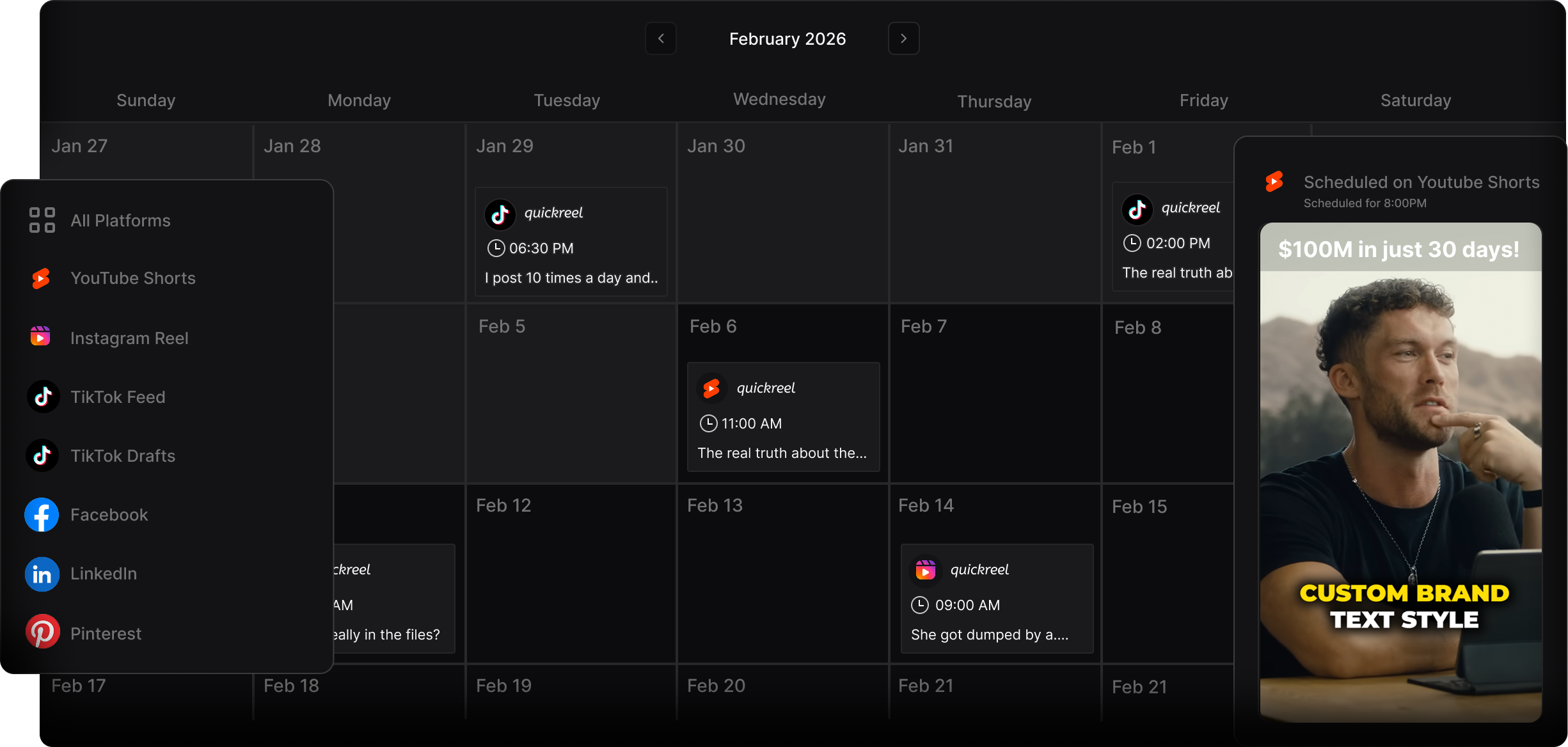
The video version is not optional anymore. 53% of new US weekly listeners now prefer to watch a podcast rather than only listen (Backlinko), so the same trailer doubles as a Reel, a Short, and a TikTok. Building the captioned vertical cut used to be the slow part. It is the easiest place to let a tool do the cropping and captioning so you can spend your hour on the edit that matters, the hook.
The trailer swap agreement checklist
Agree the deal in writing before anyone records anything. A swap goes wrong when one side over-delivers and the other forgets, and that resentment kills the next three swaps you could have run with that network. A short, plain agreement protects both of you and makes the whole thing repeatable. Send it as one email; you do not need a contract.
Confirm these seven things up front:
- Format and length. Trailer for trailer, both 30–60 seconds. Match the trade so neither side feels short-changed.
- Placement. Where exactly does each trailer run, a standalone feed drop, baked into the next episode's pre-roll, or both? Specify it.
- Run window. A single placement, or every episode for a set number of weeks? The multi-episode version is where the value compounds (more below).
- Audience size, stated honestly. Roughly matched downloads, or a knowingly uneven trade you both accept. Hidden mismatches are what sour swaps.
- Delivery date. When each trailer lands in the other's inbox, and when each goes live. Put dates on it.
- Tracking. A unique link or a "heard us on [show]?" prompt so you can both see whether it worked.
- The out. Either side can end the run after the agreed window with no hard feelings. Saying this up front makes people more willing to start.
That last point does more work than it looks. People hesitate to commit to a swap because they fear being locked into promoting a show that turns out to be a poor fit. Naming a clean exit removes the fear and gets more yeses. For the cold-outreach side, finding partners and pitching the swap in the first place, pair this with the cold pitch that gets bigger shows to swap promos and how to find the right podcasts to cross-promote with.

How does a trailer swap compound across a season?
A trailer swap compounds when you place the partner's trailer in every episode of a season instead of once. A single drop reaches whoever happens to listen that week. The same trailer baked into ten consecutive episodes reaches your full audience repeatedly, including new subscribers who join mid-season and back-catalog listeners months later, turning one negotiation into dozens of impressions for both shows.
The math is simple and most hosts miss it. If your show gets 400 plays per episode and you run a partner's trailer once, that is roughly 400 exposures. Run it across a ten-episode season and you are closer to 4,000, and the partner does the same for you. One conversation, one trailer build, ten times the reach. Compare that to a host-read promo, which has to be re-recorded each time you want to run it again, so it almost never gets repeated.
The compounding is why a trailer swap pairs naturally with a feed drop swap that actually converts: the trailer is your always-on placement across the season, and a one-time feed drop is the spike. Run the trailer for the whole run; schedule the feed drop for a week when both shows have something big.
There is one rule that protects the whole strategy: capture the audience you borrow. Cold listeners who hear your trailer and subscribe are renting their attention until they wander off. Point your trailer's call to action, and your show notes, at an email signup so a borrowed listener becomes an owned one. Start with a podcast email list from zero and a welcome email sequence that turns the first impression into a real subscriber.
Common mistakes that waste a good swap
- Trading a promo when you needed a trailer. Reading a script to a partner's loyal fans is fine; reading it to convert cold strangers wastes the swap. For cold reach, send the sample, not the pitch.
- Burying the show name. A trailer that hooks hard but never clearly says the show's name or where to subscribe earns interest and nothing else. Name it twice and end on the ask.
- Skipping the video cut. Audio-only means the trailer can't travel on Reels, Shorts, or TikTok, the surfaces where most cold discovery now happens. Build the captioned vertical version every time.
- Running it once. A single drop is the least valuable way to use a trailer you already built. Negotiate the season-long placement up front; the compounding is the whole point.
- No tracking, no learning. Without a unique link or an on-air prompt, you never know which partner sent listeners and which sent nothing, so you can't double down on the swaps that work.
FAQ
What is the difference between a trailer swap and a promo swap? A promo swap trades host-read scripts, each host talks up the other show live. A trailer swap trades produced 30-to-60-second audio (or video) trailers that play a real sample. The promo is faster and warmer for loyal audiences; the trailer converts cold listeners better because it shows the show instead of describing it.
How long should a podcast swap trailer be? 30 to 60 seconds, with 30 as the safe default. Shorter trailers survive in more partner feeds and respect the listener's patience. The first five seconds do most of the work, so spend your editing time on the hook and trim anything that delays it.
How do I find shows to swap trailers with? Look for shows with a roughly matched audience size and an overlapping listener, not a competing one. Audience overlap matters more than raw downloads. Use a tracking link in every swap so you learn which partners actually send subscribers, then run repeat swaps with the ones that do.
Do trailer swaps cost anything? No money changes hands in a standard swap, you trade placement for placement. The only cost is the hour to build your trailer once and the time to agree the terms. That is what makes swaps one of the cheapest growth levers a small show has.
Should the trailer be audio or video? Both. Build one audio trailer for feed placement and one 9:16 captioned video cut for social, since most new listeners now prefer to watch. The same hook and script work for both formats, you are just exporting two versions of one asset.