
Promo Swap vs Feed Drop vs Guest Swap: What to Use When


Use a promo swap when the relationship is new and you want a cheap test, a trailer swap when you want a promo with higher conversion at the same low cost, a feed drop when trust is established and you want maximum trust transfer into a partner's subscribers, and a guest swap when you want a real relationship and content you both keep. The fastest way to choose: match the format's commitment to how much you trust the partner, then match its strength to your single goal, more downloads now, or more subscribers that stick.
Cross-promotion is the cheapest reliable way to put your show in front of warm, pre-qualified listeners, and most shows underuse it because picking the wrong format is what burns people. A promo swap with a stranger is a sensible first date. A feed drop with that same stranger is moving in together. They are not interchangeable, and the difference between a swap that grows your show and one that costs you a partner is almost always format choice, not effort. This page is the router: a scored matrix, a reach-versus-conversion map, and four questions that point you at the right swap before you send a single pitch.
What are the four podcast cross-promotion swaps?
The four swaps are reciprocal cross-promotions that differ by how much each show stakes. A promo swap trades 30-to-60-second ads inside each other's episodes. A trailer swap trades each show's best 60-to-90-second trailer instead of a read ad. A feed drop publishes the partner's whole episode into your feed behind a host intro. A guest swap puts each host on the other's show as a guest.
They form a ladder of commitment, not a list of alternatives. As you climb it, three things rise together: the effort to produce, the trust each show transfers, and the downside if the partnership is a poor fit. A promo risks a minute of goodwill. A feed drop risks an entire episode slot, the most valuable real estate you own. Understanding the ladder is the whole game, because the right rung depends on where the relationship is and what you are actually trying to move.

The decision matrix: four swaps, four factors
Score each format on the four things that decide whether a swap is worth it: effort to set up and produce, reach (raw new ears it puts you in front of), conversion (how many of those ears become listeners who stay), and relationship risk (how much a bad fit damages the partnership). No format wins all four. That is the point, you are trading, not optimizing.
Read the matrix as trade-offs, not a leaderboard. The promo swap is the safe, cheap test, low on everything, including downside, which is exactly why it is the right first move with anyone new. The trailer swap is its quiet upgrade: roughly the same effort, but a tight trailer outconverts a read ad because it lets the partner's audience hear your actual show, not your description of it. The feed drop maxes reach and conversion together, and it also maxes risk, you are staking a whole episode slot on someone else's hour. The guest swap costs the most effort and converts hard, because a personality is stickier than an ad, but its reach is capped by whatever a single appearance can carry.
Reach versus conversion: why no swap wins on both
The single most useful way to see these formats is on two axes, how many new ears (reach) and how reliably those ears stick (conversion). Plotted that way, the swaps spread out instead of stacking, and the trade-off becomes obvious: the formats that reach the most people are not always the ones that convert them, and the cheapest format sits low on both, which is the right place for a test.
If your goal this month is raw downloads, say you have a sponsor deal tied to episode numbers, bias toward reach: a feed drop with a larger partner, or several promo swaps run in parallel. If your goal is subscribers who stick around, bias toward conversion: a guest swap or a feed drop, where the partner's audience meets a person or a full episode, not a 60-second pitch. The promo swap is rarely the end state. It is how you find out whether a partner is worth a bigger swap later.
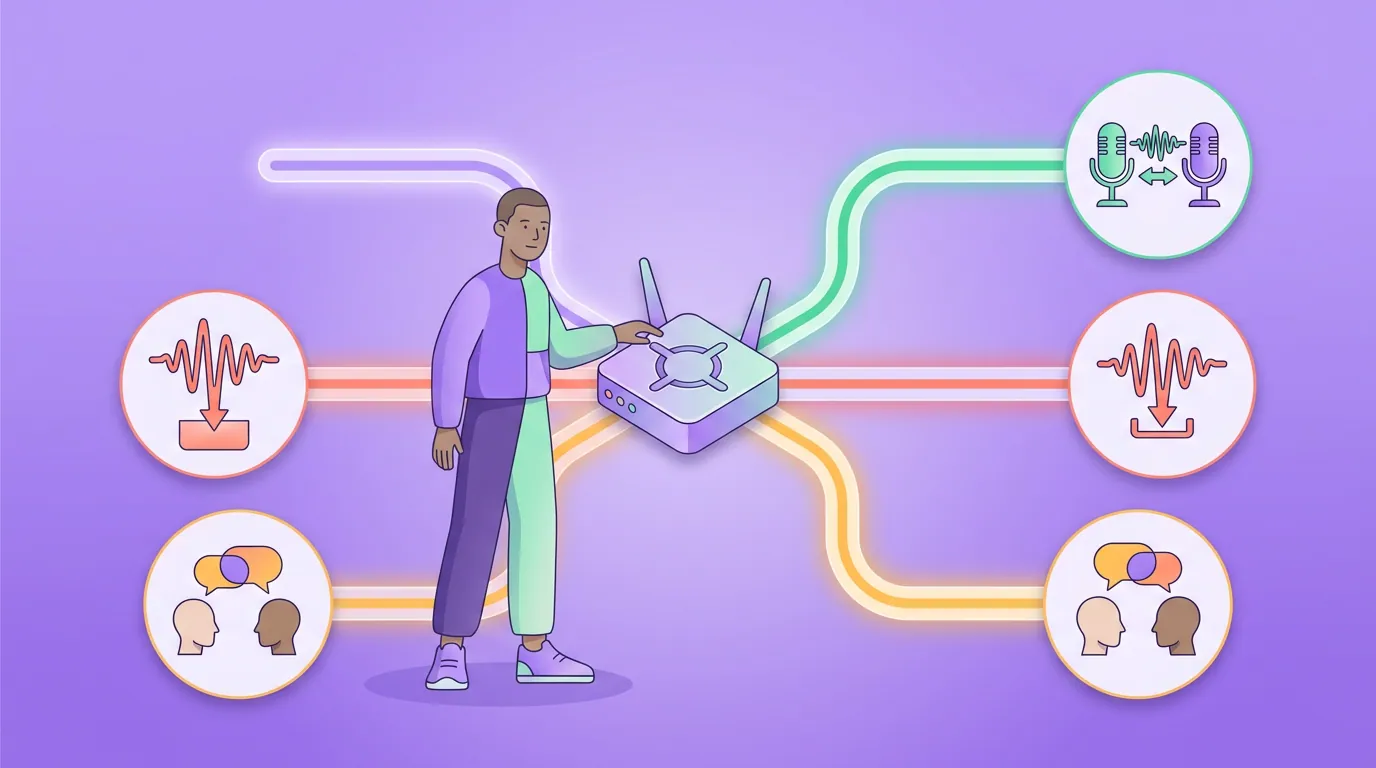
The four-question router
To pick a swap in under a minute, answer four questions in order. Each one narrows the field, and the order matters, relationship status gates everything, because the higher-commitment formats only make sense once trust exists.
- Is this a brand-new partner? If yes, or if you have never seen their numbers, start with a promo or trailer swap. You are testing fit and reliability before you stake anything bigger. A partner who flakes on a promo would have flaked on a feed drop, and now it only cost you a minute. Our guide to finding the right podcasts to cross-promote with covers how to source and vet candidates before this question even comes up.
- Read ad or trailer for that first test? Choose the trailer. Same effort to schedule, but the partner's audience hears your show instead of your pitch, and a strong cold open converts better than any script you read about yourself. The trailer swap mechanics are worth their own walkthrough, but the short version: a 60-to-90-second clip of your best moment beats a 60-second "go check us out" almost every time.
- Has the partnership proven itself? Once a partner has delivered on a smaller swap and the audience fit is real, the high-commitment formats open up. This is also where the cold pitch that gets bigger shows to agree starts working, a track record of a clean promo swap is your proof you are easy to work with.
- Subscribers or downloads? For subscribers who stick, run a guest swap (a personality travels) or a feed drop (a full episode proves the show). For a burst of downloads tied to a deadline, a feed drop with a larger partner moves the most volume. When the answer is a feed drop, our feed drop playbook has the three-condition checklist and the host-intro script that decide whether it converts.
Mapping the swaps to your show size
Show size changes which swaps are even available to you, because the unwritten rule of swapping is rough parity. A show ten times your size has little reason to swap evenly. Here is the honest read by tier.
| Your show size | Swaps to lead with | Why |
|---|---|---|
| Under 200 downloads/episode | Promo and trailer swaps with peers | Low stakes, easy yeses, and you are building a track record before you ask for more |
| 200–1,000/episode | Trailer swaps up, feed drops with true peers | You can offer real value now; reserve feed drops for partners whose audience clearly fits |
| 1,000+/episode | Feed drops and guest swaps with adjacent shows | You have trust to transfer and an episode slot worth staking; conversion-first formats pay off |
The percentile context helps you place yourself honestly: in Buzzsprout's global stats, an episode clearing 101 downloads in its first week sits in the top 25%, and 413 reaches the top 10% (Buzzsprout stats). Treat those as a rough ruler with a real caveat, Buzzsprout hosts only about 5% of podcasts and the numbers skew indie, so they undercount where the median actually sits. Still, they keep your size talk grounded when you propose a swap.

Common mistakes across all four swaps
- Jumping to a feed drop with a stranger. The whole point of the ladder is to earn the higher rungs. A feed drop is the right move with a proven partner and a disaster with an untested one, it stakes an episode slot on someone whose reliability you have never seen.
- Defaulting to the read-ad promo because it is familiar. A trailer swap costs you the same scheduling effort and converts better, because the partner's audience hears the actual show. If you are going to run a promo, run the trailer version of it.
- Measuring downloads when your goal was subscribers. A feed drop can deliver a download spike and add almost no subscribers if the host intro never says where to find you. Pick the metric that matches the goal you chose in question four, then build a welcome path so the new subscribers do not leak straight back out.
- Ignoring the clip audience entirely. Most discovery no longer starts in a podcast feed. Social clips now drive recommendations more than friends and family, 57% of listeners rely on social media for podcast recommendations versus 54% on personal contacts (InsideRadio, "The State of Video Podcasting 2025"). Whatever swap you run, cut a few clips from the swapped material for both shows to post; consistent clipping can lift discovery reach 2 to 5x (Podcast Studio Glasgow). The swap reaches a partner's audience; the clips reach everyone else.
The shows that grow from cross-promotion are not the ones that swap the most. They are the ones that match the format to the relationship and the goal, start small, and climb the ladder only when each rung earns the next. Run a promo swap to learn, a trailer swap to convert cheaply, a feed drop to transfer trust at scale, and a guest swap to build something that outlasts a single campaign. The matrix tells you which is which; the discipline is using it before you pitch, not after a swap underperforms.
FAQ
What is the difference between a promo swap and a feed drop? A promo swap trades 30-to-60-second read ads inside each show's normal episodes, low effort, low risk, ideal for a first test with a new partner. A feed drop publishes the partner's entire episode into your feed behind a host intro. The feed drop transfers far more trust and reaches their subscribers directly, but it stakes a whole episode slot, so the quality and trust bar is much higher.
Is a feed drop or a guest swap better for getting subscribers? Both convert well; they differ in reach and effort. A feed drop puts a full episode in front of every one of the partner's subscribers, so it reaches the most people and proves your show end to end. A guest swap is stickier per listener because a personality travels better than an ad, but its reach is capped by what one appearance can carry. Pick the feed drop for volume plus conversion, the guest swap when relationship and stickiness matter most.
Which swap should a brand-new podcast start with? A trailer swap with a peer-sized show. It costs the same as a read-ad promo to coordinate, carries almost no downside, and converts better because the other audience hears your actual show. Build a track record with one or two clean trailer or promo swaps before you ask anyone for a feed drop or guest spot, proven reliability is what gets bigger shows to say yes.
Do both shows have to be the same size to swap? Roughly, yes, the unwritten rule is parity, because a much larger show has little reason to swap evenly with a much smaller one. If sizes are uneven, even it out honestly: offer extra clip promotion, an email feature, or a second swap later. Never inflate your numbers to land a deal; overstated reach is the fastest way to lose a partner for good.
How do I measure whether a swap worked? Match the metric to the goal you picked. If you ran a swap for downloads, watch the download lift on the swap window. If you ran it for subscribers, watch net new subscribers in the two weeks after, plus the drop-off curve on any feed-dropped episode to see whether the intro held listeners. A swap that adds attention but no subscribers usually means the call-to-action was missing or the destination was not sayable.