
How to Structure a Podcast Episode (Intro to Outro)


Structure every episode as the same seven segments in the same order: cold open, intro bumper, body segment one, body segment two, body segment three, recap, and outro. Set a target time for each, fix the ad slot at the first body break and the CTA slot in the outro, and you have a skeleton you can reuse forever instead of designing a new show every week.
This guide is the segment-by-segment, intro-to-outro map: what each segment does, how many seconds or minutes it should run, and the two slots beginners always misplace, the ad read and the call to action. If you want the why behind retention, where listeners drop off and how a "turn" patches the mid-episode sag, that lives in the companion piece on a repeatable six-block episode structure. This one is about the running order and the clock.
What is the standard structure of a podcast episode?
The standard structure runs cold open → intro/branding bumper → two to four body segments → a short recap → outro. The bookends (open, bumper, recap, outro) are fixed short jobs measured in seconds; the body carries the episode and scales with your total length. Two slots ride inside that order: one ad read and one call to action.
That order is a convention, not a rule handed down from anyone. It works because it front-loads a reason to stay, groups your content into named chunks you and your listener can track, and parks the two things you most need to remember, the ad and the ask, in predictable places. Pick the segments once. Reuse them. The consistency is the point: listeners learn your show's shape, and you stop staring at a blank page before each recording.
Why a fixed structure beats a fresh plan every week
A reusable structure is the cheapest insurance against quitting, because the work that kills shows is the work you have to reinvent. Nearly half of all podcasts stop at three episodes or fewer, and most who fade out do so between episodes 7 and 25 (Command Linux, on podfade). The shows that survive that stretch are the ones where prep got faster, not slower. A fixed segment order turns episode planning into filling blanks instead of designing a format.
It also protects discovery. New listeners increasingly arrive from social: 57% of listeners now rely on social media for podcast recommendations, the first time that has surpassed friends and family (InsideRadio, 2025). Someone who lands on a clip and then opens your full episode meets your structure cold. A clean cold open and a tight bumper tell them, in the first thirty seconds, that this show respects their time. A five-minute meandering intro tells them the opposite.
The segments, intro to outro
Cold open (20–30 seconds)
The cold open is the single best moment from this episode, lifted to the front before any music or "welcome back." Open on tension, a surprising line, a half-told story, the most charged ten seconds of an interview, then cut. The casual listener decides whether to stay during these seconds, so they cannot be spent on housekeeping. Record this last if you need to; once the episode exists, the strongest twenty seconds are obvious.
Intro bumper (20–40 seconds)
The bumper is your branding chunk: theme sting, show name, your name, and a one-line promise of what this episode delivers. Keep it short and keep it identical week to week, a fixed bumper is what makes your show recognizable and easy to skip-to for returning listeners. Resist stuffing it with sponsor reads, "smash subscribe," and a tour of your week. Earn that attention first; spend it later.
Body segments (70–80% of the episode, in 2–4 named chunks)
The body is the episode. Split it into two to four named chunks rather than one undivided stretch of talking, three questions in an interview, three arguments in a solo, three topics in a co-host show. Named chunks give you and your listener something to track, and each chunk becomes a self-contained moment that is easy to clip later. If you run recurring segments, a regular Q&A, a news roundup, a listener question, they slot in here as fixed body chunks, which makes prep faster still.
Recap (30–60 seconds)
Before you wrap, restate the one idea you want the listener to repeat to someone tomorrow. This is your payoff line, said plainly, with a beat of silence after it. A recap is not a summary of everything, it is the single takeaway, landed clearly so it survives the trip from your mic to their memory. If you can't write that line before you record, the episode doesn't have a point yet.
Outro (20–30 seconds)
End with exactly one ask and a consistent sign-off, then stop. The outro is short on purpose: long goodbyes eat the minutes that should have gone to the body. Same words, same length, every episode, the predictability is what trains listeners to act on the ask.
Where the ad slot and CTA slot go
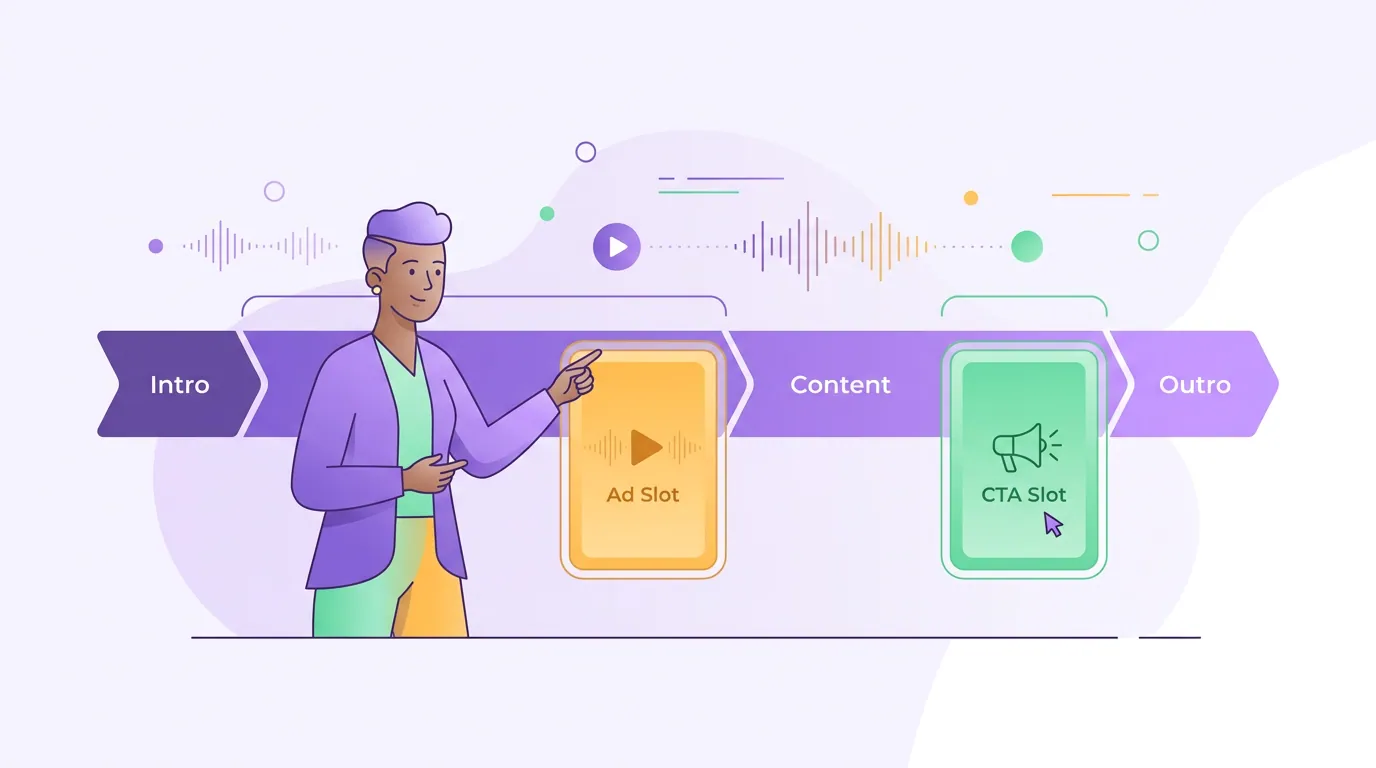
Two slots ride inside the segment order, and beginners almost always misplace them. Here is the rule, and it does not change between episodes:
- Ad slot → the first body break. Place a mid-roll read at the seam between body segment one and body segment two, not in the cold open and not the bumper. By the first break, the listener has committed; a read there rides earned attention rather than burning the hook. Mid-roll host-read placements also command the strongest rates, roughly $15–30 per thousand listens, up to $40+ for premium niches (Podscan, 2025 CPM benchmarks), so the placement is worth getting right even before you have sponsors.
- CTA slot → the outro, one ask only. The call to action lives in the outro and asks for one thing: follow the show, join the email list, or answer a single question. Two competing asks and the listener does neither. Keep the wording identical every week so the ask becomes part of the format.
If you have no sponsor yet, keep the ad slot anyway and use it for a self-promo: a teaser for your back catalogue or your email list. The slot is structural. What fills it can change.
Target durations by episode length
Hold the bookends short and let the body absorb the length. The cold open, bumper, recap, and outro are second-scale jobs whether your episode runs 20 minutes or an hour, they barely move. Everything you add goes into the body segments.
| Segment | 15-min episode | 30-min episode | 45-min episode |
|---|---|---|---|
| Cold open + bumper | ~60 sec total | ~75 sec total | ~90 sec total |
| Body segments (incl. ad slot) | ~13 min | ~27 min | ~41 min |
| Recap + outro | ~75 sec total | ~90 sec total | ~2 min total |
Read across any row of bookends and the numbers barely move, about 30 seconds of drift from a 15-minute show to a 45-minute one. Read across the body row and it triples. That is the whole rule: when you make an episode longer, you make the body longer, not the intro. A long intro is a habit, not a format requirement.

Common mistakes (and the fix)
- A five-minute intro. Theme music, a long welcome, then small talk before any content. Fix: cold open first, bumper under 40 seconds, get into the body inside the first two minutes.
- One undivided body. Forty minutes of talking with no named chunks is hard to follow and impossible to clip. Fix: split the body into two to four labelled segments and announce each one.
- The ad read in the cold open. A sponsor read before the hook spends a stranger's attention on the wrong thing. Fix: park the ad at the first body break and keep the open clean.
- Two or three CTAs in the outro. Follow, subscribe, rate, and join the list, the listener does none. Fix: one ask, the same words, every episode.
- A different structure each week. Redesigning the show every time is exactly the work that leads to quitting. Fix: lock the segment order and the slot rule; vary only what goes inside the body. Settle your overall shape during planning, before you record.
FAQ
How many segments should a podcast episode have? For most shows, four to seven total: a cold open, an intro bumper, two to four body segments, an optional recap, and an outro. The body is where the count varies, two segments for a tight 20-minute show, three or four for a longer one. More than four body segments usually means the episode is too long or unfocused; combine related chunks.
Where do ads go in a podcast episode? A single mid-roll read goes at the first body break, the seam between your first and second body segments, where the listener has already committed. Avoid pre-rolls inside the cold open; they undercut the hook. If you run two reads on a longer episode, place the second at a later body seam, never back-to-back with the first.
How long should a podcast intro be? Cold open plus intro bumper should total roughly 60 to 90 seconds combined: a 20–30 second cold open and a 20–40 second branding bumper. Anything longer and you are spending attention before the content earns it. Keep the bumper identical every week so returning listeners can skip it in one tap.
Does this structure work for solo, co-host, and interview shows? Yes, the segment order is the same; only the body's contents change. A solo show fills the body with arguments, an interview with escalating questions, a co-host show with a running order. The cold open, bumper, ad slot, recap, and CTA all stay put. If you are still choosing a step-by-step launch plan, settle the format first, then apply this skeleton.
Do I need a script to follow this structure? No. The skeleton is a running order, not a script, most hosts run it from a one-page runsheet of bullet beats rather than full sentences, which keeps delivery conversational. You only need the segment names, the target times, and the two slot markers in your eyeline while you record.