
Start a Small Podcast Collective Instead of Joining One


To start a podcast collective, recruit four to six peer shows whose audiences overlap but don't duplicate yours, agree to five written contribution rules, run a rotating promo calendar so every member features and supports on a schedule, and decide by light majority. Keep it no-contract: each host owns their show, IP, and revenue. The collective pools reach, nothing else.
Joining someone else's network usually means handing over a cut of ad sales, sometimes a slice of IP, and your publishing calendar to a label that prioritizes its biggest shows. A small peer collective gets you most of the upside, pooled audiences, shared promotion, built-in accountability, without giving up control. The catch is that loose groups die fast when nobody defined who does what. This guide is the operating model that keeps a collective alive past month three: the rules, the rotation, the decision method, and a copy-paste agreement.
Why a collective beats joining a network for most indie shows
A network is a business that sits above your show and monetizes it. A collective is a horizontal agreement among peers who stay independent. For a show under a few thousand downloads, the collective wins on every axis except one, a network can sometimes sell ads you couldn't sell alone. If you're not yet at the scale where ad sales matter, that advantage is theoretical, and you're trading real control for it.
The math behind pooling is simple. As of 2025, 57% of listeners rely on social media for podcast recommendations, the first time social passed friends and family (InsideRadio). Recommendations now move through feeds, and five shows posting about each other reach five audiences instead of one. A collective is a recommendation engine you build with peers, aimed at the channel where discovery actually happens.
There's also a survival argument. Of roughly 4.6 million indexed podcasts, only about 483,000 are still actively publishing, close to 10% (demandsage; The Podcast Host). The single biggest predictor of which shows keep publishing is consistency, and consistency erodes when you feel like you're shouting into a void. A collective gives you four people who notice if you go quiet. The accountability is half the value.
Step 1, Recruit four to six peers with overlapping, not identical, audiences
Four to six is the working range. Below four, one quiet member tanks the whole rotation. Above six, the calendar gets crowded and members feel like they're promoting strangers more than they're getting promoted. Five is the number I'd start with.
The selection rule is the same one that governs any good swap: pick shows that share your listener type, not your exact topic. A collective of five near-identical true-crime shows just trades the same listeners back and forth, everyone's already heard of everyone. A collective of complementary shows (true-crime narrative, true-crime news, an unsolved-cases interview show, a forensics-explainer show, a regional-cases show) covers different needs for the same kind of listener, so each member actually brings new people to the others. The full sourcing method is in how to find the right podcasts to cross-promote with; apply it, but recruit several partners at once instead of one.
Keep size parity in mind. A collective works best when members are within roughly 3–5× of each other's audience, so nobody feels they're carrying dead weight or being mined by a much smaller show. The numbers also tell you how low that bar really is: the median podcast episode gets just 28 downloads in its first seven days, and you only need 413 to land in the top 10% (Buzzsprout). That spread is the whole argument for a collective, most shows are small, so a peer who brings even a few hundred new ears moves your numbers meaningfully. Use those benchmarks as a rough map for size parity, not a scoreboard; they come from one host's catalog and skew indie.
Step 2, Agree to five contribution rules before anyone promotes anything
Most collectives die because "we'll all support each other" is not a rule, it's a wish. Write down exactly what membership requires. Five rules cover it. If a prospective member balks at any of them, that's the cheapest possible time to find out.
- Minimum cadence to qualify. You must publish at least twice a month to stay in the rotation. A dormant show in a collective drains it. Miss two months and you're paused, not removed, but you don't get featured while you're dark.
- One promotion per feature week, on a named channel. When it's a member's turn, you owe one real promotion: a feed read, a co-published clip, a newsletter mention, or a social post, agreed in advance, not "whatever I get to."
- Same effort in and out. What you give a member is what you expect back. No member gets a feed read while only giving a buried story. Symmetry keeps resentment out.
- Bring the asset, don't make work. The featured member supplies their own promo material, a clip, a 30-second read script, the cover image. Nobody should have to build your promo for you.
- A quiet exit is allowed. Anyone can leave with two weeks' notice, no drama, no clawback. People stay when they know they're free to go.
These five turn vague goodwill into an operating agreement. The template at the end packages them so you can paste and edit.

Step 3, Build a rotating promo calendar so everyone gives and gets
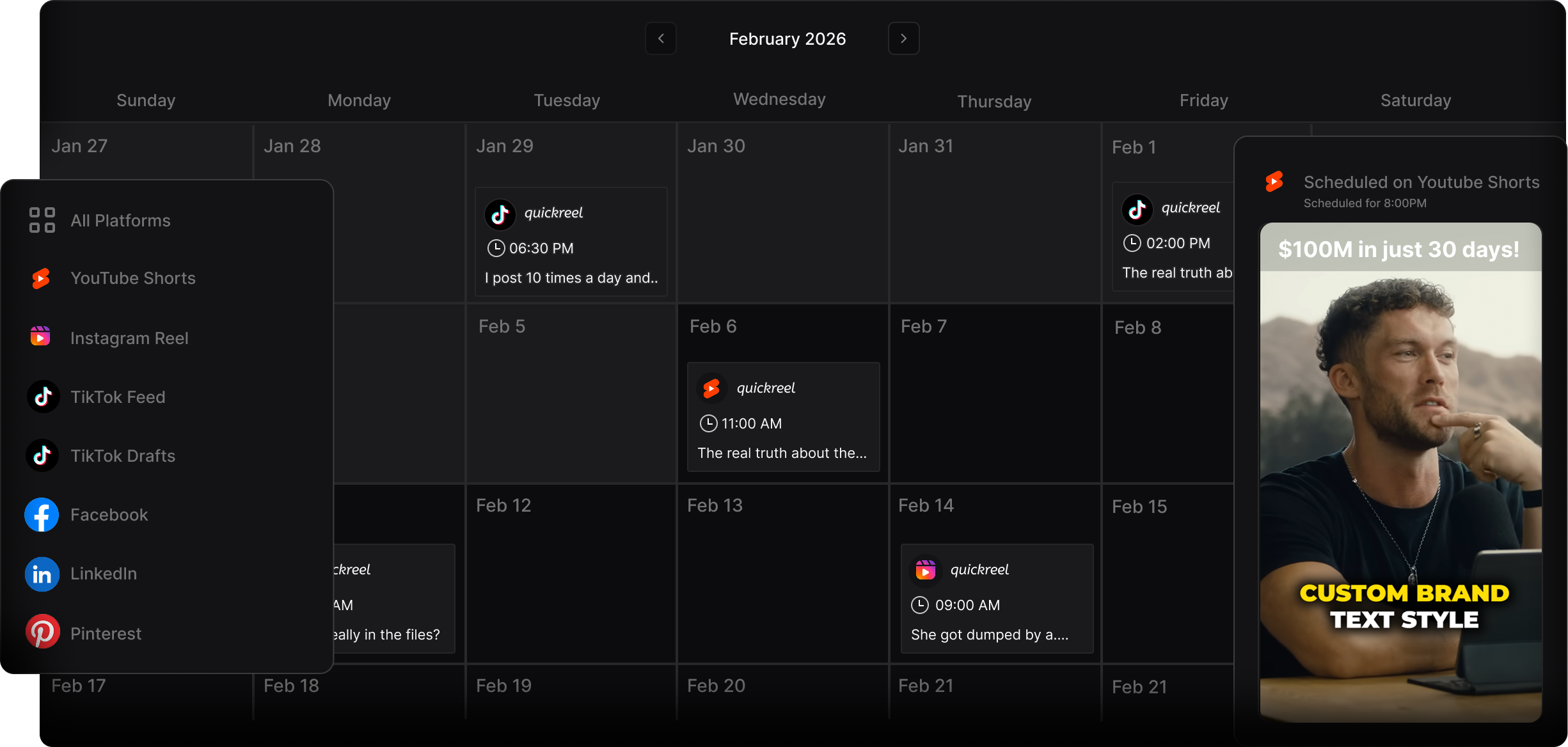
The calendar is the machine. Without it, promotion happens when someone remembers, which means rarely. With a rotation, each member gets a dedicated feature week on a fixed schedule, and every other member owes them one promotion that week. With five members, each show is featured roughly once every five weeks and supports four times in between, so you're always either the beneficiary or a contributor, never idle.
Pick the swap mechanic per feature week from the menu your members can actually deliver. A feed read drops the featured show's trailer into your episode; a feed drop swap publishes their whole episode into your feed; a trailer swap is the lowest-effort version and a good default for a new collective. Whatever you choose, the featured member supplies the asset, per rule four.
The most portable asset across a collective is a short clip everyone can co-publish. Clips drive an estimated 20–40% of new audience for video shows (Podcast Studio Glasgow), and a clip is far easier for four busy peers to share than a custom read. Make "one captioned clip per feature week" the collective's default deliverable and the calendar runs itself.
Step 4, Decide things with a light majority and a single coordinator
A collective needs just enough governance to settle the handful of decisions that come up: who to admit, when to pause an inactive member, whether to change the cadence. Two roles cover it.
- A rotating coordinator. One member, on a quarterly rotation, owns the calendar and sends the monthly reminder. That's the whole job. Rotating it stops any one person feeling like unpaid management and stops the collective from becoming a one-person network in disguise.
- A light majority for decisions. Admitting or pausing a member, or changing a rule, needs a simple majority of active members, three of five. Skip consensus; one holdout shouldn't freeze the group. Skip a dictator; nobody joined to work for free under someone else.
Run one 30-minute sync a month. That is the entire standing overhead. Most months it's a five-minute message thread confirming the next feature week, and the monthly call is for the rare admit/pause/change vote and a quick "what's working" review.
Common mistakes that kill small collectives
- No written rules. "We'll support each other" collapses the first busy month. The five contribution rules are the difference between a collective and a group chat that goes quiet. Write them before week one.
- Recruiting clones. Five identical shows just recycle the same listeners. Aim for complementary angles on the same listener type so each member brings new people to the others.
- No coordinator, so no calendar. Without one person owning the rotation, feature weeks slip and the whole thing drifts. Rotate the role, but always have one.
- Letting a dark show stay featured. A member who stopped publishing but still gets promoted breaks the symmetry rule and breeds resentment. Pause them, kindly, automatically, per the rules.
- Pooling money too early. Shared ad sales or a joint Patreon turns a friendly collective into a business with a cap table and disputes. Pool promotion first. Only consider shared revenue once the group has run cleanly for six months and everyone wants it.
The no-contract operating agreement (copy and edit)
This isn't a legal contract, it's a plain-language understanding that heads off most collective conflicts before they start. Paste it into a shared doc, fill the brackets, and have every member confirm in writing. Each host keeps full ownership of their show, feed, IP, and revenue; this agreement covers promotion only.
[Collective name], Operating Agreement Members: [show A], [show B], [show C], [show D], [show E]. What we share: cross-promotion only. Every host keeps full ownership of their show, RSS feed, brand, IP, and all revenue. No money changes hands. To stay in the rotation: publish at least twice a month. Miss two consecutive months and you're paused (not removed) until you're publishing again. Each feature week, you owe: one agreed promotion for the featured member, a feed read, a co-published clip, a newsletter mention, or a social post, named in advance. The featured member supplies: their own promo asset (clip, read script, cover image). Nobody builds another member's promo. Coordinator: [name], rotating quarterly. Owns the calendar and the monthly reminder. Decisions (admit, pause, change a rule): simple majority of active members. Leaving: anyone may exit with two weeks' notice. No clawbacks, no hard feelings. Confirmed by: [names + date].
Adapt the cadence and promotion menu to your members' real capacity. The point isn't the exact wording, it's that everyone agreed to the same thing before the first feature week, so there's nothing to argue about later.
FAQ
How many shows should a podcast collective have? Four to six, with five as the sweet spot. Fewer than four and one quiet member breaks the rotation; more than six and the calendar gets crowded and members feel they're promoting strangers. Five gives each show a feature week roughly every five weeks with four support weeks in between.
Is a podcast collective the same as a podcast network? No. A network is a business that sits above your show and usually takes a cut of ad sales and sometimes IP, in exchange for selling ads or production you couldn't manage alone. A collective is a flat, no-contract agreement among peers who stay fully independent and share only promotion. Choose a network only once ad-sales scale justifies the cut.
Do we need a legal contract to start a collective? Not for a promotion-only collective where no money changes hands. A plain-language operating agreement that every member confirms in writing prevents almost all disputes. You only need a real contract once you pool revenue, shared ad sales or a joint membership, which is worth delaying until the group has run cleanly for months.
How do we choose who to let into the collective? Score candidates the way you'd score a swap partner: overlapping but not identical audience, size within roughly 3–5× of the group, an active publishing schedule, and a host who'll actually deliver their feature-week promo. A complementary angle on your listener type adds members; a near-clone just recycles the same audience.
What should each member promote during their feature week? One agreed asset, supplied by the featured member. A short captioned clip is the most portable choice because it's easy for busy peers to co-publish and discovery now runs through social. A feed read or trailer swap works too, pick what your members can reliably deliver and name it in advance.
Once members start sending each other listeners, capture them before they drift. Set up a podcast email list from zero and a 5-email welcome sequence so a feature week turns into subscribers you keep. And for the outreach that recruits your founding members, the cold pitch that gets shows to swap promos adapts cleanly from a one-off swap to a collective invitation.