
How to Start a Book Podcast Without Copyright Trouble


To start a book podcast without copyright trouble, talk about books far more than you read from them. Discussion, criticism, and review are exactly what US fair use was written to protect, so a show built on your commentary is on solid ground, while reading whole chapters aloud crosses into the rights an author keeps. Quote short, quote for a reason, and never substitute your audio for buying the book.
This guide is not legal advice, if you plan to read substantial passages or build a serialized audio-reading show, talk to an IP lawyer first. But almost all the copyright risk in book podcasting comes from one habit: treating the microphone like a free audiobook. Below is the workflow, a fair-use map for deciding how much you can use, why reading aloud is the trap, how to land author interviews through publicists, and a format chart that matches your show's structure to how much of the book you actually need.
Book and literature shows sit inside Society & Culture, one of the top US podcast genres (Statista top genres). The audience is large and loyal, but it is also a crowded field, and the shows that last are the ones with a clear format and a clean rights story, not the ones that quietly become unlicensed audiobooks.
Can you legally talk about books on a podcast?
Yes. Discussing, reviewing, and criticizing a book is the textbook example of fair use under US copyright law (17 U.S.C. § 107, which names "criticism, comment, [and] news reporting" outright). You can describe the plot, analyze the themes, react to the writing, and quote short passages to make a point, all without permission. What you cannot do is reproduce so much of the work that your episode becomes a stand-in for the book itself.
The line is not "no quoting." It is the difference between using a book to make your own commentary and substituting your audio for the original. A two-line quote you then unpack for five minutes is fair use working as intended. A twenty-minute reading of a chapter, with no commentary, is reproduction, the exact right copyright reserves to the author and their publisher. Same book, two very different legal positions.
One clean rule simplifies almost everything: the book is your raw material, not your content. Your content is what you think about it.
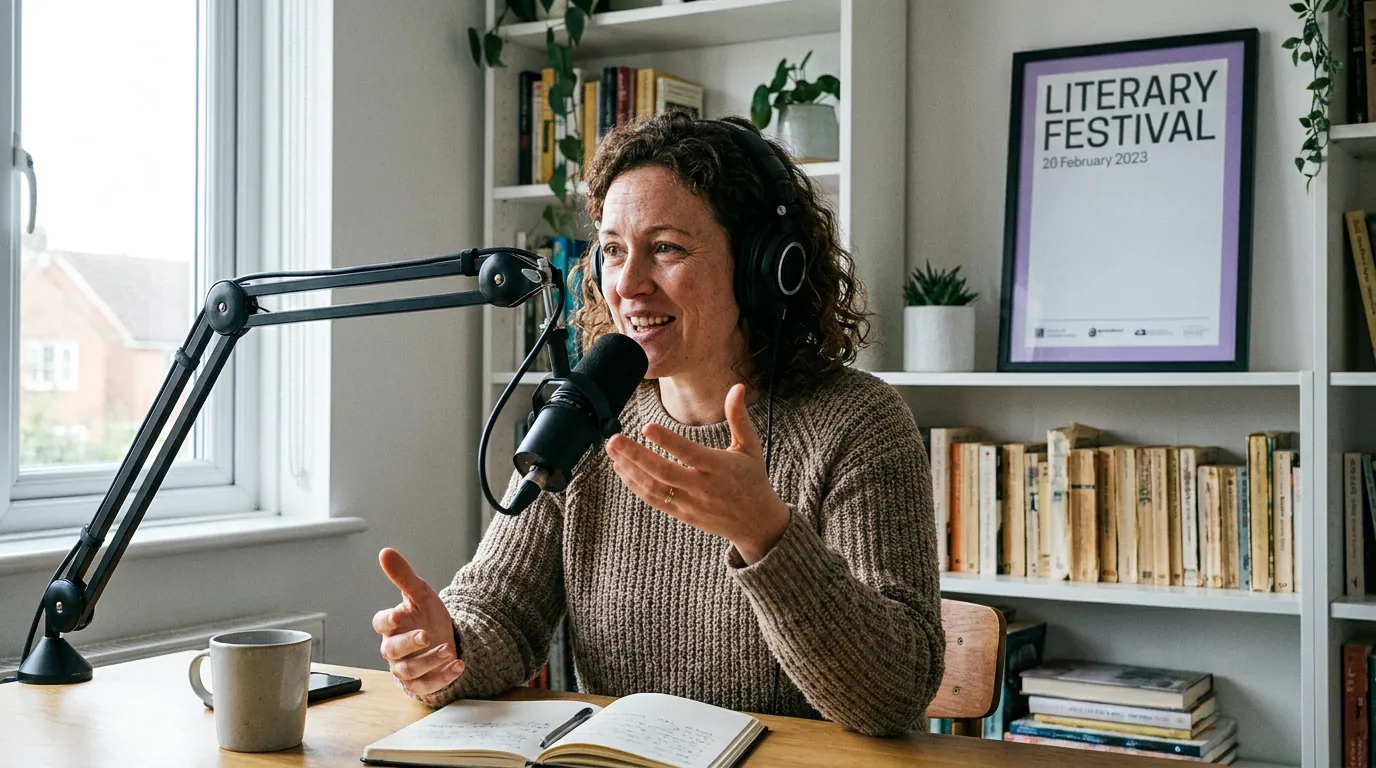
The fair-use map for book podcasts
There is no magic word count that makes a quote "safe", fair use is decided by weighing four factors together, case by case. The map below is how courts (and your own judgment) should weigh a quote before it goes in the script. If a passage pulls in the wrong direction on most factors, shorten it, frame it with more of your own commentary, or cut it.
In practice, the four factors collapse into a few working habits. Quote to support a point you are making, not to deliver the content for free. Lean toward short, a sentence or two, occasionally a paragraph for a passage you're dissecting in depth. Avoid the "heart of the work," the line or scene the whole book turns on, even if it's short. And ask the market question honestly: could someone skip buying the book because your episode gave them the good parts? If yes, you've gone too far.
Why reading whole passages aloud is the real risk
Reading is where well-meaning book shows get into trouble, because reading aloud touches two rights an author keeps that commentary does not: the reproduction right and, for audio, something close to the audiobook (derivative) right. A publisher pays real money for audiobook rights; a podcast that reads chapters for free competes directly with that market. That is the fourth fair-use factor, market harm, at its most exposed.
The amount matters more than people expect, too. There's a persistent myth that you may "use 10%" or "30 seconds" or "a single page" of anything. No such rule exists in US law, those are guesses, not statutes, and a short quote of the wrong passage (a poem's key stanza, a thriller's final reveal) can still fail fair use. The safer frame is purpose: a quote read to analyze it is defensible; the same words read to deliver them is not.
Three rules keep readings on the right side of the line:
- Read to analyze, not to perform. A few lines, then your reaction or argument. The commentary should outweigh the quotation in every segment, not the other way around.
- Poetry and song lyrics are their own danger zone. They're short and dense, so even a "small" quote can be a large share of the whole work, and music publishers are notoriously aggressive. Quote sparingly, and for lyrics, assume you need permission.
- Public-domain books are your free playground. In the US, works published before 1931 are generally in the public domain as of 2026 (the cutoff moves forward one year every January, 1931's works free in 2027, and so on), and you can read those in full, all day. A classic-literature read-along show is one of the few formats where reading aloud carries little copyright risk.
Choose a format that fits how much you read
The smartest copyright decision you make is the format itself, because the format sets how much of the book you need to use. Three formats dominate book podcasting, and they sit at very different points on the reading-load scale.
- Author interview is the lowest-risk and often the most valuable. You barely quote the book at all, the episode is the conversation. It also gives you something the algorithm and the author's audience both reward: a real human, a real story, and a guest who will share the episode.
- Review and criticism is the workhorse format. Short quotes, lots of your own argument, clear fair-use footing. This is where most durable book shows live.
- Book club discussion sits a notch higher because the temptation to read longer passages is strong. Keep quotes purposeful and let the conversation carry the episode.
- Full read-along is the one to be careful with. For an in-copyright book it's the riskiest format there is; for public-domain classics it's not only legal but a genuinely good idea.
If you're choosing a niche and weighing its research and rights load, our guide to starting a true crime podcast without getting sued walks through a parallel sourcing-and-defamation workflow, and the comedy podcast guide covers the lighter end of the format spectrum.
How to land author interviews through publicists
The interview format depends on a skill most new hosts don't realize is a system: pitching publicists. Authors with a new release are on a promotion schedule, and the gatekeeper is usually the publisher's publicity team, not the author. Get the pitch right and you can book guests far above your download count, because publicists are trading exposure for the author's tour.
Work it like this. Find the publicist via the publisher's website (most list a publicity contact by imprint) or the "publicity inquiries" line on the author's site. Pitch around the pub date, six to eight weeks before release is the window publicists care about most. Keep the pitch short and specific: your show's angle, who listens, your typical audience size (be honest), and one genuine reason this book fits your audience. Offer to send questions in advance and to clip the best moments for the author to share. That last offer matters more than your download number, because a guest who gets shareable clips out of the appearance is a guest who says yes and comes back.
For smaller or self-published authors, skip the publicist and reach the author directly, they're usually thrilled to be asked. Either way, the asset you're really offering is reach, and clips are the most portable form of it.
Common mistakes that get book podcasts in copyright trouble
- Reading chapters with no commentary. The single biggest error. A long, comment-free reading is reproduction, not fair use, and for audio it competes with the audiobook market. Read short, then talk.
- Trusting the "10% rule" or "30-second rule." These aren't law. There's no safe percentage, fair use turns on purpose, amount, and market effect together. Judge each quote on the map above, not on a number you read in a forum.
- Quoting poetry and lyrics like prose. A few lines of a poem or song can be a huge share of the whole work, and music rights-holders enforce hard. Treat lyrics as "get permission" by default.
- Using cover art and audiobook clips freely. A book's cover is copyrighted, and audiobook narration is its own licensed recording. Don't drop publisher audio into your episode, and use cover images under a fair-use comment context (a review thumbnail) rather than as decoration.
- Forgetting your background music has rights too. The intro track, the bed under your read-aloud, same rules as any podcast. Use licensed or royalty-free music and keep the receipts, the way any careful niche show does.
On gear, a book show needs nothing exotic, a clear, warm voice in a quiet room does more than any plugin. A single budget mic from our by-tier guide or a solid pick under $100 is plenty; spend your effort on the reading and the rights, not the rig. And consistency, not gear, is what keeps a show alive: nearly half of all podcasts never get past their first three episodes Amplifi Media, almost always from the per-episode workload, not the audience.
Frequently asked questions
Can you read a book aloud on a podcast?
You can read short passages to analyze or review them, which is fair use, but reading whole chapters or the full book is not, that reproduces the work and competes with the author's audiobook rights. The exception is public-domain books (in the US as of 2026, generally published before 1931), which you can read in full.
How much of a book can you quote on a podcast?
There is no fixed amount. US fair use weighs four factors together, your purpose, the nature of the work, how much you use (including whether it's the "heart" of the book), and the effect on the market. As a habit: quote short, quote to support your own commentary, avoid the key passage, and never substitute for buying the book.
Do you need permission to talk about a book on a podcast?
No. Discussing, reviewing, and criticizing a book is protected fair use, and facts and ideas aren't copyrightable, so you can describe the plot and analyze the themes freely. You only need permission to reproduce substantial copyrighted material, long readings, lyrics, cover art used as decoration, or audiobook narration.
What book podcast format has the least copyright risk?
The author-interview format, because you barely quote the book at all, the episode is the conversation. Review and criticism is the next safest, relying on short, purposeful quotes. Book club discussion is fine with restraint, while full read-alongs of in-copyright books carry the most risk and should be reserved for public-domain titles.
How do you get authors as guests on a new book podcast?
Pitch the publisher's publicity team (listed by imprint on most publisher sites) around the book's pub date, six to eight weeks before release is the window that matters. Keep the pitch short: your angle, your audience, and one real reason the book fits. Offer to send questions ahead and to clip the best moments for the author to share.
Build the show around your commentary, weigh every quote on the fair-use map, and let the format decide how much of the book you ever need to read aloud. A book podcast that respects the rights line is both the safest to publish and, not coincidentally, the more interesting one, because the value was always in what you think, not in how much you read.