
Spotify Ad Studio for Podcasters: A Setup Guide


To advertise your podcast on Spotify, use Spotify Ads Manager (the self-serve platform formerly called Ad Studio). Pick podcast categories your future listeners already follow, upload a 30-second audio or video ad with one clear ask, and set a budget, the minimum campaign is $250. The advantage over Instagram or TikTok ads: the listener can follow your show in the same app, with no link to chase.
That last part is the whole reason to do this. Most paid podcast promotion fights friction, someone sees your clip on TikTok, has to remember your name, open a different app, and search for you. On Spotify, the person who hears your ad is already inside the place they listen. The gap between "interested" and "following" is one tap. Below is how to set the campaign up, write the ad, and spend the $250 without throwing it away.
Is Spotify Ad Studio still called Ad Studio?
Not officially. Spotify rebranded its self-serve advertising platform from Ad Studio to Spotify Ads Manager in July 2024 (Spotify Advertising). The old name is still what most people search, so this guide uses both, but when you log in at ads.spotify.com, you'll see "Ads Manager." The redesign added video ad formats and tighter audience controls, which matters for podcasters running visual ads, covered below.
Everything that made Ad Studio useful for small advertisers is still there: you build a campaign in minutes, set your own budget, and don't need a sales rep or a contract.
Why Spotify ads fit podcast promotion specifically
The argument for Spotify over a general social ad isn't reach, it's intent. Spotify reaches more than 115 million monthly US podcast listeners, and over 90% of US podcast listeners tune in through its network on some app (Spotify Advertising). Your ad lands on people in listening mode, not people scrolling.
It also leans into a real shift. 53% of new US weekly podcast listeners now prefer to watch rather than only listen, up from 30% in April 2022 (Backlinko), which is why Ads Manager's video formats are worth knowing about even for an audio-first show. But the structural edge is conversion location.
A skeptical caveat before you spend: ads are one of several discovery levers, and not the biggest. 57% of listeners now rely on social media for podcast recommendations, the first time that surpassed friends and family (InsideRadio). Paid ads buy attention; word of mouth and clips earn it. Run ads alongside organic, not instead of it. For the broader call on whether to pay at all, read when paid podcast promotion is actually worth it.
How to set up a Spotify podcast ad campaign
Six steps, start to launch. None of them require design skills, and the platform includes a free voiceover and music option if you don't want to record your own.
- Create an account at ads.spotify.com and start a campaign. Choose your goal. For a podcast, you usually want awareness or consideration, not a website-clicks objective, the conversion you care about is a follow inside Spotify.
- Pick your ad format. Audio is the default and the cheapest to produce. Video and Spotify's visual formats (like Opt-In Video, which appears in the Now Playing view) are available since the Ads Manager relaunch (Spotify Advertising). Start with audio unless you already have video clips ready.
- Set targeting by podcast genre. This is the lever that makes or breaks the spend, see the next section.
- Layer demographics and location. Add age, gender, and country/region/city. Keep it loose at first; over-targeting on a $250 budget starves the campaign of impressions.
- Build the creative. Upload your own 30-second spot, or use Spotify's free production tools, background-music library, voice actors, and audio mixing are included at no extra cost (Lead Advisors). Ads Manager accepts creative up to 30 seconds.
- Set budget and schedule, then launch. The minimum campaign budget is $250 (AI Digital; Lead Advisors). Use a frequency cap so the same person doesn't hear your spot ten times, and set start/end dates rather than letting it run open-ended.
How does genre targeting work on Spotify?
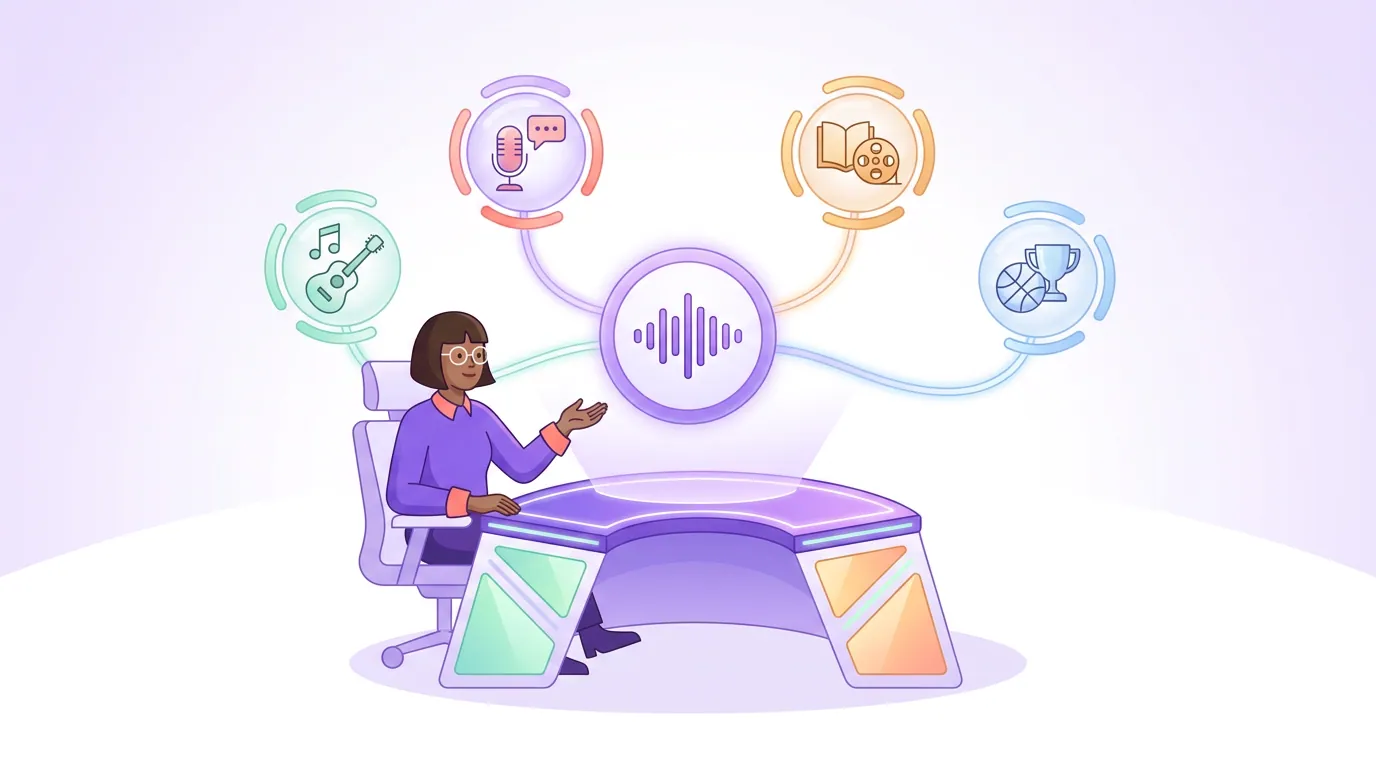
Spotify lets you target podcast content at two levels: podcast category (Business, True Crime, Sports, Comedy, Lifestyle & Health, and so on) and episode topic (for example Sports or Tech) (Spotify Advertising). The content itself acts as the interest filter, a true-crime listener hearing your true-crime show is a warmer prospect than any demographic guess. Note that the self-serve tool runs on categories and topics, not hand-picked individual shows; targeting a specific competitor's feed is a reserved/managed buy.
The rule that trips people up: you can apply one advanced targeting option per ad set (Spotify Advertising). So pick the single strongest signal, usually the podcast category closest to your own show, and let demographics do the rest. Don't try to stack "Business + Tech interest + 25–34 + city" into one ad set on a small budget; you'll narrow the audience until delivery stalls.
If your show sits at the intersection of two genres, run two ad sets, one per category, and compare which delivers cheaper follows. That comparison is the actual point of a test budget.
How to write a 30-second podcast ad that earns a follow
A Spotify podcast ad has 30 seconds and one job: make a listener tap to your show. The structure that works is a hook in the first three seconds, one specific reason to care, a single named ask, and your show name said twice. Don't pitch the whole catalog. Sell one moment.
Here's the structure I'd hand a host, with rough timing:
- 0–3s, Hook. Open mid-thought, the way your best clip would. "The studio told her the movie would flop. It made a billion dollars." Not "Hi, welcome to our podcast."
- 4–18s, The promise. What does this show give the listener every week, in one sentence? Be concrete: "Every Tuesday we break down one business that should have died and didn't."
- 19–25s, The ask. One action, stated plainly: "Follow [Show Name] on Spotify." Saying "follow" beats "check us out" because it names the exact tap.
- 26–30s, Name repeat + sign-off. Say the show name again. People act on names they hear twice.
Read it out loud and time it. If it runs long, cut the promise, not the hook or the name. And match the ad's tone to the genre you're targeting, a true-crime spot and a comedy spot should not sound the same.
Common mistakes that waste the $250
These are the errors I see sink small Spotify campaigns. Each has a fix.
- Treating $250 as a campaign instead of a test. At a $15–25 CPM you reach roughly 10,000–16,000 people (AI Digital). That's enough to learn which genre and ad convert, not enough to "grow your podcast." Spend it to find your winner, then decide whether to add budget.
- Over-narrowing the targeting. Stacking too many filters on a tiny budget chokes delivery. Pick one strong category, keep demographics broad, and let Spotify optimize.
- A vague ask. "Listen wherever you get your podcasts" sends a Spotify listener away from the one tap that would have worked. Say "Follow on Spotify."
- No frequency cap. Without one, your budget can pile repeats onto a small group instead of reaching new ears. Cap it.
- Measuring impressions instead of follows. Impressions are the cost, not the result. Track followers and episode starts before and during the flight, and compute your rough cost per new listener. Our podcast cost-per-listener benchmarks give you a number to compare against, and a reality check on what "good" looks like.
Where Spotify ads fit in a wider promotion plan
Spotify ads are one channel, strongest for converting attention into followers inside the app. They pair well with the rest of a paid mix rather than replacing it. If your audience skews toward a different app, advertising your podcast on Overcast reaches a more niche, loyal Apple-side listener. To borrow another show's existing audience, buying ads inside other podcasts' feeds often converts better per dollar because it's a host-adjacent endorsement.
Whatever channel sends new listeners, capture them somewhere you own. A follow on Spotify is rented attention; an email subscriber is yours. Start with a podcast email list from zero and route new followers into a welcome email sequence so a paid follow becomes a habit, not a one-time tap.
FAQ
How much does it cost to advertise a podcast on Spotify? The minimum self-serve campaign on Spotify Ads Manager is $250 (AI Digital). Pricing runs on a CPM (cost per 1,000 impressions) model, commonly $15–25, so $250 reaches roughly 10,000–16,000 people (Lead Advisors). Treat that first $250 as a test, not a growth campaign.
Can I target specific podcasts or genres? You can target by podcast category and by episode topic, plus demographics and location (Spotify Advertising). The self-serve tool targets categories and topics, not individual shows by name, pick the single strongest category, since you can apply only one advanced targeting option per ad set.
Do I need a video ad, or is audio enough? Audio is enough and cheaper to produce, and Spotify includes free voiceover, music, and mixing tools (Lead Advisors). Video and visual formats exist since the Ads Manager relaunch (Spotify Advertising) and are worth testing once you have clips, but start with a 30-second audio spot.
Will Premium subscribers hear my podcast ad? Yes for podcasts. Spotify podcasts remain ad-supported even for Premium music subscribers, so podcast ad inventory reaches more of the audience than music-stream ads do (AI Digital).
How do I know if the campaign worked? Watch followers and episode starts, not impressions. Compare your follower count and listens during the flight against the week before, then divide spend by net new followers for a rough cost per listener. Hold it against cost-per-listener benchmarks before deciding to scale.