
The Post-Podcast-Interview Workflow for Guests


When the interview ends, you have three jobs, and none of them is "say thanks and disappear." Send one tidy handoff message with the assets a host needs to promote you, ask for promotion the right way by making it effortless, and start a referral loop so this one booking feeds the next. That post-interview workflow takes under thirty minutes and is what separates a guest who appears once from one who gets recommended around.
Most guests get the interview right and the aftermath wrong. They unmute, say "that was great," and vanish, leaving the host to dig up a headshot, write the promo copy, and remember your name six weeks later when the episode finally drops. This page is the logistics version of the follow-up: exactly what to send, how to set up mutual promotion without being the pushy guest, and how to turn one appearance into a self-feeding pipeline. If you want the warmer relationship-and-timing sequence instead, that lives in the companion piece, what to do after your podcast interview ends; this one is about the handoff and the loop.
What should you do right after a podcast interview?
Right after a podcast interview, do three things before you close the tab: confirm the rough publish date, note anything either of you promised to send, and capture one specific moment you'd want to clip. Then, the same day, send a short thank-you that opens the door to a handoff message. Everything in the workflow below builds on those three notes.
Capture them on the spot because you will forget. By next week the publish date is a blur, the study you promised has slipped your mind, and the line you wanted to share is gone. The host's view of you is built almost entirely from what happens after the recording, the interview itself fades fast, but a clean handoff and a follow-through sticks. The whole thing breaks into three jobs.
Why the post-interview workflow is worth thirty minutes
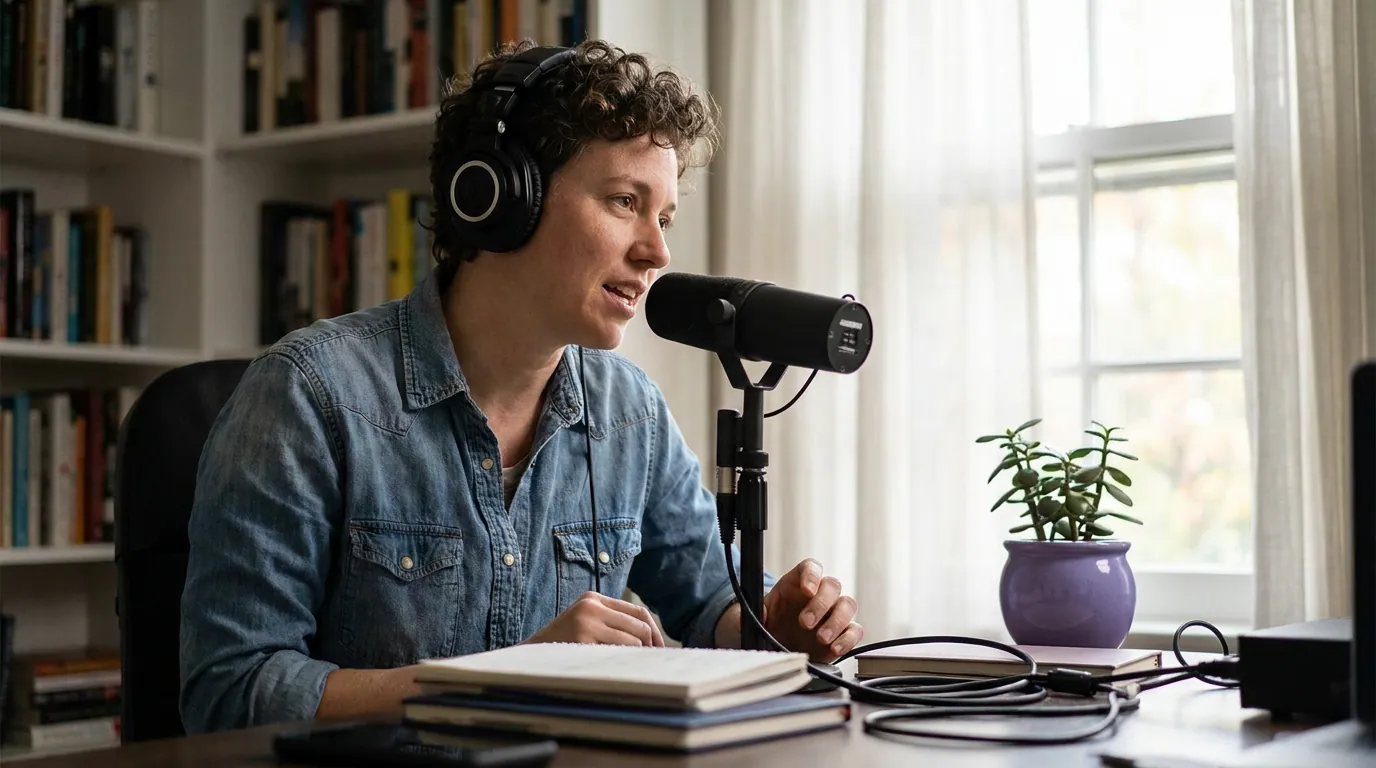
A guest spot is a favor the host did you, their audience, their editing hours, their credibility lent to your name. The follow-up is where you prove the slot was well spent and, more usefully, where you make yourself the easiest person in their contacts to promote and re-book. The math is lopsided: thirty minutes of organized handoff can earn a second appearance, a recommendation to another host, and a steady share to your own audience.
It pays your own reach too, not just the host's. Discovery has moved to social, 57% of listeners now rely on social media for podcast recommendations, the first time it has surpassed friends and family (Inside Radio). And clips specifically pull weight: short clips can drive 20–40% of a video show's new audience (Podcast Studio Glasgow). A captioned clip of your best answer, posted by both of you, is discovery working in two directions at once. That clip-share is the lever the whole workflow turns on.
Job 1: The handoff message and the asset bundle
The handoff is one message, sent the same day or the next morning, that does the host's promo legwork for them. The thank-you is the wrapper; the assets are the point. A host who has to find your headshot, write your bio, and figure out your handle usually posts nothing. Hand them a ready bundle and you turn "I'll promote it when I get a sec" into a post that actually happens.
Put five things in the bundle. Each one removes a task from the host's plate, and the whole set takes you ten minutes if you keep it on hand.
Here is the message itself. Keep it warm and short; the attachments do the heavy lifting.
Subject: Thank you, and a few things to make sharing easy Hi [host], that was a genuinely good conversation, your question about [specific thing] is the part I'll be thinking about. Whenever it's live, I'll share it properly. To save you time on the promo, I've attached my headshot, a one-line bio with the links/handle to tag, two pull quotes, and a short captioned clip of the bit where we talked about [topic] (it's around [timestamp] in the full cut). Use any of it, none of it, or tell me what else would help. Thanks again for having me.
Two of those items deserve a note. The pull quotes save the host from re-listening to find a hook, pick lines that stand on their own out of context. The clip is the one almost no guest provides and the one a host is most likely to reshare, because it is the only asset that works on its own in a feed. If you keep a reusable version of the bio-and-links portion, this drops to a thirty-second job; the podcast guest media kit guide shows how to build that one-sheet once and reuse it forever.

Job 2: How to ask for promotion the right way
You don't really "ask" for promotion, you make promoting you the path of least resistance, then propose a fair trade. The right framing is co-promotion: you'll push the episode hard to your audience, and you'd love a tag or reshare in return. Lead with what you'll do, not what you want. That single reorder is the difference between a gracious guest and a needy one.
The wrong version is a demand or a guilt trip: chasing the host for a feature post, asking why they haven't tagged you, or treating their feed as your billboard. Hosts notice, and it costs you the rebooking. The right version sounds like an offer.
On publish day: "Shared it with my list and posted the clip on [platform], tagged you and the show. If it's an easy reshare for you, great; if not, no worries at all. Happy to send anything else that helps."
Then actually do your half well. A bare "new episode out [link]" from you does almost nothing; a specific, human post about one moment from the conversation is what earns clicks, and it doubles as discovery for you. The mechanics of writing that share so it performs are in how to promote an episode you guested on. The principle: be the guest who over-delivers on their own promotion, and the reshare takes care of itself.
One honest caveat, don't measure the relationship by whether the host reshares within the hour. Some won't reshare at all, and that's fine. You promote because it serves your audience and the host both; the reciprocity is a bonus, not the invoice. Guests who keep score loudly are the ones who don't get asked back.
Job 3: The referral loop that books your next shows
The referral loop is the move that turns one booking into a pipeline, and it is the part nearly every guest skips. Within a week, introduce the host to one person who would make a genuinely good guest for their show, and become the kind of guest other hosts get recommended to. A host's hardest recurring job is finding the next good guest; solve it once and you stop being someone they enjoyed and start being someone they need.
This is a flywheel, not a one-off. Each appearance, done right, produces two kinds of fuel: a host who'll re-invite you, and a host who'll recommend you to peers. Hosts talk to each other and book from referrals far more than from cold pitches. Feed the loop deliberately and your next bookings come to you.
Here's the intro, kept honest:
Hi [host], following up from our recording. You mentioned wanting more guests on [topic]. [Name] would be a real fit: [one specific reason, what they've built, the angle they'd bring]. Happy to connect you both if you're open to it, no pressure either way.
Two rules keep this from backfiring. Never refer someone who isn't a genuine fit just to look generous, a bad intro wastes the host's time and dents your credibility. And always ask the person you're referring first; a surprise intro is its own breach of etiquette. Done right, the referral is what quietly becomes "you should have [you] back" and "who else should I talk to?", the two questions that grow your guesting from a series of one-offs into a channel. If guesting is part of how you find clients, that channel logic is the whole point of podcast guesting as a lead-generation channel.
Common post-interview mistakes
The workflow is short, so the failures are predictable. Avoid these five and you're ahead of most guests:
- Sending a thank-you with no assets. A warm note that makes the host do all the promo legwork still leaves you un-promoted. The thank-you is the wrapper; the bundle is the gift.
- No clip in the bundle. Hosts reshare clips; they rarely reshare a link to a 50-minute episode. Skipping the one self-contained asset is the most common miss.
- Asking for promotion before offering yours. Leading with "will you post about me?" reads as extractive. Lead with what you'll do, then propose the trade.
- Skipping the referral. It's the single most valuable move and the least common, which is exactly why it works. One good intro a week after recording is worth more than five thank-you emails.
- Keeping score. Chasing the host for download numbers, or sulking when they don't reshare fast, tips you from gracious into high-maintenance. Deliver your half, then let it go, it's one of the most-broken rules in podcast guest etiquette.
Tools that make the handoff easier
You don't need software for most of this. A saved set of templates and a reusable one-pager (bio, headshot, links, handles) covers the message and four of the five bundle items. Keep a calendar reminder for publish day and the referral so neither slips.
The one place a tool earns its keep is the clip, the asset that makes your bundle stand out and the only one a host will reliably reshare. Most hosts won't have clips ready on day one, so a guest who hands over a captioned 30–60-second cut of their best answer is doing something rare and memorable. If the show will share the raw file or the YouTube link on request, you can cut your own clip and control your own share. That's the move that quietly turns a one-off into a standing invite. The questions that produced your best answer in the first place are worth studying too, podcast follow-up questions are usually where the clippable moments come from, and knowing them helps you spot your own best material to bundle.
Frequently asked questions
What is a good post-podcast-interview workflow for a guest? Run three jobs after the recording: send a same-day handoff message with an asset bundle (headshot, bio and links, two pull quotes, one short captioned clip, and the timestamp of your best moment), propose co-promotion by leading with what you'll share, and within a week introduce the host to one genuinely good potential guest. The whole thing takes under thirty minutes.
What should a thank-you email to a podcast host include? Two warm lines naming one specific moment from the conversation, plus the promo-ready attachments that save the host time: your headshot, a one-line bio with the exact links and handle to tag, a couple of pull quotes, and ideally a short clip of your best answer. The specific detail makes it genuine; the attachments make it useful.
How do you ask a podcast host to promote your episode? You don't demand it, you offer co-promotion. Tell the host you'll share the episode hard with your own audience, tag them, and post a clip, then invite a reshare as an easy, no-pressure trade. Doing your half well, with a specific human post rather than a bare link, is what makes the reshare likely.
How do you get invited back on a podcast? Be the guest who solves the host's recurring problem. Deliver a clean asset handoff, promote the episode well, and refer one genuinely good potential guest within a week of recording. That referral is the move almost no guest makes, and it's what turns a single appearance into re-invites and recommendations to other hosts.
Is it pushy to send a host a clip of yourself after recording? No, it's the opposite. A short captioned clip of your best moment is the asset hosts most want and least often have on day one. Sending one, with a "use it or don't" note, removes work from their plate. Just keep it genuinely good and short; a polished 30–60-second cut helps, a rambling two-minute one doesn't.