
Cutting a Podcast Video Trailer for Ads


A trailer you pay to show people is a different cut from the one you post to your feed. Build it short and vertical, land your hook inside the first two seconds, burn the captions in so it works on mute, and end on one clear instruction, follow, listen, or subscribe, not three. The feed trailer earns attention; the ad trailer buys it, so it has zero seconds to waste and exactly one job.
Most podcasters who run their first ad just upload an organic trailer and wonder why the cost per result is brutal. The organic version was built for a warm-ish audience scrolling on purpose. A paid placement interrupts a stranger who never asked for you. This guide gives you the exact spec differences, the second-by-second anatomy of an ad trailer, the real length and aspect ratios per placement, and a testing plan that actually tells you which version to keep.
What makes an ad trailer different from a feed trailer?
A paid-traffic trailer differs from a feed trailer in three concrete ways: the hook has to land in two seconds instead of three to five, captions must be burned in because the viewer didn't choose to watch you, and the ending carries a single call-to-action instead of an open-ended "check out the show." Same source footage, different cut, different goal.
The reason comes down to who's watching. A feed trailer reaches people who already follow you or landed on your profile, a slightly warm audience that gives you a moment of benefit of the doubt. A paid placement drops your trailer between a friend's post and a meme, in front of someone with no relationship to you and no patience. As of 2025, 57% of listeners rely on social media for podcast recommendations, the first time social passed friends and family (InsideRadio). That's the opportunity. The catch is that you're paying to interrupt, so every weakness an organic trailer can absorb, an ad trailer gets billed for.
There's a hard reason captions are non-negotiable on paid placements: most social video is watched with the sound off. Sharethrough found roughly 75% of people often keep their phone on mute even while watching a video (Digiday), and publishers reported as high as 85% of Facebook video played silently (Digiday). Both are directional, self-reported and publisher-reported, not platform-audited, but the direction is the whole point: a paid impression where the viewer can't tell what's happening is money set on fire. Burned-in captions turn a muted scroll into a readable pitch.
The anatomy of a paid ad trailer
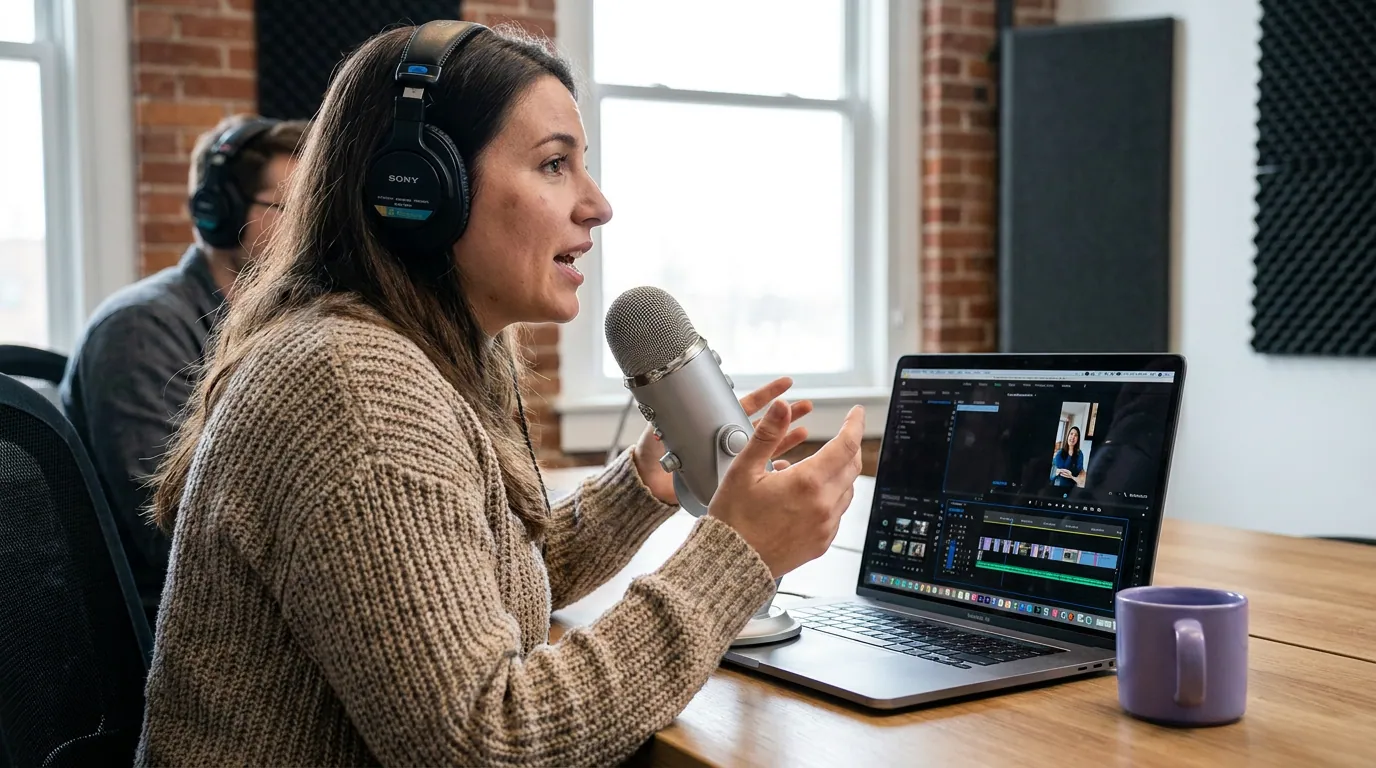
Build the ad trailer as four blocks inside ten to twenty seconds: a two-second hook, a quick payoff that proves the hook wasn't a bait, a sliver of proof or specificity, and a single closing instruction. The whole thing should make sense to someone who has never heard of your show and is half-watching with the sound down.
- The two-second hook. Open on the single most arresting line or moment in the episode, a contrarian claim, a sharp question, a reaction. Castmagic calls the first seconds "absolutely critical for social media success" (castmagic). Cut any intro, any "welcome back to the show," any logo sting. The hook is the first frame.
- The payoff. Seconds two to seven prove the hook was real. If you opened on a question, start answering it. If you opened on a claim, show why it's true. This is where a cold viewer decides whether you're worth the next five seconds.
- The proof or specificity. One concrete detail that signals the episode delivers, a number, a name, a specific story beat. Vague trailers feel like every other ad; specific ones feel like a real conversation worth joining.
- The single CTA. End on one instruction, said out loud and shown on screen: "Follow for the full breakdown," or "Listen wherever you get podcasts." Pick the action that matches the placement and the platform, and never stack two. A trailer that asks for a follow and a website visit and a subscribe gets neither.
A note on the goal of the ad itself. Clips and trailers can drive 20–40% of a video show's new audience and lift reach 2–5× (Podcast Studio Glasgow), but those are organic figures for clips people chose to watch. A paid trailer's job is narrower: turn a paid impression into one tracked action you can measure against its cost. Decide that action before you cut a single frame.
Aspect ratio and length specs per platform
Every ad placement wants vertical 9:16 at 1080×1920, but the recommended length and the hard limits differ. Cut your master at 9:16 and 1080×1920, keep the core trailer at ten to twenty seconds, and trim or pad to fit the specific placement you're buying. Always confirm current specs in the ad manager before you launch, because platforms revise these.
| Placement | Aspect / resolution | Length to use |
|---|---|---|
| Meta (Instagram/Facebook Reels ads) | 9:16, 1080×1920 | Trailer 10–20s; placement allows up to ~90s (Meta) |
| TikTok in-feed ads | 9:16, 1080×1920 | 5–60s allowed; ~9–15s tends to perform best; a 10–20s trailer fits cleanly (TikTok) |
| YouTube Shorts ads | 9:16, 1080×1920 | Shorts run up to 3 min; keep the ad cut 10–20s (Google Ads) |
The practical move: master one 9:16 trailer at the tightest useful length, then export the placement variants from it. Keep the readable content, captions, faces, the CTA, inside the center safe zone, because each platform overlays its own buttons and username along the edges. A trailer whose CTA is hidden behind a "Sponsored" tag converts no one.

How to A/B test trailer variants
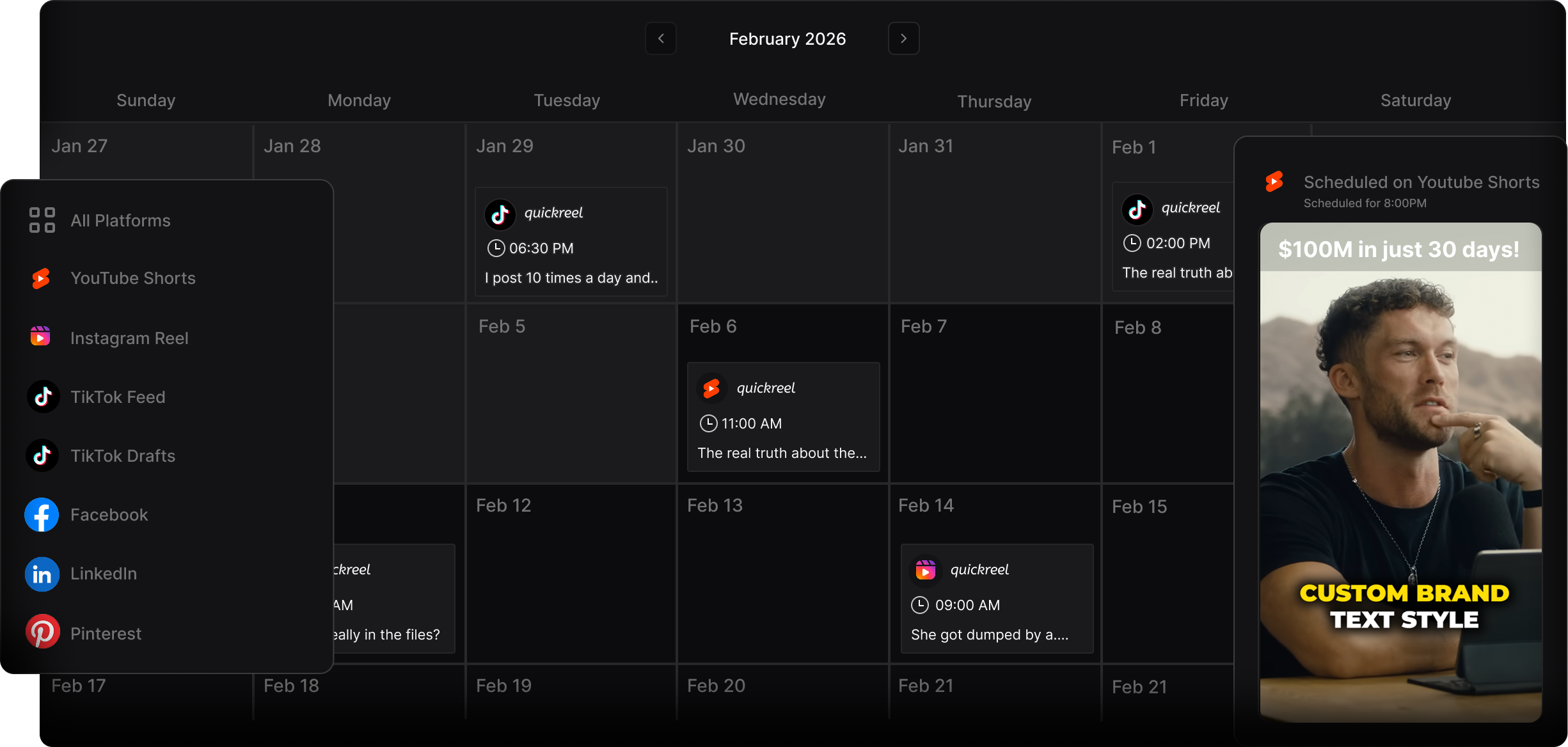
Test one variable at a time, or you learn nothing. Cut three or four variants of the same trailer that each change exactly one element, the hook line, the opening frame, or the CTA, keep everything else identical, run them against the same audience and budget, and let cost-per-result pick the winner. Changing two things at once tells you which combination won but never which change caused it.
Here's the order I'd test in, because the variables aren't equally important:
- Test the hook first. The opening two seconds drive the largest swing in whether anyone keeps watching, so it's the single most worthwhile thing to vary. Write two or three genuinely different hooks for the same moment, a question, a claim, a number, and let the data choose.
- Then test the opening frame. The first frame is your unofficial thumbnail in many placements. A face mid-expression usually beats a wide establishing shot. This is cheap to swap and often moves the three-second view rate.
- Then test the CTA. Once the hook holds, find out which single ask converts cheapest, "follow," "listen now," or a specific episode prompt. Track cost-per-result, not raw views, because a cheaper-to-reach audience that never acts is the most expensive kind.
Give each variant enough budget and time to gather real signal before you judge it, a day or two and a meaningful number of impressions, not an hour. Then kill the losers, keep the winner as your new control, and test the next variable against it. The point isn't a one-time horse race; it's a repeatable way to lower your cost per new listener over weeks. Anchor every "is this working" call to what a new listener is actually worth to you, our guide to what it costs to buy a podcast listener walks through that math.
Common mistakes that waste ad budget
These are the failure patterns that show up most when podcasters run trailers as ads, each with the fix.
- Using the organic trailer as-is. It was built for a warmer audience and a slower hook. Recut a dedicated paid version with a two-second hook and a single CTA before you spend a cent.
- No burned-in captions. With the majority of mobile video watched on mute, a silent, caption-free trailer is a paid impression no one can follow. Burn captions in, every variant.
- Stacking calls-to-action. "Follow, subscribe, and check the link" splits attention and converts worse than one clear ask. Choose the action that matches the placement and commit to it.
- Testing too many things at once. Three variants that each change three elements teach you nothing about cause. One variable per variant, always.
- Ignoring the center safe zone. Platform UI covers the edges. If your captions or CTA sit where the "Sponsored" tag and buttons land, the viewer never sees them.
- Spending before the show is ready to receive. A great trailer sending strangers to a feed with no clear next step leaks the audience you paid for. Have somewhere to keep them, start a podcast email list from zero and a welcome sequence for new subscribers so a paid view becomes a kept listener.
Is a paid trailer even the right spend?
Sometimes. A paid trailer makes sense when you have a strong, self-contained episode worth pitching cold and a clear action you can measure, not as a reflex for every release. Before you commit a budget, weigh it against cheaper distribution: cross-posting natively across platforms, or a feed-level swap, often beats a small ad spend at zero cost.
For the broader call on whether to put money behind your show at all, see when paid podcast promotion is actually worth it. If you'd rather trade reach than buy it, buying ads inside other podcasts' feeds reaches people already in a listening mindset, and advertising your podcast on Overcast covers the directory-placement angle. A vertical ad trailer is one tool among several. It earns its place only when the creative is built for paid traffic and the cost per new listener clears your bar.
FAQ
How long should a podcast trailer for ads be? Keep the core trailer at ten to twenty seconds. Meta Reels ads allow up to about 90 seconds, TikTok in-feed up to 60, and YouTube Shorts ads run on shorter cuts, but a paid trailer's job is one tracked action, and shorter, tighter cuts almost always cost less per result. Master one tight version and trim per placement.
What aspect ratio should a vertical podcast ad trailer be? 9:16 at 1080×1920 for every major placement, Meta Reels, TikTok, and YouTube Shorts all take it. Keep your captions, faces, and CTA inside the center safe zone, because each platform overlays its own buttons and "Sponsored" tag along the top and bottom edges.
Do I need captions on a paid podcast trailer? Yes, burned in. Most mobile social video is watched on mute (reported at roughly 75–85% across publishers), so a silent ad is a paid impression no one can follow. Burned-in captions also survive re-uploads and platform compression, which soft captions don't always do.
How is an ad trailer different from a regular podcast trailer? An ad trailer interrupts a cold stranger, so it lands its hook in about two seconds instead of three to five, burns captions in, and ends on a single call-to-action rather than an open invitation. Same footage, recut for paid traffic with no second to spare.
How many trailer variants should I test? Three or four is enough to start: a control plus two or three variants that each change exactly one element, hook, opening frame, or CTA. Test the hook first since it moves results the most, give each variant real budget and a day or two, then keep the winner as your new control.