
Build a Video Podcast Studio in a Small Room


To build a video podcast studio in a small room, design around the room's three constraints instead of buying gear to beat them: shoot the diagonal of the room to fake depth, clamp lights to shelves and walls instead of using floor stands, and seat two people at an angle so they fit where the room only holds one comfortably. The small-room problem is geometry, not equipment, so almost every fix saves space rather than adds it.
A spare bedroom, a deep closet, or a corner of a home office is enough for a sharp-looking video podcast. The thing that makes small rooms hard is not size on its own, it is the way size collides with three specific things a camera needs: distance behind the subject, somewhere to put a light, and elbow room for a second person. Solve those three and the room disappears on screen. This guide gives you a layout for each, in the order you should tackle them.
Why a tight room is still worth filming in
A small, watchable corner is worth carving out because the people most likely to find a new show now want to watch it, and a controllable little room is easier to make look good than a big messy one. 53% of new US weekly listeners say they prefer to watch a podcast, up from 30% in April 2022 (Backlinko). A 7-by-9-foot room you fully control beats a sprawling living room you can't, fewer windows to fight, less background to tidy, one light to aim.
One honest caveat before any gear talk: a fiddly setup is a setup you stop using, and that matters because nearly half of all podcasts stop at three episodes or fewer Amplifi Mediasummarizing podfade data). The whole point of designing around constraints once is that you never re-solve them. The room is staged; you sit down and record.
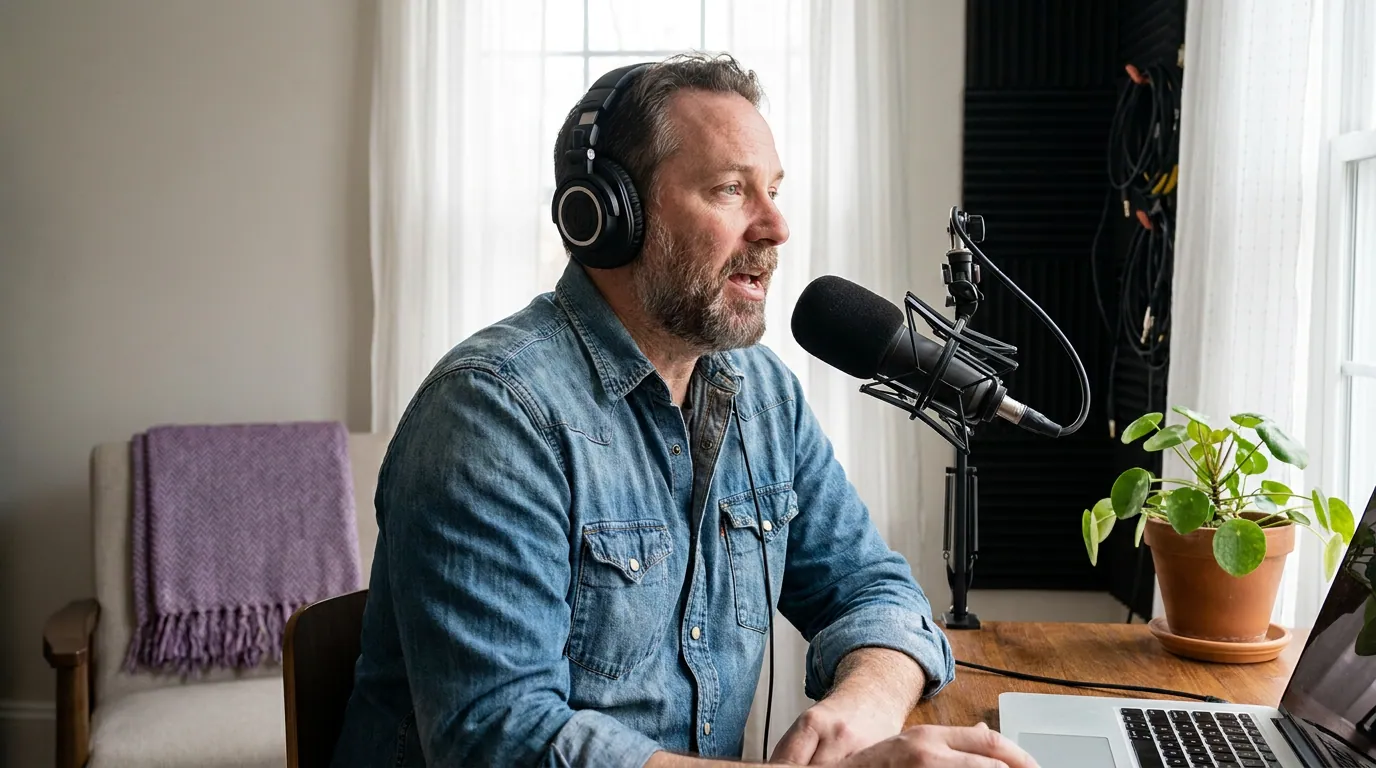
The three small-room constraints (and the fix for each)
Every small-room problem traces back to one of three constraints. The fix for each saves space rather than adding equipment, that is the rule this whole guide follows.
Constraint 1, Shallow depth: shoot the diagonal
When a wall sits a foot or two behind your head, the shot goes flat and the background reads like a cardboard cutout. The fix costs nothing: turn the whole setup and shoot across the diagonal of the room. Put the camera in or near one corner and face it toward the opposite corner, so the longest line of sight in the room runs behind your head. A 7-by-9 room has a diagonal of about 11 feet, that extra distance is what gives the image depth.
Then let the background fall slightly out of focus. On a phone, use portrait mode or move the subject as far forward of the back wall as the diagonal allows; on a camera, open the aperture (a lower f-number) so the wall softens. A softly blurred, deeper-looking background is the single biggest "this looks like a real studio" upgrade you get for free in a small room. For how the subject should sit inside that frame, our guide to framing and composition for a talking-head podcast covers eyeline and headroom.
Two more depth tricks that don't eat floor space. Put one small light source behind you and off to the side, a lamp, a clamp light bounced off the ceiling, so there's a visible pool of light on the back wall instead of a flat grey field; separation reads as depth. And hang or place a single object at a different distance than the wall (a plant on a shelf, a framed print pulled forward) to give the eye something to judge depth against. One object, not a cluttered set.
Constraint 2, No floor space: clamp, don't stand
Light stands and tripods are designed for rooms that have a floor to spare. A small room doesn't, so move everything off the floor and onto the surfaces you already have. Clamp lights to a shelf, a bookcase edge, or the top of a door, and use a desk-mounted arm for the camera instead of a tripod. A spring clamp or a small articulating clamp light gets a key light up near eye level without a single square foot of floor.
The aiming rules don't change because the room shrank: one soft key light, slightly above eye level, roughly 45 degrees off to one side of the camera. In a tight room a bare bulb is brutal, bounce the light off a white wall or ceiling, or clip a diffusion sheet in front of it, so the light gets soft and wraps the face instead of carving hard shadows on a wall that's inches away. If you have a window, treat it as your key: sit facing it, side-on to the camera, and you may not need a second light at all. The full kit, once you have somewhere to put it, is in our three-point lighting guide for a video podcast.
Keep the audio off the floor too. A short desk stand or a clamp-on boom arm puts a mic within a hand's width of your mouth without a floor stand crowding your knees, and close-mic'd audio is what lets a small, untreated room sound fine, because the mic hears far more of you than of the walls. If you're choosing a first mic for a tight space, a dynamic mic on a desk arm rejects room sound better than a sensitive condenser; see the best podcast mic under $100 for picks that suit exactly this.
Constraint 3, No room for two: seat people at an angle
When the room only fits one chair comfortably, don't try to wedge two side by side facing the camera, turn them. Seat both people at an angle, chairs rotated 30 to 45 degrees toward each other, with the camera positioned to catch them in a loose two-shot or to favor each in turn. Angling the chairs does three things at once: it fits two bodies into a narrower span, it makes the conversation look natural (people talk to each other, not to a wall), and it shares the room's depth across both speakers instead of forcing them flat against the back wall.
For audio in a two-person small room, give each person their own mic on a desk stand and point each mic away from the other speaker, so each one mostly hears its owner. That cuts the room's worst small-space problem, both voices bleeding into both mics, without any acoustic treatment.
Then decide your camera count honestly. In a small room, one well-placed camera on the two-shot is usually the right answer, not two cameras you have to wedge into corners and sync. A second angle only earns its complexity once the show is a habit and the room can hold it; our breakdown of single versus multi-camera for a podcast walks through when the jump is worth it. Whatever you choose, frame each speaker in the center third so your vertical clips stay centered later.
Common small-room mistakes (and the fix)
Five mistakes turn a usable small room into a frustrating one. Each fix saves space rather than spending money.
- Backing straight up to the wall. It flattens the shot and throws hard shadows. Fix: shoot the diagonal and put a little distance and light behind you.
- Fighting for floor space with stands. Tripods and light stands you'll trip over get abandoned. Fix: clamp lights to shelves and mount the camera on a desk arm.
- A bright window behind you. The camera exposes for the window and your face goes dark. Fix: turn so the window is your key light, or cover it and light the face yourself.
- A sensitive mic in a hard room. A condenser in a small, untreated room grabs every reflection. Fix: a dynamic mic, close, on a desk stand, close-mic'ing beats treating the whole room.
- Cramming in a second camera. Two angles in a tiny room means two things to sync and trip over. Fix: one camera on the angled two-shot until the room can hold more. See the full first-time filming runbook for the order to set it all up in.
A small note on background, since it's where small rooms most often look "homemade": one tidy, deliberate object beats a blank wall, and a blank wall beats clutter. Our guide to designing a podcast backdrop that doesn't distract covers the cheap wins for a shallow set.
Frequently asked questions
How small a room can a video podcast work in? A room around 7 by 9 feet is plenty for one or two people if you shoot across the diagonal, clamp your light instead of standing it, and seat a guest at an angle. Even a deep closet works for a solo show, small, but fully controllable, which is what makes it easy to light.
How do you make a small room look bigger on camera? Shoot the longest sightline in the room, usually the diagonal from one corner, so there's more distance behind your head, then let that background fall slightly out of focus with portrait mode or a wider aperture. Add a pool of light and one object at a different depth than the back wall, and the flat-cutout look disappears.
How do you light a video podcast with no floor space? Clamp a soft light to a shelf, bookcase edge, or the top of a door at roughly eye level and 45 degrees off the camera, then bounce or diffuse it so it doesn't carve hard shadows on a nearby wall. If you have a window, sit facing it and let daylight be your key.
Can two people record a video podcast in a small room? Yes, angle the chairs 30 to 45 degrees toward each other instead of placing them side by side. The angle fits two people into a narrower span, makes the conversation look natural, and lets one camera catch both. Give each person a close dynamic mic pointed away from the other to keep the voices separate.
Does a small room sound worse for a podcast? Small untreated rooms have more reflections, but close-mic'ing solves most of it: a dynamic mic within a hand's width of your mouth hears far more of you than the walls. A few soft furnishings, a rug, curtains, a bookshelf, tame the rest, so you rarely need acoustic panels to make a small room sound clean.
A workable setup costs in the low hundreds; one industry guide puts a hobby rig at $100–350 in one-time equipment (Ausha).
Name the constraint, then apply the space-saving fix: diagonal for depth, clamps for light, an angle for two. Stage the corner once, and a spare bedroom becomes a studio you'll actually keep recording in.