
Record Pilot Episodes Before You Launch a Podcast

Record three pilot episodes nobody will ever hear before you publish episode one. Treat them as private R&D, not launch content: pilot -2 tests whether your format actually holds for 20 minutes, pilot -1 tests length and pacing, and pilot 0 is a full dress rehearsal with your real runsheet. Then listen back, score yourself, and only launch when you pass.
The reason is blunt. Nearly half of all podcasts never make it past the first three episodes Amplifi Media2025). Many of those shows quit not because nobody listened, but because the host discovered in public that the format was wrong, the episodes ran 70 minutes, or they hated their own voice on tape. A pilot moves those discoveries before the launch, where they cost nothing. This guide gives you exactly what each pilot tests, what to listen for, and a five-point go/no-go scorecard.
Why pilot episodes beat launching to learn
A pilot is the cheapest insurance in podcasting because it surfaces the format, length, and confidence problems while the audience is still zero. The classic failure pattern is "launch and learn", publish episode one, realize by episode three that the interview format drags or the solo monologue is exhausting, and quit before fixing it. Reframing those first three takes as private experiments removes the public stakes entirely.
This is not the same as over-preparing. You are not polishing; you are testing hypotheses. Each pilot has one question to answer and a clear pass/fail. The mindset shift is the whole trick: a pilot you scrap is a success, not a waste. It did its job by telling you what to change before anyone arrived.
There is a second payoff. By pilot 0 you will have a real, listenable episode and a runsheet you trust, which means your public launch can ship a small back-catalog at once. New listeners who find you almost never stop at one episode if the next is good, so launching with three banked episodes beats launching with one and a promise.
Pilot -2: does the format actually hold?
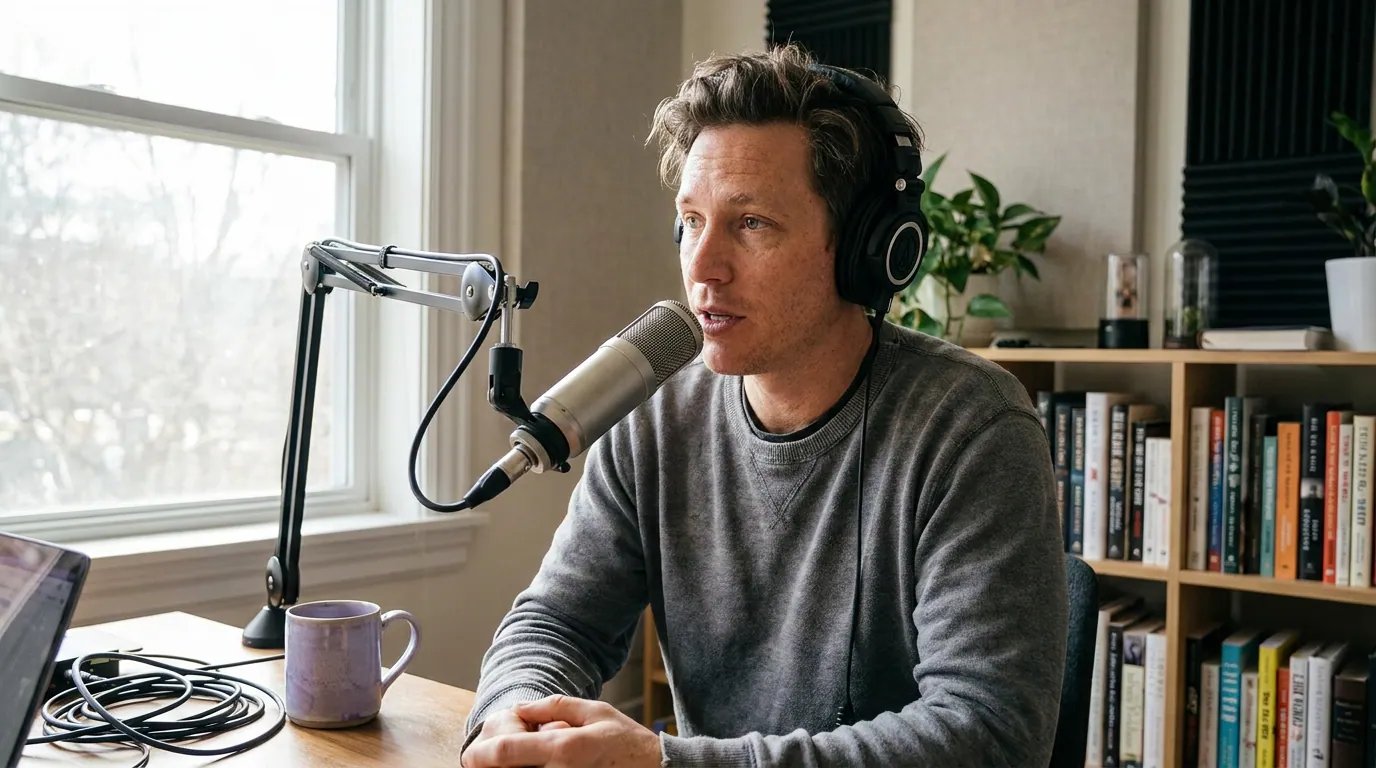
Record a real episode in your intended format and find out whether you can sustain it. If you are solo, can you carry 20 minutes alone without running dry? If you are co-hosting, do you and your partner build on each other or talk over each other? If it's interviews, does your questioning go anywhere once the prepared list runs out? Pick one format and commit for this take, don't hedge.
The single most useful thing to test here is whether you have enough to say. New hosts almost always overestimate solo stamina and underestimate how much an interview drags without follow-up questions. Record the full thing, even if it falls apart at minute eight. The point where it falls apart is the data.
If pilot -2 tells you the format is wrong, that is the experiment working. Switch and record it again. It's far cheaper to decide now than to relaunch a published show. If you haven't locked your format yet, work through solo, co-host, or interview as your core format before you record this one.
What to listen back for: energy that holds (or dies) past minute ten, dead stretches where you ran out of material, and whether you sound like a person talking or a person reading. Note the timestamp of every sag.
Pilot -1: what's your real length and pacing?
Now that the format holds, find your true runtime. Record again with no editing plan in mind, then time it and map where attention dips. Most beginners record 50 minutes of material that wants to be 25. The pilot tells you which it is before you commit to a length your audience has to sit through every week.
Pacing matters more than total length. A tight 22-minute episode beats a loose 45-minute one, and listeners forgive a short show far faster than a slow one. Listen for the parts where you'd reach for the skip button if it weren't your own voice. Those are cuts. If you're unsure what target to aim at, start from how long a podcast episode should really be for your niche, then adjust to what you can actually sustain.
This is also where you decide how much to prep. If pilot -1 rambles, you may need tighter structure; if it's stiff, you may be over-scripting. The honest answer is usually somewhere between, which is the whole question behind scripting versus outlining your show. Use the pilot to pick.
What to listen back for: total runtime versus the runtime it deserves, the two or three slowest minutes, and filler-word density. Write the target length you'll hold yourself to from episode one.
Pilot 0: the full dress rehearsal
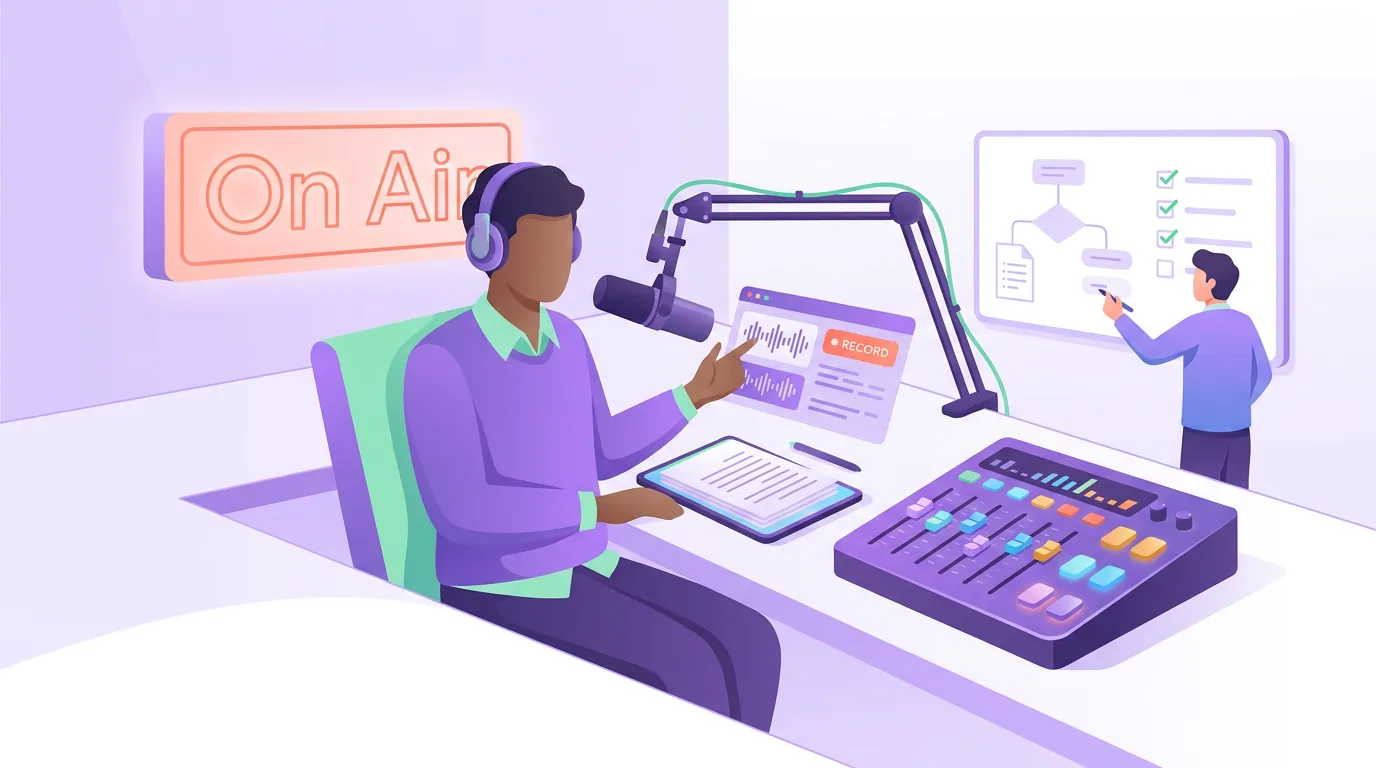
Run the whole show start to finish with your real runsheet, cold open, intro, the body in your tested format, your one call to action, the outro, and don't stop for mistakes. The goal is to rehearse the seams, not the content. Most launch-day stumbles happen at the joins: a clumsy intro, a forgotten sponsor mention, a CTA you've never said out loud before.
This pilot is the one that can survive. If it lands, it becomes episode one. If you have the structure dialed in, lay your runsheet over the six-block episode skeleton so the cold open, body, payoff, and single CTA each have a fixed job and time. A repeatable structure is the closest thing podcasting has to a retention guarantee, and pilot 0 is where you prove yours works under real conditions.
Record pilot 0 on the gear you'll actually launch with, in the room you'll actually record in. A pilot recorded on your laptop mic in a quiet kitchen won't prepare you for the AC hum in your office. If your audio is the weak link, fix it now, a clean-sounding budget podcast mic under $100 closes most of the gap between "amateur" and "fine."
What to listen back for: every awkward transition between blocks, whether the CTA sounds natural or bolted on, and any audio problem you can hear (hum, clipping, room echo). These are your last fixes before public.
The go/no-go scorecard
After pilot 0, score yourself against five launch-readiness signals. Hit four of five and you launch. Miss the bar and you run one more pilot, that's the protocol, not a failure.
The voice signal trips up the most people. Almost everyone hates their own recorded voice at first; the bar is not "I love it" but "I can listen to a full episode without wincing." If you genuinely can't get there after three pilots, the fix is usually pacing and confidence, both of which improve fast with reps, launch anyway and let episode five sound better than episode one.
Common mistakes (and the fix)
- Treating pilots as practice, not tests. Recording without a question to answer wastes the take. Fix: assign each pilot one hypothesis and a pass/fail before you hit record.
- Polishing instead of deciding. Re-editing the same pilot ten times avoids the real call. Fix: listen once with notes, decide go or re-run, move on.
- Skipping the listen-back. The recording teaches you nothing until you hear it as a listener would. Fix: listen to all three pilots on headphones, with a notepad, the way a stranger would.
- Launching with one episode. A single episode gives a new listener nothing to binge. Fix: bank pilot 0 plus one or two more so launch day ships three episodes at once.
- Endless piloting. Five, six, seven pilots is just fear wearing a process. Fix: three pilots, score the card, launch at four of five. Reps after launch beat rehearsals before it.
FAQ
Do I have to publish my pilot episodes? No, that's the point. Pilots -2 and -1 are private R&D you record, learn from, and usually scrap. Only pilot 0 is built to be publishable, and only if it passes the scorecard. Keep the failed takes; they're your training data, not your launch.
How many pilots is too many? Three is the target; more than five usually signals fear rather than genuine problems. Each extra pilot has steeply diminishing returns because the biggest improvements now come from publishing and getting reps, not rehearsing. Score the go/no-go card honestly and launch at four of five.
Can I record all three pilots in one day? You can, and batching them is efficient, but leave a gap before you listen back. Reviewing immediately after recording, you'll hear the effort; reviewing a day later, you'll hear what a listener hears. Record together if you like, but score them with fresh ears.
What if I don't have guests for an interview pilot? Use a stand-in, a friend, a colleague, anyone willing to be interviewed for practice. The pilot tests your questioning and pacing, not the guest's fame. A practice interview with your most patient friend tells you almost everything a real booking would about whether the format works for you.