
Engineering a Launch Week to Chart on Apple


To chart on Apple at launch, you concentrate every follow you can muster into a single 72-hour window, guest audiences, paid bursts, your email list, and your own clips all firing on the same days. The Apple Top Shows chart reads recent follow velocity, not total size (Apple Podcasts for Creators). So launch week is a coordination problem: stack the channels, compress the timing, and treat the spike as a scheduling exercise.
This is the operator's version of charting. If you want the mechanics, why velocity beats size, what Apple counts, whether it's worth it at all, start with how podcasts get on the Apple charts. This guide assumes you already buy that the chart reads acceleration, and gets straight to the harder question: how do you make five different audiences act on the same morning? Below is a channel-by-day matrix, a rough follower-fuel estimator so you can size the push before you run it, and a flat-honest note on what the spike actually buys you.
Why does timing the burst matter more than the total?
Because the chart measures change over a short window, the shape of your follows matters as much as the count. Three hundred follows compressed into two days can chart; the same 300 dripped over three weeks usually won't, because no single day ever spikes. The Podnews illustration is blunt: a show gaining followers steadily by word of mouth "will never appear on the Apple Podcast chart, since that is worked out using recent subscriptions" (Podnews).
So your job is not to gain more followers than usual, it is to gain them all at once. That reframes launch promotion entirely. A guest who shares your episode three weeks after release is lovely for your audience and useless for your chart push. The chart is a stopwatch. Everything you do is about getting more people across the line in the same heat.
The Podcast Host, which has tracked Apple's behavior for years, describes the model as Apple looking hardest at follows in the last seven days, with extra weight on the most recent 24, 48, and 72 hours, and is careful to call this informed analysis, not confirmed fact (The Podcast Host). Treat the exact hour weights as folklore. Treat the direction as solid: the tighter the window, the taller the spike.
The stacked-burst matrix: every channel, same days
Most launches fail at charting because the channels fire on different days. The guest's newsletter goes out Tuesday, your email lands Thursday, the ads start the following Monday, and the clips trickle out whenever you finish editing. Each push is fine on its own and none of them stacks. The fix is a single shared window, pick your launch day, then pull every channel toward the 24-to-72 hours after release.
Here is the framework I use to plan it: a stacked-burst matrix. List your channels down one side and the launch days across the top, then schedule each channel to peak inside the window, not before or after it.
| Channel | Pre-launch (do now) | Launch window (Day 0–3) |
|---|---|---|
| Email list | Build it; tease the date | One launch email Day 0, one nudge Day 1 |
| Guest audiences | Lock 2–3 guests + their share assets | Guests post the same 24–48h |
| Paid bursts | Set up + warm the ad account | Short, heavy flight Day 0–2 only |
| Your clips | Cut 6–10 ahead of time | Front-load all of them into the window |
| Your network | Line up a "follow squad" privately | One coordinated ask Day 0 |
The discipline is the point. Anything you can do before launch (build the list, cut the clips, line up guests, set up ads) you do quietly in the weeks prior. Anything that creates a follow you save for the window. The mistake is using your best assets early because you're impatient, a guest shout-out in week two is a follow that doesn't count toward the spike.
Stacking guest audiences
Guests are the channel with the most upside because they bring a warm audience you don't have yet. The trick is coordination: book two or three guests whose episodes drop during launch week, and give each of them a ready-to-post clip and a one-line follow ask so sharing takes thirty seconds. Don't ask "please promote whenever." Ask "can you post this on Tuesday morning?" A clip in hand on the right day beats a vague promise every time. For the mechanics of getting guests to actually reach into their feeds, see buying and trading promotion inside other podcasts' feeds.
Paid bursts, used surgically
Paid promotion during launch week is a velocity amplifier, not a substitute for an audience. The honest framing: a short, heavy ad flight in the window can push your spike higher, but it's expensive fuel and it stops the moment you stop paying. Run it concentrated, Day 0 to Day 2, never spread thin across the month. Before you spend a dollar, read when paid podcast promotion is actually worth it, because for many shows it isn't, and a launch is the one moment it sometimes is. Platforms like Overcast offer cheap, podcast-native placement that fits a launch burst well; here's how advertising on Overcast works.
Email and your own clips
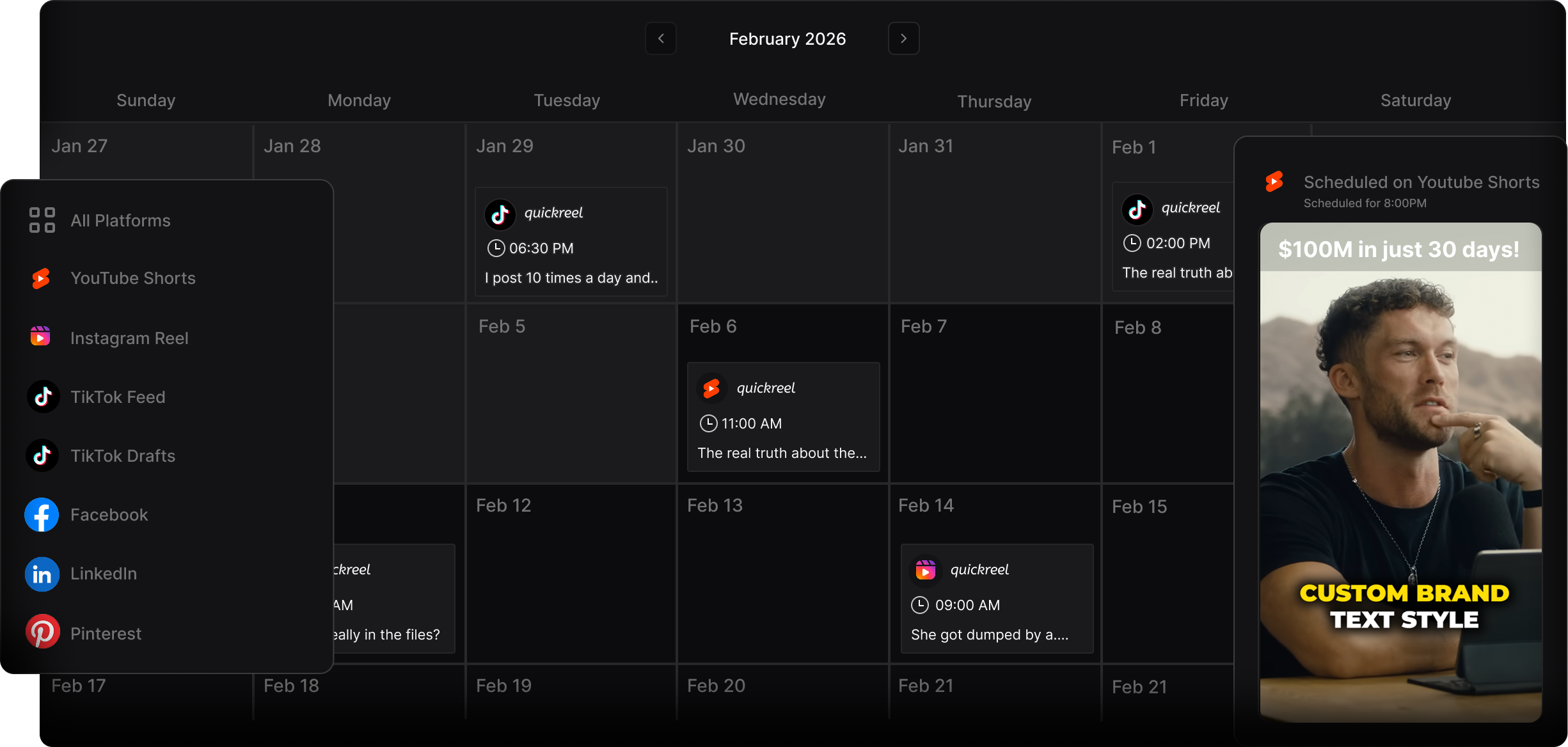
Your email list is the only channel you fully control, which makes it the spine of the launch. Even 150 committed people is enough to chart in a narrow category. If you don't have a list yet, that is the pre-launch project: start a podcast email list from zero. Then put short, captioned clips into the same window to reach people outside the list, clips drive 20–40% of new audience for video shows and can raise reach 2–5x (Podcast Studio Glasgow). Front-load every clip you have so the new viewers arrive while your velocity is being measured.
How much fuel do you actually need? A rough estimator
Before you run the launch, size it. There is no published follow count that guarantees a chart spot, Apple doesn't disclose the formula, but third-party analysis suggests a couple of hundred new follows in a single day can get you to the top of most category charts, while the overall Top 100 took around 244 new subscribers inside a four-hour window in one experiment (The Podcast Host). Treat both as directional, not promises; they shift by market and category.
Work backward from it with a follower-fuel estimate: list each channel, write down a realistic day-one follow count (be pessimistic, these are conversions, not reach), and add them up. If the total clears your category's rough bar, you have a launch. If it doesn't, you build more list or book more guests before you publish, not after.
The estimate is deliberately conservative on every line. An email list converts at maybe 10–20% of subscribers on a good launch day, not 100%. A guest's audience converts at a sliver of a percent. If your honest sum lands under your category target, the answer is more pre-launch work, not wishful thinking on launch day.
Common mistakes that flatten the spike
- Channels firing on different days. The most common failure. Each push is fine; none of them stacks. Pull everything into the same window.
- Spending your best assets early. A guest shout-out two weeks out is a follow that doesn't count toward the spike. Hold your biggest-reach shares for the window.
- Asking for reviews instead of follows. Reviews are social proof, not a ranking input (Apple Podcasts for Creators). Make following the single, spoken ask: "Open Apple Podcasts, search the show, tap Follow."
- Picking too broad a category. A precise subcategory needs a fraction of the follows of "Society & Culture" overall. Choose the narrowest category you legitimately fit.
- Buying fake follows to fake velocity. Apple says rankings "cannot be purchased or sold" and monitors the charts for genuine engagement (Apple Podcasts for Creators). Incentivized or fake follows risk your standing.
What about Apple Podcasts editorial features?
Apple Podcasts editorial features is hand-curated by Apple's editors, not driven by the velocity algorithm, several charts, "particularly New and Noteworthy, are hand curated by Apple" (Podnews). No follow stack gets you there, because no formula decides it. You can only become eligible by submitting a polished, complete show during your launch window and hoping it catches an editor's eye. Build for the algorithmic Top Shows chart you can actually move with a coordinated burst, and treat any editorial feature as a bonus you cannot plan around.
What does a chart spike actually buy you?
A launch milestone, a credibility line, and a short visibility bump, rarely a durable audience. A "ranked top 10 in [category]" line is real social proof for your bio and pitch emails. But the spike fades the moment your velocity drops, and a one-day placement often delivers fewer lasting followers than the launch push that created it.
Here is the part most launch guides skip. The chart measures a moment; a show is built over years. The number-one predictor of survival is publishing consistency, not chart position, and nearly half of all podcasts never make it past the first three episodes Amplifi Media. If you burn every favor and every dollar on the spike and then go quiet, you'll have a screenshot and no show. Use launch week as a forcing function to get organized and rally your people, then redirect that same energy into a steady habit, and into welcoming the people who do follow, with a real welcome email sequence for new subscribers so the spike turns into something that stays.
FAQ
How many follows do I need to chart at launch? There's no published number, Apple doesn't disclose the formula. Third-party analysis suggests a couple hundred follows in a single day can top most category charts, while one experiment hit the overall Top 100 with 244 in a four-hour window (The Podcast Host). Size your channels against the narrowest category you fit.
Should I run paid ads during launch week? Only as a concentrated burst, and only if your organic channels already get you close. Paid promotion amplifies a spike but stops working the day you stop paying. For most shows it isn't worth it; launch is the rare exception, see when paid podcast promotion is actually worth it before spending.
How many episodes should I launch with? Three, not one. A new follower who arrives during your spike has something to binge, which helps completion rate, a quality signal Apple names (Apple Podcasts for Creators), and the show feels established rather than empty.
Can I coordinate guests if I don't have a network yet? Yes, but it's the part to start earliest. Book guests whose episodes can drop during your window, hand each a ready-made clip and a one-line follow ask, and pin a specific posting day. The coordination, not the relationship size, is what produces the stacked spike.
Is charting worth the effort for a small show? As a launch milestone and a credibility line, often yes; as a growth engine, rarely. The placement fades with your velocity, so plan for what comes after the spike, consistent publishing and a way to keep the followers you earned, not the screenshot.