
How to Write a Podcast Intro That Doesn't Lose Listeners


Lead with your strongest line, not your show name. A podcast intro that holds listeners opens with a hook in the first five seconds, says what they get and why to stay, and only then drops the brand and credits. Keep the whole thing under 30 seconds. The order is hook, then brand, then credit, never the reverse.
That reverse order, music, "welcome back to the show," a tour of your week, then the content five minutes later, is the single most common reason new listeners leave before anything happens. This guide gives you three intro patterns to pick from, a fixed rule for the order of hook, brand, and credit, and a side-by-side teardown of a bloated intro against a tight one so you can see exactly what to cut.
Why the first 30 seconds decide everything
For a new listener, the intro is where the episode is most fragile, it's the only stretch with no content yet to hold them. Someone who arrived from a clip or a recommendation will give your episode a few seconds, not a few minutes, to prove it's worth their time. Spend that window on theme music and housekeeping and you lose them with the value still queued up behind a wall of admin.
Discovery is now overwhelmingly social, which raises the stakes on the open. 57% of listeners now rely on social media for podcast recommendations, the first time it has passed friends and family (InsideRadio, 2025). Someone who clicks through from a 40-second clip arrives mid-attention, not at the start of a relationship. They have no patience banked for your intro.
Video makes a slow intro worse, not better. **53% of new US weekly listeners now say they prefer to watch a podcast, up from 30% in April 2022** (Backlinko, 2025). On screen, a long open reads as visible dead time, a host shuffling papers while a stranger's thumb hovers over the back button. The fix is not more energy or a better mic. It's putting the most interesting thing first.
The order rule: hook, then brand, then credit
Every intro contains the same three jobs in some order. Most beginners run them backwards. The rule is to put them in the order the listener cares about them.
- Hook (0–5 seconds). The most interesting line in the episode, or a sharp question, or a charged claim. This buys you the next 25 seconds.
- Brand (5–12 seconds). Your show name and, in one phrase, who it's for. "This is The Build Log, the show for people shipping software solo." Short. Said the same way every week so it becomes a sound listeners recognize.
- Credit (12–25 seconds). Your name, your guest's name if there is one, and the promise, what this specific episode delivers and why it's worth staying for.
The mistake is leading with brand and credit. "Welcome back to episode 47 of The Build Log with me, your host, before we get into today's topic make sure you subscribe" spends the hook window on things a new listener has no reason to care about yet. They don't know the show is worth subscribing to, that's what the next 25 minutes are for. Earn the name before you announce it.
Three intro patterns (and when to use each)
There is no single best intro. There are three reliable patterns, and the right one depends on your format. Pick one, write it once, and use it every week so listeners learn the shape of your show.
Pattern 1, Cold-open-then-brand
Pull the strongest 10–20 seconds of the episode to the very front, before any music, then cut to your brand and promise. This is the default for interview shows and any episode with a single charged moment. A guest's best line, a surprising number, a half-told story, lift it, play it, then say the show name.
The discipline here is to tease, not resolve. Play the charged setup or the claim, then cut before the answer. The listener stays for the resolution that's now waiting 20 minutes away. If you give away the payoff in the cold open, you've removed the reason to keep listening. Record the cold open last, once the episode exists, the best 15 seconds are obvious.
Pattern 2, Promise-first
Open with exactly what the listener gets and why it's worth their next half hour, then add a hook detail, then the brand. This fits solo shows, how-to formats, and any episode whose value is the information rather than a single dramatic moment. "Today, the three pricing mistakes that killed my first business, and the exact script I use instead."
Promise-first works when you don't have one obvious hook line to lift. The promise is the hook: a specific, concrete benefit beats any amount of mood music. The trap is making the promise a table of contents. "Today we'll talk about pricing" is not a reason to stay. "The email line that doubled my open rate" is.
Pattern 3, In-media-res
Drop the listener into the middle of a scene or story with no setup at all, then surface for a fast brand and credit. This is for narrative and storytelling shows where atmosphere does the recruiting. You open mid-action, a door opening, a voice mid-sentence, the sound of a place, and let curiosity carry the first 20 seconds.
This is the hardest pattern to do badly and the easiest to overdo. It only works if the scene is genuinely intriguing on its own; a dull scene with no context is just confusing. Use it when your show is built on story, and keep the brand drop short and clean so you don't break the spell you just cast.
Teardown: a bloated intro vs. a tight one
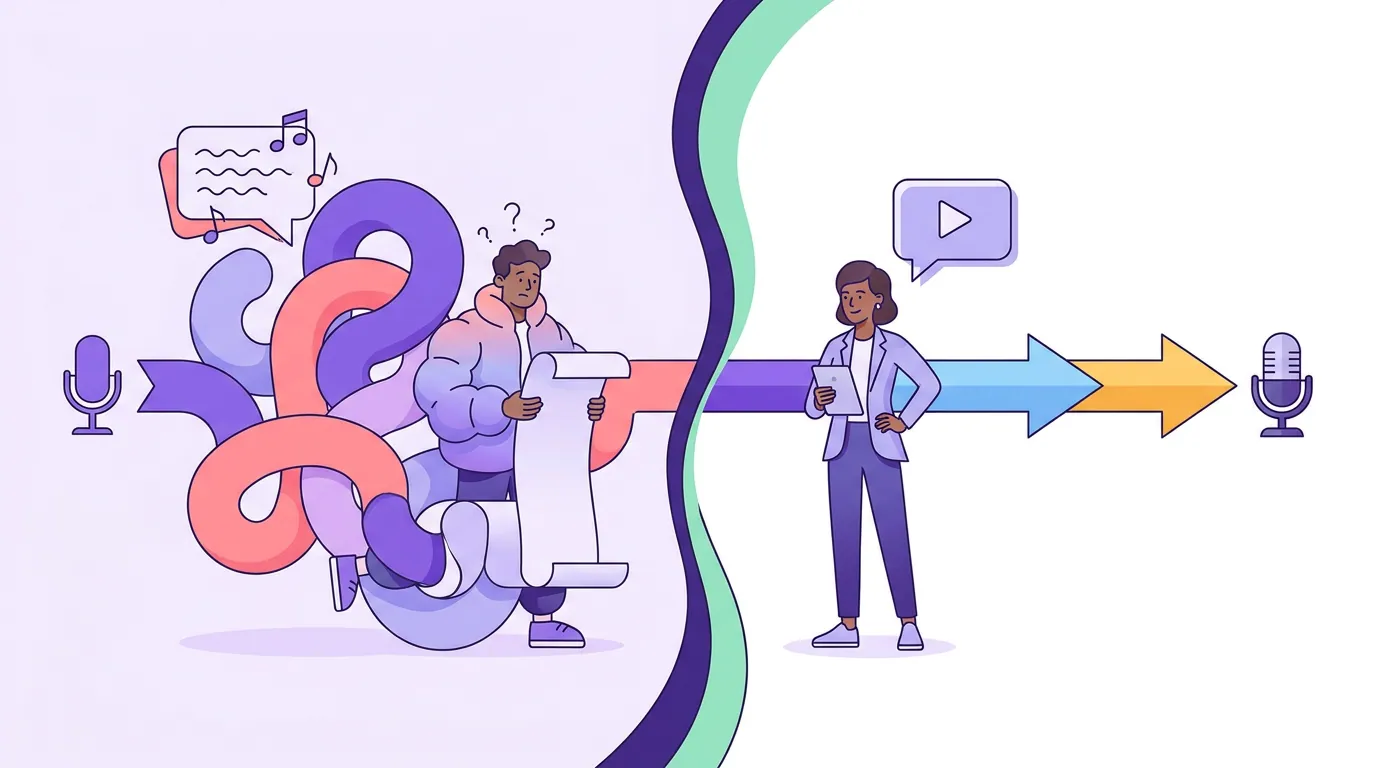
Here is the same interview episode opened two ways. The bloated version is the default most new shows ship. The tight version is the same content, edited to the order rule above.
What changed, line by line: the theme music dropped from 15 seconds to a 3-second sting placed after the hook. The welcome and the episode number disappeared, a new listener doesn't care it's episode 47. Housekeeping and the subscribe ask moved to a mid-roll, where they ride attention you've already earned. The sponsor read moved to the same mid-roll slot. The guest's best line moved to the front as the cold open.
Net result: content starts at 0:28 instead of 1:35. That's 67 seconds of a stranger's patience handed back. The bloated intro isn't longer because it has more to say, it's longer because it says everything in the wrong order. None of the cut material was deleted from the show; it was moved to where listeners will actually hear it.
What goes in the intro vs. what gets moved
A tight intro isn't about cutting things you need. It's about moving them to where they belong. Use this split as your editing rule.
| In the first 30 seconds | Moved to a mid-roll or the outro |
|---|---|
| Hook (best line or sharp promise) | "Smash subscribe / rate the show" |
| Show name + who it's for | The sponsor read |
| Host + guest name | How your week is going |
| The promise (specific payoff) | Episode number and back-catalogue plugs |
If something doesn't directly help a stranger decide to stay, it does not belong in the opening. The subscribe ask in particular is wasted at second 10, you're asking for commitment before you've delivered anything. Move it to a mid-roll, after the first strong segment, where the listener has a reason to say yes. For the full map of where each element lives across the episode, see the repeatable six-block episode structure.
Common mistakes (and the fix)
- Leading with the show name. "Welcome back to The Build Log" is brand-first, and brand means nothing to a new listener. Fix: open with the hook; the name comes 5–10 seconds later.
- A promise that's a table of contents. "Today we discuss marketing" gives no reason to stay. Fix: name the specific, concrete payoff.
- A variable intro every week. Listeners learn the shape of a show; a different open each time resets that learning. Fix: pick one pattern and write a reusable template. Whether you script or outline the rest of the episode, the intro should be scripted word-for-word.
- A cold open that spoils the payoff. Resolving the hook removes the reason to keep listening. Fix: tease the setup, cut before the answer.
- Front-loading the subscribe ask. You're asking for commitment before delivering value. Fix: move it to a mid-roll after your first strong segment.
Your intro pattern also depends on your core format, solo, co-host, or interview, and on how long your episodes actually run: a 60-minute interview can spend a few more seconds on context than a 12-minute solo brief.
FAQ
How long should a podcast intro be? Under 30 seconds for most shows, and ideally closer to 20. The hook should land in the first five seconds, the brand by about ten, and the content by thirty. Long intros are a habit, not a requirement, the bloated 95-second open in the teardown above carries the same information as the 28-second one.
Should I use theme music in the intro? Yes, but place it after the hook, not before, and keep it to a short sting of a few seconds. Leading with 15 seconds of music spends your most valuable window on something a new listener can't use. A brief sting after the hook signals the brand without costing you the open.
What makes a good podcast cold open? The single most charged moment from this episode, a surprising claim, a guest's best line, or a half-told story, played before any music or welcome. Tease it, don't resolve it: play the setup, then cut. The same moment usually doubles as your best short clip, because a self-contained hook is exactly what travels on social.
Do I need a different intro for each episode? Keep the same structure and brand line every week so listeners recognize the show, but swap the hook and the promise to match each episode. The pattern stays fixed; the contents change. That consistency is also what makes your show easier to clip and easier for a returning listener to settle into fast.
Where should the "subscribe" ask go? Not in the intro. Move it to a mid-roll placed after your first strong segment, when the listener has heard something worth committing to. Asking at second 10 is asking before you've earned it, and it competes with the hook for the only attention you're guaranteed.
The payoff of getting this right shows up beyond retention: the cold open you write for the intro is usually the same moment that performs as a clip, and clips drive 20–40% of new audience for video shows (Podcast Studio Glasgow). Write a sharp open once and it pays you twice.