
Paid Placements and Featured Spots in Podcast Apps


Paid placement in a podcast app means buying a spot on the directory's browse, search, or "now playing" screen so new listeners see your show while they hunt for something to subscribe to. The legitimate venues are Overcast, Pocket Casts, Castbox, Podcast Addict, Podbay, Buzzsprout Ads, and newsletters like Podnews. Entry prices run from $25 a day to $2,000+ a month, and only a few reliably convert browsers into actual subscribers.
The trap is treating all of these as one thing. They are not. Some spots buy you impressions, eyeballs that scroll past. A smaller set buys you listeners, taps that end in a one-tap subscribe. This guide maps every legitimate venue, lists the real price I could verify in June 2026, and sorts each one by which of those two things it actually delivers. None of this is pay-to-chart manipulation, which violates Apple and Spotify policy; it is buying ad inventory that the apps openly sell.
What "paid placement" actually buys you inside a podcast app
A paid in-app placement is an ad slot the directory sells, surfaced where people browse for new shows. The format is almost always the same three pieces: your show's title, its artwork, and a one-line description. Tapping it opens a native screen, your episode list with a subscribe button, so the conversion happens without leaving the app.
That last detail is the whole game. Buying an ad inside the app a person already uses to listen means there is no friction and no education: everyone who sees it is, by definition, a podcast listener actively looking. The Overcast ads page makes this explicit, placements run "below the controls on the Now Playing screen and in the Add Podcast directory," and a tap "invites listeners to subscribe with a single tap" (overcast.fm/ads).
Compare that to a Meta or TikTok ad, where you first have to convince a scroller that podcasts are for them, then that yours is, then get them to leave the platform and open a podcast app. In-app placement skips the first two steps. That is its one genuine advantage, and it is real.
The venue map: every legitimate paid placement, priced
Here is the inventory, with the lowest rate I could confirm in June 2026. Prices on Overcast move daily by demand, so treat any single number as a snapshot, not a fixed rate.
| Venue | What you buy | Price (verified June 2026) |
|---|---|---|
| Overcast (iOS) | Now Playing + directory ad, 30 days | Category-priced; live page showed Music $140, Sports $150, Arts $180, Society & Culture $775, All-categories $1,525 (overcast.fm/ads) |
| Pocket Casts (iOS/Android/web) | Discover-tab slot, 1 week (Mon–Mon) | $1,700 for a one-week run (buzzsprout); exact rate by quote at pocketcasts.com/ads |
| Podcast Addict (Android) | Search screen or category | Quote-based, varies by category, no public rate card (buzzsprout) |
| Podbay (iOS/Android) | Featured spot, up to 30 days | $25 per day (buzzsprout) |
| Buzzsprout Ads | In-player ad to other Buzzsprout listeners | From $100, reaching 5,000+ downloads (buzzsprout) |
| Castbox | Editors' Picks / homepage banner | Apply; banner needs 1,000+ Castbox subs; ~$2,000+/mo per third-party guides (castbox help) |
| Podnews newsletter | Classified, logo, or sponsorship | Classified: demand-led, low entry; logo from $150/mo; sponsorship by quote (podnews.net) |
| Podchaser Pro | Research/data tool, not an ad slot | ~$5,000/yr for up to 3 seats (podchaser) |
A few things to flag in that table. Castbox doesn't run a self-serve marketplace; you apply, and it selects only a small share of applicants. Its free "featured" window is three days, one time, for qualified shows. Anything beyond that, the homepage banner, requires 1,000+ existing Castbox subscribers and runs through their sales team, with third-party guides putting month-long campaigns around $2,000 (Castos). I could not find a current published rate card from Castbox itself, so treat that figure as directional.
Podchaser Pro is on this list to take it off your list. It is frequently grouped with "paid promotion," but it is a research subscription for marketers and PR teams, contact databases, ad-cost estimates, brand-safety scores, not a placement you can buy (features.podchaser.com/pro). Useful if you are planning a campaign across other shows. It will not put your podcast in front of a single new listener on its own.
The split that matters: impressions vs listeners
Sort every venue above into two buckets and the spending decision gets simple. One bucket buys attention you can't bank. The other buys subscribers you can.
The listener bucket, Overcast, Pocket Casts, Podcast Addict, wins for one structural reason: the subscribe action lives inside the ad. Overcast lets you log into your account any time during the 30-day run to watch views, taps, and subscriptions live (overcast.fm/ads), which is why it's the venue I'd test first (we walk through the setup in our full guide to advertising your podcast on Overcast). That means you can calculate a real cost per subscriber and decide whether to renew.
The impression bucket isn't useless. A Podnews classified (demand-led, low entry) or logo (from $150/mo) reaches 33,600+ industry subscribers (podnews.net), exactly right if your goal is to be known among other podcasters, bookers, and press, which is a guesting and PR play, not an audience play. Just don't expect it to move your download numbers, and don't judge it as if it should.

The number that decides everything: cost per subscriber
Run any paid placement through one metric: what did each new subscriber cost? The math is your spend divided by net new subscribers during and just after the campaign. A real-world test ran two Overcast buys and got wildly different results: a $370 Health & Fitness placement returned 1,770 taps and 26 subscribers, about $14.23 per subscriber, while a $140 buy in the lower-demand Fiction category came in at $8.20 per subscriber (eastcoaststudio.com).
The gap is the lesson. Only about 1.5% of taps on the Health & Fitness ad subscribed; the cheaper Fiction category converted at 2.5%. So your cost per subscriber is set by two things you partly control, the category you buy into and how well your snippet earns the tap. Most of what you pay for is a tap, and most taps don't subscribe.
How do you know if $8 to $14 a subscriber is good? It depends on what a listener is worth to you. If your show monetizes through sponsorships at a healthy CPM, paying $10 for a subscriber who sticks for a year can pencil out, the lifetime ad revenue clears the acquisition cost. If you don't monetize yet, that is real money for an uncertain return, and the cheaper end of the range only happens in low-demand categories like Fiction. There's no universal "good" number; there's only good relative to your listener's lifetime value. For the full framework on what a listener should cost you, see our breakdown of what it costs to buy a podcast listener and our honest take on when paid podcast promotion is actually worth it.
Common mistakes that waste the budget
Most disappointing campaigns fail for predictable, fixable reasons. Here are the five I see most.
- Buying impressions and judging them as listeners. A newsletter logo or banner-only spot can't drive a one-tap subscribe. If your goal is downloads, buy from the listener bucket and ignore the rest. If your goal is industry awareness, the impression bucket is correct, just measure it as reach, not subscribers.
- Skipping the snippet. On Overcast and most apps the title and artwork are fixed, but you control the one-line description. That sentence is the only thing you can optimize, and it decides your tap rate. "A new unsolved case every Tuesday" beats "A podcast about crime." Write it like an ad, not a tagline.
- Putting the whole budget on one app. Each directory's audience is different, Pocket Casts skews male, 35–60, in the US/UK/Australia/Canada (pocketcasts.com/ads); Overcast is iOS-only. Spreading a test budget across two or three venues tells you which audience actually responds before you commit.
- Ignoring the eligibility rules. Overcast accepts no targeting data, so it rejects ads for non-English shows, gender-specific content, and region-specific shows (overcast.fm/ads). Castbox banners require 1,000+ existing Castbox subscribers. Read the rules before you build artwork you can't use.
- Expecting the spike to last. In-app campaigns produce a visible jump in subscribers that often fades, because some new followers decide the show isn't for them. Plan for retention: a strong first episode and a reason to come back beat a bigger ad budget. Pair any placement with a welcome email sequence so the listeners you paid for don't evaporate, and feed them from an email list you actually own.
Where paid placement fits, and where clips beat it
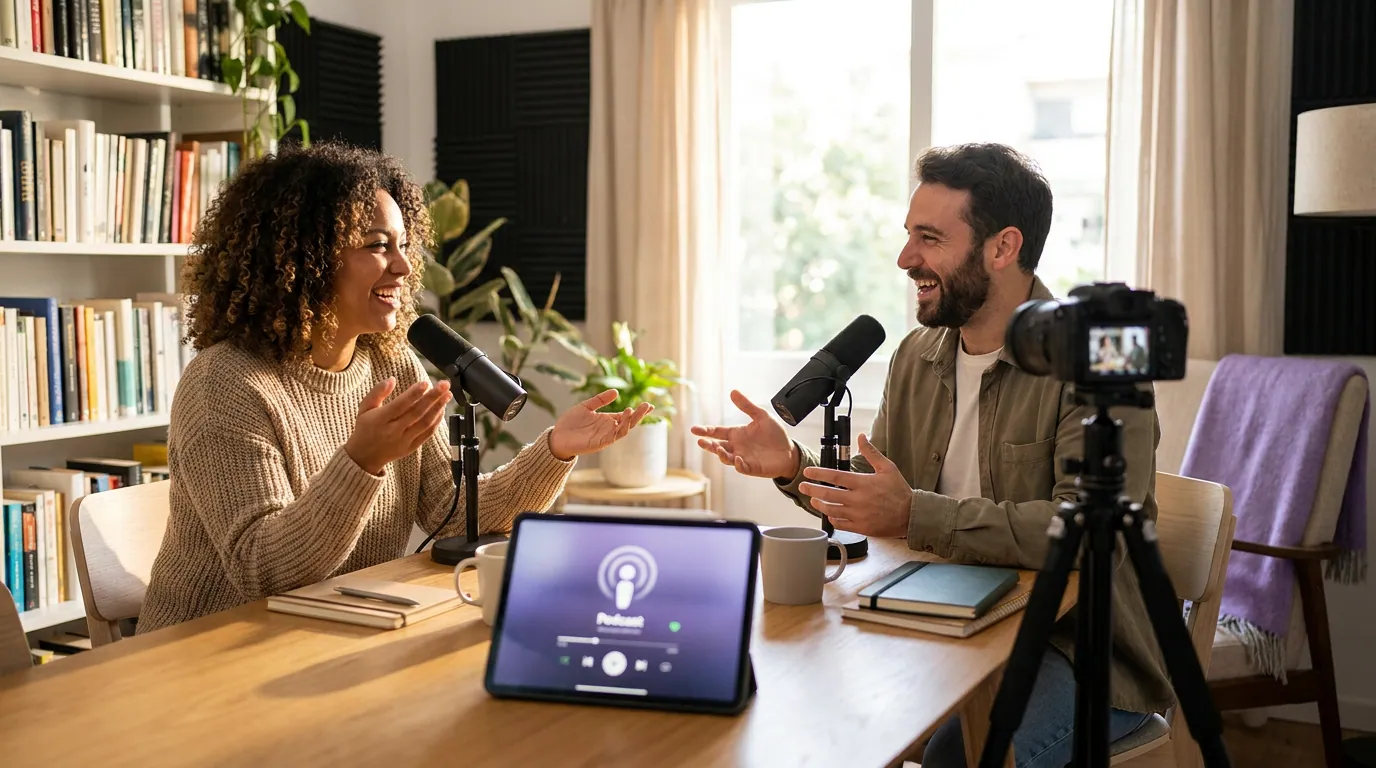
Honest positioning: paid in-app placement is a useful accelerant for a show that already converts, not a fix for a show that doesn't. The cheapest, most durable discovery channel in 2026 is still social video. 57% of listeners now rely on social media for podcast recommendations, the first time that surpassed friends and family (InsideRadio, 2025).
A directory ad reaches people already inside a podcast app, a shrinking pool of people you've mostly already met. A clip on Reels, Shorts, or TikTok reaches people who weren't looking for a podcast at all and converts the curious into subscribers. For most shows, the smart sequence is: build a clip habit first, layer paid feed ads inside other shows second (see buying ads inside other podcasts' feeds), and treat directory placements as a top-up test for a specific category push.
That doesn't make placements wrong. It makes them step three, not step one.
FAQ
Is paying for a featured spot against Apple or Spotify rules? Buying ad inventory the apps openly sell, Overcast's directory ad, Pocket Casts' Discover slot, is fully allowed. What's prohibited is paying for fake downloads, bot subscribers, or services that promise to manipulate the Apple or Spotify charts. Those risk removal. Stick to the published ad products listed here.
Which podcast app is cheapest to get featured on? Podbay at $25/day and Podnews classifieds (demand-led, priced to be affordable) are the lowest entry points, but Podnews is an industry newsletter (impressions), not an in-app listener ad. For the cheapest spot that can actually win subscribers, Overcast categories start near $140 for low-demand genres like Music or Fiction (overcast.fm/ads), well below Pocket Casts' $1,700-a-week Discover slot (buzzsprout).
How much should I budget for a first test? Run a small test: one or two low-demand Overcast categories, roughly $250–$350 total, then calculate cost per subscriber. (Skip Pocket Casts to start, at $1,700 a week it's not a first-test budget.) The one published real-world test landed between $8.20 and $14.23 per subscriber on Overcast (eastcoaststudio.com), set your own ceiling against your listener's lifetime value. Beat it, scale the winner. If not, the channel isn't for your show right now, and you've learned that for the price of a dinner out.
Does Castbox really feature shows for free? Yes, for qualified shows, a one-time, three-day feature in Editors' Picks or a homepage slot, in exchange for promoting Castbox (a badge, an embedded player, a social mention). The paid homepage banner is separate, requires 1,000+ Castbox subscribers, and runs through their team (Castbox help center).
Will a featured spot help if my episodes aren't strong yet? No. Paid placement amplifies whatever your show already does to a new listener. If the first episode they hear doesn't earn a second, you're paying to introduce people to a show that doesn't retain them. Fix the first-impression episode and the subscribe prompt first, then buy the spot.