
How to Get Booked on Podcasts With No Following


You get booked on podcasts with no following by giving the host the one thing they actually need: a guest who will make a good episode. Follower count is a tiebreaker, not the bar. Lead with a specific story, a concrete result you produced, or a framework their audience can use, and pitch the small shows that are hungry for guests, not the ones with a waitlist.
Most guesting advice quietly assumes you arrive with an audience to cross-promote. You don't, and that's fine. The host doesn't need your audience. They need 45 minutes that hold attention and a reason to hit publish. This is a playbook for spending what you do have when you can't spend reach.
Why hosts book unknown people more often than you think
Hosts book unknowns because most shows are desperate for guests, not picky about reach. There are roughly 4.5 million indexed podcasts, but only about 10–11% are still publishing, meaning roughly 90% of podcasts are no longer putting out episodes (demandsage). The math reframes the whole problem. Of the shows that do survive, an estimated 47% stop at three episodes or fewer Amplifi Media, and by one widely cited estimate only about 11% ever reach 50 episodes (PodMatch, Actively Established Podcast Report).
What does that mean for you? The single biggest cause of a podcast dying is the host running out of energy to fill the calendar. A reliable guest who shows up prepared and makes editing easy is a gift to a host fighting that fade. The small show with 200 downloads an episode is not screening for your follower count. It is screening for "will this person help me publish next week without it being painful."
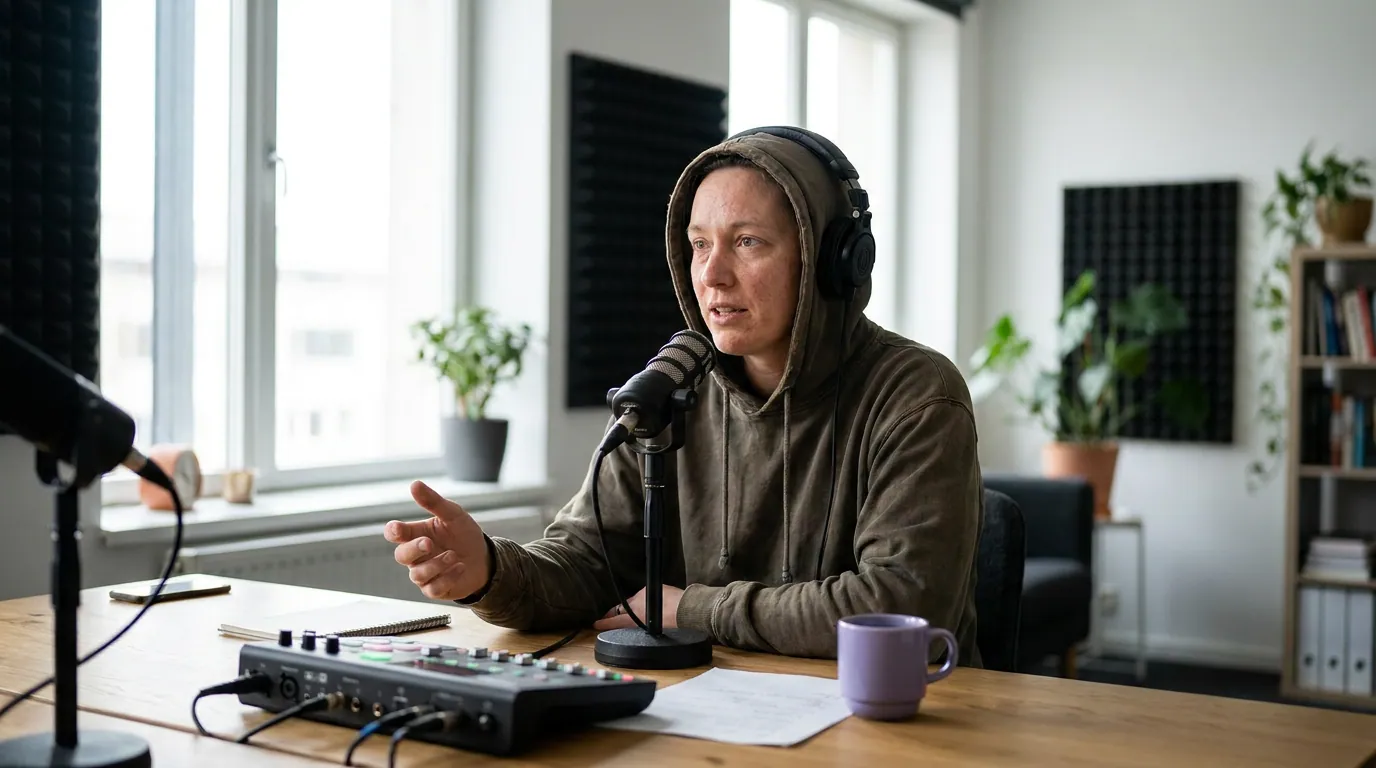
What to lead with instead of follower count
When you can't trade reach, you trade one of three other currencies. Pick the one you actually have the most of, and build your pitch around it.
Story. You lived through something specific and unusual, you rebuilt your credit from a default, you survived the first year of a restaurant, you moved countries with no job lined up. Hosts in personal-finance, food, and lifestyle niches run on first-hand stories. Your "credential" is that it happened to you and you can narrate it with texture.
Result. You produced a measurable outcome, even a small one. "I grew a local bakery's Instagram from 0 to 4,000 in six months" is bookable even if your own account has 90 followers. The number is the proof. Attach a real figure and the timeframe, and skip rounding it up, hosts can smell an inflated metric.
Framework. You have a repeatable method the audience can run themselves. "The five-email sequence I use to recover abandoned carts." "A two-question filter for vetting a freelancer." This is the strongest currency because it gives the host an episode their listeners can act on immediately, and it makes you quotable in a clip.
Whatever you pick, the test is simple: could the host write the episode title from your pitch? "How [Name] paid off $40K in 19 months" is a title. "Entrepreneur and thought leader" is not.
Which shows to pitch first
Pitch shows where you are an upgrade, not a long shot. The decision rule: target shows that are active, small, and topically aligned, in that order of priority. Active means an episode in the last 30 days; a dead show won't reply. Small means roughly the bottom 90% by audience, where the host books guests themselves and reads their own email. Aligned means your one currency maps cleanly to what their listeners already came for.
Work through three concentric rings:
- Your direct niche. Shows about the exact thing you have a story, result, or framework in. Highest hit rate; start here.
- Adjacent niches. Shows one step out where your angle is a fresh segment for them, a recruiter pitching a productivity show, a nurse pitching a parenting show.
- Format-fit shows. Interview shows that openly invite guests (look for a "be a guest" page or a recurring guest format). They are structurally short on people, not picky about reach.
Skip, for now, anything with a media kit, a booking agency, or a guest waitlist. Those are reach-for-reach trades and you don't have the chip yet. For the mechanics of building and filtering that list, see how to find podcasts that will actually book you and the broader walkthrough on how to get booked on podcasts as a guest.

The pitch: how to write it without an audience to dangle
Keep it short, make it about their show, and lead with your one currency in the first two sentences. The host decides in about ten seconds whether to keep reading, so the angle goes first, not your bio, not "I'm a huge fan."
A working structure:
- One line that proves you watched the show. Name a recent episode and one specific thing in it. Generic praise reads as spam.
- Your angle as an episode idea. "I think your listeners would get a lot from how I [story/result/framework]. We could cover X, Y, Z." Give the host the segments.
- Three concrete talking points. Bullet them. This is the proof you'll be easy to interview.
- One line of low-friction logistics. "I can record any weekday on Riverside or Zoom, and I'll send my own bio and headshot so you have nothing to chase."
That last line matters more than any follower number. The thing that makes a host say yes to an unknown is the promise that you will not create work. For the exact wording, the podcast guest pitch email that gets replies breaks down a template line by line, and finding a host's real email address covers getting it in front of the right person rather than a generic inbox.
Common mistakes that get a no-following guest ignored
These are the ones I see most, each with the fix.
- Apologizing for your size. Never write "I know I don't have a big following, but…". You just told the host to weigh the thing you're weakest at. Lead with the currency and don't mention reach at all.
- Pitching yourself instead of an episode. "I'd love to come on and talk about my background" gives the host nothing to title. Pitch a specific angle with segments.
- Inflating a metric. A rounded-up or vague number ("massive growth," "tons of clients") reads as a lie and kills trust. A small true number beats a big fuzzy one.
- Going only for the big shows. A handful of pitches to flagship podcasts will get you silence. Twenty pitches to active, small, aligned shows will get you bookings. Volume into the right tier wins.
- Treating the first booking as the prize. The first appearance is your asset, not your finish line. A recording you can point to makes the next pitch easy, "here's me on [Show]" is the credential you didn't have last week.
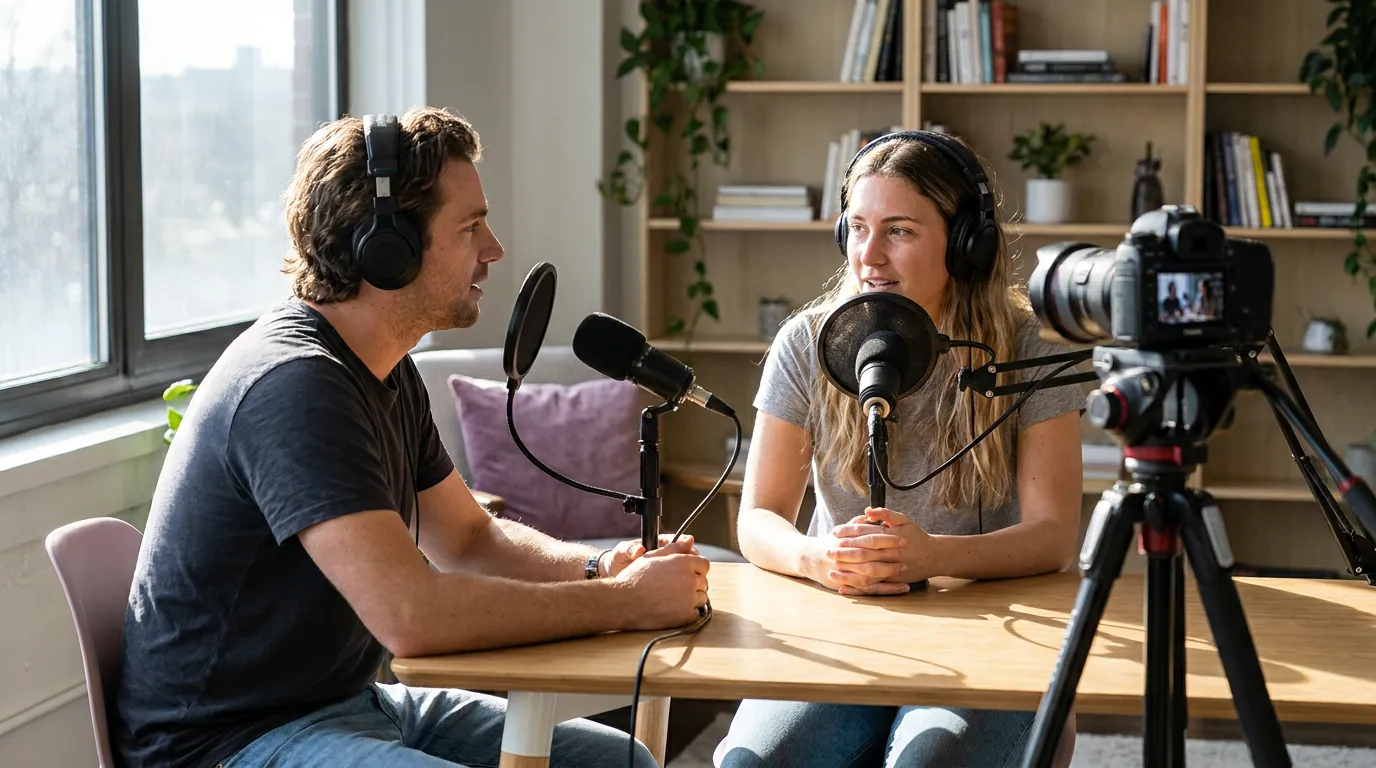
Turn one appearance into the credibility you lacked
After the episode, you have something you didn't have before: a recording of you being articulate and interesting. That single asset compounds. Reference it in your next pitch, post a clip of your best moment, and let it do the proof-of-competence work that a follower count was supposed to do.
This is also where reach quietly starts to build. Social video clips now drive podcast discovery more than recommendations from friends and family do, with 57% of listeners relying on social media for podcast recommendations, the first time it surpassed word of mouth (InsideRadio). A 40-second clip of your sharpest answer is both your portfolio for the next host and your first taste of an audience. Mind the guest etiquette around promoting an episode so you share it in a way the host appreciates rather than resents.
FAQ
Do I need any followers at all to get on a podcast? No. Small and mid-size shows book guests for the quality of the conversation, not for cross-promotion. Lead with a story, a result, or a framework their listeners can use, pitch active and aligned shows, and make it clear you'll be easy to interview. Reach helps at the top tier; it isn't the entry requirement.
How many shows should I pitch to land my first one? Plan for roughly 15–25 targeted pitches to active, small, topically aligned shows. The hit rate on well-matched pitches is far higher than on flagship shows, where unknown guests rarely get a reply. Quality of fit beats volume, but you still need enough at-bats.
What if I have no results and no dramatic story? You almost certainly have a framework. Anything you do at work that you could teach a beginner in 20 minutes is a framework, a checklist, a filter, a sequence. That's the most bookable currency because it gives the host an episode listeners can act on the same day.
Should I start my own podcast first to look credible? Not necessarily. Guesting builds proof faster than launching a show that may stall in the danger zone where most do. If you enjoy hosting, do both, but you don't need to be a host to be a guest.