
LinkedIn Post Formats That Drive Episode Plays


The two LinkedIn formats that actually send people to your episode are a native video clip and a text-only takeaway that ends with a soft pointer to the full show. Carousels and guest-quote graphics build authority and comments but rarely drive a play. Polls and link-only posts mostly generate vanity engagement, likes that never become listeners. Lead with the first two; use the rest deliberately, not by default.
That is the short version. Below is each of the six formats ranked by one metric that matters, does it move someone from the feed to your episode, plus the decision rule I use to pick a format per episode, and the honest catch about LinkedIn and outbound links that breaks most podcasters' promotion.
Why LinkedIn is worth the effort for podcasters
Social clips are now the front door to your show. Social media overtook friends and family as the top source of podcast discovery in 2025, 57% of listeners said they rely on social media for recommendations, the first time it passed word of mouth (InsideRadio, 2025). LinkedIn is where that plays out for any business, B2B, career, or expert-interview show: the audience is sitting at a desk, signed in, and primed to consume a five-minute idea between meetings.
The catch is that LinkedIn rewards content that keeps people on LinkedIn and quietly suppresses posts whose main job is to send people off the platform. So the format you choose is not a cosmetic choice. It decides whether your post gets shown at all, and whether the people who see it ever reach the episode. Get the format right and a single clip can carry a week of plays. Get it wrong and you collect 40 likes and zero listens.
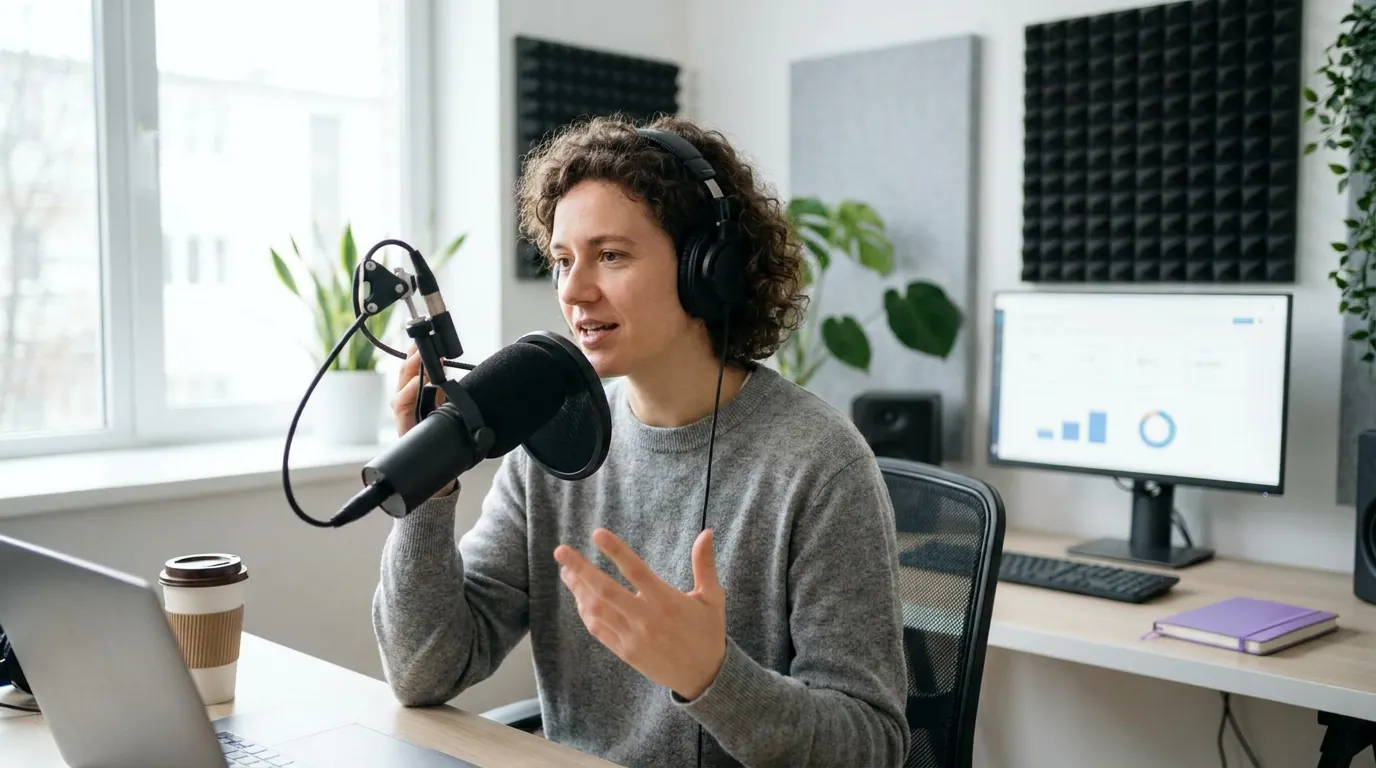
The six formats, ranked by click intent
Here is the ranking. The score is not a LinkedIn metric, it is my field ranking from running episode promotion across video shows, weighing one thing: how reliably each format moves a viewer from the feed to pressing play, set against how much of its engagement is vanity (a like that goes nowhere).
1. Native video clip, the highest click driver
A 30–90 second vertical or square clip uploaded straight into LinkedIn (not a YouTube link) is the single best episode-promotion format. It plays in-feed, it counts as native content LinkedIn wants to distribute, and it shows the guest's face and voice, which sells the episode better than any sentence you could write. Clips can account for 20–40% of a video show's new audience, and posting them consistently can raise discovery reach two to five times (Podcast Studio Glasgow). On LinkedIn the clip is the post; you put the episode link in the first comment, not the body.
Caption the clip, most LinkedIn video autoplays muted in the feed, so an uncaptioned clip is a silent face. Open on the strongest 10 seconds of the conversation, not the intro. The clip earns the stop; the comment earns the play.
2. Text takeaway, the sleeper that converts
A pure text post, no image, no video, that distills one specific idea from the episode is the second-best driver, and it is the one most podcasters skip. LinkedIn's feed gives plain text posts real reach, and a well-built takeaway reads like value, not promotion. Structure it as: a one-line hook, three to five short lines unpacking one insight from the episode, then a single soft line pointing to the full conversation ("Full breakdown with [guest] is in the latest episode, link in the comments").
This works because you give the reader the idea for free. They got value without leaving the feed, which is exactly what LinkedIn rewards, and a meaningful share of the people who liked the idea will go get the rest. It is slower to write than slapping up a link, but it out-converts everything except a great clip.
3. Carousel, authority, not always plays
A LinkedIn carousel (a multi-slide PDF document post) is excellent for one job: packaging an episode's framework into a swipeable artifact. Five to eight slides, hook, problem, the steps your guest laid out, a closing slide that points to the episode. It earns dwell time and saves, and saves are a strong distribution signal. People share carousels with their team.
The honest limit: carousels rank mid for plays because they are so self-contained that the reader often finishes satisfied and never clicks through. They build your reputation and your reach. They do not reliably move someone to the audio. Use a carousel when the episode has a teachable structure worth keeping, and accept that its payoff is authority and follows more than immediate listens. The build for a LinkedIn carousel from a podcast is the same repurposing instinct you apply turning short-form viewers into listeners on any platform.
4. Guest-quote graphic, looks good, travels little
A clean quote card with a striking line from your guest and their photo. It is fast to make and looks polished in the feed, which is exactly why it underperforms: LinkedIn treats it as a static image, gives it modest reach, and the quote is fully consumed in the feed. Likes come; clicks rarely follow. Use it as a third or fourth post in an episode's promotion cycle, never as the lead. If you do post one, pick a quote that is incomplete on its own, a line that makes someone need the context only the episode provides.
5. Poll, engagement bait, weak intent
A poll on the episode's topic ("Which matters more for a first hire, speed or culture fit?") will pull comments and votes, because LinkedIn surfaces polls aggressively and people click options reflexively. That is the trap. Poll engagement is the purest form of vanity engagement for a podcaster: a vote costs nothing, signals almost no real interest, and the voter has no reason to leave for your episode. A poll can be a fine warm-up the day before an episode drops, framing the question your guest answers. As a promotion post on its own, it is busywork that looks like reach.
6. Link-only post, the one to stop doing
A post whose body is "New episode out now 🎙️ [link]" is the worst-performing format, full stop. LinkedIn suppresses posts built to send people off-platform, so the outbound link in the body caps your reach before anyone reads it. And the post gives the reader no reason to care, no idea, no clip, no hook. It is the format most podcasters default to and the one that quietly trains the algorithm to ignore you.
If you take one thing from this article: stop putting the link in the post body. Put your link in the first comment, and make the body a clip, a takeaway, or a carousel.
The decision rule: which format for which episode
You do not need all six. Pick by what the episode actually contains, using this rule:
- Always make a native clip. Every episode has one 30–90 second moment worth a clip. This is your default lead post, every week.
- If the episode has one strong idea, write the text takeaway. Big claim, contrarian take, a number that surprised you, that becomes the text post.
- If the episode has a step-by-step framework, build the carousel. A repeatable process is the only thing worth the carousel's build time.
- Skip the quote card unless the line is genuinely incomplete on its own.
- Use a poll only as a pre-launch warm-up, never as the promotion itself.
- Never post the bare link in the body. Link goes in the first comment, always.
That gives most shows two to three LinkedIn posts per episode that earn distribution, instead of one link post that the feed buries.
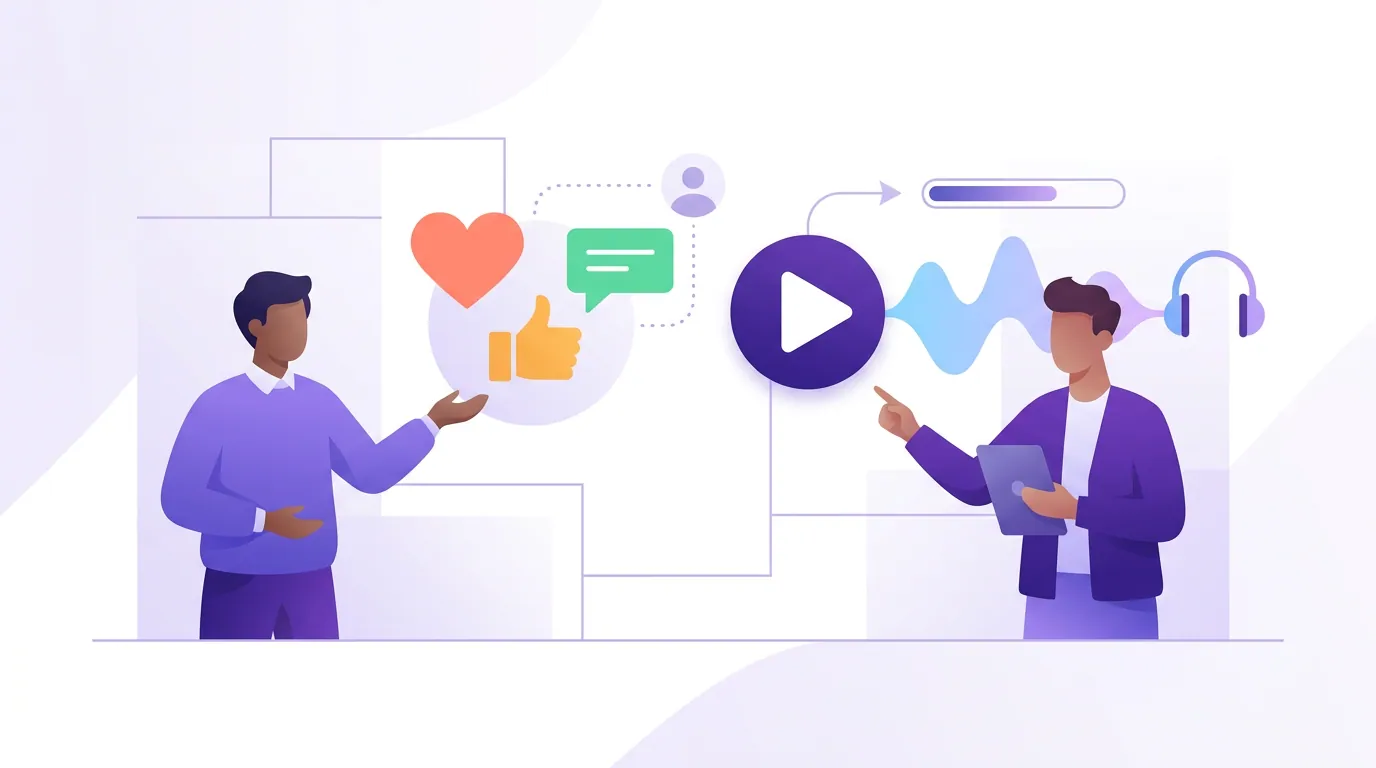
Vanity engagement vs the signals that mean a play
The reason this ranking matters is that LinkedIn makes vanity engagement feel like progress. A poll with 200 votes looks like a hit. It is not, if zero of those voters reached your episode. Here is the line I draw.
Track the right-hand column. LinkedIn shows you video watch-time and you can see clicks on a comment link; those are the numbers that map to listens. Likes and poll votes are weather, not climate. The same discipline applies everywhere, judging real listener intent over surface metrics is the whole game when you turn social followers into actual podcast listeners.
Common mistakes that kill LinkedIn reach for podcasts
- Link in the body. Covered above and worth repeating: it caps reach before the post is read. First comment, every time.
- Uncaptioned video. LinkedIn autoplays muted. A clip with no captions is a silent talking head that gets scrolled past. The same caption rules that make TikTok hooks land in the first three seconds apply on LinkedIn.
- Posting the same format every week. All clips, or all quote cards, flattens your reach. Rotate the two-to-three formats that fit each episode.
- Treating LinkedIn like TikTok. The cadence is slower and the audience reads. One strong post outperforms five thin ones, closer to a TikTok posting schedule built for sustainability than to a daily-volume play.
- No capture step. A play is good; an email is better. Point your strongest posts at a podcast email list you started from zero so a viewer becomes a subscriber, not a one-time listen.
FAQ
What is the best LinkedIn post format to promote a podcast episode? A native video clip, a captioned 30–90 second moment uploaded directly to LinkedIn with the episode link in the first comment. It plays in-feed, gets native distribution, and shows the guest, which sells the episode better than text. A text-only takeaway is the strong second choice.
Should I put my episode link in the LinkedIn post or the comments? The first comment. LinkedIn suppresses reach on posts whose body contains an outbound link, because it wants to keep people on-platform. Put a clip, takeaway, or carousel in the body, then add the episode link as the first comment and pin it.
Do LinkedIn carousels work for podcasts? Yes, for authority and saves, not for immediate plays. A carousel packages an episode's framework into a swipeable document that earns dwell time and shares, but it is self-contained, so many readers finish satisfied without clicking to the episode. Use it when the episode has a teachable, step-by-step structure.
How many times should I post about one episode on LinkedIn? Two to three posts in different formats: always a native clip, plus a text takeaway if the episode has one strong idea, plus a carousel if it has a framework. Space them over the week. Skip the bare link post entirely.
Are LinkedIn polls good for promoting a podcast? Only as a pre-launch warm-up. Polls pull votes because LinkedIn surfaces them aggressively, but a vote is vanity engagement, it costs nothing and rarely leads to a play. Run one the day before an episode to tee up the question your guest answers, then promote the episode with a clip or takeaway.
Once the clips are flowing, the next levers are repurposing across feeds and converting the attention you earn, apply the same instincts in the TikTok growth playbook for podcasts, and set up a welcome sequence for new subscribers so a LinkedIn play turns into a regular listener.