
Editing vs Recording Headphones: Two Different Jobs


Recording and editing ask opposite things of a pair of headphones. While recording, the only job that matters is keeping the headphones' own sound out of the microphone, so you want closed-back, sealed cups that don't leak. While editing, you want the most honest picture of the audio so you can hear plosives, hiss, and harsh edits, and open-back headphones do that better. They are two different tools because they solve two different problems.
That's the whole distinction in one breath. Below: what each design does to your sound, the honest tradeoffs in a table, and the question most solo podcasters are really asking, can one affordable pair do both jobs without ruining either? Short version: yes, with a closed-back pair, as long as you understand the one thing you're giving up.
Why recording headphones have to be closed-back
A microphone records whatever reaches it, including the audio leaking out of your headphones. Open-back headphones leak by design, their cups are perforated so air and sound pass through, and that leak gets picked up by a sensitive mic, especially the dynamic cardioid mics most podcasters use up close. The result is a faint echo of your own voice or guest's voice bleeding back into the track, which is miserable to clean up later.
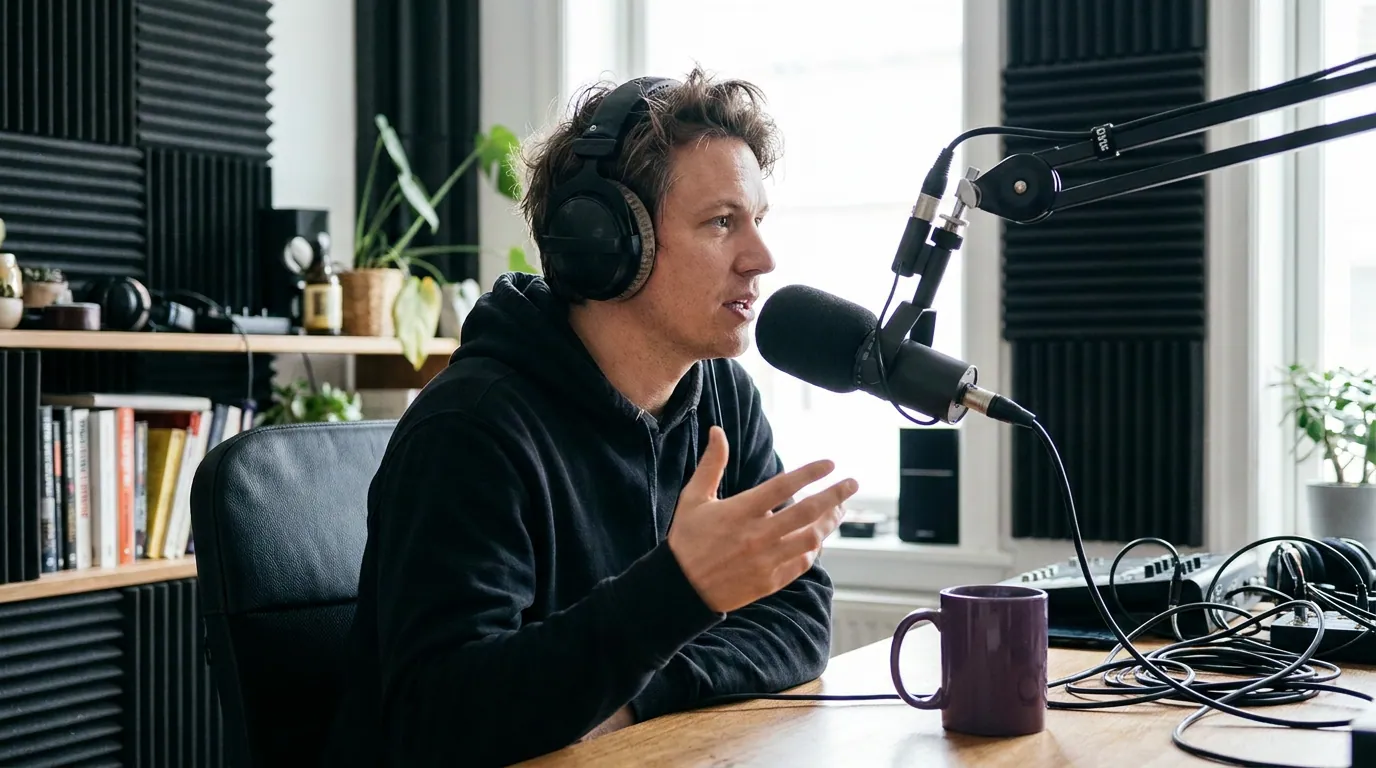
Closed-back headphones have sealed cups that trap the sound facing your ears, so almost nothing escapes into the room or the mic (Sound on Sound). That isolation is the entire reason every recording studio hands the talent closed-back cans. It also works the other way: closed-back blocks more of the room around you, the fan, the keyboard, a co-host's speakers, so you hear yourself and your guest cleanly while tracking.
For an interview or any session where you're both wearing headphones and a live mic is open, this isn't a preference. Open-back headphones near a live mic will bleed. If you record solo with no mic open while you listen back, the rule relaxes, but the moment a mic is hot, closed-back is the safe call.
Why editing and mixing reward open-back
Open-back headphones sound more natural and more like real speakers because the open cups release pressure and resonance that sealed cups trap. That gives a wider, flatter, less "boxed-in" image, which is exactly what you want when you're judging whether a cut sounds clean, whether a plosive is too harsh, or whether the music bed is sitting too loud under speech (Sweetwater). You're trying to hear the truth of the file, not a flattering version of it.
There's a comfort dividend too. Open-back cans don't seal heat and pressure against your head, so they tend to fatigue your ears less over a two-hour editing session (Shure). Long edits are where small audio problems get missed, so anything that keeps your ears fresh is doing real work.
The price of that honesty is leakage, open-back cans spill sound out and let room noise in. That's a non-issue at an editing desk and a deal-breaker beside a live mic. Which is the whole tension this guide exists to resolve.
The quick comparison table
| Job | Use this design | Why |
|---|---|---|
| Recording with a live mic | Closed-back | Sealed cups stop headphone bleed and block room noise |
| Editing, mixing, fine cuts | Open-back | Wider, flatter, more honest sound; less fatigue |
| One pair for everything (solo) | Closed-back | Only design safe near a live mic; editing on it is "good enough" |
Note the asymmetry in that last row, because it's the crux of the whole buying decision. Closed-back can do both jobs passably. Open-back can only do one of them safely. So if you're buying a single pair, the answer is decided for you.
Can one pair do both? The honest answer for solo podcasters
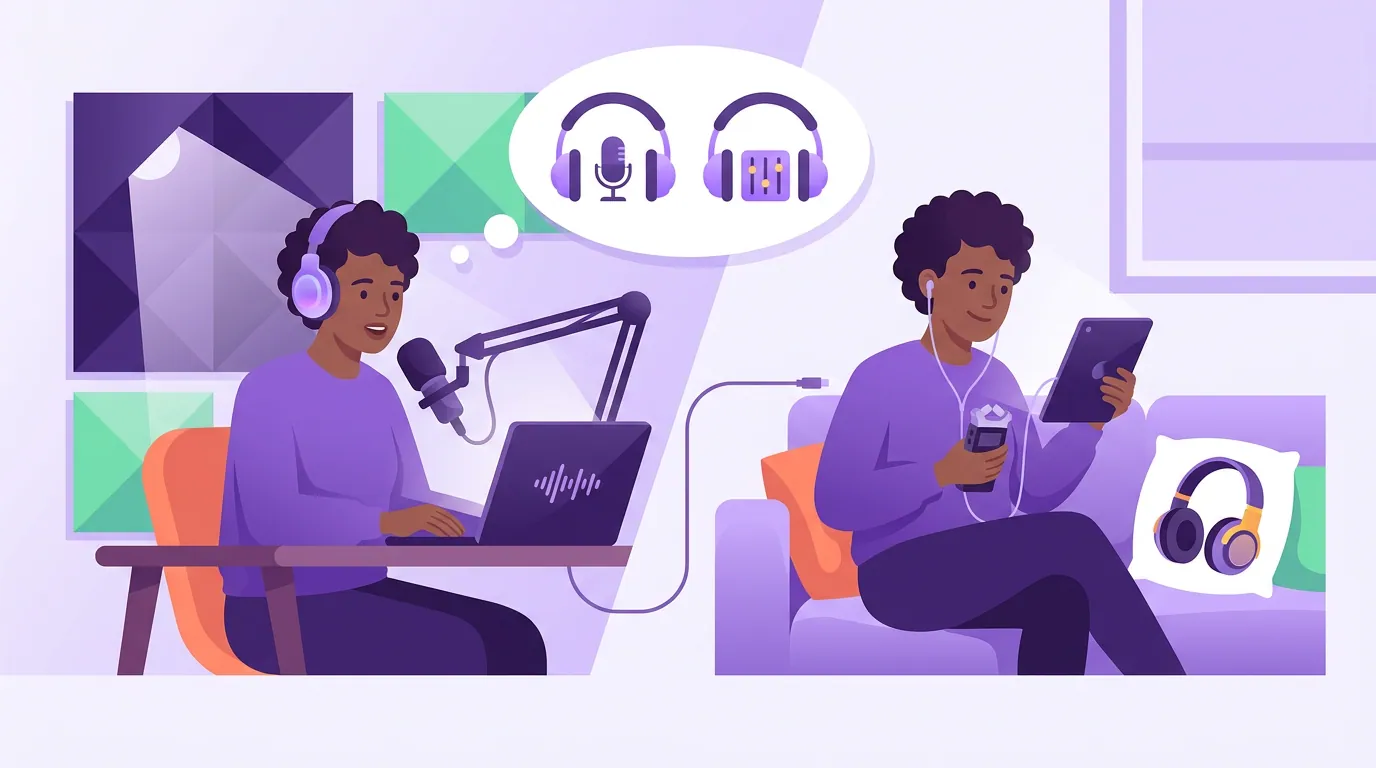
Yes. For a solo podcaster on a budget, one good closed-back pair is the correct call, not a compromise. The reason is the asymmetry above: closed-back is the only design you can safely wear next to a live mic, and a decent pair edits speech well. You give up a little of open-back's "truer picture," but not enough to hurt a speech-first podcast.
Here's the part most gear guides skip. The open-back advantage matters most for mixing music and judging fine spatial detail, the work of a mastering engineer. Podcast editing is mostly speech: trimming dead air, removing filler, leveling voices, checking for plosives and clicks. A good closed-back pair handles all of that. The open-back edge is real, but it's a refinement on a job your closed-back cans already do well.
When does the second pair earn its place? When you're regularly mixing music beds, scoring, or doing heavy noise reduction where you need to hear exactly what you're sculpting, and when you have a quiet, separate editing spot where leakage doesn't matter. Until then, one closed-back pair is the smart spend.
What to actually buy, by situation
This is a TOFU equipment piece, so the point is the design choice, not a fifteen-model leaderboard. But here's how the decision maps to spend, with the same closed-back-first logic.
- Brand-new, one pair, any budget: a closed-back over-ear pair. It's the only design safe next to a live mic, and it edits well enough. Workhorse closed-back monitoring headphones start around the same money as a starter mic.
- Recording interviews where both people wear cans: closed-back for everyone. Open-back on a guest is how you get their voice echoing into your track.
- You edit a lot and mix music: keep your closed-back pair for tracking, add an open-back pair for the editing desk once budget allows.
- You record fully solo with playback muted: you can technically edit on open-back, but you'll still want a closed-back pair the first time you bring on a guest. Buy closed-back first.
Podcast headphones run anywhere from $25 to $600, with plenty of solid options around the $100 mark (Ausha), roughly the same money as a good first mic. You don't need the top of that range to record and edit speech. If you're still building the rig, our best podcast mics by budget tier breaks the spend down the same way, and the best podcast mic under $100, tested by use case covers the entry end.
The thing that beats any headphone upgrade
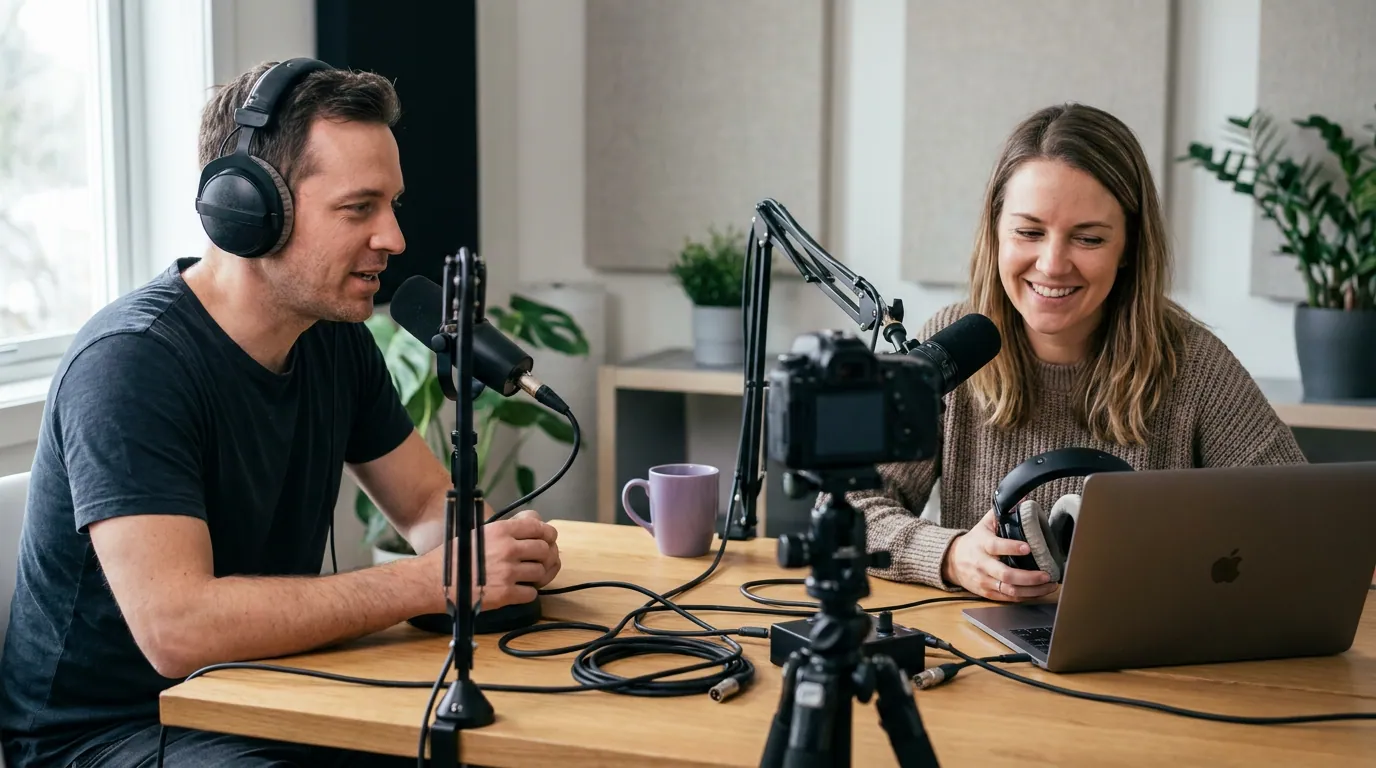
One rule outranks every gear-spec argument: the difference between a cheap rig and an expensive one is smaller than the difference between bad mic technique in a noisy room and good technique in a treated one. A hobby podcast setup runs $100–$350 in one-time gear (Ausha), and most of what separates a good-sounding episode from a bad one at that price isn't the headphones. Your distance from the mic, your room, and your levels decide what gets recorded. A second pair of editing headphones reveals flaws faster; it won't stop you from creating them.
So before you split your budget across two pairs, spend on the inputs. Get close to the mic, kill the echo with soft furnishings, and set your gain so you're not amplifying a quiet, hissy signal in the edit. Then your one good closed-back pair will tell you everything you need to know. If you're weighing the whole signal chain, USB vs XLR mics and hybrid USB/XLR mics that grow with your show are the next two decisions worth ten minutes each.
FAQ
Can I use open-back headphones to record a podcast? Only if no microphone is live while you wear them. Open-back cups leak sound by design, and a close podcast mic will pick up that bleed as a faint echo in your track. For any session with a hot mic, solo or interview, use closed-back (Sound on Sound).
Do I really need two pairs of headphones for podcasting? No. A single good closed-back pair covers recording (where it's mandatory) and edits speech well enough. A second open-back pair only earns its place when you mix music, master, or do heavy noise reduction and have a quiet editing spot where leakage doesn't matter.
Why are open-back headphones better for editing? The open cups release the pressure and resonance that sealed cups trap, giving a wider, flatter, more honest picture of the audio and less ear fatigue over long sessions (Sweetwater; Shure). That honesty helps when you're judging fine detail, but most podcast edits are speech, which closed-back handles fine.
Are wireless or noise-cancelling headphones okay for podcasting? Skip them for recording and editing. Bluetooth adds latency that throws off live monitoring, and noise-cancelling alters what you hear so you can't trust the edit. Use wired over-ear monitoring headphones for both jobs.
What's the single most important thing for podcast headphones? For recording, that they're closed-back so they don't bleed. Beyond that, comfort over a two-hour session matters more than chasing a flat frequency response. Headphones don't change what your mic captures, the room and your mic technique do.