
How to Grow a Science Podcast by Translating Research


Grow a science podcast by getting good at one specific skill: turning a research paper into a sentence a curious non-expert wants to repeat, without losing what the paper actually says. The studies that travel are counterintuitive, relatable, and self-contained, and the hook that travels keeps the caveat. Pick the right study, translate it cleanly, find researchers who can speak plainly, and let curiosity-driven communities spread the clip.
That is the entire game, and it is harder than it sounds. Most science shows fail in one of two directions: they stay so accurate they are unlistenable, or they hype a finding into something the data never claimed. The durable shows live in the narrow band between those failures. This guide is the playbook for staying there: a paper-to-hook translation ladder, a scorecard for deciding which studies will clip well, a method for sourcing guests who do not bury you in jargon, and how to grow without trading your credibility for a viral moment.
What actually grows a science podcast?
Translation grows it. A science podcast grows when you reliably turn dense research into something a smart, busy non-expert can understand in 30 seconds and want to share, while keeping the finding honest. Not louder production, not more episodes, not a better mic. The bottleneck is almost always the gap between what a paper says and what your audience can feel, and closing that gap is the whole job.
Science is not a top-tier US genre the way comedy, news, and true crime are (Statista, top US podcast genres), which cuts both ways. The room is less crowded, so a clear voice stands out faster. But the audience does not arrive by default the way it does for comedy, you have to earn each listener by being the person who finally made a confusing thing make sense. That is a translation problem, not a volume problem.
There is a survival angle too. Nearly half of all podcasts stop at three episodes or fewer Amplifi Media, and science shows have a specific failure mode: the host picks fascinating-to-them papers that are impossible to explain quickly, the episodes get heavy, the clips do not travel, and the feedback loop that keeps a host going never starts. Pick clippable science from episode one and you give the show somewhere to go.
The translation ladder: paper to hook without losing the truth
Translate in four rungs, and carry the caveat up every one. The mistake is treating translation as "make it simpler", simplification alone is how accuracy dies. Translation is making it clearer and shorter while keeping what is true, and the caveat is part of what is true. Here is the ladder I use on every study before it becomes a hook.
Rung one is the finding in the paper's own terms, the effect size, the sample, the confidence. Rung two strips the notation but keeps the hedge: "a bit less likely," "in one study," not "proven to prevent." Rung three connects it to something the listener already does or worries about, because relevance is what makes a stranger care. Rung four is the hook that opens your clip, and it can be punchy, as long as the next sentence in the clip restores the caveat.
The discipline that separates a durable science show from a hype account is this: the hook can be bold, but it cannot lie, and the clip must contain its own correction. "The supplement everyone takes might do nothing" is a fair hook if the next ten seconds say "one large trial found no effect, here's what that does and doesn't mean." That structure, bold open, honest immediately after, is the most-shared format in credible science short-form, because it gives people the surprise and the safety of not being misled.
Which studies should you actually clip? The CRVS scorecard
Not every study clips, and chasing the ones that don't is how science hosts burn out. Score a study on four traits before you build an episode hook around it, counterintuitive, relatable, visual, self-contained. A study that scores high on all four practically clips itself. One that scores low is a fine read but a bad hook, and you should know that before you spend an hour on it.
Run a quick gut-score from one to five on each trait. Counterintuitive is the strongest single predictor, a result that contradicts common belief is inherently shareable, because people forward things that change their mind. Relatable means it connects to sleep, food, money, phones, kids, health, anxiety, the stuff non-scientists already think about. Visual matters more every year, because science clips that can show a chart, a demo, or a clear comparison hold attention that talking-head explanation loses. Self-contained is the gate: if a clip needs three minutes of background to land, it is an episode segment, not a clip.
A worked example. A meta-analysis on statistical power in psychology research scores low, fascinating to nerds, low on relatable and self-contained. A study finding that a five-minute walk after eating blunts blood-sugar spikes scores high on all four: counterintuitive (you thought you needed a "real" workout), relatable (everyone eats), visual (a glucose curve flattening), self-contained (you get it instantly). Same field, wildly different clip potential. The scorecard tells you which one opens the episode.
How do you find researcher guests who can actually talk?
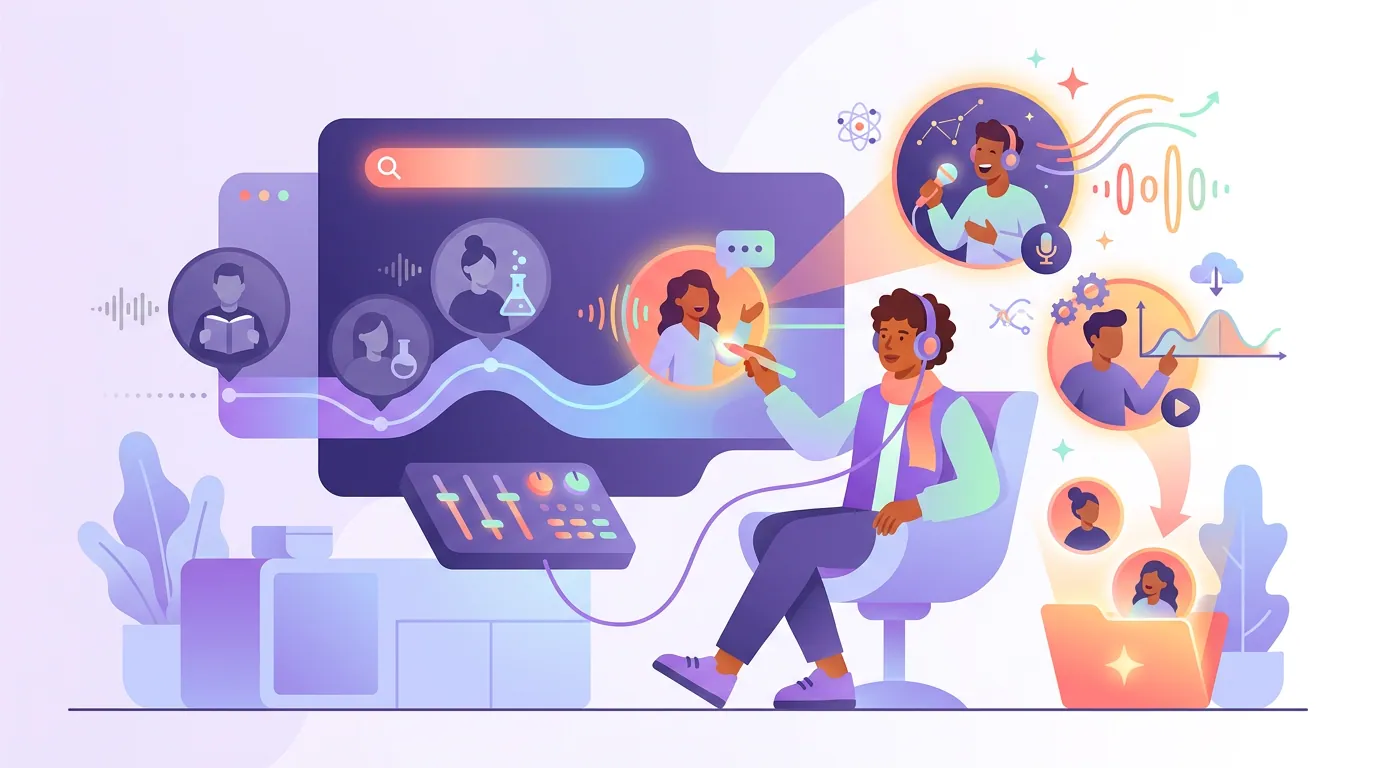
Source guests for plain speaking, not prestige. The most-credentialed scientist in a field is often the worst podcast guest, and the postdoc who runs a popular thread explaining their own work is frequently the best. Your job is to find researchers who can hold a clear sentence, and the signal for that is already public.
Where the plain-speaking ones show up:
- Their own short-form. A researcher who posts threads, TikToks, or YouTube explainers about their field has already proven they can translate. They are pre-qualified guests, and they want the reach.
- University press releases and "explainer" quotes. Press offices pick the scientists who give a usable quote. If someone is repeatedly quoted in plain language about new findings, they can do your show.
- The acknowledgements and "lay summary" sections. Many journals now require a plain-language summary; the authors who write a good one are the ones to email.
- Science communicators with a real degree. Hosts and writers who came from the bench can bridge both worlds and often bring an audience.
Pitch them the way you would pitch any guest, short, specific, and about them, not you. The same guest-first dynamics that grow B2B shows apply here: the show that books well grows faster than the show that chases listeners directly, which is the core argument in why business podcasts grow by booking guests first. For science, add one line that does outsized work: tell the researcher you will send the clips for them to share, and that you caption everything so their work reaches people who watch on mute. Reach plus accuracy is a combination most outlets do not offer them, and it gets yeses.
Once they are booked, do the translation work in the room. Ask "how would you explain that to your aunt?" and "what's the part everyone gets wrong?", those two questions produce the cleanest clip moments you will get all episode.
The credibility-vs-accessibility balance (the line you cannot cross)
Accessibility wins attention; credibility wins a durable audience. The shows that last hold both, and the way you hold both is by being accessible in the hook and credible in the body, never by sacrificing one for the other. Cross into hype and you get a spike of views and a slow erosion of the trust that makes a science show worth subscribing to.
A few rules that keep the line clear:
- Never upgrade a correlation to a cause. "Linked to" is not "causes." This is the single most common science-clip lie, and your audience's smartest members will catch it.
- State the sample and the stage. "One small study," "early animal research," "a large randomized trial", these three words change everything and take one second.
- Let "we don't know yet" be a feature. Saying the science is unsettled is more credible than false certainty, and it is a surprisingly good hook in its own right.
- Correct on the record. When you get one wrong, fix it openly next episode. A correction is the most trust-building thing a science show can do, the same trust mechanic that powers a true crime show that grows on credibility instead of shock.
The honest framing to keep in front of you: virality without strategy is empty engagement, and views are not conversions. A clip that misleads can outperform a clip that informs, for one week. The misleading one costs you the audience you were trying to build.
Where science shows actually spread
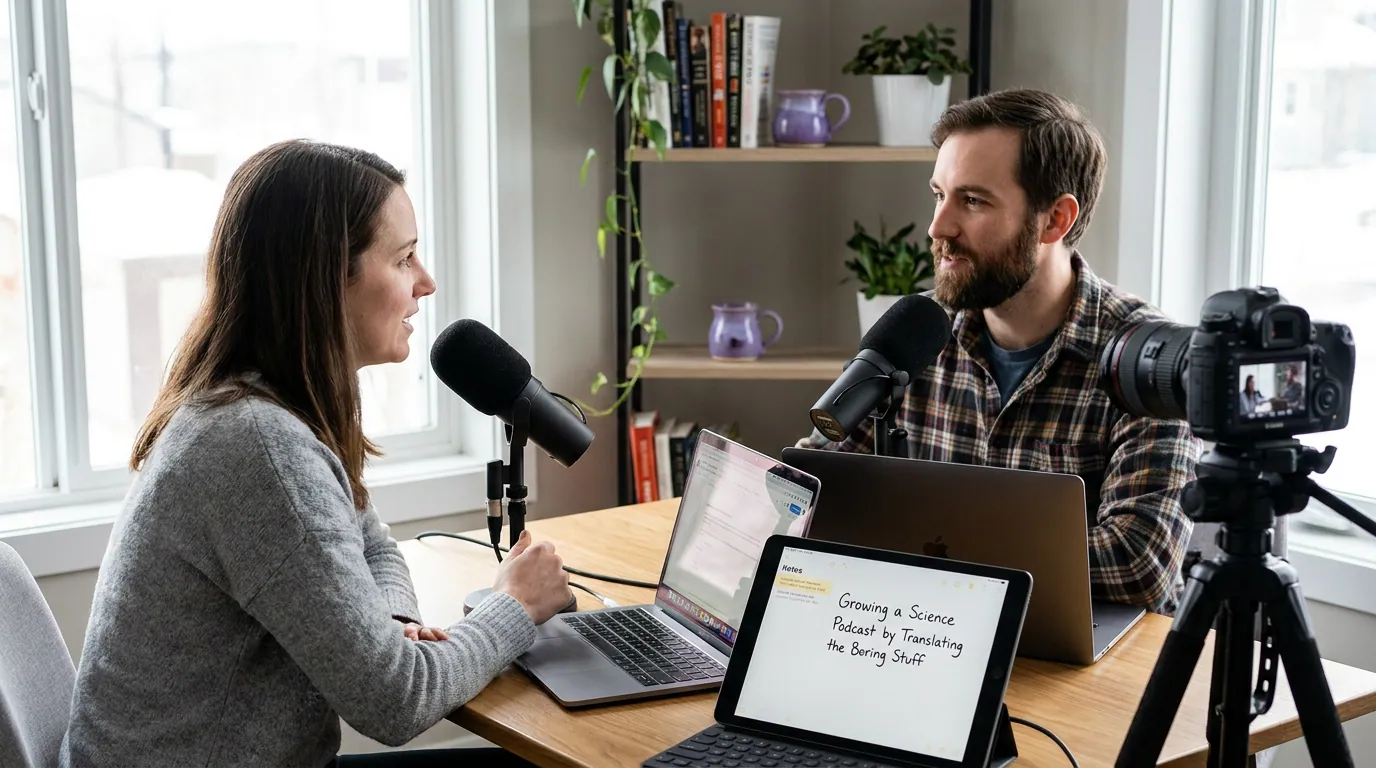
Science spreads through curiosity, not through a genre chart. The discovery loop runs from a clip into a community that is already curious, a subreddit, a niche Discord, a comment section of a bigger science channel, which sends people to the full episode, which captures the most loyal into a channel you own.
Clips are the entry ticket because the format is increasingly watched, not just heard, 53% of new US weekly listeners now prefer to watch a podcast (Backlinko), and a captioned visual clip is what people actually drop into a thread when they want to say "wait, look at this." Social clips now drive discovery more than personal referrals (57% of listeners rely on social media for recommendations versus 54% on friends and family, per InsideRadio), and posting clips consistently can lift discovery reach 2 to 5x (Podcast Studio Glasgow). State the catch out loud: those reach figures come from production studios with an interest in the result, so treat them as directional. And because most social video is watched on mute (commonly cited at 75 to 85%, per Verizon Media and Digiday reporting), your captions and on-screen chart carry the whole finding, for a science clip, that is the difference between informing and being misunderstood.
The same niche-discovery loop powers other communities, it is how a comedy show grows on its most clippable moments and how a fitness show grows around program launches. For science the entry ticket just has a higher accuracy bar: the clip has to be both surprising and correct, or the smartest person in the thread will dismantle it.
Common mistakes that stall a science podcast
- Picking studies that fascinate you but can't be clipped. Run every study through the CRVS scorecard first. If it scores low on relatable and self-contained, it is a long-form segment, not the hook that grows the show.
- Dropping the caveat to make the hook land. A bolder lie outperforms a true claim for exactly one week, then costs you the credibility you were building. Keep the correction inside the clip.
- Booking the most-credentialed guest instead of the clearest one. Prestige does not translate; plain speaking does. Source guests from their own short-form and their lay summaries.
- Upgrading correlation to causation in the caption. This is the most common science-clip error and the easiest for a sharp audience to catch. "Linked to," never "causes," unless the study is a causal one.
- Building only on rented platforms. A clip can get throttled and a chart position can vanish. Move your most loyal listeners somewhere you control, start a podcast email list from zero and put a real welcome sequence for new subscribers behind it, so a careful episode reaches people even when the algorithm doesn't cooperate.
FAQ
How do you grow a science podcast? Get good at translation: turn each research finding into a 30-second hook a curious non-expert wants to share, while keeping the caveat intact. Score studies on whether they are counterintuitive, relatable, visual, and self-contained, clip the ones that pass, book guests who speak plainly, and seed those clips into curiosity communities. The accuracy is what makes the growth durable.
Which research makes the best podcast clips? Studies that are counterintuitive (they overturn a common belief), relatable (they touch sleep, food, money, health, or phones), visual (you can show a chart or demo), and self-contained (they land in under a minute with no prerequisite). A finding that hits all four practically clips itself; one that needs three minutes of background belongs in a long-form segment instead.
How do you make science accurate and engaging at the same time? Be accessible in the hook and credible in the body. Open the clip with the bold, surprising line, then immediately restore the caveat, the sample size, the stage of research, the "linked to" versus "causes" distinction. The clip should contain its own correction. That structure gives the audience the surprise and keeps you honest, which is what earns repeat listeners.
How do you find scientists who are good podcast guests? Look for plain speaking, not prestige. Researchers who post their own threads or explainers, who are quoted clearly in university press releases, or who write good lay summaries have already proven they can translate. Pitch them on reach plus accuracy, tell them you will send captioned clips of their work to share.
What kind of clip works best for a science podcast? A surprising, accurate moment with something on screen, a flattening chart, a quick demo, or a clear before/after, paired with a hook that leads on the counterintuitive line. Caption it heavily, since most social video is watched on mute (75 to 85%, per Verizon Media and Digiday reporting), and make sure the finding survives without sound, because for science the caption is the message.