
How to Grow a Mental Health Podcast Without Burning Out


Grow a mental health podcast the way you would manage a heavy caseload: protect the host first, set a crisis-resource standard the audience can rely on, and grow with clips that teach rather than retraumatize. Pick a cadence you can hold for a year, alternate heavy episodes with steadier ones, and clip the insight, not the breakdown.
This niche fails for a reason most growth advice ignores. The content is emotionally expensive to make. You are not reviewing gadgets; you are sitting with grief, trauma, and your own history every week. The shows that survive are not the loudest. They are the ones whose hosts built a system that keeps the work sustainable and the audience safe at the same time.
Why pacing matters more here than in any other niche
Nearly half of all podcasts never get past their first three episodes Amplifi Media, and only about 11% ever reach 50 episodes (PodMatch's Actively Established Podcast report). The single biggest predictor of survival is publishing consistency. In a mental health show, the thing that breaks consistency is rarely the editing workload, it is host fatigue from heavy material.
So the growth lever is counterintuitive. You do not grow by going harder. You grow by outlasting the roughly 89% of shows that quit before episode 50, and you only last if the production rhythm protects you.

How do you grow a mental health podcast without burning out?
Build three systems before chasing a single new listener: a host-pacing rule that caps heavy material per month, a crisis-resource standard that runs on every episode so safety is automatic, and a clipping policy that promotes the show with teachable moments rather than someone's worst day. Growth then becomes a byproduct of a process you can repeat without dread.
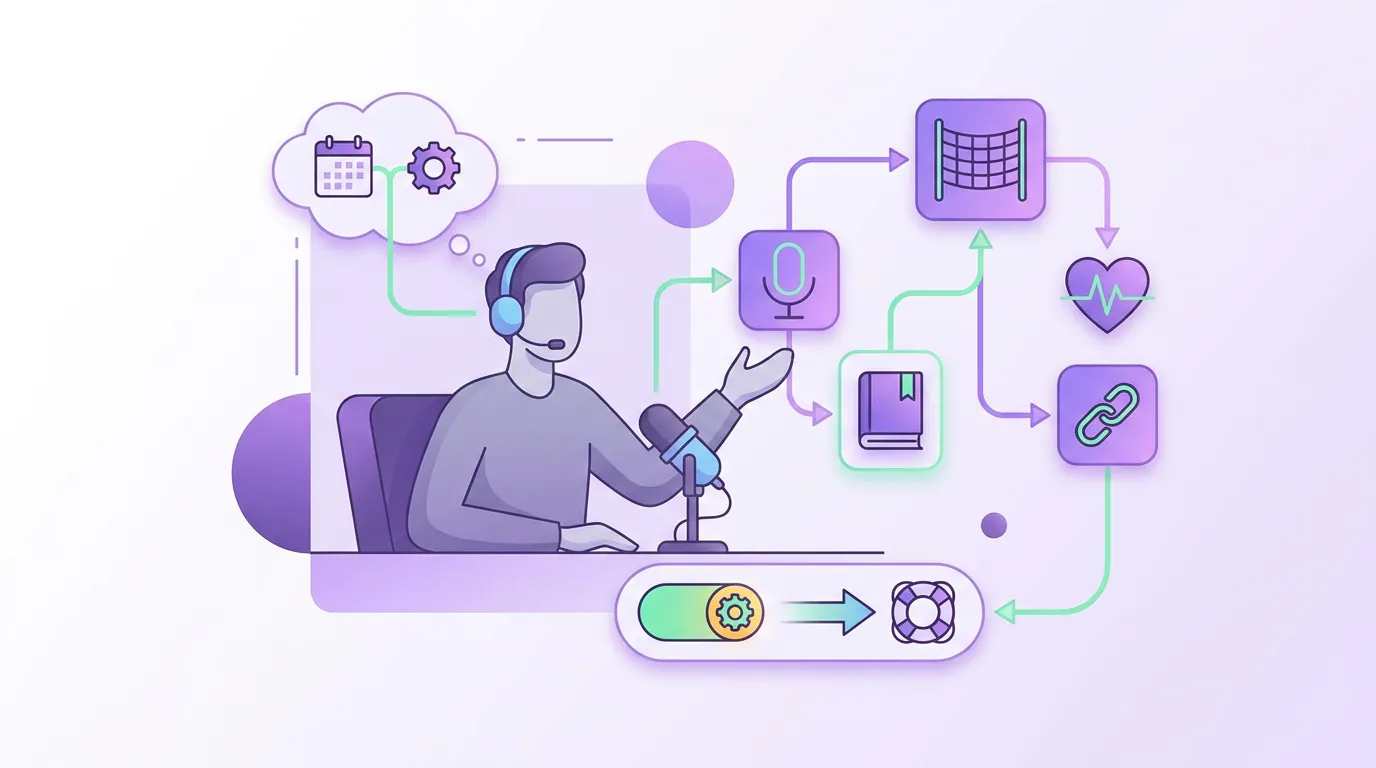
Call it the Dual-Protection System, protect the host, protect the listener. It is two checklists and one rule, and it is the through-line for the rest of this guide.
Step 1: Set a heavy/steady cadence
Sort every planned episode into one of two buckets before you record. Heavy episodes deal with trauma, loss, suicidal ideation, abuse, or your own raw story. Steady episodes are lighter: a coping skill, a book breakdown, a listener Q&A, a "small wins" format, a craft conversation with a clinician about their work rather than a survivor reliving an event.
The rule: never publish two heavy episodes back to back. Alternate. If your show is weekly, that is at most two heavy episodes a month. If you feel the dread building, you are allowed to run three steady episodes in a row, the audience will not punish you, and your nervous system will thank you.
A practical add-on: batch-record steady episodes when you feel good. Bank two or three. Those become your buffer for the weeks when a heavy episode wipes you out or life intervenes. The buffer, not willpower, is what protects your publishing streak.
Step 2: Make safety automatic with a crisis-resource standard
Audiences in this niche expect a baseline of care, and platforms increasingly look for it. Build a fixed safety block you reuse on every episode so it never depends on remembering. Your standard should cover:
- A spoken content note at the top of any episode touching self-harm, abuse, or acute crisis, short, calm, specific ("This episode discusses suicidal thoughts").
- A "not a substitute for care" disclaimer stating you are sharing experience and information, not clinical advice. If you are not a licensed clinician, say so plainly. If you are, your professional body likely has rules about portraying treatment, follow them.
- Crisis resources in every set of show notes, the regional helpline numbers for your main audience (for example, the 988 Suicide & Crisis Lifeline in the US), pinned and identical each time.
- A consent and anonymity protocol for guests sharing trauma: agree before recording what is on the record, and offer to alter identifying details.
This is not legal advice, and you should get your own. But a consistent safety block is also a trust signal that compounds, it is one reason listeners stay, and staying audiences are what feed a podcast email list you actually own.
Step 3: Grow with clips that teach, not clips that retraumatize
This is where most mental health shows either stall or do harm. Clips are the strongest discovery channel available, 57% of listeners now rely on social media for podcast recommendations, the first time it surpassed friends and family (InsideRadio), and clips can drive 20–40% of a video show's new audience (Podcast Studio Glasgow). But the obvious clips in this niche are the rawest moments, and those are exactly the wrong ones to push.
The decision rule is simple. Clip the insight, not the breakdown. A 45-second moment where a guest names a coping strategy travels and helps. A 45-second moment of a guest crying through the worst night of their life gets views and exploits them. The first builds a show people trust; the second builds one people screenshot and recoil from.
A clip-safety test before anything leaves your edit, pass all four or do not post it:
- Useful out of context? A stranger who never hears the full episode gets something true and helpful, not just a feeling.
- Dignified? The person in the clip would be comfortable seeing it on a stranger's feed.
- Non-prescriptive? It does not present a single experience as medical instruction.
- Captioned and content-noted? Most social video is watched on mute, commonly cited at 75–85% muted (Sharethrough research via Digiday reported ~75% of mobile video; Digiday reported ~85% of Facebook video muted, publisher-reported and directional), so captions are mandatory, and a one-word on-screen content note where the topic is heavy.
The same principle that keeps a true crime show from exploiting victims applies here: the ethical clip and the effective clip are usually the same clip, because audiences reward shows that handle hard material with care.

Step 4: Pick steadier growth channels for a heavy topic
Not every growth tactic fits a mental health show. Choose the ones that reward depth and consistency over volume and shock.
| Channel | Why it fits this niche | The honest catch |
|---|---|---|
| Search/evergreen episodes | People search symptoms and skills at 2am; calm, titled "how to cope with X" episodes get found for years | Slow to compound; not a launch-week spike |
| Teachable clips | Coping-skill moments are shareable without being exploitative | The raw moments tempt you; resist them |
| Email list | A direct line that does not depend on an algorithm's mood | You have to ask for the signup every episode |
Email deserves a line of its own. In a sensitive niche, owning the relationship matters more than borrowing reach. A simple welcome sequence for new subscribers lets you set expectations, share resources, and stay in touch on a cadence you control, which is, again, the theme of the whole show.
Common mistakes that burn out mental health hosts
- Recording four heavy episodes in a month. This is the fast track to dread, then a missed week, then podfade. Cap it. Alternate.
- Treating the rawest clip as the best clip. It performs on vanity metrics and corrodes trust. Views are not the same as the right audience. The discipline that helps a comedy show find genuinely clippable moments applies inverted here: find the moment that helps, not the one that shocks.
- No consistent crisis-resource block. Improvising safety per episode means you eventually forget, on the episode where it matters most. Make it a template.
- Chasing guests who relive trauma on camera with no consent protocol. Booking-led growth works well for business and interview podcasts, but here it requires explicit, pre-recording consent and an anonymity option.
- No buffer. With nothing banked, one bad week breaks the streak. Batch steady episodes when you have the energy.
What "good" growth looks like here
Borrow one habit from outside the niche: tie growth to a steady rhythm rather than a sprint, the way a fitness show plans around program launches. For a mental health show, the rhythm is the heavy/steady cadence plus a weekly batch of teachable clips. Hold that for six months and you will be past the episode count where most shows die, with an audience that trusts you, which is the only audience worth growing.
FAQ
How often should a mental health podcast publish? Weekly or biweekly is plenty, and biweekly is often the smarter choice in this niche because it builds in recovery time. Consistency beats frequency: a regular cadence, not raw volume, is what separates active shows from the podfaded majority (squadcast). A sustainable biweekly show outgrows an exhausted weekly one that quits at episode 12.
Is it okay to share my own mental health story on the show? Yes, with a pacing rule. Personal-story episodes are some of the most connective content you can make, but they are emotionally costly. Treat them as "heavy," never stack two in a row, and bank a steady episode as a buffer afterward. Add a content note and crisis resources every time.
Which clips should I avoid posting? Avoid clips of acute distress, anyone's worst moment, or anything that reads as medical instruction out of context. Run the four-point test: useful out of context, dignified, non-prescriptive, captioned with a content note. If a clip fails any one, do not post it, the views are not worth the harm or the lost trust.
Do I need to be a licensed therapist to grow a mental health podcast? No, but you must be clear about what you are. State plainly that you share lived experience and information, not clinical advice, and put crisis resources in every episode. If you are licensed, follow your professional body's rules on portraying treatment. Honesty about your role is itself a trust and growth asset.