
Why Your Voice Sounds Different Recorded, And How to Like It


Your recorded voice sounds different because you never hear your real voice the way everyone else does. When you talk, sound reaches your ears two ways: through the air, and through the bones of your skull, which add a low, warm bass that only you hear. A recording captures the air path alone. So the playback isn't wrong, it's the version the rest of the world has heard your whole life.
That gap is why the first listen makes you wince. The voice in your head is bassier, rounder, more authoritative than the one on the tape, and your brain has spent decades treating that internal version as the real you. Strip the bone-conducted bass and you get something thinner and higher than you expected, and the mismatch reads as "that's not me." It is you. It's the only you anyone else has met. This guide explains the mechanism in plain terms, then walks through a short protocol to stop the flinch, because once you can listen to a take without cringing, you can actually review your own delivery and perform without the self-consciousness getting in the way.
Why does my voice sound different on a recording?
Your voice sounds different recorded because you lose the bone-conduction path. While you speak, your vocal cords vibrate your skull as well as the air, and bone carries low frequencies efficiently, so your internal voice has extra bass and warmth. A microphone only picks up the air-conducted sound, which is higher and thinner.
The effect is bigger than most people assume. Bone conduction boosts the low end specifically, so the version in your head can sound a full register more resonant than reality. Everyone you have ever spoken to has heard the thinner, air-only version. The recording isn't distorting your voice. It's removing a distortion that only you experience, and showing you the baseline everyone else already knows.
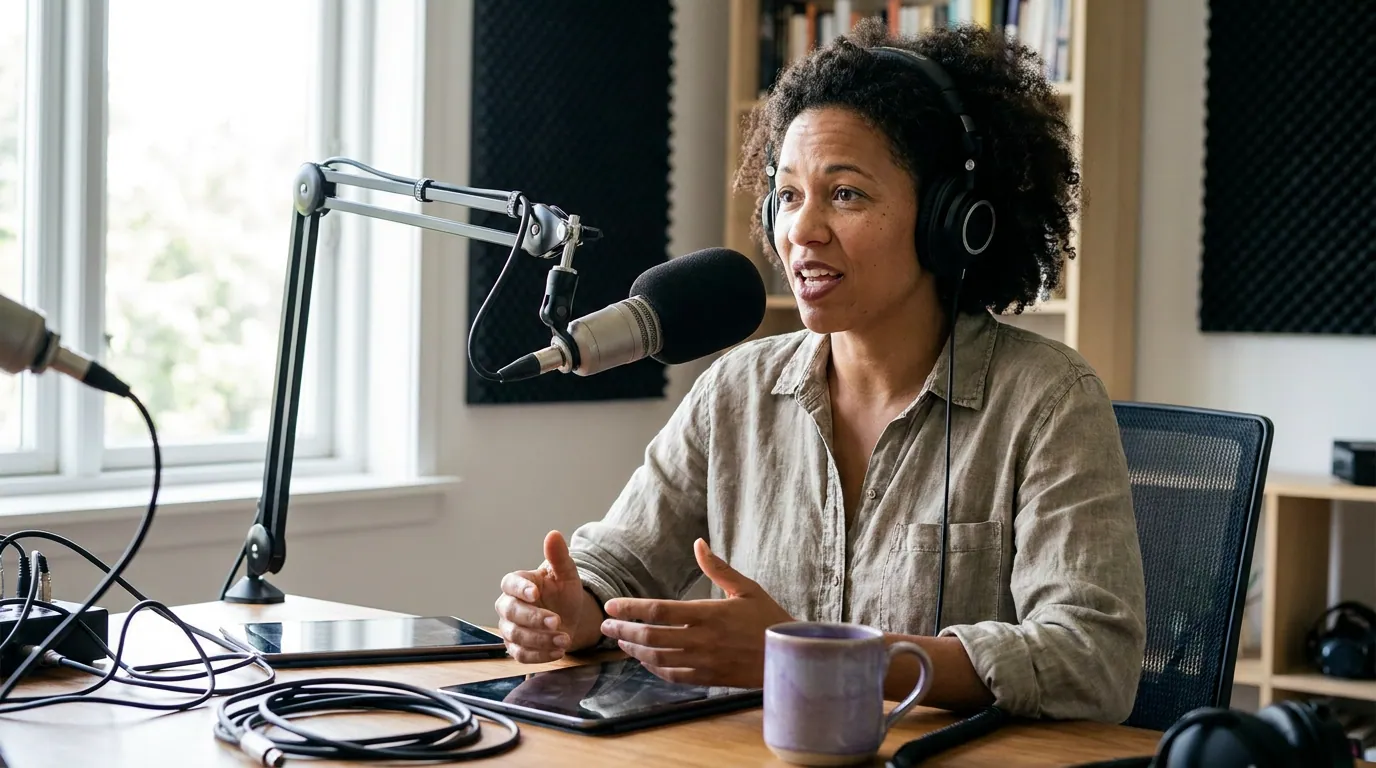
Is the recording or the voice in my head the "real" one?
The recording is the real one, in the only sense that matters: it's the voice every other person hears. The version in your head includes bass that exists only inside your own skull, no listener, no microphone, no phone call ever receives it. To know what you actually sound like, trust the playback.
This reframe does more work than any tip. The discomfort comes from comparing the recording against a private internal reference no one else shares. Once you accept that the internal version was never the benchmark, the recording stops being a downgrade and becomes simple information. You're not hearing a worse voice. You're hearing the accurate one for the first time, and learning to recognize it is a normal adjustment, not a verdict on your voice.
How do I stop hating my recorded voice?
You stop hating it with exposure, not effort. The flinch is a familiarity gap, your brain flags the air-only voice as foreign because it rarely hears it. Play short recordings of yourself daily, listen for content rather than tone, and the foreignness fades within a couple of weeks. The voice doesn't change. Your reaction does.
This is the same desensitization principle used for any harmless thing that triggers an outsized reaction: controlled, repeated, low-stakes exposure. The mistake guests make is the opposite, they record, cringe once, and avoid ever listening back, which keeps the voice permanently unfamiliar and the flinch permanently fresh. Here is the protocol I give nervous guests, built to make exposure short enough that you'll actually do it.
Step three is the hinge. People conflate two completely different things when they say "I hate my voice": the timbre, which is the air-only sound you can't change, and the delivery, which is everything you can. Once you split them, the timbre stops being a problem to solve and the delivery becomes a skill to practice. That distinction is what lets you review a take without it feeling like a referendum on you.

How do I review my own takes without cringing?
Review only the column you can change. Split everything you notice into "sound", your natural timbre, accent, and pitch, which are fixed, and "delivery", pace, clarity, energy, fillers, and where your sentences trail off, which are not. Ignore the first column entirely. Judge yourself on the second, and only the second.
This is the framework that turns playback from an ordeal into editing. When you catch yourself thinking "I sound so nasal," that's a sound note, drop it, you can't act on it. When you notice "I rushed that answer and swallowed the ending," that's a delivery note, write it down, it's fixable next take. Most people never separate the two, so every listen feels like a long list of flaws, half of which they could never have done anything about.
The delivery column also happens to be where every quotable moment is won. A calm pace and a finished thought make a clean answer; a swallowed ending or a rushed answer makes one you'd never post. If you want to attack that list directly, the fastest wins are usually cutting the um and like out of your answers and warming the voice up before you record so it doesn't crack or sit flat in the first ten minutes.
Common mistakes that keep you stuck on your voice
The voice-hatred loop is usually kept alive by a handful of habits, not by the voice itself. These are the ones I see most.
- Avoiding playback entirely. Record, cringe once, never listen again, and the voice stays permanently unfamiliar, so the flinch never fades. Avoidance feels protective and is the single thing that guarantees you keep hating it. Short, regular exposure is the only fix.
- Trying to fake a deeper voice. Pushing your pitch down to chase the bass you hear internally reads as forced and tires your throat fast. Your natural pitch, spoken with energy and clarity, always sounds better than a performed one. Work the delivery, not the register.
- Judging the sound, not the delivery. "I sound nasal" is not actionable; "I trailed off at the end of that answer" is. Spending playback critiquing your fixed timbre teaches you to dread it and fix nothing.
- Self-monitoring while you talk. Listening to yourself mid-sentence to check how you sound is what makes you stiff and quiet, and self-consciousness is audible. Put your attention on the host and the idea, the same way you'd hold eye contact with the camera instead of watching your own video feed.
- Comparing yourself to a polished broadcast voice. The host you admire has hundreds of hours of reps and probably hated their voice once too. You're comparing your raw take to their edited highlight. Compare your take this month to your take last month instead.
Settle those and the voice stops being the thing you think about, which, not coincidentally, is also what makes you sound relaxed. The same composure carries into looking confident on camera as a first-time guest, because a guest who isn't fighting their own voice has the attention to spare for the conversation.
A two-week plan to make peace with your voice
Stack the protocol into a short routine and you don't have to white-knuckle it. Run this in the couple of weeks before a recording that matters.
- Days 1–4: tiny daily clips. Record 30–60 seconds on your phone, reading anything, or answering a question out loud, and replay it once. No notes, no judgment. You're only building familiarity.
- Days 5–9: listen for content. Keep recording daily, but on each replay ask only "did I make my point clearly?" The voice fades into the background when your attention is on the words.
- Days 10–14: one delivery fix at a time. Now review against the right-hand column, pace, fillers, finished sentences, and pick one thing to improve in the next clip. One per take, then stop.
- Before the real recording: do a quick vocal warm-up and remember that the host wants you to sound good, making a guest comfortable is, after all, part of the host's job.
Why getting over this is worth it
Once your own voice stops distracting you, two things happen: you perform better live because you're not self-monitoring, and you can finally review your takes well enough to keep improving. That second part feeds directly into how your show grows. 57% of listeners now rely on social media for podcast recommendations, the first time that source passed friends and family (InsideRadio), and **53% of new US weekly listeners now prefer to watch a podcast, up from 30% in April 2022** (Backlinko). The clips people share are the ones where you sound clear, calm, and at ease, and you can only make those clips if you can stand to watch yourself back. Make peace with your voice and the rest gets easier, including showing up to your next interview having read up on the unwritten guest etiquette rules.
Frequently asked questions
Why does my voice sound different and higher on a recording? Because you lose the bone-conduction path. When you speak, your skull carries low frequencies to your inner ear, adding bass and warmth only you hear. A microphone records the air-conducted sound alone, which is higher and thinner. The recording is the version everyone else has always heard, it's accurate, not distorted.
Which is my real voice, the recording or the one in my head? The recording. The voice in your head includes bone-conducted bass that no microphone, phone, or listener ever receives. Everyone you've spoken to has heard the air-only version on the recording. If you want to know what you genuinely sound like, trust the playback.
Can I train myself to like my recorded voice? Yes, with exposure rather than effort. Record short clips of yourself daily, replay them focusing on what you said instead of how you sound, and the foreignness fades within a couple of weeks. The voice doesn't change, your familiarity with it does, and familiarity is what kills the flinch.
Should I try to make my voice sound deeper? No. Pushing your pitch down to chase the bass you hear internally sounds forced and strains your throat. Your natural pitch, delivered with energy, clear articulation, and finished sentences, always beats a performed register. Improve the delivery, leave the timbre alone.
How do I review my own recordings without feeling terrible? Split what you notice into "sound", timbre, accent, pitch, which are fixed, and "delivery", pace, clarity, fillers, energy, which you can change. Ignore the sound column entirely and review only delivery, picking one fix per take. Reviewing the changeable parts turns playback into useful editing instead of self-criticism.