
The Best Solo Podcasts and How They Hold You


The best solo podcasts, Criminal, Short History Of…, Making Sense, The Emerald, hold listeners without a guest using three levers: a narrative structure that creates forward pull, a deliberate scripted-improvised balance, and a parasocial voice that feels like one person talking to you. Who they are is easy. How they keep you is the lesson.
A solo show has no second voice to break the monotony, no guest to carry a dead patch, no banter to fall back on. That is exactly why most solo shows are a slog and a few are unmissable. This page takes the ones that work and pulls out the mechanism, so you can borrow it at any scale.
What makes a solo podcast actually hold attention?
A solo podcast holds attention when the host replaces the missing guest dynamic with structure and intimacy: script enough to keep a story moving, improvise enough to stay human, and speak in a one-to-one register. The format's weakness, one voice, no friction, becomes its strength once the host stops imitating an interview and builds for solo.
The trap most new solo hosts fall into is recording a monologue as if a co-host might wander in. They leave gaps a guest would normally fill, ramble toward a point instead of arriving at one, and never decide whether the episode is written or off-the-cuff. The shows below made that decision on purpose, and it is the difference between a podcast you finish and one you abandon at minute four.
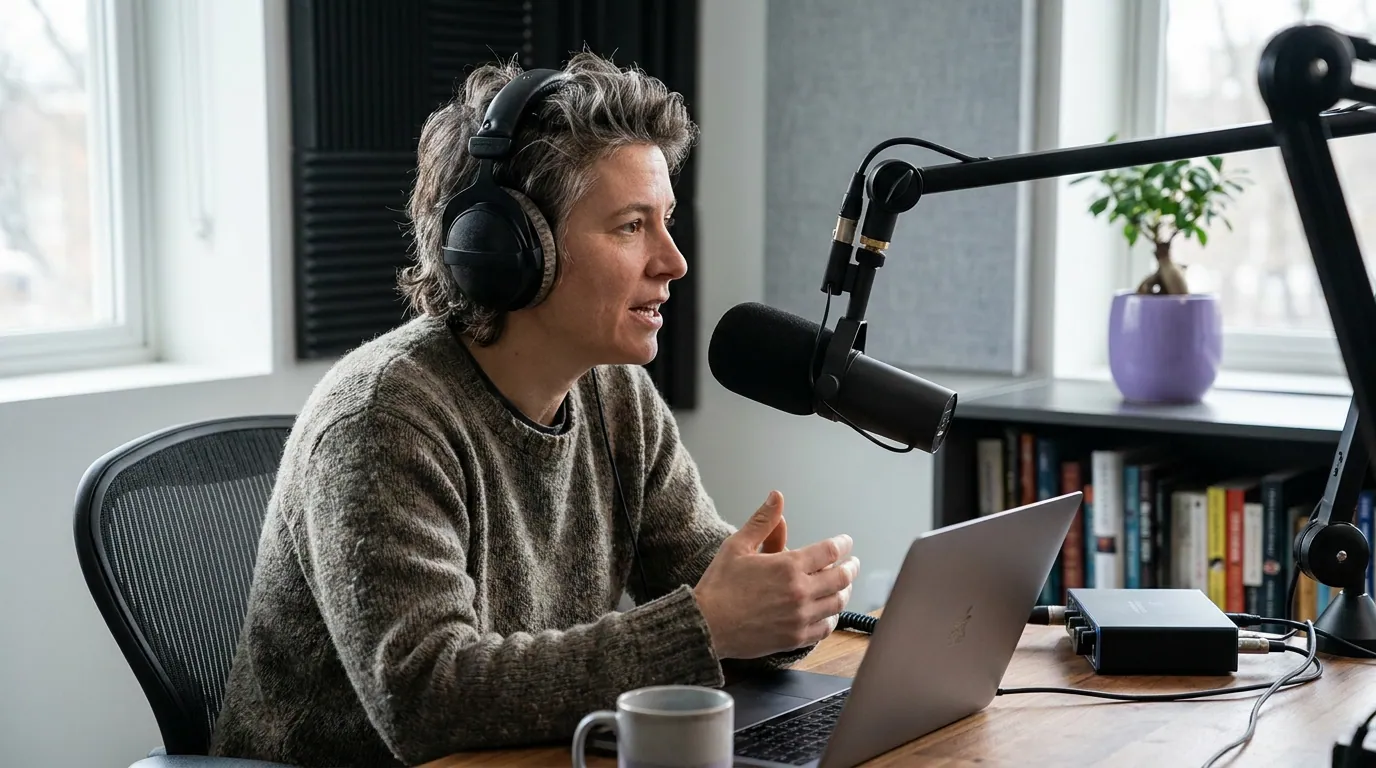
The solo shows worth studying (and what to steal from each)
These five span true crime, history, philosophy, myth, and money, proof there is no single solo topic, only a solo shape. Full episode histories live on the directory; the craft analysis lives here.
- Criminal, Phoebe Judge's true-crime show is the cleanest example of the format. Each episode is a single, tightly told story, and listeners stay as much for the unhurried, deliberate voice as for the case. The steal is restraint: Judge never rushes, never over-narrates, and trusts a quiet delivery to do the holding. See the Criminal entity page for the full run.
- Short History Of…, Each episode picks one historical figure or event and tells it, often opening mid-scene rather than with throat-clearing. The transferable habit is the cold open: drop the listener into the action before you explain anything. (Short History Of… page.)
- Making Sense with Sam Harris, A monologue-and-essay show that proves a single host can carry long, demanding ideas with no guest at all. The steal is not the philosophy; it is the willingness to think out loud in a structured argument rather than meander. (Making Sense page.)
- The Emerald, Joshua Michael Schrei builds episodes from myth, poetry, and sound design into something closer to an audio essay than a talk. The habit to borrow is treating production as part of the storytelling, not a coat of polish added at the end. (The Emerald page.)
- Financial Feminist, Tori Dunlap's mostly-solo personal-finance show shows the format flexing: a structured main series plus themed mini-series and the occasional guest. The steal is format variety inside one show, so a solo host never bores themselves into quitting. (Financial Feminist page.)
One honest note before the patterns: several of these shows bring in an occasional expert or guest. "Solo" in practice means host-led and host-carried, not a vow of total isolation. The point is that the episode works even when it is just one voice, and that is what we are pulling apart now.
Lever 1: Narrative structure creates the pull a guest usually provides
In an interview show, tension comes from the back-and-forth, you keep listening to hear the answer. A solo host has to manufacture that tension alone, and the way the best ones do it is structure. Criminal and Short History Of… both run on an open loop: a question or a half-told event posed early that the rest of the episode resolves. You stay because something is unfinished.
The cold open is the simplest version of this. Instead of "hi, welcome back, today we're talking about," Short History Of… often starts in the middle of the story and explains later. That is not a stylistic flourish, it is retention engineering. The first seconds decide whether a listener stays, and platforms treat the early drop-off as a quality signal. For the short-form version of the same shows, captioning analysts at castmagic call the first three seconds "absolutely critical for social media success", and the principle holds for the full episode too: open the loop before you introduce yourself.
The practical rule for your own show: decide the one question each episode answers, pose it in the first thirty seconds, and do not resolve it until the end. If you cannot name the question, the episode does not have a structure yet, it has a topic, which is not the same thing.

Lever 2: The scripted-improvised balance is a dial, not a switch
The second pattern is that strong solo shows pick a deliberate point on the scale between fully written and fully off-the-cuff, and the point is rarely either extreme. Read every word and you sound like a press release. Wing it entirely and you ramble. The shows that hold listeners script the spine and improvise the muscle.
Criminal and The Emerald sit toward the scripted end because narrative and sound design demand it; a story falls apart if the teller loses the thread. Making Sense sits in the middle, a structured argument delivered conversationally. Financial Feminist leans looser on its main episodes because the value is the host's personality and candor, which a tight script would flatten. None of them is at a pure extreme, and that is the lesson.
How to find your point on the dial: if your value is information or story, script the spine and read it like you are explaining it to a friend, not reciting it. If your value is your personality, write a bullet outline and talk. Test both for three episodes and keep the one your own retention data prefers. The mistake is never choosing, which produces the worst of both, a script you stumble over and improv that wanders.
Lever 3: A parasocial voice that talks to one listener
The third lever is the one a guest format gets for free and a solo show has to build: intimacy. With no second person in the room, the relationship is entirely between the host and the listener, and the best solo hosts speak as if to one person. Phoebe Judge's near-whisper, Sam Harris's measured directness, both feel like private address, not broadcast. That one-to-one register is what makes a listener feel like a regular rather than an audience member.
This is the solo format's quiet advantage. A guest show splits the listener's attachment across two or three people. A solo show concentrates it on you. Over months, that compounds into the kind of loyalty that survives an off episode, the listener is here for you, not the topic.
Two concrete moves build it. Use "you," not "you guys" or "everyone." And keep your delivery consistent enough that the voice becomes a place a listener returns to, the way Criminal sounds like Criminal every single week. Predictability of voice is not boring; it is what a habit is made of.
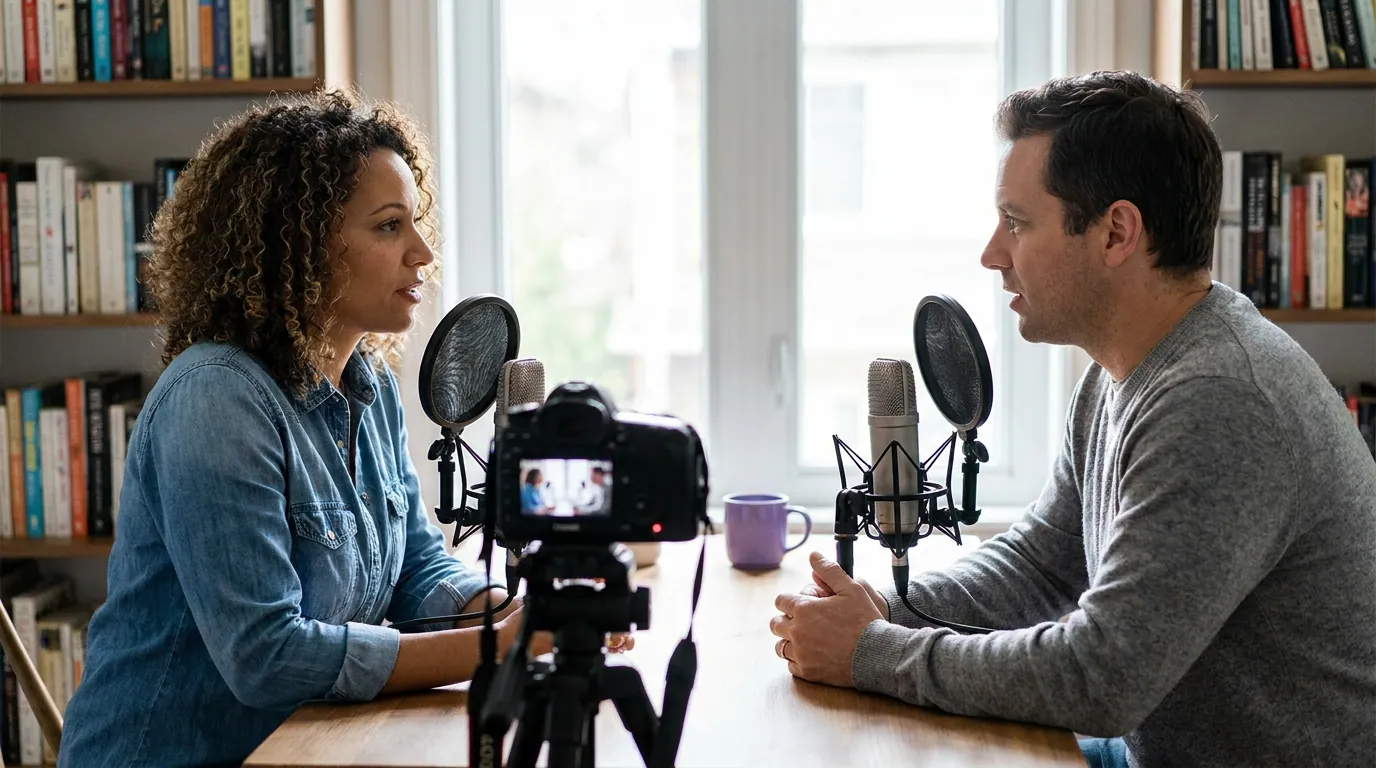
What solo shows still borrow from everyone else: clips
Holding the listeners you have is lever one through three. Finding new ones is a separate job, and here even the best solo shows lean on the same engine as the big interview shows, short, captioned clips. Discovery now runs through social: 57% of listeners rely on social media for podcast recommendations, the first time it edged out friends and family in the survey (Coleman Insights and Amplifi Media, "The State of Video Podcasting 2025," 1,000 US consumers, via InsideRadio). For a host with no guest's audience to borrow, a clip that travels is often the only way a stranger meets the show.
Two caveats that apply double for solo shows. First, film if you can, or at least make audiograms, because a clip a stranger can read beats one they can only hear, most people keep their phone on mute even while a video plays, put at 75% by Sharethrough's research (Digiday, 2021). Second, the cadence that builds parasocial loyalty is exactly what burns out a one-person team. A directory analysis found 44% of podcasts have produced three or fewer episodes (Amplifi Media, on Podcast Index data), most quit early, and a solo host has no co-host to absorb the workload that drives that. Automating the clip step is how a one-person show keeps a schedule a listener can rely on.
So what should a solo host actually copy?
Not the fame, the budget, or the sound design. Copy the mechanism. Build each episode around one open question so the structure pulls the listener forward. Pick a deliberate point on the scripted-improvised dial and stop drifting. Speak to one person so the relationship concentrates. Those three levers are what the missing guest used to provide, rebuilt by hand.
Then handle discovery separately. The three levers keep the listeners you earn; clips are how you earn them. If you want the broader pattern across the chart, the top US podcasts share three production habits that scale down to a solo show. For genre-specific craft, see what the best true crime hosts do differently, Criminal sits in that tradition, and business podcasts worth studying for the educational solo model. The regional cuts, like why the UK top 10 looks nothing like the US and how Canadian shows handle the US-border problem, show the same levers under different market pressure.
FAQ
What are the best solo podcasts to learn from? Criminal, Short History Of…, Making Sense with Sam Harris, The Emerald, and Financial Feminist are strong models because each carries an episode on a single voice across a different genre, true crime, history, philosophy, myth, and money. They are worth studying less for their topics than for how they replace the missing guest with structure, deliberate scripting, and a one-to-one voice.
Can a solo podcast succeed without any guests? Yes. Solo shows top several niche charts, and a single host concentrates listener attachment rather than splitting it across multiple people. The catch is that the format gives you no co-host to cover a flat patch, so the host has to build retention deliberately through narrative structure and a consistent, intimate delivery rather than relying on chemistry.
Should a solo podcast be scripted or improvised? Most strong solo shows are neither fully scripted nor fully improvised, they script the spine of the episode and improvise the delivery. Story-driven and idea-driven shows lean scripted; personality-driven shows lean looser. Pick a deliberate point on that dial and test it for a few episodes. Drifting between the two leaves you stumbling over a script while the improv wanders.
Why do solo podcasts lose listeners faster? Usually because they imitate an interview format without the second voice, leaving gaps a guest would fill, rambling toward a point, and never deciding whether the episode is written or off-the-cuff. The fix is to build for solo on purpose: open with one clear question, hold a deliberate scripting level, and speak directly to one listener.
How do solo shows get discovered without a guest's audience? Through clips. Social media now drives podcast discovery ahead of personal referral (InsideRadio, 2025), so a captioned clip that travels is often how a stranger meets a one-host show. Because a solo host has no guest network to borrow, consistent clipping matters more, not less, and automating it is what keeps the schedule survivable.