
The Best Podcasts to Start With If You're New


If you have never had a regular listening habit, start with a self-contained episode under 45 minutes from a show that needs no back-catalog: Stuff You Should Know, This American Life, Radiolab, 99% Invisible, or SmartLess. Pick one episode on a topic you already care about, listen on a walk or a commute, and judge the show by that single episode, not by its 400-episode archive.
The mistake most new listeners make is treating a podcast like a TV series you have to watch from episode one. Almost none of these need that. The nine picks below are chosen for three things a first-timer actually needs: short enough to finish, self-contained so you can drop in anywhere, and broad enough that you do not need to be a fan of anything first. Each comes with one specific episode to try.
What makes a podcast good for a beginner?
A beginner-friendly podcast has three traits: episodes short enough to finish in one sitting (roughly 15–45 minutes), self-contained episodes you can start anywhere, and a topic broad enough that you need no prior interest. Length lowers the commitment, self-containment kills the "start from episode one" pressure, and broad appeal means the first episode lands.
Those three traits are a filter you can apply to any show, not just the ones below. If a podcast fails two of them, it is a bad first listen even if it is a great show, serialized true crime that assumes you heard last week's episode, or a three-hour interview with an industry insider, will lose a first-timer fast. Save those for after the habit sticks.
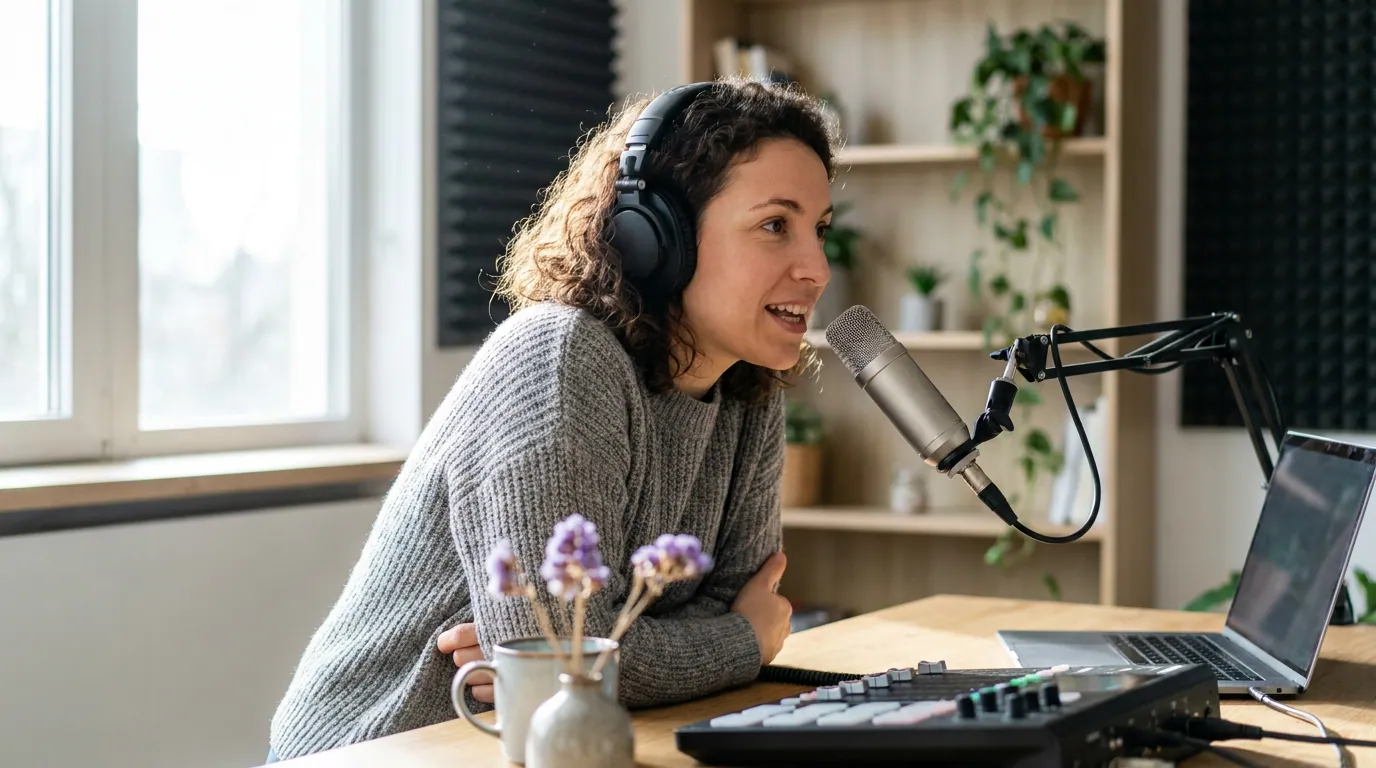
Nine podcasts to start with (and the one episode to try)
These nine span explainers, storytelling, news, and comedy, deliberately, so something here matches whatever you already think about. None require starting from episode one. Full episode histories live on the directory; the reason each works for a first-timer lives here.
- Stuff You Should Know, Two hosts explain one everyday topic per episode, conversationally, in about 45 minutes to an hour. Nothing carries over between episodes, so any title you find interesting is a valid starting point. Try first: any episode whose title makes you say "huh, how does that work", that is the entire format. See the Stuff You Should Know entity page.
- This American Life, The template most narrative podcasts copy. Each ~60-minute episode is built around a theme split into short acts, so even the long ones feel like several short stories. Try first: a standalone themed episode rather than a multi-part series. (This American Life page.)
- Radiolab, Science and big ideas told as audio stories, usually 30–60 minutes, fully self-contained. Strong sound design makes it engaging even if science is not normally your thing. Try first: a single-topic episode, not a season arc. (Radiolab page.)
- 99% Invisible, Short, tightly produced episodes (often 25–40 minutes) about design hiding in plain sight, buildings, objects, systems. Low commitment and broadly fascinating. Try first: any episode about something you walk past daily.
- SmartLess, Three well-known hosts interview a surprise guest each week. The appeal is the banter, not the news peg, so episodes do not age and you need no context. Try first: an episode with a guest you already like. (SmartLess page.)
- The Daily, A 20–30 minute daily news explainer from The New York Times. The shortest serious-news on-ramp on this list, and a good test of whether you like a quick daily habit. Try first: today's episode, it is built to be dropped into cold. (The Daily page.)
- Freakonomics Radio, Economics applied to ordinary questions, roughly 40–50 minutes, mostly standalone. Good if you like learning something counterintuitive without needing a background in the subject. Try first: a standalone "why does X work this way" episode rather than a multi-part series.
- Wait Wait... Don't Tell Me!, NPR's news quiz, about 50 minutes, light and self-contained. A gentler entry than heavy interview shows because it is built to be funny first and informative second. Try first: the most recent weekly episode, each one stands alone and assumes no prior listening.
- Crime Junkie, The on-ramp for true crime specifically. Episodes are roughly 40–60 minutes and most are standalone cases, so you can sample without committing to a series. Try first: a single-case episode, not a multi-parter. For what makes the genre work, see what the best true crime hosts do differently.
Note the spread of lengths. Nothing here demands more than an hour, and several land under 30 minutes, which matters more than topic when you are building a habit from zero.
How do I pick the right one for me?
Match what you already think about to a length you can spare. Want to learn on a commute: 99% Invisible or Freakonomics. Want stories: This American Life or Radiolab. Want the news in 25 minutes: The Daily. Want to laugh: SmartLess or Wait Wait. Topic is the hook; length is the habit-keeper.
The single biggest predictor of whether the habit sticks is not the show, it is attaching listening to something you already do. A walk, a commute, dishes, the gym. New listeners who pick a great show but no slot to listen in usually drift off within a couple of weeks. Pick the slot first, the show second.
There is a good chance you found one of these shows the modern way: a 45-second clip on your feed. Social clips now drive podcast discovery more than personal referral does, 57% of listeners rely on social media for podcast recommendations, the first time that passed friends and family (InsideRadio, 2025). That is also the easiest no-commitment sampler: a clip lets you hear a host's voice and pace before you give an episode 45 minutes.
Is it normal to not finish a podcast episode?
Completely normal, and a useful filter. If a self-contained episode does not hold you halfway through, that show is not for you, drop it and try another from the list. Beginners often force themselves through episodes they dislike and conclude "podcasts aren't for me," when the real issue was one bad match.
This is exactly why self-contained shows make better first listens than serialized ones. Quitting a standalone episode costs you nothing; quitting episode three of an eight-part series feels like wasting the first two. Lower the stakes of every individual listen and you try more shows, which is how you find the one that sticks.
How many people actually listen to podcasts?
Most people do, which makes this a normal habit, not a niche one. In the US, about 158 million people listen monthly, 55% of the 12-and-over population, and roughly 115 million (40%) listen weekly (Edison Infinite Dial 2025). Among 18-to-34s, weekly podcast reach now matches television.
The catalog is enormous, which is the only intimidating part. There are millions of podcasts indexed worldwide, though far fewer publishing regularly (demandsage, 2025). You do not need to navigate all of it. Nine good on-ramps and a three-trait test are enough to find your first few shows; the rest you discover one recommendation at a time.
FAQ
What is the easiest podcast to start with? A self-contained explainer like Stuff You Should Know or 99% Invisible, because you can begin with any episode and finish it in one sitting. There is no story to catch up on and no fandom required, you pick a topic that already interests you and listen. If that episode does not hold you, try a different topic or a different show with no cost.
How long should a beginner's first podcast episode be? Aim for 15–45 minutes for your first few listens. Short episodes lower the commitment while you figure out whether you enjoy the format, and they fit cleanly into a commute or a walk. Once the habit sticks, hour-long interview shows feel easy; before it does, they are a common reason new listeners give up early.
Do I have to start a podcast from episode one? Almost never. Most beginner-friendly shows are self-contained, so any episode is a valid entry point, pick the title that interests you most. The exception is serialized storytelling and multi-part series, which assume you heard the earlier episodes. For a first listen, choose standalone episodes and save the serialized shows for later.
Where do most people discover new podcasts? Increasingly through social media clips rather than friends or app charts. As of 2025, 57% of listeners rely on social media for podcast recommendations, the first time that surpassed personal referral (InsideRadio, 2025). Clips are a low-risk sampler: you hear the host before committing to a full episode.
What are the most popular podcast genres for new listeners? Comedy is the most popular US genre, followed by news, society and culture, true crime, and sports (Statista). That spread is why the list above mixes explainers, storytelling, news, and comedy, starting in a genre you already enjoy in other media makes the first episode far more likely to land.
If you want to see what the shows at the very top do that beginners eventually graduate toward, read the top US podcasts and the habits behind them, why the UK top 10 looks nothing like the US, and the regional contrast in the best Canadian podcasts and the US-border problem. Once you have a habit, business podcasts worth studying is a good next step into a single genre.