
How to Be a Great Guest During the Interview


To be a great guest during the interview, do four things while the tape is rolling: hand the host lines they can quote, match their pacing instead of running your own, leave clean edit points around your best moments, and answer in self-contained chunks that work as standalone clips. Do those and you stop being a guest who's merely fine and become one a host re-books and recommends.
Prep gets you booked. Delivery gets you invited back. Most guesting advice stops at the bookends, send your bio, share the episode after, and skips the only part the audience ever hears: the 45 minutes of live conversation. This is a guide to that 45 minutes. Not how to be polite, which is covered in the unwritten etiquette rules, but what to actually do with your mouth and your attention while someone is recording you.
What should you actually do during a podcast interview?
Run four moves on a loop: give the host quotable lines, read their pacing and match it, leave a clean edit point around your sharpest answers, and keep each answer self-contained enough to stand alone. These are live skills, not scripts. You can't rehearse a conversation, but you can hold four behaviors in your head and run them as the talk unfolds.
Why these four and not "be confident" or "be yourself"? Because each one maps to a real downstream outcome. Quotable lines and self-contained answers become the clips a host posts, and clips are how shows grow now, with 57% of listeners saying they rely on social media for podcast recommendations, the first time it passed friends and family (Inside Radio). Reading pacing and leaving edit points make you cheap to edit. A host who gets clean clips with little cleanup books you again. That's the whole loop.
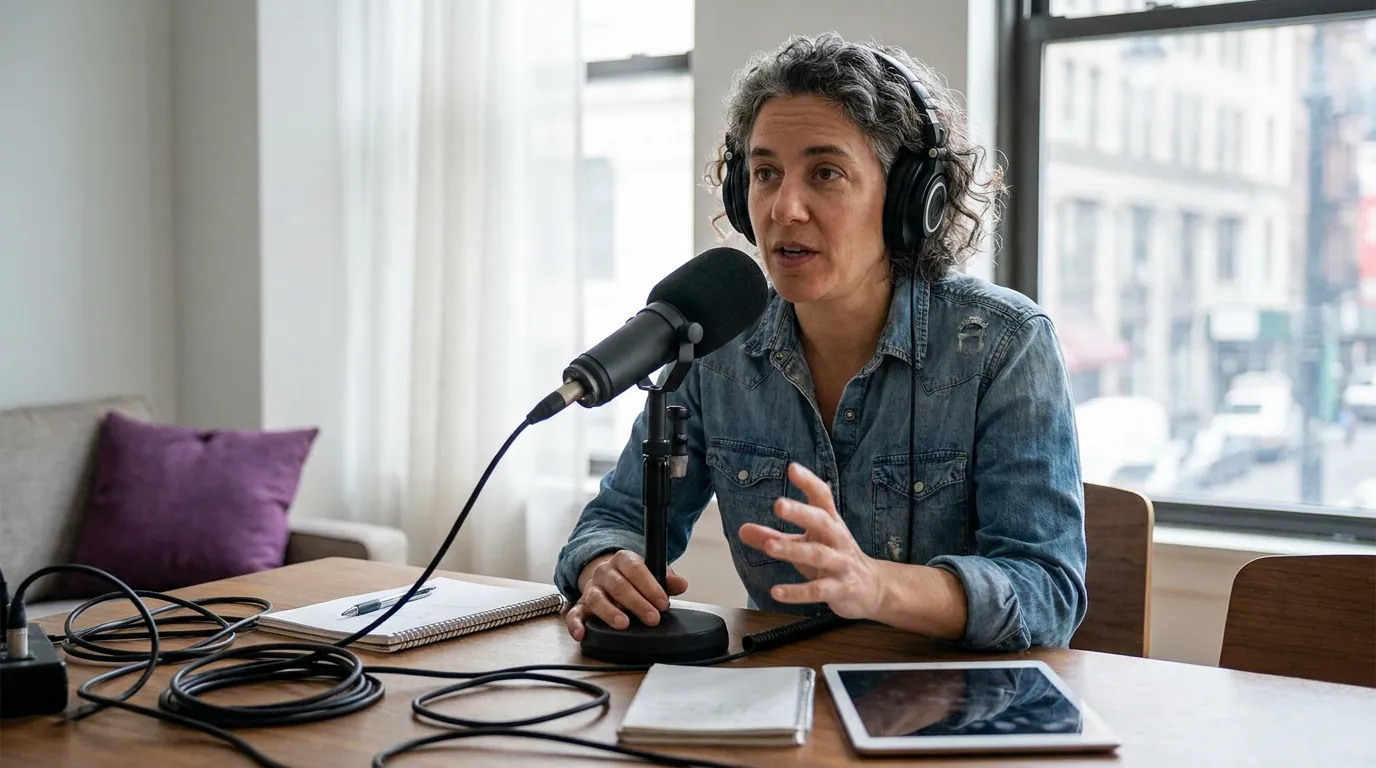
Move 1: Hand the host lines they can quote
The single best thing you can do on tape is give the host one quotable sentence per topic, a compressed, opinionated line they can pull as a clip title or a pinned quote. Hosts are listening for these. When you deliver one cleanly, you can often feel the room change, because you just did their promo work for them.
A quotable line is short, takes a position, and survives out of context. "Most people don't have a pricing problem, they have a confidence problem" beats two minutes of nuance around the same idea. The nuance still belongs in the conversation, say it right after, but lead with the compressed version so there's a clean line to lift.
Three ways to make a line quotable on the fly:
- Compress, then expand. Say the sharp version first ("Hiring your first employee is the day you stop being a freelancer"), then unpack it. The compressed line is the clip; the unpacking is the episode.
- Take a side. Hedged statements don't travel. "It depends" is honest and unclippable. Pick the position you actually hold and state it, then add the caveat as a follow-up sentence.
- Use a number or a contrast. "I turned down $50,000 to keep the rights" or "We grew faster after we fired our biggest client", concrete numbers and reversals are what a host's ear flags as a clip.
You don't need many of these. Two or three across an hour is plenty. Hand over a quotable line on each of your main topics and the host walks away with a week of clips from one recording.
Move 2: Read the host's pacing and match it
Match the host's energy, speed, and answer length instead of running your own internal metronome. If they're rapid and punchy, don't deliver four-minute monologues. If they're slow and reflective, don't talk over their pauses. Reading pacing is what makes a conversation feel like chemistry rather than two people taking turns.
The simplest tell is answer length. If the host asks tight questions and gives short reactions, they want a brisk back-and-forth, keep answers to 30 to 60 seconds and let them drive. If they ask one big question and go quiet, they're handing you the floor for a longer story. Mismatch this and even good answers feel off, because the rhythm is wrong.
Watch for the two signals hosts use to steer without interrupting: a small verbal nudge ("say more about that") means stretch out; a quick "totally, and what about, " means wrap up, you've given enough. On video, leaning in usually means keep going; glancing at notes usually means they're ready to move. Pacing is a conversation you're having underneath the words.
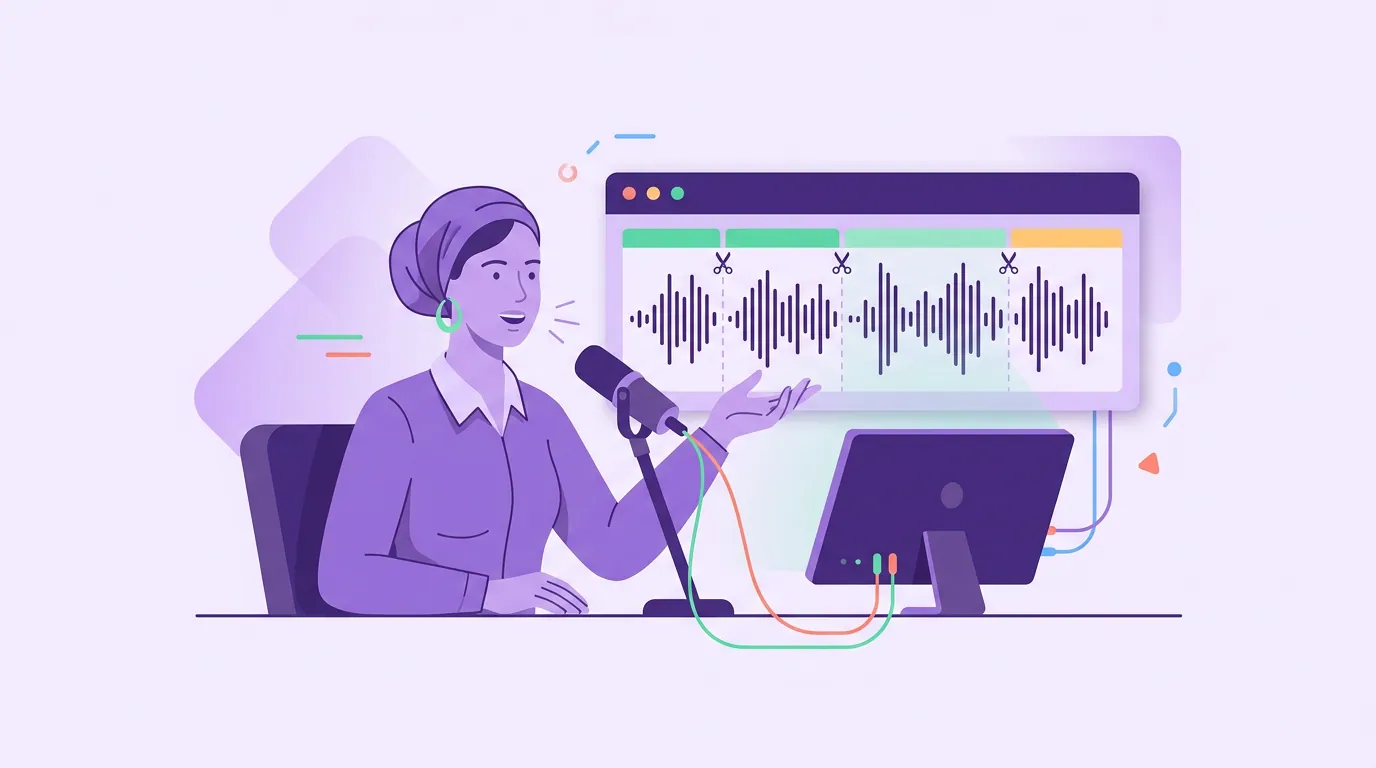
Move 3: Leave clean edit points
Leave a half-second of silence before and after your best lines, and don't talk over the host. This sounds trivial; it's the difference between a clip a host can post in two minutes and one they have to abandon because your sentence is tangled into theirs. You are, in effect, marking the cut points for whoever edits.
The mechanics are simple and they cost nothing:
- Let the host finish. Wait a half-beat after their question before you answer. Crosstalk is the single hardest thing to edit out, and on video it's nearly impossible, both faces are talking.
- Don't start your best line on top of their reaction. If the host says "wow" or "right," let it land, then deliver. Otherwise your quotable line is buried under their voice.
- Stop when you're done. Land the sentence and leave a beat. That silence is the host's clean out-point. Trailing off into "...and stuff like that, you know" wrecks an otherwise clippable answer.
Hosts can trim dead air, but they can't un-overlap two voices. The pause is the one edit you make for them, live.
Move 4: Answer in self-contained chunks
Make each answer stand on its own, so a stranger who hears only that 40 seconds still gets the point. This is what makes an answer clippable. The fastest way to do it: fold a sliver of the question into your answer. Instead of "yeah, exactly," start with "the reason most first-time guests freeze is...", now the clip needs no setup.
Self-contained answers are also where storytelling does its heavy lifting, a tight story with a hook and a turn is the most clippable thing you can say. The mechanics of building one live are their own skill; see turning answers into stories on a podcast. For the in-the-moment version, the rule is short: name the topic, take your position, give one concrete detail, stop. A clip needs roughly 30 to 90 seconds to work (Castmagic), so a self-contained answer told to that length is one the host can lift straight into a promo.
Common mistakes guests make on tape
These are the live errors I see most when coaching guests, each one quietly costs you a rebooking.
- Treating it like a monologue. You finally have the floor and you don't give it back. Watch your air time. If you've talked for four minutes straight, hand it back with a question or a clean stop.
- Hedging every line. "It depends, but also, in some cases" gives the host nothing to clip and the listener nothing to remember. Take a position, then add the caveat as a separate sentence.
- Stepping on the host's reactions. Their "wow" or laugh is the audience's permission to react. Talk over it and you bury both your line and theirs.
- Pitching too early and too often. Hold the plug until you've earned the room, the etiquette rules cover the timing. On tape, an early pitch poisons the well; most hosts will tee up your plug at the end if you've been useful.
- Trailing off. Ending strong answers with "...yeah, anyway" hands the editor a ragged out-point. Land the sentence and stop.
Where the live skills fit in the rest of guesting
What you do during the interview sits in the middle of a longer arc. It starts with getting booked as a guest and finding shows that will actually book you, runs through introducing yourself so the host frames you right, and finishes with promoting the episode well after it drops. The four live moves are the hinge: they're what turns a one-off booking into a standing invitation, because they make you the guest a host gets clean clips from.
Frequently asked questions
What should you say on a podcast as a guest? Lead each topic with one short, opinionated line the host can quote, then unpack it. Take real positions instead of hedging, fold the question into your answer so it stands alone, and tell a tight story with a concrete detail where you can. Say the compressed version first, the nuance second, the compressed line is what becomes a clip.
How do you not be boring as a podcast guest? Take sides and answer in stories, not bullet points. A specific anecdote with a number, a name, and a turn beats a tidy list every time. Match the host's pacing so the conversation has rhythm, and resist the urge to qualify every statement. Boring guests hedge; memorable ones commit to a line and then explain it.
Should you let the host lead the interview? Yes, it's their show, format, and audience, so follow their thread rather than steering toward your own agenda. Read their pacing signals: a "say more" means stretch out, a quick "and what about" means wrap up. Letting them lead doesn't mean being passive; it means matching their rhythm while still handing over strong, clippable answers.
How long should your answers be on a podcast? Match the host's pace, but as a default keep most answers to 30 to 90 seconds, long enough to make a point with a detail, short enough to stay clippable and keep the conversation moving. If the host asks a big question and goes quiet, they want a longer story; if they're brisk and punchy, keep it tight.
How do you get invited back as a podcast guest? Make the host's job easy on tape: hand them quotable lines, leave clean edit points around your best answers, and keep answers self-contained so they're easy to clip. A host who walks away with a week of clips and almost no cleanup re-books you. Then share the episode and tag them when it drops.