
Spoken CTAs vs Show Notes Links: What Converts in Audio


Say the ask out loud when the action can wait, and put the link in show notes when it cannot. A spoken call to action reaches everyone listening, including the majority who never open your notes, but it asks them to remember something. A written link converts on the tap, but only the smaller, already-engaged group reading the description ever sees it. The best shows use both, deliberately, for different jobs.
That split is the whole problem with audio CTAs, and it is the reason most podcast asks quietly fail. Audio has no clickable surface. When you say "go sign up," nobody can tap the words coming out of an earbud. You are competing against a steering wheel, a dog leash, and a treadmill, the listener's hands are busy, their screen is in a pocket, and your ask has to either survive into memory or hand off cleanly to a place they can actually tap. This is a guide to choosing the right tool for each ask, and writing the ask so it lands.
When does a spoken CTA beat a show-notes link?
A spoken CTA wins whenever reach matters more than instant conversion, or when the action is simple enough to remember, following the show, a short vanity URL, anything done later. Use a show-notes link when the action needs a precise click now: a coupon code, a long URL, a signup form. Most asks are better spoken; most conversions still happen on a link.
The case for saying it comes down to one number that podcasters underweight. The people still listening at the end of an episode are your warmest possible audience, and almost none of them are reading your notes at that moment, they are walking, driving, washing dishes. A link they cannot see converts no one. A clear spoken ask reaches all of them. That is why the spoken CTA is the default and the written link is the backup, not the other way around.
But "spoken" has a hard ceiling: memory. A listener can hold a short phrase or a four-word URL; they cannot hold a coupon code, a UTM-tagged link, or "the second link in the description below the timestamps." The moment your ask exceeds what someone can repeat back to themselves, it has to become a link. The skill is knowing which side of that line you are on before you record.
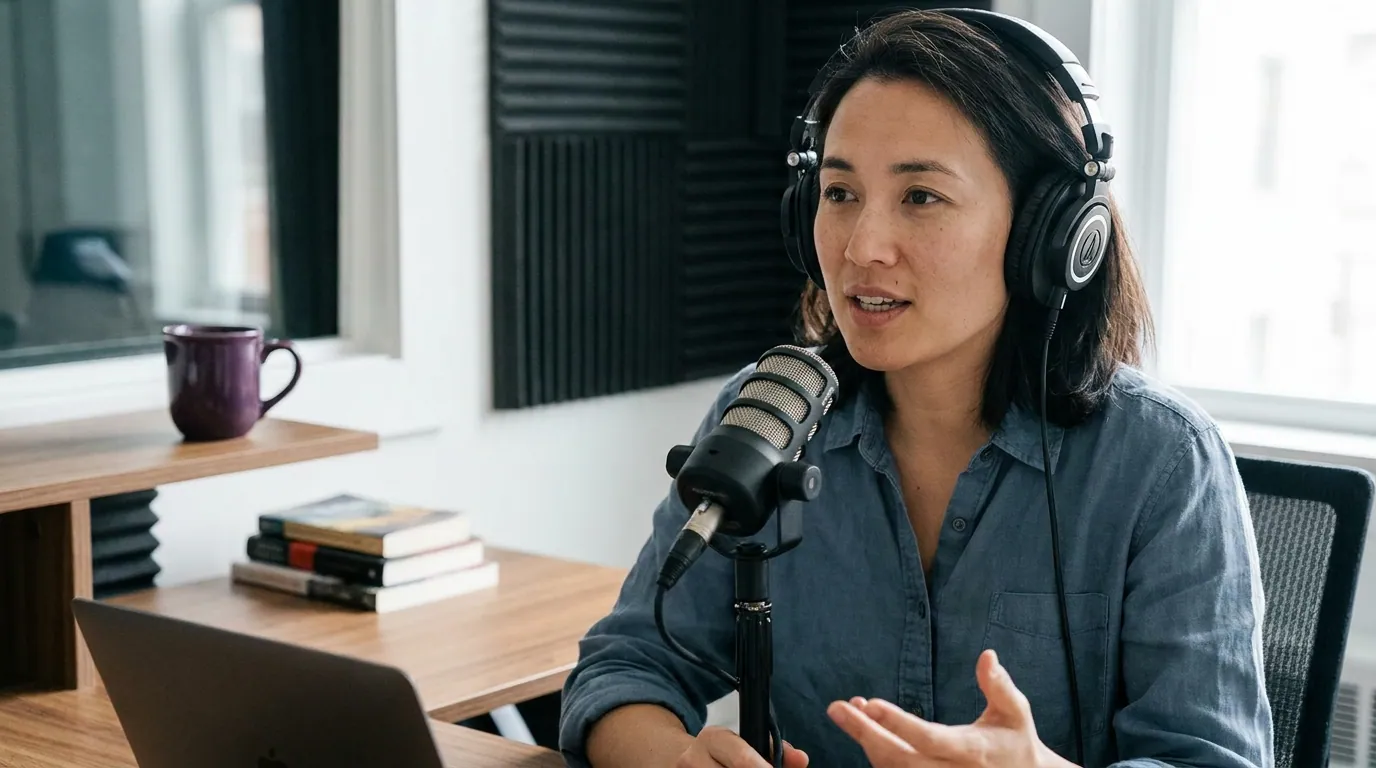
The head-to-head: what each format actually does well
Treat the spoken CTA and the show-notes link as two different instruments, not rivals. One maximizes how many people hear the ask; the other maximizes how cleanly the action happens once someone decides. Here is the honest split across the three things that decide a CTA's fate: who it reaches, how much friction it carries, and what it is genuinely best at.
| Spoken CTA | Show-notes link | |
|---|---|---|
| Who it reaches | Everyone still listening, the warmest audience | Only the subset who open the description |
| Friction | High to act now (no tap), low to remember | Low to act (one tap), high to even find |
| Best at | Follows, short vanity URLs, "remember this" | Codes, signup forms, long or tracked links |
How do you make a vanity URL that survives being said out loud?
A spoken URL must be short, lowercase, punctuation-free, unambiguous when said aloud, and pointed at a destination you control, because a listener has to hear it once and type it correctly later. "yourshow.com/kit" passes. "bit.ly/3xKq9Z" does not: nobody retypes a random string from memory. The URL is the handoff between hearing and acting; if it breaks, the spoken CTA was wasted breath.
This is the part most podcasters get wrong. They read a tracked link aloud, or spell out a slash-heavy path, and lose every listener who is not at a keyboard. A voice-friendly URL is a different object from a clickable one. Five rules make it sayable.
The repetition rule does the quiet heavy lifting. A URL said once is a coin flip; the same URL said at the end of forty episodes becomes something regulars know by heart. Pick one branded destination, point it at your signup page for the podcast email list, and never change it. Consistency is what turns a spoken URL from a hope into a habit.
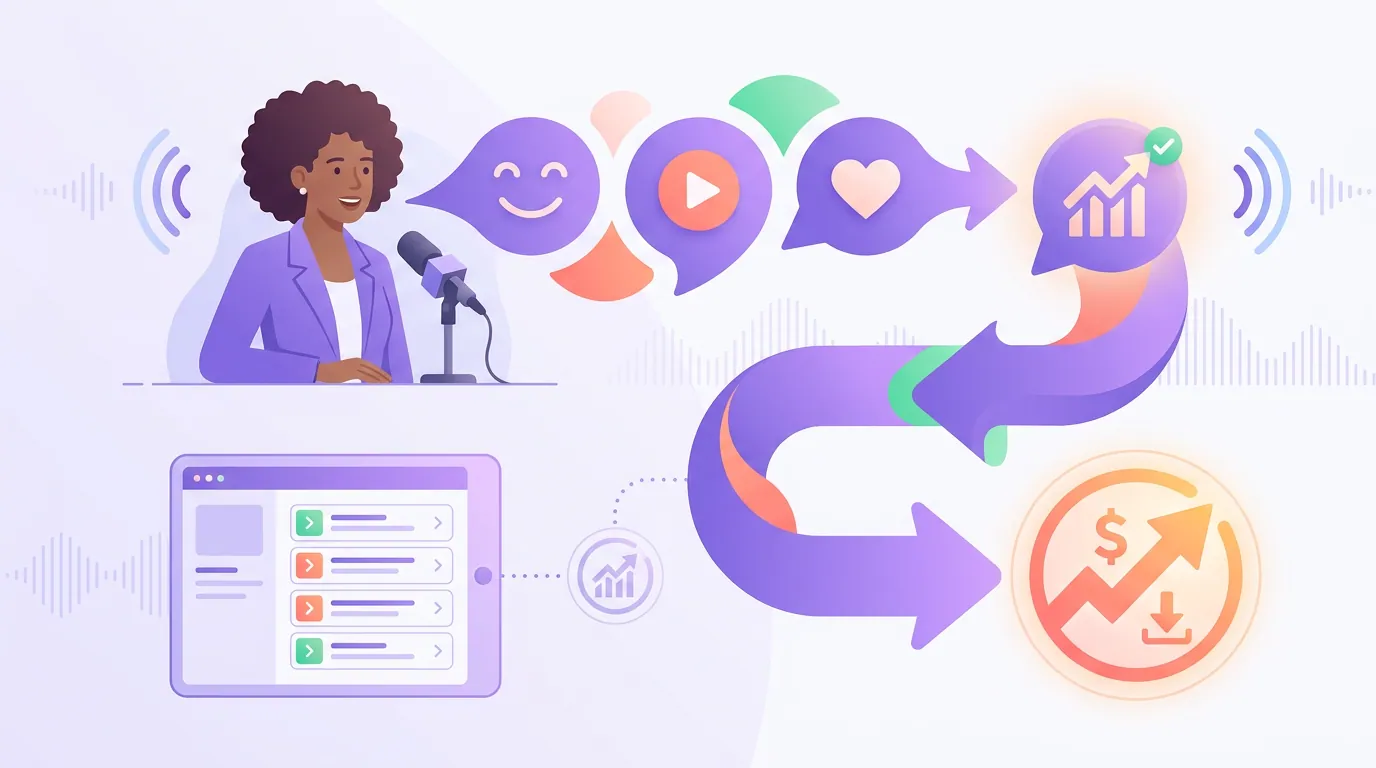
The voice-friendly phrasing patterns that convert
A spoken ask converts when it is single, specific, and placed at peak attention. Ask for one thing, not three. Name the exact payoff, not a vague "check it out." And deliver it at the moment goodwill is highest, usually the last 30 seconds, occasionally a mid-roll when the topic is hot. The phrasing is where most asks die of politeness or vagueness.
Four patterns that work, each built for being heard rather than read:
- Name the thing, then the destination. "If you want the one-page summary of today's episode, it's at yourshow.com/notes." The payoff comes first because that is what decides whether anyone keeps listening to the ask.
- Tie it to what they just heard. A CTA that references the episode converts better than a generic one bolted onto every show. "That framework Sarah described, I put it in this week's email, free at yourshow.com/list." Relevance is the difference between an ask and an ad break.
- Give a do-it-later instruction explicitly. Listeners with busy hands need permission to act later. "When you're back at a screen, the link's in the show notes" beats pretending they can tap now. Honesty about the medium increases follow-through.
- Ask once, clearly, then stop. Stacking "follow, rate, review, subscribe, join the Discord, sign up" trains listeners to ignore all of it. Pick the single most valuable action for this episode and let the others wait for another week.
Common mistakes that kill an audio CTA
- Reading a tracked link aloud. UTM tags and shortener strings are unsayable. Speak a clean vanity URL and keep the tracked version for the written link only.
- One spoken ask, many actions. "Follow, rate, review, and join the newsletter" converts on none of them. One ask per episode. Rotate the others across weeks.
- Burying the written link under timestamps. If the show-notes link is the action you actually want, it goes on the first line, not below ten chapter markers nobody scrolls past. Treat the top line of your notes as prime real estate.
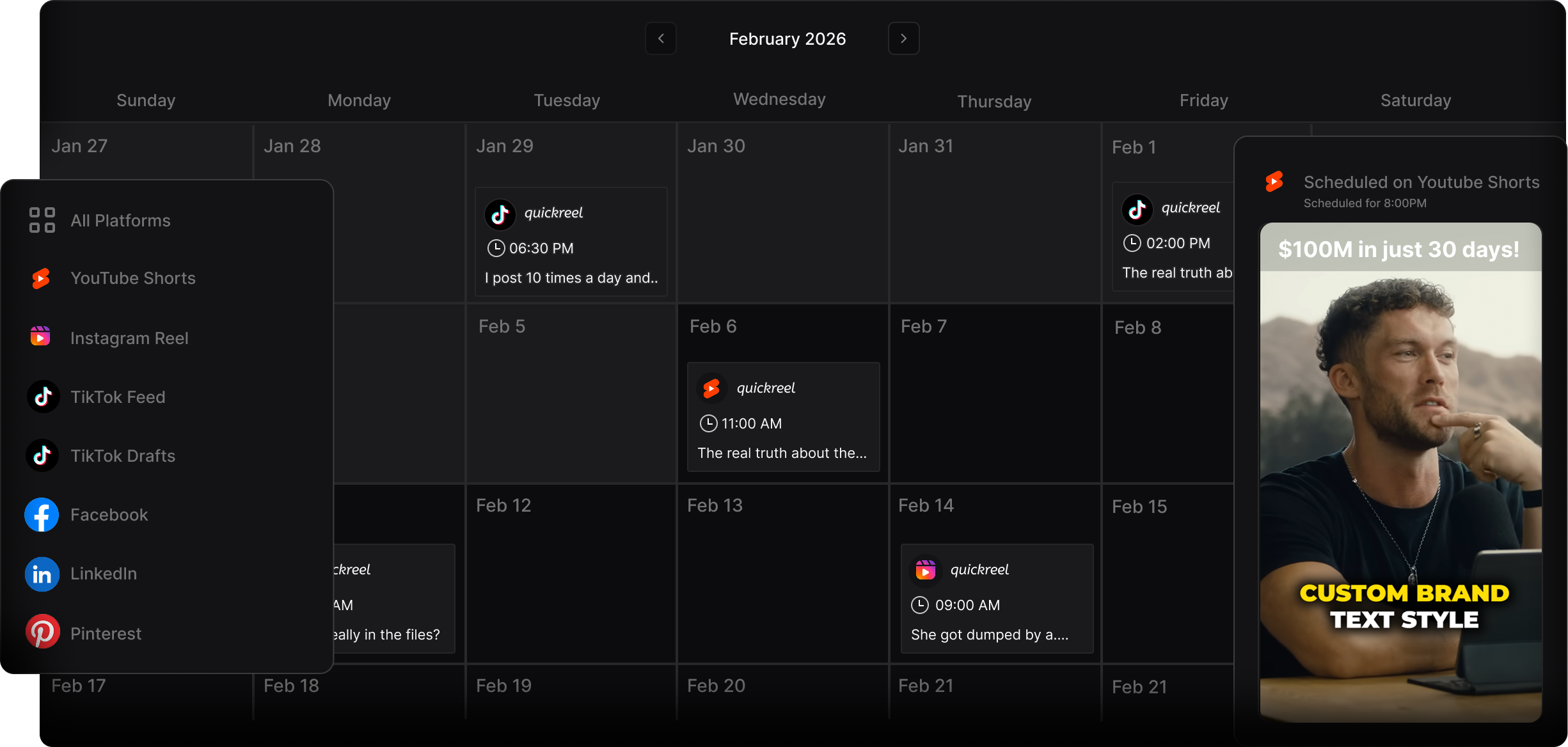
- Forgetting the clip viewer. The fastest-growing slice of your audience never hears the spoken CTA or reads the notes, they found a 40-second clip. Social clips drive discovery more than personal referrals now: 57% of listeners rely on social media for recommendations versus 54% on friends and family (InsideRadio, "The State of Video Podcasting 2025"). Put the same ask, as on-screen text, in your clips and point the link-in-bio at the same signup page.
- Changing the URL. A vanity URL earns its value through repetition. Switch it and you reset the memory you spent months building.
The reason this matters for a growing show is reach. Consistent clipping can lift discovery reach 2 to 5x (Podcast Studio Glasgow), which means more strangers hearing your spoken ask and seeing your link than ever reach your back catalog on their own. The CTA is how that borrowed attention becomes an audience you own. For the destination side of this, what the ask should point at, our guide to lead magnets that actually get signups covers what makes someone act on the URL once they reach it.
FAQ
Should I put my CTA at the start or end of the episode? End, in almost every case. The listeners still with you at the end are your warmest, and an early ask interrupts the value before you have earned the right to ask. The one exception is a mid-roll for a CTA that ties directly to the topic being discussed right then, relevance can beat timing.
Can a spoken CTA work without any link at all? Only for actions that need no click: "follow the show" or "tell one friend." Anything requiring a destination needs either a memorable vanity URL the listener can type later or a show-notes link they tap when back at a screen. A spoken ask with no findable destination converts almost no one.
How many times should I repeat the same CTA across episodes? Every episode, with the same wording and the same URL. Podcasters worry about sounding repetitive; listeners rarely hear two episodes back to back, and the repetition is exactly what makes a vanity URL stick. The person ready to act today is rarely the one who heard the ask first.
What converts better for email signups specifically, spoken or written? A spoken ask that names a written destination. Say what they get and where it lives, then make sure the link is the first line of your notes and on your link-in-bio. Pair it with a welcome email that delivers immediately so the signup pays off the second it happens.
Does a CTA for joining a community work the same way? Mostly, but community asks need more "why" than email asks, because joining a Discord for your listeners is a bigger commitment than handing over an address. Spoken works for the invite; the written link carries the join button. Name one clear benefit of being in the room before you ask anyone to walk into it.