
Running a Podcast Audience Survey People Finish


To run a podcast audience survey people actually finish: keep it to five to seven questions, use a free tool like Google Forms or Tally, ask the survey out loud at the end of an episode and in your show notes and email, offer everyone something useful instead of a prize draw, and read the results knowing a small sample only tells you about the people who answered.
Most podcast surveys fail in one of two ways. Either nobody finishes them, because the host asked twenty questions and front-loaded demographics, or they finish but the answers are useless, because the host asked leading questions and bribed a self-selected crowd. This is a logistics problem before it is a research problem. Get the length, the placement, and the incentive right, and the analysis takes care of itself. Get them wrong, and no statistics will save the data.
Why survey your audience at all?
A survey replaces guessing with the one thing your download numbers cannot tell you: why people listen and what would make them listen more. Analytics show you what happened, which episode got plays, where people dropped off. A survey shows you the reason, in your listeners' own words, which is what you actually act on.
The stakes are quietly high for new shows. Nearly half of all podcasts stop at three episodes or fewer Amplifi Media, and a lot of them quit while still making the show they assumed people wanted rather than the one their listeners would have described. A survey is the cheapest course-correction you can run. It will not manufacture an audience, but it stops you from spending a year polishing a format the people who stayed never asked for.
One honest caveat to hold onto from the start: a survey tells you about the listeners who answered, not your audience as a whole. The people who finish a survey are your most engaged, they skew loyal, opinionated, and unrepresentative of the casual listener who churns silently. That bias is not a reason to skip the survey. It is a reason to read it carefully, which the last section covers.
How long should a podcast survey be?
Five to seven questions, finishable in under two minutes. That is the range where completion stays high and you still learn something. Every question past the seventh trades real response rate for a marginal data point, and demographic questions, age, location, gender, should go last or get cut, because they rarely change what you do next.
Spend your five-to-seven questions on the things that change a decision. The highest-value ones for a podcast are: what made you start listening, what nearly made you stop, what topic or guest you want more of, where you listen (so you know which platform to invest in), and one open text box, "anything else you'd tell me." That open box is usually where the gold is; people write the thing your multiple-choice options never anticipated.
Which tool should you use?
Use the free tier of a general survey tool, Google Forms, Tally, or Typeform, not a podcast-specific one. There is no special podcast-survey software worth paying for at this scale, and the only features that matter are mobile-friendly forms, an open-text question, and a way to export answers to a spreadsheet. All three are free.
| Tool | Best for | The catch |
|---|---|---|
| Google Forms | Free, fast, exports straight to Sheets | Plain look; basic logic |
| Tally | Free, modern, conversational layout | Newer; some power features are paid |
| Typeform | One-question-at-a-time feel that lifts completion | Free plan caps responses each month |
The honest call: for most shows, Google Forms is enough and you should stop researching and build it. Tally is the upgrade if you want the form to look less like a 2012 spreadsheet, and Typeform's one-question-per-screen flow genuinely helps completion, just watch its free response cap if your survey takes off. Whatever you pick, build the form on a phone screen first, because that is where nearly all your answers will come from.

Where do you promote it for a real response rate?
Promote the survey in every channel you already own, more than once, and lead with the spoken ask. A link in one tweet gets a handful of responses; the same link read aloud across three episodes, repeated in show notes, and emailed to your list outperforms it many times over. Distribution is where response rate is won.
The two channels worth emphasizing are the spoken ask and the email. Whoever is still listening at the end of an episode is your warmest possible respondent, so ask out loud, give the short link, and say how long it takes: "If you've got two minutes, I'd love your answers, link's in the description." Your email list is the next best, because subscribers already chose a direct relationship with you; if you do not have a list yet, building one is the single most useful thing you can do for surveys and everything else, and our guide to starting a podcast email list from zero walks the whole setup.
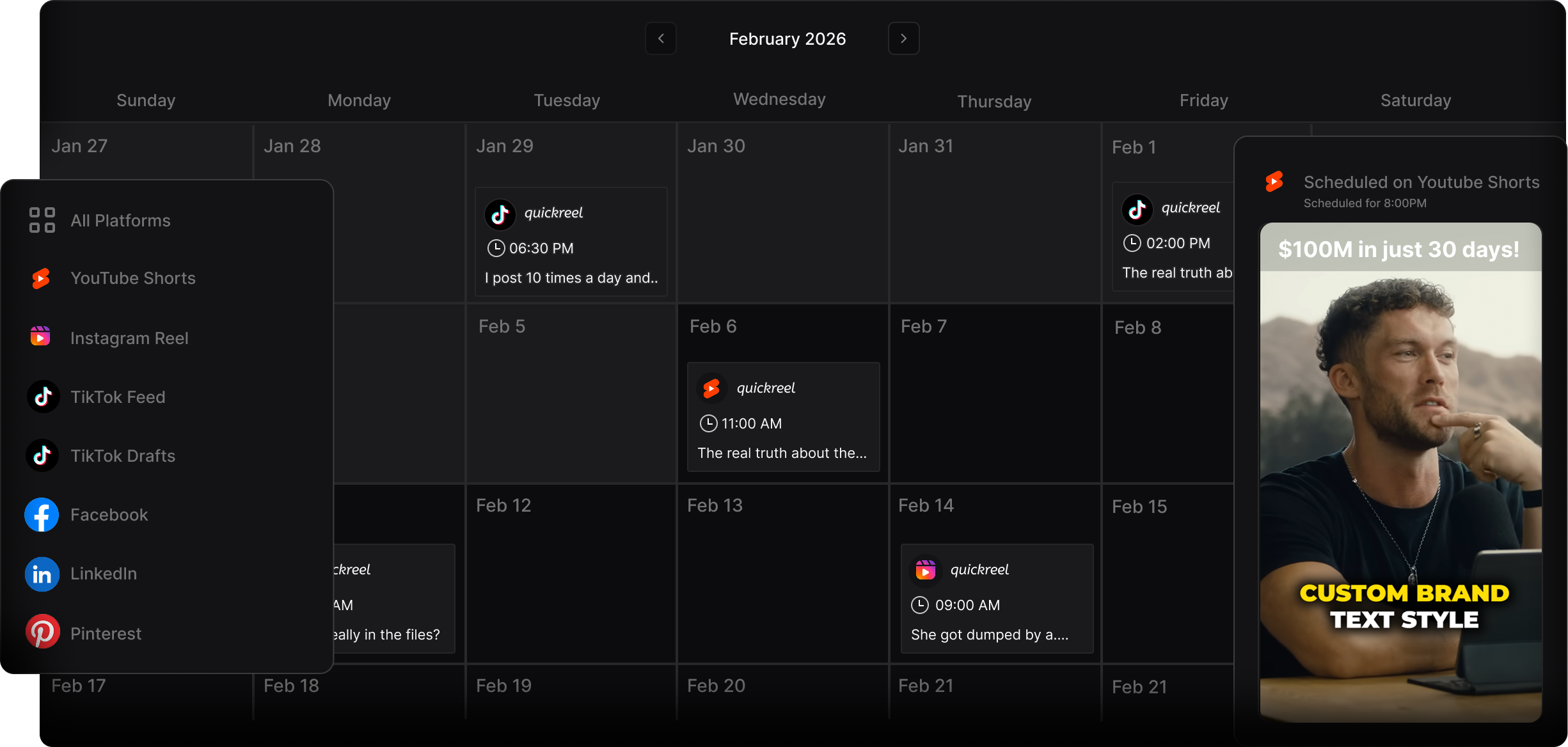
That link-in-bio box matters more than it looks, because increasingly your new listeners arrive through social clips rather than the feed. 57% of listeners now rely on social media for podcast recommendations, against 54% on friends and family (InsideRadio, "The State of Video Podcasting 2025"), and consistent clipping can lift discovery reach 2 to 5x (Podcast Studio Glasgow). The people a clip sent to your profile never see show notes, the link-in-bio survey is how you hear from them.
What incentive won't bias your results?
Give every respondent something genuinely useful, instead of entering them in a prize draw. A gift-card draw pulls in people who want the gift card, not people who want to help your show, and it rewards quantity over honesty. The fix is an incentive that costs the same at any scale and only appeals to actual listeners.
The cleanest options are byproducts of the show. Promise every respondent a bonus mini-episode, an early look at a future guest list, a results recap ("I'll share what everyone said"), or a useful one-pager tied to your topic. A survey gift doubles as a list-builder, many of the same ideas in our roundup of podcast lead magnets that earn signups work as survey rewards too. Sharing the results back is quietly the best of these, it appeals only to people who care about the show, and it gives you a reason to email the list again. If you do want a draw, run it as a small extra on top of the everyone-gets-something gift, never as the only reason to answer, and say plainly that honest answers help more than fast ones. The same care applies to sensitive niches: a true-crime show surveying its audience should keep questions and incentives respectful of the subject matter, not sensational.

How do you read small-sample results without fooling yourself?
Treat your survey as a source of directions, not numbers. With a few dozen or a few hundred responses, percentages feel precise but are not, "68% want more interviews" off 40 answers really means "most loud listeners lean toward interviews," and a different 40 could say 55% or 80%. Read for strong signals and surprising comments, not decimals.
Three rules keep you honest at small scale. First, look for lopsided results, not narrow margins: a 70/30 split means something; a 52/48 split means you learned nothing. Second, read every open-text answer yourself before you tally anything, because the patterns there are richer than any checkbox and they tell you what to ask next time. Third, remember the survivor bias baked in, these are your stayers, not your leavers, so a survey is great for "what should I do more of" and weak for "why did people quit," which only churned listeners could answer and they are precisely the ones not filling out your form.
A practical cadence: run a short survey once or twice a year, not constantly. Surveying the same engaged crowd every month just re-confirms what they already told you and burns the goodwill you will want for the survey that actually matters. Use the off-months to act on what they said and to grow the list, so the next survey reaches a wider, fresher set of voices.
FAQ
How many responses do I need for a podcast survey to be useful? Fewer than you think for direction, more than you think for confidence. Thirty to fifty answers already surface clear patterns and great open-text comments you can act on. Treat anything under a few hundred as directional, look for lopsided splits and recurring comments, not precise percentages, and never report a tiny-sample figure as if it were a hard number.
What's the single best place to promote a podcast survey? The spoken ask at the end of an episode, because it reaches your most engaged listeners at their warmest moment. Back it with show notes and an email to your list. If clips drive a lot of your discovery, add a link-in-bio survey so the listeners who found you on social, who never see show notes, can answer too.
Should I ask demographic questions? Only if a specific decision depends on the answer, and put them last if you do. Age and location rarely change what episode you make next, and they cost completion because they feel like work with no payoff. The questions that earn their place are about why people listen, what they want more of, and what nearly made them leave.
Does a prize draw really bias the results? Yes, in two ways: it recruits people who want the prize rather than people who care about the show, and it tempts rushed or duplicate entries. Give every respondent something useful instead, a results recap, a bonus clip, an early guest list, so the only people motivated to answer are real listeners answering honestly.
How often should I survey my audience? Once or twice a year for most shows. Surveying the same engaged listeners more often just repeats what they already told you and wears out your goodwill. Run it, act on it, spend the gap growing your email list and audience, then survey a wider group next time.