
Why Podcast Members Cancel and How to Keep Them


Podcast members cancel for four reasons: they forgot what they were paying for, the perks stopped feeling worth it, a renewal charge surprised them, or their life changed and the budget got cut. Three of the four are yours to fix, and all four show warning signs weeks before the cancel click. The work is naming the cause, then sending the right message before the button gets pressed.
This matters because membership is now the most reliable money in podcasting. Patreon creators in the podcast category earned $629 million in 2025, up 33% year over year, the platform's single biggest content category (Variety, Feb 2026). But a membership business is a leaky bucket: every member who joins is a member who can leave, and a 6% monthly churn rate quietly halves your recurring revenue over a year even if you never lose a single new signup. Plugging the leak is worth more than chasing more pours.
What actually causes members to cancel?
Members cancel for four reasons, ranked here by how common they are. Forgotten value is the biggest, they stopped feeling the thing they paid for. Perk fatigue is next, the bonus content became a chore or stopped arriving. Billing surprise is a renewal they did not see coming. Life events are budget cuts you cannot control. Name which one, and the fix becomes obvious.
The mistake most hosts make is treating churn as one problem with one solution, usually "add more perks," which often makes perk fatigue worse. A cancellation is a symptom. The four causes below are the actual diseases, and they need different medicine.
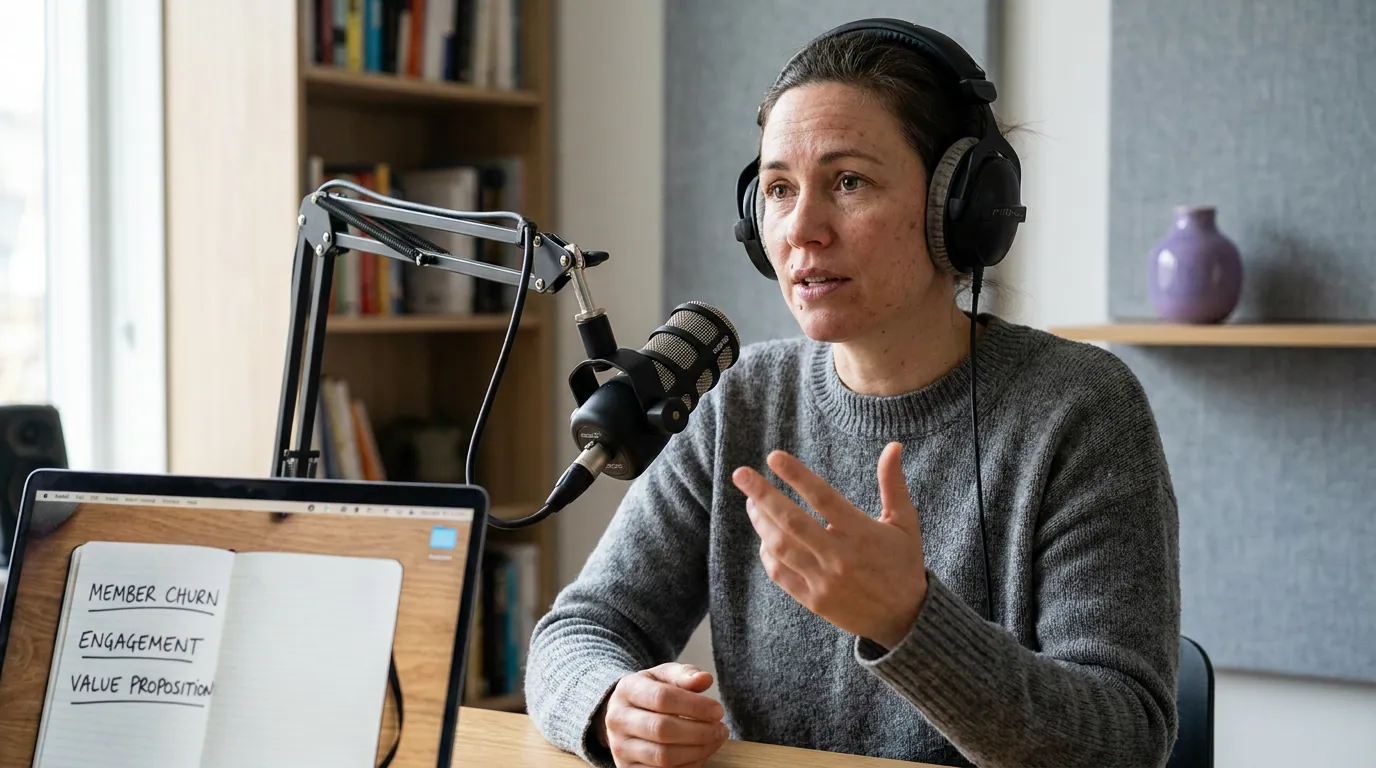
The leading indicators that predict a cancel
A cancellation almost never comes out of nowhere. It is the end of a slide you could have seen. The earliest and most reliable warning is a drop in consumption, a member who used to open every bonus episode and now opens none has effectively already left; the billing just hasn't caught up. Watch engagement, not the cancel page.
Rank your warning signs by how much lead time they give you. The earliest signals are behavioral and quiet; the latest are loud and nearly too late.
One signal deserves its own note: the failed payment. A large share of cancellations are not decisions at all, they are expired cards and declined charges, called involuntary churn. These members wanted to stay. A simple automated "your card didn't go through, here's a one-tap fix" email recovers a meaningful slice of them, and most membership platforms have card-update dunning built in, Patreon, for example, automatically retries a declined payment up to six times and emails the member each time, and Memberful and Supercast re-run the charge the moment a card is updated. Turn it on. It is the cheapest retention you will ever buy.
The save-flow: a fix and a message for each cause
Match the intervention to the cause. Below is the framework, the cause, the specific fix, and the one email that addresses it. Send the email when the leading indicator fires, not after the cancel. A save-flow that triggers post-cancel is a win-back; one that triggers pre-cancel is a save, and saves are far cheaper.
Forgotten value → re-anchor the benefit
When a member stops opening anything, they have lost the felt reason to pay. Do not pile on more perks; remind them of the one they already have. Send a short email that surfaces the single best thing waiting for them, the bonus episode they missed, the back-catalog highlight, the thing that made them join. One link, one reason.
Subject: You missed the best one Hey [name], the [specific bonus episode] is the kind of thing your membership is for, and you haven't opened it yet. Here's the direct link, no app required: [link]. That's the whole email. Talk soon.
This is the save that returns the most, because forgotten value is the most common cause. It works for the same reason a welcome email sequence works at the start, it re-creates the moment the relationship felt worth it.
Perk fatigue → simplify or offer a pause
Some members drown in perks they cannot keep up with. A backlog of twelve unopened bonus episodes does not read as value; it reads as guilt. The fix is counterintuitive: give them less, or give them a break. Offer a one-month pause instead of a cancel. A paused member is a retained member; a cancelled one is gone.
Subject: Need a breather, not a goodbye? Looks like the bonus feed has piled up. You don't have to cancel to take a break, you can pause for a month and pick up where you left off, nothing lost: [pause link]. Or if you'd rather, here's the one episode worth catching up on first: [link].
Downgrading is well supported across platforms, and a pause sits behind the cancel button on most: Patreon lets creators pause billing, Memberful pauses subscriptions admin-side (its docs walk through suspend-and-resume), and where a self-serve pause isn't built in you can offer it on request. Adding "pause for a month" as an option before "cancel" is one of the few interface changes that directly cuts churn.
Billing surprise → the pre-renewal heads-up
Annual members especially get jolted by a renewal they forgot was coming, and a surprise charge becomes an angry cancel and sometimes a chargeback. Get ahead of it. Email three days before any annual or large renewal, frame it as a courtesy, and remind them what the year bought.
Subject: Heads-up: your membership renews Friday Quick note, your annual membership renews on [date] for [amount]. This past year that covered [N bonus episodes, the community, ad-free feed]. No action needed if you're staying. If anything's changed, you can manage it here: [link].
The counterintuitive part: telling people their card is about to be charged reduces cancellations, because the surprise, not the price, is what triggers the angriest exits. Transparency is retention.
Life events → the graceful downgrade
Sometimes the budget is gone and there is nothing to fix. Do not fight it. Offer the cheapest tier or a free-but-occasional option so the relationship survives the rough patch, then re-earn the upgrade later. A member who downgrades to a $3 tier today is a member who upgrades again when things turn around; a member you guilt-tripped is gone for good.
Subject: Whatever works for you Totally understand, life costs money. Before you go, there's a lighter [lower tier] at [price] that keeps you in the community and the ad-free feed. And if now's just not the time, no hard feelings, you'll always have a spot here, and the door stays open: [link].
The graceful exit is also a growth move. People who leave warmly come back, refer others, and keep listening to the free show, where your clips and free episodes keep them in orbit until they can rejoin.

Common mistakes that quietly raise churn
- Adding perks to fix engagement. More bonus content rarely cures forgotten value; it usually causes perk fatigue. If members aren't consuming what exists, shipping more makes the backlog worse. Re-anchor the existing value first.
- No pause option on the cancel page. Forcing a binary, stay or quit, converts a temporary dip into a permanent loss. A pause recovers members who would have churned over a busy month.
- Ignoring failed payments. Involuntary churn from expired cards is pure leakage of members who wanted to stay. Turn on dunning emails; it is the cheapest retention move available.
- Treating all cancels the same. A one-size win-back email ("we miss you, here's a discount") leaks money on members who didn't need a discount and insults members who left for life reasons. Match the message to the cause.
- Only emailing members about renewals. A list you touch only to charge people feels transactional. Keep a steady, non-billing rhythm, the same discipline behind a healthy podcast email list, so the renewal note isn't the only thing they hear from you.
FAQ
What is a normal churn rate for a podcast membership? For small creator memberships, monthly churn commonly runs in the mid-single digits, roughly 5–8% a month is typical, with annual plans churning far less than monthly ones. There is no official podcast-specific benchmark; membership platforms don't publish per-creator churn. Track your own rate over three months and aim to lower it, rather than chasing an outside number.
How do I win back a member who already cancelled? Win-backs are harder than saves, so segment by exit reason. Send forgotten-value leavers your single best new bonus, free; send life-event leavers a note when you launch a cheaper tier; skip the blanket discount, which trains members to cancel for a deal. Most win-backs land weeks later, not immediately, patience beats pressure.
Should I offer discounts to stop cancellations? Sparingly. A discount fixes price objections, but most churn is forgotten value or fatigue, not price, so a discount there just lowers your revenue per saved member. Lead with a pause, a re-anchor, or a downgrade. Reserve discounts for clear price-driven exits, and never make them the default save.
Does the free podcast affect membership churn? Yes, indirectly. The free show is what keeps lapsed and casual listeners in your orbit, and it is your main recruiting channel for new members. Consistent free episodes and clips that drive discovery mean a steady top of funnel, which makes the occasional cancellation sting less and gives downgraded members a reason to come back.
How early can I tell a member is about to cancel? Usually weeks, if you watch consumption rather than the billing page. A member who stops opening bonus episodes or goes silent in your community space has mentally left long before they click cancel. That engagement gap is your save window, act while there is still a relationship to save.