
Podcast Website SEO: The Pages That Actually Rank


Podcast website SEO is an architecture problem, not a keyword problem. A site that ranks has one crawlable page per episode, a few topic hub pages that group those episodes by subject, and a guest page for each recurring interviewee, all stitched together with internal links. A single page with an embedded player ranks for exactly one thing: your show's name.
The mistake almost every podcast site makes is treating the website as a brochure. One home page, a feed widget, maybe an "about" tab. There is nothing there for a search engine to read except a player and a list of titles. The fix is to turn the same catalog into a network of pages that point at each other. Below is the blueprint, a coverage rule to tell whether your site is structured or stranded, and the build order that gets you ranking pages fastest.
What does podcast website SEO actually involve?
Podcast website SEO is structuring your show's site so search engines can crawl, read, and rank the content buried inside your audio. It reduces to three page types, episode pages, topic hubs, and guest pages, plus the internal links between them. Done right, one 40-minute episode surfaces for dozens of long-tail searches you never targeted.
Structure beats every individual tactic because Google ranks pages, not podcasts. Audio is invisible to a crawler; the text on a page you own is the only part of an episode it can index (Descript). So the real question is not "how do I rank my podcast", it is "how many useful, connected pages does my podcast generate." A show with 80 episodes on one landing page is one page. The same 80 episodes split into episode pages, six hubs, and twenty guest pages is more than a hundred pages aimed at each other.
That gap is worth claiming because the field is thinner than it looks. There are around 4.7 million registered podcasts but only roughly 483,000 still actively publishing, about one in ten (The Podcast Host), and the active ones mostly fight on the same two or three audio apps. Your website is the one surface where you compete on Google search instead, against the smaller fraction of shows that bothered to build real pages.
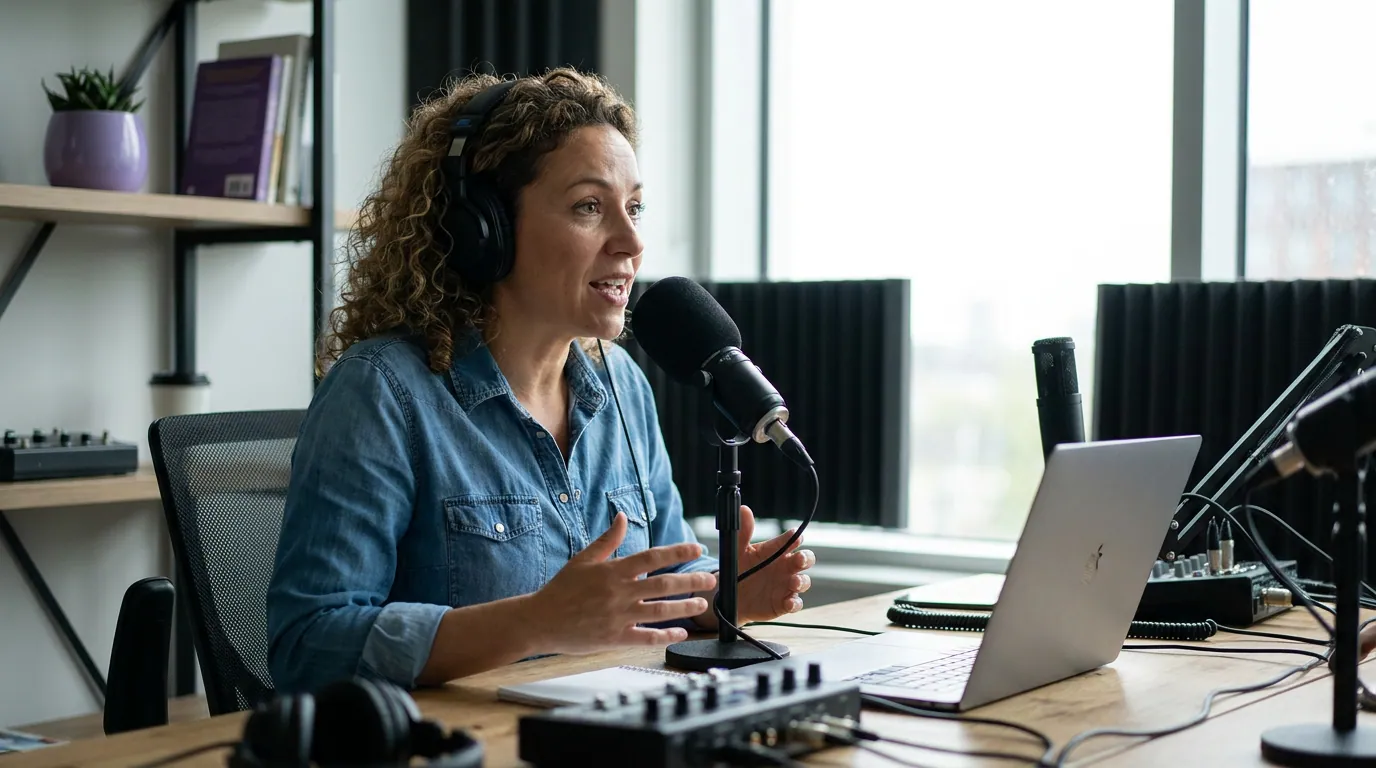
The site-architecture blueprint
Three page types in a deliberate hierarchy. The home page sits at the top. Topic hubs sit one level down, grouping episodes by subject. Episode pages sit below the hubs. Guest pages cut sideways across the whole thing, pulling together every episode a person appeared on. Each type earns its place by doing a job the others cannot.
1. Episode pages, one indexable page per episode. Every episode gets its own URL on a domain you own, with a descriptive title, a meta description, real show notes, and a cleaned transcript. This is the foundation; hubs and guest pages mean nothing without it. The should match how people search, never "Episode 47." Borrow the thinking from episode titles that get found and reuse it for the page title. The body carries the show notes that rank on Google and the transcript, so a 40-minute conversation becomes a few thousand crawlable words.
2. Topic hub pages, the layer most shows skip. A hub is a page about a subject, not a single episode: "Everything we've covered on founder fundraising," with a short original intro and a curated, linked list of the relevant episodes. Hubs do two jobs at once. They target the broad head term ("podcast about fundraising") that no individual episode can win, and they pass authority down to every episode they link to. Build one for each of the four to eight recurring themes your show genuinely returns to, never for a subject you covered once.
3. Guest pages, the cross-cutting layer. For any guest who appeared more than once, or any notable name, a page that collects every episode they were on plus a short bio. These rank for "[guest name] podcast", high-intent searches from people who already know the person, and they give that guest one link to share, which earns backlinks and reshared clips. For interview shows, guest pages are also how you quietly build topical authority around the people in your niche.
The hierarchy itself is a ranking signal. Home → hubs → episodes keeps every page within a couple of clicks of the home page, which is the shallow, logical structure Google's SEO starter guide rewards. Guest pages sit off to the side and lace the levels together.
The 3-link coverage rule (a quick audit)
Here is a test I run on any podcast site before touching a keyword: open ten random episode pages and count the internal links pointing to each one. The rule is simple, every episode page needs at least three internal links from other pages on your site, or it is effectively stranded. One from its topic hub, one from a related episode, and one from either the home page, a guest page, or another hub.
The reason three is the floor: Google discovers and weighs pages largely by following links and reading anchor text, and a page nothing links to can sit unfound or unranked (Google Search Central). One inbound link is fragile; three create a small web that survives a redesign and routes authority from your stronger pages. Score your site this way and the gaps show instantly: the episode pages with zero or one inbound link are exactly the ones invisible in search, no matter how good the episode was.
| Inbound internal links | What it means | Action |
|---|---|---|
| 0 links | Orphan, likely unindexed | Add hub + related-episode links now |
| 1–2 links | Fragile, under-ranked | Wire to a hub and 2 related episodes |
| 3+ links | Connected, crawlable | Maintain; vary the anchor text |
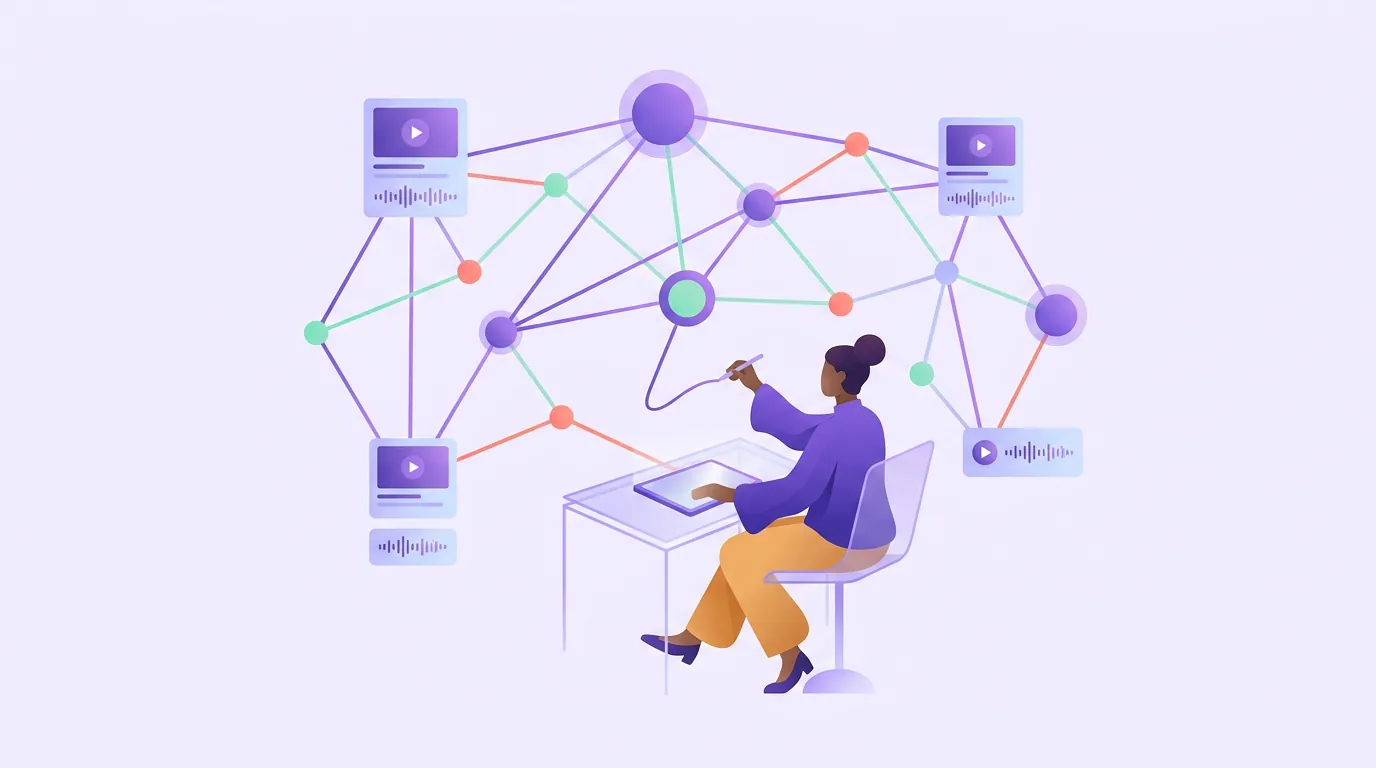
The internal-linking pattern that builds the network
A pile of pages is not a network, the links are. Once the coverage rule is met, the direction of the links is what turns separate pages into one connected site. There are only five rules, and they map directly onto the three page types above.
- Every episode page links up to its topic hub. "Part of our founder-fundraising series." This tells Google the episode belongs to a subject and sends a reader to more of the same.
- Every topic hub links down to its episodes, curated, newest- or best-first, with descriptive anchors that use the episode's real topic, not "listen here."
- Episode pages link sideways to two or three related episodes. The "if you liked this" links keep a search visitor reading past one page and signal a cluster.
- Guest pages link across to every episode that guest appeared on, and each of those episode pages links back. A two-way connection on both sides.
- Vary the anchor text. Don't link to one hub with the identical phrase forty times, "our fundraising episodes," "how founders raise a seed round," "the early-stage interviews." Repetitive identical anchors read as manufactured.
The compounding is the whole point. When a search visitor lands on one episode page, those upward and sideways links hand them three more things to read and hand Google three more signals that your pages relate. Do this across fifty episodes and authority circulates through the site instead of dead-ending on isolated pages.
The build order: ship ranking pages fastest
Most people build a podcast site in the wrong sequence and burn a weekend on the parts that move nothing. Structure your episodes first, then group them, then add the cross-links, front-loaded so the highest-impact pages exist before the decorative ones.
- Convert your back catalog to episode pages. Real URL, title, show notes, transcript. Start with your ten most-listened episodes, not episode one.
- Build a hub for each recurring theme and link the relevant episodes into it. Four to eight hubs covers most shows.
- Wire the upward and sideways links so every episode hits the three-link floor.
- Add guest pages for recurring or notable guests, with two-way links.
- Point the home page at the hubs and three flagship episodes, then submit a sitemap. Only now does the polish, design, fonts, hero copy, matter.
Common mistakes that flatten the structure
Five errors collapse a would-be network back into a single landing page. Each has a direct fix.
- Embedding a player feed instead of building pages. A scrolling widget of titles gives Google almost nothing. Fix: a real, separate URL per episode with text on it, many site builders auto-create these, but confirm they are indexable, not iframe'd.
- No topic hubs. Without them you can never rank for broad subject terms and authority has nowhere to pool. Fix: one hub per recurring theme.
- Orphan episode pages. A page nothing links to is hard to find and rank (Google Search Central). Fix: the three-link rule.
- Thin episode pages. An embed and one sentence is a player, not content. Fix: real show notes plus a cleaned transcript.
- Mass-generating thin pages to chase keywords. Auto-spinning hundreds of near-identical pages is exactly what Google's scaled-content-abuse policy targets, the March 2024 core update and accompanying spam policies deindexed hundreds of such sites through manual actions. Fix: every page earns its existence with genuine notes, a transcript, or original commentary. Quality per page, never page count.
How website SEO fits with platform discovery
Your website is one of three discovery engines, and it is the slow, compounding one, it wins long-tail Google searches over months. The in-app platforms move faster on different signals: Apple Podcasts search ranking leans on follows and listening velocity, and Spotify podcast SEO runs on its own index of your topics and guests. None of your website pages directly move those charts.
So run all three in parallel instead of picking one. The website catches people searching Google for a problem your episode solves; the platforms catch people browsing for a show; and the fastest feeder into both is social. 57% of listeners now rely on social media for podcast recommendations, the first time it passed friends and family (InsideRadio). Clips bring the new audience; the website turns their later searches into pages they land on.
One thing to say plainly: website SEO is a multi-month game. A hub page will not rank in week two. Build the structure, publish consistently, and the network compounds, but the payoff arrives in quarters, not days.
FAQ
Do I need a website for podcast SEO, or is a hosting platform's page enough? You need pages on a domain you control. Hosting platforms give you an audio feed and sometimes a basic page, but real Google ranking needs indexable episode pages, topic hubs, and internal links you own. The auto-pages are a floor, not the structure that ranks (Descript).
How many pages should a podcast website have? At minimum one per episode, plus four to eight topic hubs and a guest page for each recurring guest. A 50-episode show might run 60–80 connected pages. The number follows your catalog and recurring themes, never a quota.
What is a topic hub page for a podcast? A page about a subject your show covers repeatedly, with an original intro and a curated, linked list of relevant episodes. It targets the broad term no single episode can win and passes authority down to those episodes. Build one per recurring theme.
Do guest pages actually help SEO? Yes, for interview shows. A guest page ranks for "[guest name] podcast," gives the guest one link to share, which can earn backlinks, and groups related episodes so Google sees the cluster. Only build them for recurring or notable guests; a page per one-time guest is thin.
How many internal links does an episode page need? At least three from other pages on your site, typically its topic hub, a related episode, and the home page or a guest page. Pages with zero or one inbound link tend to sit unindexed or under-ranked (Google Search Central).
How long until podcast website SEO works? Months, not weeks. Episode and hub pages usually take a few months to gain traction, and the network compounds as you add episodes and links. Treat it as the slow, evergreen layer beneath faster social and platform discovery.