
How to Plan a Podcast Tour: Booking a Run of Guest Spots


A podcast tour is a concentrated run of 8 to 12 guest appearances booked and released inside a few weeks, timed around one launch or milestone and tied together by a single message. Plan it backward from your launch date: batch all outreach in one or two sittings, record in a tight block, then cluster the episode releases so the spots reinforce each other instead of trickling out over a year.
The reason a tour beats scattered guest spots is compounding. One appearance puts you in front of one audience once. Eight appearances landing in the same three-week window, each carrying the same through-line, each shipping a clip to social, make the same person see your name on three different shows they trust. That repetition is what converts a stranger into a subscriber. This guide gives you the timeline, the booking math, the outreach method, and the message that makes the run feel like a campaign rather than a coincidence.
What is a podcast tour and when is it worth running?
A podcast tour is a deliberate cluster of guest appearances, typically 8 to 12, recorded and published in a short window to support one specific moment: a book or product launch, a season premiere, a course opening, or a round-number milestone. Outside of a moment, guesting is a steady drip. A tour is a spike you control.
Run one when you have something time-bound to point at. The whole advantage of a tour is concentration, and concentration only pays off if there's a reason for the audience to act now. If you're guesting just to grow generally, don't force a tour, book one or two thoughtful appearances a month instead and skip the scheduling overhead. The tour is the right tool when a date on the calendar gives every listener the same next step on the same week.
The mechanic works because of where recommendations travel today. As of 2025, 57% of listeners rely on social media for podcast recommendations, the first time social passed friends and family (InsideRadio). A tour is not just eight audio feeds reading your name. It's eight chances to put a clip in front of overlapping social audiences in a tight enough window that the second and third exposure does the persuading.
How many shows do you actually need to pitch?
Pitch 30 to 40 shows to land 8 to 12 published appearances. Guesting outreach converts at a fraction of what hosts expect, a strong, warm, targeted pitch lands a reply maybe half the time and a booking from a third of those. Working backward from your target with a realistic funnel separates a full tour from one that fizzles at three spots.
Here's the math that keeps a tour from stalling. The numbers below are an editorial planning model, not a measured benchmark, treat them as a sane starting ratio you tune after your first run, not a guarantee.
Two adjustments to the ratio. If a chunk of your list is warm, past guests, people you've hosted, shows in a network you belong to, your conversion climbs and you can pitch closer to 20. If you're cold-pitching shows with no shared connection, push toward 40 and expect more silence. Either way, the rule holds: build the list bigger than feels necessary, because the spots that fall through always do so at the worst moment.
To build that list well, you want shows whose audience overlaps yours without being a carbon copy. The same sourcing and fit-scoring discipline that powers a good swap applies here, see how to find the right podcasts to cross-promote with for a five-source method and a scorecard you can reuse to rank tour targets.
The six-week tour timeline
Plan the tour backward from your launch date in four phases: outreach, recording, release, and amplification. The biggest mistake is treating these as sequential when two of them overlap. You batch outreach up front, record in a compressed block, and then let releases cluster around the launch, some before to build anticipation, most in the week of and the week after.
Weeks 1-2: batch the outreach
Do all your pitching in one or two focused sittings, not a few emails a day for a month. Batching matters for three reasons: your pitch quality is higher when you're in the rhythm, your follow-up timing stays consistent, and you can hold every reply against the same recording window. Send the first wave, wait four to five business days, send one follow-up to non-responders, then stop. Anyone who hasn't replied after one nudge isn't a no, they're a "not this tour," and you re-pitch them in three months.
Your pitch has to do something a normal guest pitch doesn't: it has to fit the host's calendar fast. Lead with the specific value for their audience, name two or three angles you can speak to, and state your recording availability in a tight band ("I'm recording this run in [three-week window] and I'd love to fit yours in"). The structure of a high-conversion cold pitch is the same one that lands promo swaps, the cold pitch that gets bigger shows to say yes is a template you can adapt almost line for line.
Weeks 3-5: record in a compressed block
Stack your recordings into as few weeks as you can. Two reasons. First, you stay in voice, you'll be sharper on your fifth interview that week than on one interview every other Tuesday, because the stories, the framing, and the through-line are loaded and ready. Second, a compressed recording block keeps releases from drifting. Hosts publish on their own schedule, so the tighter your recording window, the tighter your release cluster lands near the launch.
Block the recordings in your calendar before you confirm a single one, then offer hosts slots from that grid. Giving a host two or three specific times converts faster than "when are you free?", it removes the back-and-forth that kills momentum on a deadline.
Weeks 6-9: cluster the releases
This is the phase that makes it a tour. You don't fully control when a host publishes, but you can nudge: ask each host their typical lead time when you book, and aim your recording dates so most episodes land in a two-to-three-week band straddling your launch. A workable shape is one or two spots before the launch to seed anticipation, the heaviest cluster in launch week, and a tail of two or three in the week after for people who missed the first wave.
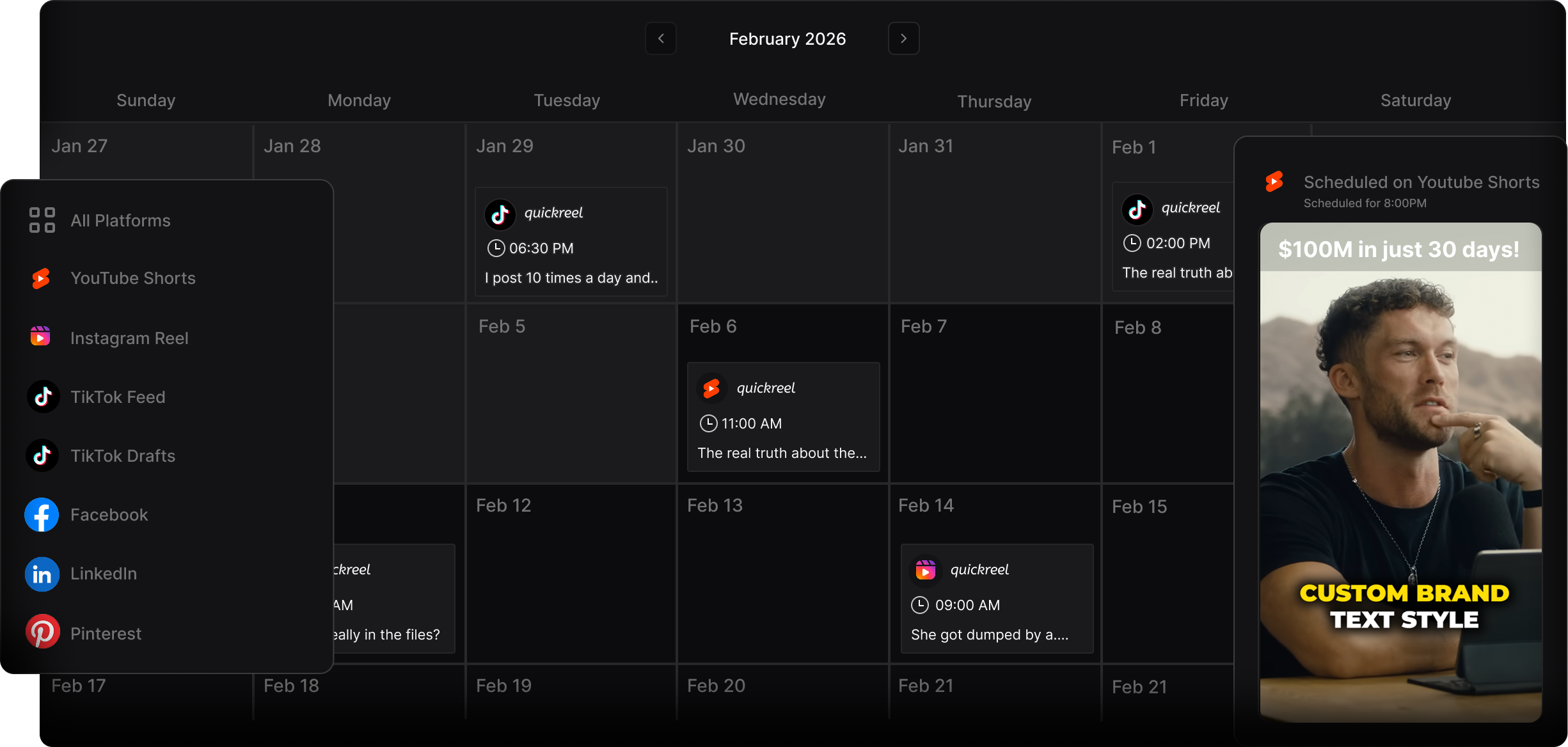
Keep a simple release tracker, show, recording date, expected drop date, actual drop date, link. The moment an episode goes live, you move into amplification.
Throughout: amplify every spot the day it drops
Each published appearance is raw material for a week of social posts. The day an episode drops, pull the two or three strongest moments, caption them, and post them to your channels, and ask the host to co-post or at least allow you to tag them. With clips driving an estimated 20-40% of new audience for video shows (Podcast Studio Glasgow), the clip is often where the appearance actually earns subscribers, far more than the audio listen on a feed you don't own.
This is where a tour pays a compounding dividend. Eight appearances become 20-plus clips, all carrying the same through-line, released in a tight window. The honest caveat: virality without strategy is empty engagement, and views are not conversions. A clip that gets seen but doesn't tell the viewer what to do next, follow you, grab the launch thing, is a vanity number. Every tour clip should end pointing at the same single action.
The through-message: one line that ties the tour together
Write one sentence before you pitch anyone, and make every appearance, every clip, and every bio serve it. This is the single most overlooked part of a tour and the thing that turns eight unrelated interviews into a campaign. Without it, you're just a guest who happened to be busy that month.
Your through-message is the answer to "why is this person everywhere right now, and what should I do about it?" It has three parts: who you are (a one-clause identity), the time-bound reason (the launch or milestone), and the single next step (the one action you want every listener to take). For example: "I'm the host of [show]; my book is out [date]; grab the first chapter free at [link]." Every host intro nudges toward it, every clip caption echoes it, every call to action points at the same place.
The discipline here is subtraction. You will be tempted to mention three projects, two links, and a newsletter on every show. Don't. A tour's power comes from repetition of one thing across many touchpoints. The listener who hears the same clean ask on the third show they catch you on is the one who converts, but only if it was the same ask all three times.
Common mistakes that sink a tour
- Pitching too few shows. Hosts plan for 8 spots, pitch 12, and land 5. Use the funnel: pitch 3-4x your target so a wave of "not this time" replies still leaves a full tour.
- Drip-pitching over a month. Outreach loses consistency and follow-up timing slips. Batch it into one or two sittings so every reply maps to the same recording window.
- Letting releases scatter. Eight episodes spread over six months is just normal guesting. Compress the recording block and ask hosts their lead time so drops cluster around the launch.
- No through-message. Eight great interviews with eight different asks convert worse than eight decent ones with the same single ask. Write the one line first; make everything serve it.
- Treating the appearance as the finish line. The audio listen is the start. The clip, posted the day it drops with the same call to action, is where a tour actually grows your audience.
- Forgetting to capture the people you reach. A launch-week spike fades. Point the tour at an email signup, not just a download, so the audience you borrowed becomes one you keep.
FAQ
How many podcasts should I appear on for a tour? Aim for 8 to 12 published appearances clustered in a two-to-three-week window around your launch. Fewer than 8 and you lose the repeated-exposure effect that makes a tour work; more than 12 and quality and scheduling usually slip unless you have help. Pitch 30 to 40 shows to land that many.
How far in advance should I plan a podcast tour? Start six to eight weeks before your launch date. Batch outreach in weeks one and two, record in a compressed block over weeks three to five, then let episodes cluster in release around the launch. Hosts often have multi-week publishing queues, so earlier outreach buys you tighter release timing.
What's the difference between a podcast tour and regular guesting? Regular guesting is a steady drip, one or two appearances a month for general growth. A tour is a concentrated spike of 8 to 12 appearances timed around a specific moment and tied together by one message and one call to action. Use a tour only when you have a date worth pointing every listener toward.
How do I get hosts to publish my episode near my launch? Ask each host their typical recording-to-publish lead time when you book, then schedule your recording date to land the episode in your target window. Record in a tight block so drops stay clustered. You can't control their calendar, but a compressed recording window keeps releases from drifting apart.
Should I make clips from my guest appearances? Yes, the clip is often where the appearance earns subscribers. With clips driving an estimated 20-40% of new audience for video shows (Podcast Studio Glasgow), post two or three captioned moments per spot the day it drops, each ending with your single call to action. Ask the host to co-post for reach into their audience too.
A tour borrows other people's audiences for a few weeks. The work that keeps them is what you do next: capture the spike before it fades. Set up a podcast email list from zero and a 5-email welcome sequence so launch-week listeners become subscribers you own. And if you want a lower-lift way to keep cross-promoting between tours, trailer swaps and feed drops are the two formats worth running on repeat.