
Five Plug-In Podcast Episode Templates by Goal


Keep five episode templates on file and stop designing your show from scratch every week. Each is a fixed sequence of blocks built for one goal: teaching to make a point land, interview to mine a guest, news roundup to stay current, listener Q&A to build loyalty, story for emotional pull. Pick the one matching this week's goal, fill it, record.
Below is the runsheet for all five, block by block, with a target length, the job of each block, and which one to reach for when. They share a spine but differ where it counts: prep cost, who carries the talking, and how repeatable they are when you are tired. Rotate them across a month and you get variety without ever staring at a blank page.
Why a template kit beats a blank page
A kit of fixed templates is the most reliable defense against the most common way podcasts die: quitting. Nearly half of all podcasts never make it past their first three episodes Amplifi Mediaanalysis of industry data), and the single biggest predictor of survival is publishing consistently. The week you have to invent a format from nothing is the week you skip, and skipped weeks compound into a dead feed.
Templates also make your show legible. Listeners learn the shape of a teaching episode versus a Q&A and choose accordingly; clippers and your future self find the strong moment faster because they know where it lives. This kit assumes the repeatable six-block episode structure underneath, cold open, promise, body, turn, payoff, one CTA. The five templates here are that skeleton specialized for five different jobs.
Template 1, The teaching episode (12–20 min)
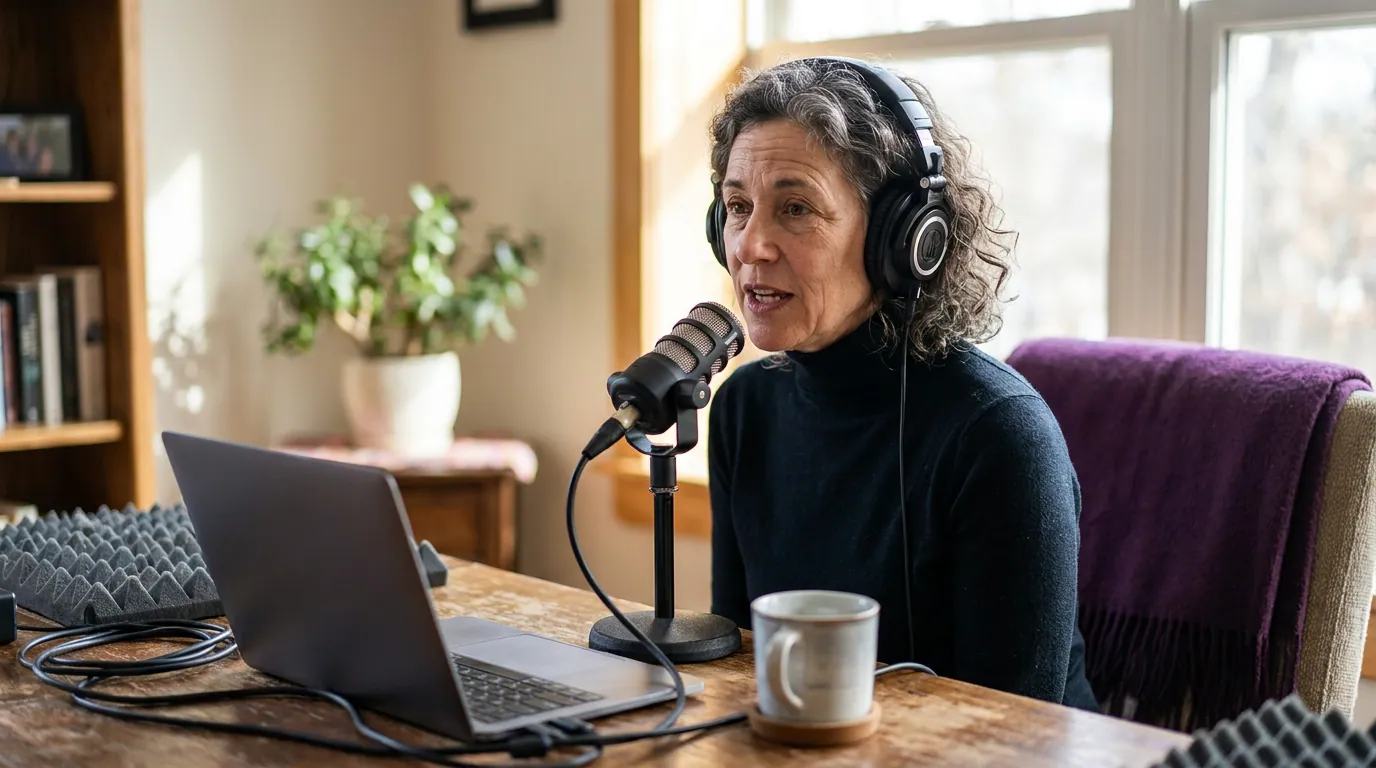
Use this when you have one idea worth explaining and want it to stick. Teaching episodes are the most repeatable solo format because the structure does the heavy lifting, you are not waiting on a guest or chasing the news cycle. Keep it tight; one well-explained idea beats three half-explained ones.
Runsheet: Cold open (20s, the surprising claim or the cost of getting this wrong) → Promise (30s, "by the end you'll be able to…") → Beat 1: the idea in one sentence → Beat 2: why it's true (the mechanism or evidence) → Beat 3: how to apply it (a concrete example or steps) → Payoff (the one line to remember) → Single CTA. The body's three beats are non-negotiable, name, prove, apply. If you are deciding how much of this to write out, scripting versus outlining matters most here, because teaching rewards tighter prep than any other template.
Template 2, The interview (35–60 min)
Use this to mine one guest for everything a listener can't get elsewhere. The interview brings built-in energy and a guest's audience, but it lives or dies on question order, not on the guest being interesting. Prepare an arc that escalates: warm, then substantive, then the question only this person can answer.
Runsheet: Cold open (the guest's best line, pulled forward) → Setup (45s, who they are and the one reason they're worth an hour) → Arc 1: origin / context questions → Arc 2: the substance, where the real value sits → The turn (the unexpected question that goes somewhere neither of you planned) → Closing question (their most quotable answer) → Single CTA. The turn is what separates a memorable interview from a competent one, script a question designed to surprise them. If you are still choosing your show's backbone, weigh solo, co-host, or interview as your core format before you commit to a guest-dependent calendar.

Template 3, The news roundup (8–15 min)
Use this to stay relevant and post on a tight, predictable cadence. The roundup is the cheapest template to produce once you have a sourcing habit, and it trains listeners to expect you on a fixed day. Cap it at three to four stories, more turns it into a list nobody finishes.
Runsheet: Cold open (the biggest story's headline + your take in one line) → Promise (15s, "three things that matter this week and why") → Story 1 (the news in a sentence, then your angle) → Story 2 (same shape) → Story 3 (same shape) → Payoff (the through-line connecting them, or your prediction) → Single CTA. The discipline is uniform story blocks: fact, then opinion, then move on. Listeners come for your filter, not a press-release readout.
Template 4, The listener Q&A (15–25 min)
Use this to deepen loyalty and surface what your audience actually wants more of. A Q&A doubles as research: the questions people send tell you which future episodes to make. Answer three to four real questions in full rather than skimming ten.
Runsheet: Cold open (the most interesting question, read aloud) → Promise (20s, "your questions, honest answers") → Q1 (read the question, answer in 3–5 minutes) → Q2 → Q3 → Single CTA (always: "send your next question"). The CTA here is structural, every Q&A episode must feed the next one, so the close is the ask for more questions, every time. Treat the inbox as your editorial calendar.
Template 5, The story episode (18–30 min)
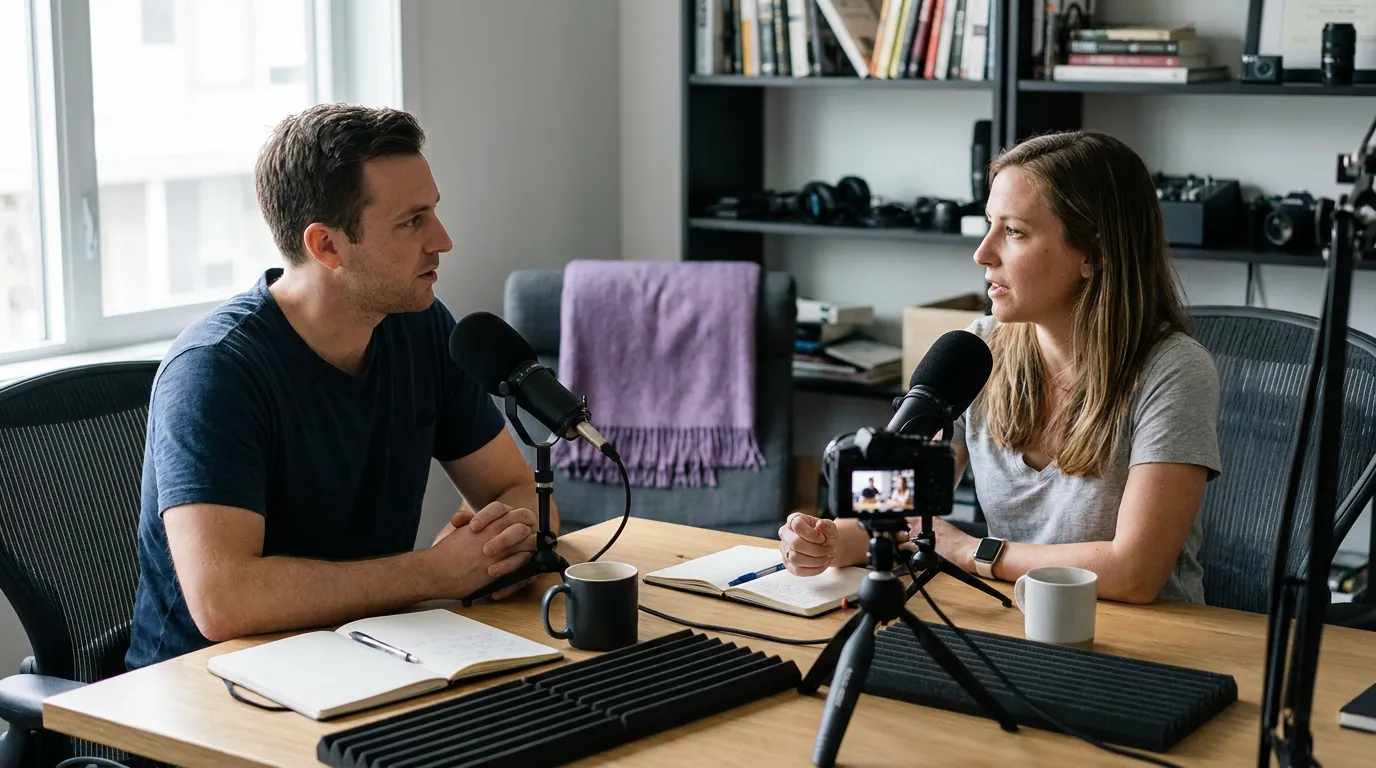
Use this when emotional pull matters more than information density, a personal account, a case study, a narrative built from interview tape. Story episodes are the hardest to produce and the most memorable when they land. The rule: tension early, resolution late, and never give away the ending in the open.
Runsheet: Cold open (the charged moment from the middle of the story, no context) → Setup (30s, who and where, just enough to orient) → Rising action (the body, told in scenes that escalate) → The turn (the reversal or revelation) → Resolution + payoff (what it meant) → Single CTA. Story episodes need the cleanest episode runsheet of the five, because you are managing tension across the whole arc, not just filling blocks. Mark your turn on the page so you build to it.
Common mistakes (and the fix)
- Treating every episode as a story. Narrative is expensive and most weeks don't warrant it. Fix: default to teaching or Q&A; save story episodes for material that earns the effort.
- A roundup with eight stories. Coverage is not value; your filter is. Fix: cap at three to four, and add your take to each, that's the part listeners can't get from a news app.
- An interview with no turn. A flat Q-and-A reads as competent and forgettable. Fix: script one question designed to surprise the guest and place it past the halfway mark.
- Skipping the template the week you're tired. That's exactly the week the kit exists for. Fix: reach for the news roundup, it's the lowest-prep template and keeps the feed alive.
- Letting length drift. A 20-minute teaching idea stretched to 40 minutes loses the point. Fix: hold the target ranges above; if an episode wants to be longer, ask whether it's secretly an interview or a story.
Where the templates and clips meet
Every one of these blueprints has a designed peak, the payoff in teaching, the closing answer in an interview, the through-line in a roundup, the turn in a story. That peak is your clip. Clips drive 20–40% of new audience for video shows (Podcast Studio Glasgow), and the moments that travel are almost always the engineered peak, not the intro. Watching is now the default for new listeners too, **53% of new US weekly listeners say they prefer to watch a podcast, up from 30% in April 2022** (Backlinko, 2025). When you plan the peak into the template, you are also planning the clip that pulls strangers back to the full episode.
FAQ
How many episode templates should I keep on file? Three to five is the working range. Fewer than three and the show feels monotonous; more than five and you lose the consistency that makes templates worth having. Start with teaching and interview, add a news roundup or Q&A for cadence, and reserve the story template for material that earns it.
Can I mix templates in one episode? Sparingly. A teaching segment plus a short Q&A can work, but blending too many goals dilutes each one. The point of the kit is that each template has a single job. If you find yourself merging two every week, that combination is probably your real format, name it and make it a template of its own.
Which template is best for a brand-new podcast? Teaching, usually. It's fully under your control, needs no guest, holds to a short runtime that's easy to finish on a low-energy week, and forces you to make one clear point per episode. Add interviews once your cadence is steady and you can absorb the booking overhead.
How do I decide the right length within each range? Match length to the goal, not the format's ceiling. A teaching episode with one tight idea belongs at the low end; an interview with a genuinely deep guest can fill the high end. For the underlying logic, see how long a podcast episode should really be, the short version is that minutes only become a problem when they stop earning their place.