
Cutting Between Cameras in a Multicam Podcast


Cut to the camera on whoever is talking, switch the moment the speaker changes, and hold the wide two-shot whenever someone is reacting, a laugh, a nod, a "wait, what." Never cut faster than about once every three seconds, and when you can't decide which angle, sit on the wide. Those four rules turn a wall of synced footage into pacing a viewer can actually follow.
That is the whole job, and it is more boring than most people expect. Multicam editing for a conversation is not a creative free-for-all where you cut on the beat. It is a small set of repeated decisions made quickly down a timeline. The footage feels overwhelming because you are staring at three angles of forty minutes and assuming every second needs a verdict. It doesn't. Most of the time the right angle is obvious, and the rulebook below tells you what to do in the few moments it isn't.
The four rules, in priority order
Here is the rulebook on one card. Read it top to bottom, the order is the point, because the rules sometimes conflict and you need to know which one wins.
Memorize that order and most of the second-guessing disappears. If you only take one thing from this page, take rule three: it is the difference between an edit that feels produced and one that gives people motion sickness.
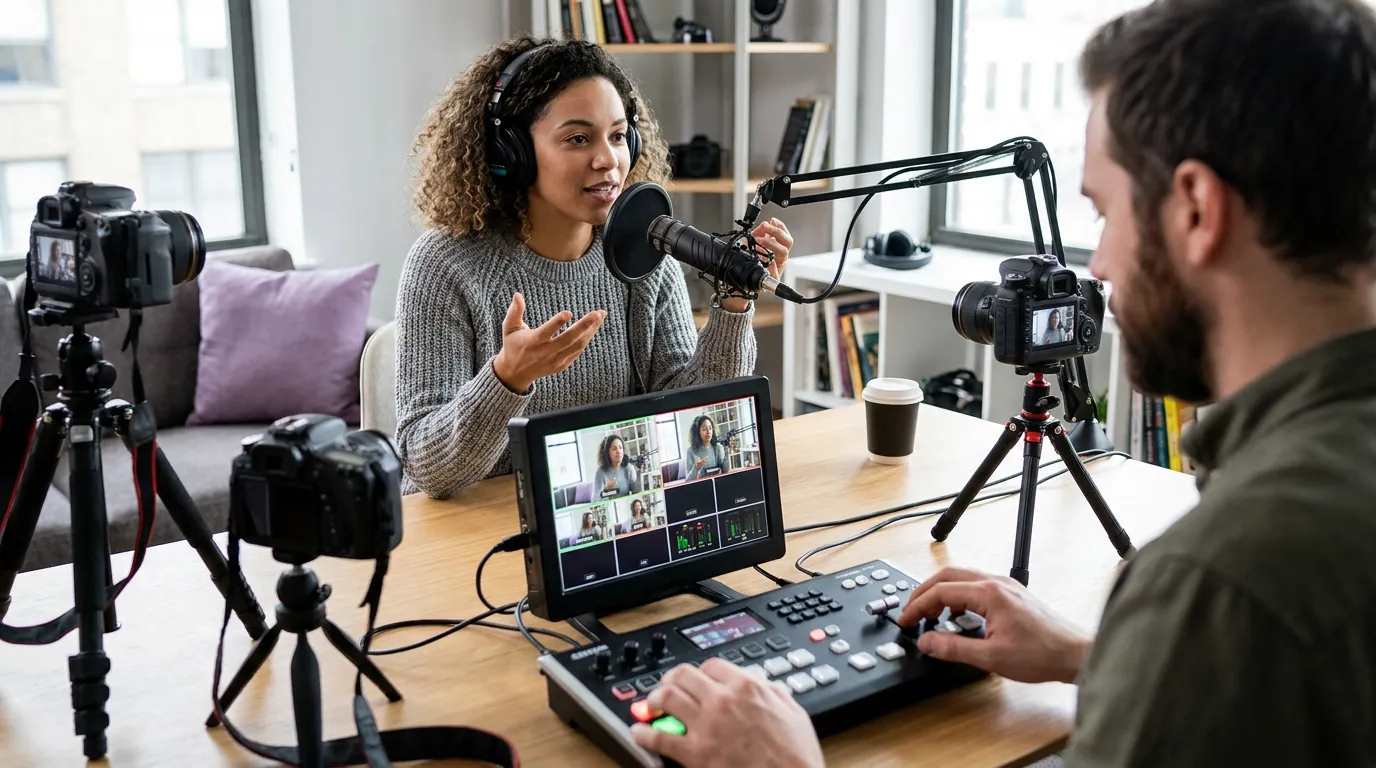
When should you cut between cameras in a podcast?
Cut to a person's camera when they start talking, and hold that angle for as long as they hold the floor. A speaker change is the single clearest signal in a conversation, and matching the picture to the voice is what makes a multicam edit feel invisible, the viewer's eyes land on the person their ears are already following. Everything else is an exception to this one rule.
So the default rhythm of a two-person show is simple: host talks, you're on the host; guest answers, you're on the guest; back and forth. You are not trying to be clever. You are trying to be unnoticed. A clean edit is one where nobody in the audience ever thinks about the editing, and the fastest way to get there is to let speech drive the picture. If you set your cameras up well, see framing and composition for a talking-head podcast, each single is already a flattering shot, so cutting to it adds nothing but timing.
The one trap here is cutting slightly before the new speaker actually starts. Land the cut on the first word, or a beat after, never a second early, which makes it look like you're cutting away from someone mid-thought. When in doubt, cut a hair late rather than a hair early.
Hold the wide two-shot for every reaction
When something happens between the two people, a laugh, a flinch, a "no way," an interruption, cut to the wide two-shot and stay there. Reactions are the most watchable moments in any conversation, and they live in the space between two faces. If you're tight on the person who just made the joke, you miss the guest cracking up, which is the actual payoff. The wide catches both.
This is also the rule that makes a show feel warm instead of clinical. A relentless A/B cut between two close-ups, with no wides, reads like a deposition. Sprinkle the two-shot in at every genuine moment of connection and the conversation starts to feel like a conversation. A good instinct: if you find yourself smiling at what's happening on screen, that moment probably wants the wide.
The wide also rescues crosstalk. When both people talk at once, which happens constantly in a real conversation, there is no single "speaker" to cut to, so the two-shot is the only honest choice. Trying to A/B cut through overlapping speech produces a frantic, twitchy edit. Sit on the wide and let the moment breathe.
The minimum-shot-length rule that stops seasick cutting
Never hold any single angle for less than about three seconds, even if the speaker changes faster than that. This is the rule that overrides the others, and it is the one beginners break constantly. When two people trade quick one-word lines, "Yeah." "Right." "Exactly.", obeying rule one literally would mean three cuts in three seconds, and the screen starts flickering between faces like a strobe. It is genuinely uncomfortable to watch.
The fix: when the back-and-forth gets faster than your minimum, stop cutting and ride the wide through the rapid exchange. The two-shot absorbs any number of quick lines without a single cut. Resume single-camera cutting once one person takes the floor again for a real stretch. Three seconds is a floor, not a target, many shots should run ten, twenty, thirty seconds. The rule is only there to catch the failure mode where you cut too much.
What a real exchange looks like, second by second
Here is a worked 24-second slice of a two-person interview so you can see the rules interacting. Notice how the cuts cluster on speaker changes, how a laugh pulls everything back to the wide, and how a fast "yeah / right" exchange gets absorbed by the two-shot instead of becoming four cuts.
Six cuts in twenty-four seconds is a calm, normal pace for a conversation. If your edit of the same exchange had fifteen cuts, you broke rule three. If it had two, you probably sat on one single through a reaction the wide should have caught.
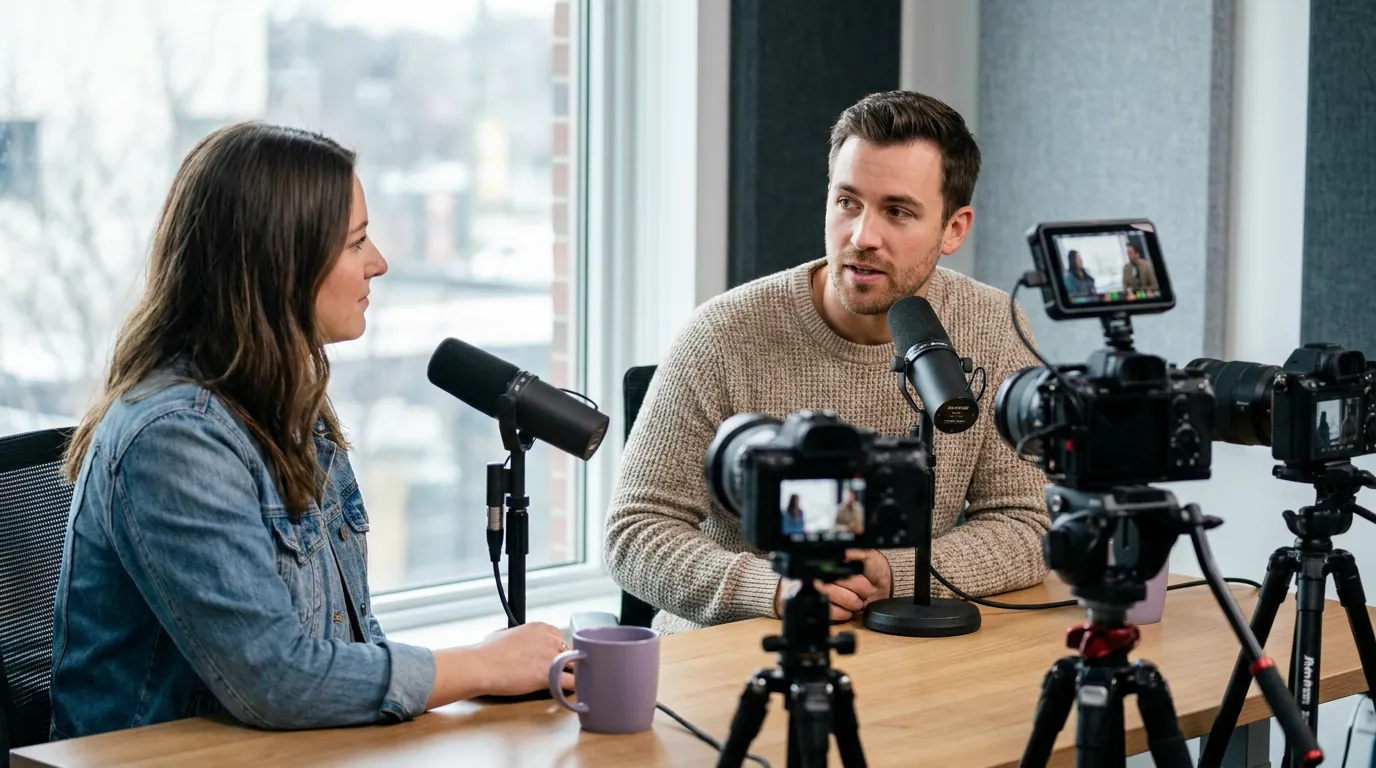
Which angle should you default to when in doubt?
Default to the wide two-shot whenever there's no clear answer. Crosstalk, a long pause, an awkward beat, a moment where you genuinely can't tell who "owns" the screen, the wide is always defensible because it shows the truth of the room: two people, sitting there, in a conversation. It is the resting position the edit returns to between decisions.
The wide is also the angle you start and end on. Open the episode on the two-shot so viewers understand the space and who's in it, then cut into singles once the talking settles. Come back to the wide for goodbyes. Treat it as home base, not as a shot you're rationing. The deeper reason to start the whole project with the right number of cameras is covered in single vs multi-camera podcast: which you need, multicam only pays off if the angles are framed and lit to be cut between in the first place.
Common multicam editing mistakes (and the fix)
Most bad multicam edits fail in the same handful of ways. Here are the ones worth watching for.
- Cutting on a rhythm instead of on meaning. Some editors cut every few seconds out of habit, regardless of what's happening. Cut on speaker changes and reactions, not on a metronome. A shot can hold for thirty seconds if one person is telling a story, and it should.
- Missing the reaction because you're tight on the talker. The funniest beat is usually the listener's face, not the speaker's. When you sense a payoff coming, get to the wide before it lands, not after.
- Cutting a beat too early. Landing the cut a half-second before the new speaker starts makes it look like you abandoned the last one mid-sentence. Cut on the first word or just after.
- Forgetting to lock matched looks across cameras. If your two cameras don't match on exposure and color, every cut flashes brighter or warmer and the edit feels cheap, the same problem you fix at the source with three-point lighting for a video podcast and matched white balance. Fix it before you cut, not after.
- Holding a single on someone who's done talking. Once a person finishes and the other starts, you're late if you're still on the first face. The eyes want to follow the voice.
Does the cutting rhythm change when you're making clips?
For short vertical clips, cut a little tighter and lean harder on the wide, but keep the same logic. A 30-to-60-second clip has no time for slow build, so trim the runway and start near the moment that matters. The reaction beat that earns the wide in a full episode is often the entire reason a clip travels, a laugh or a stunned face is what stops a thumb mid-scroll.
This matters because the clip is increasingly the thing people see first. More new US weekly listeners now prefer to watch a podcast than to only listen, 53%, up from 30% in April 2022 (Backlinko). For many shows the clip is no longer the promo for the episode, it is the thing most of the audience actually watches. The honest caveat: a tight, well-cut clip still won't travel if the moment itself isn't interesting. Pacing is a multiplier on a good moment, not a substitute for one.
FAQ
How often should I cut between cameras in a podcast? Cut on speaker changes and reactions, not on a clock. In practice that lands most conversations around four to eight cuts per minute, but the number is an output, not a target. A single shot can run thirty seconds if one person holds the floor; a fast exchange might ride the wide with no cuts at all. Let the conversation set the pace.
Do I need three cameras, or will two work? Two cameras, one single on each person plus a wide pulled from a third camera or a crop, is enough for almost any two-person show. The wide is the non-negotiable one; without it you have no reaction shot and no safe default. If you can only have two angles, make them both singles only if you can also crop a wide from a 4K master.
Should I edit multicam manually or use auto-switching? Auto-switching tools cut to whoever's mic is loudest, which gets the speaker-change rule right most of the time but breaks on reactions and crosstalk, it cuts away from the laugh to the talker. Use it as a rough first pass, then go back and fix the reaction beats and any sub-three-second flicker by hand.
Where do I cut for a clip versus the full episode? Same rules, tighter execution. Start the clip right before the moment that earns it, keep cuts on speaker changes, and favor the wide for the reaction that makes the clip worth watching. Trim any dead air at the front so the payoff arrives fast.
New to shooting with more than one camera? Start with how to film a video podcast for the first time, decide your rig with single vs multi-camera podcast, and pick bodies that match for cutting in the best cameras for a multi-camera video podcast.