
How to Co-Host a Joint Episode With Another Show


A joint episode is one conversation, recorded once, that goes out on both shows' feeds. Before you record, settle three things: which model you'll use to publish on both feeds, which show owns the canonical RSS item, and how you'll split the clips so each audience ends up subscribed to the right show. Get those decided in writing and the rest is just a good conversation.
Most co-hosted episodes go wrong not in the recording but in the week after, when two hosts who never agreed on the details start improvising. One publishes early. One swaps in their own ad read and breaks the run time. Both upload the same file to their own feed and now there are two podcast entries competing for the same chart slot. None of that is hard to avoid. It just has to be decided before anyone hits record, which is what this playbook is for.
What is a joint podcast episode?
A joint episode is a single co-produced conversation between two hosts (or two shows) that publishes on both feeds, rather than a normal guest spot where one host interviews the other on one feed only. The defining trait is shared distribution: the same recording reaches both audiences, so each show borrows the other's listeners for one episode.
That makes it the highest-impact move in cross-promotion. A promo swap buys you 30 seconds in someone's feed. A feed drop hands their audience a full episode of yours. A joint episode does something neither does alone: it puts you in the room with the other host in front of their audience, so their listeners hear you for 40 minutes as a peer, not an ad. When it works, a chunk of that audience subscribes because they just spent a whole episode with you.
The catch is that "publishes on both feeds" hides a real technical and editorial decision. There are three ways to do it, and they are not interchangeable.

How do you publish one episode on both feeds?
Pick one of three models before you record: simultaneous dual-publish (both feeds upload their own copy on the same day), lead-feed with delayed re-release (one feed publishes first, the other re-releases a week or two later), or single canonical with a link (one feed hosts the real episode, the other points listeners to it). Each trades reach for control differently.
The reason this matters is that a podcast "episode" is really an RSS item, a file plus metadata that a feed owns. When both shows upload the same audio to their own hosting, you create two separate RSS items of the same conversation. That's allowed, and it's the most common approach, but it has consequences for analytics, chart counting, and which version a clip should send people to. Decide on purpose.
My default recommendation: simultaneous dual-publish, with one show designated the canonical owner for clips and links. You get both audiences on day one, both feeds get the download credit their listeners generate, and you avoid the "re-run" feeling that drags the delayed model's second release. Use the delayed re-release only when one show is much larger and wants to protect its launch slot. Use single-canonical only if one of you can't easily upload third-party-recorded audio, it's the cleanest analytics but it asks the second audience to leave their app, and many won't.
Who owns the RSS item?
One show owns the canonical RSS item, the version that clips, show notes, and external links point to, even when both feeds host their own copy. Pick the owner before recording, usually the larger feed or the one whose audience the topic fits best. Ownership decides where a new listener lands when they tap a clip.
This is the single most-skipped decision, and it causes the most friction later. When both shows have their own copy and a clip goes viral, where does the clip's caption send people? If you never decided, you get two hosts each linking to their own feed under the same clip, confusing the viewer and splitting the traffic. Designate one canonical episode URL up front. Both hosts can still promote their own feed in their own posts, but the episode page a clip points to is one agreed link.
Ownership is not the same as credit. The owner hosts the canonical link; both shows still publish, both get downloads on their own feed, and both name each other in the title and notes. The owner just resolves the tie when something needs a single destination.
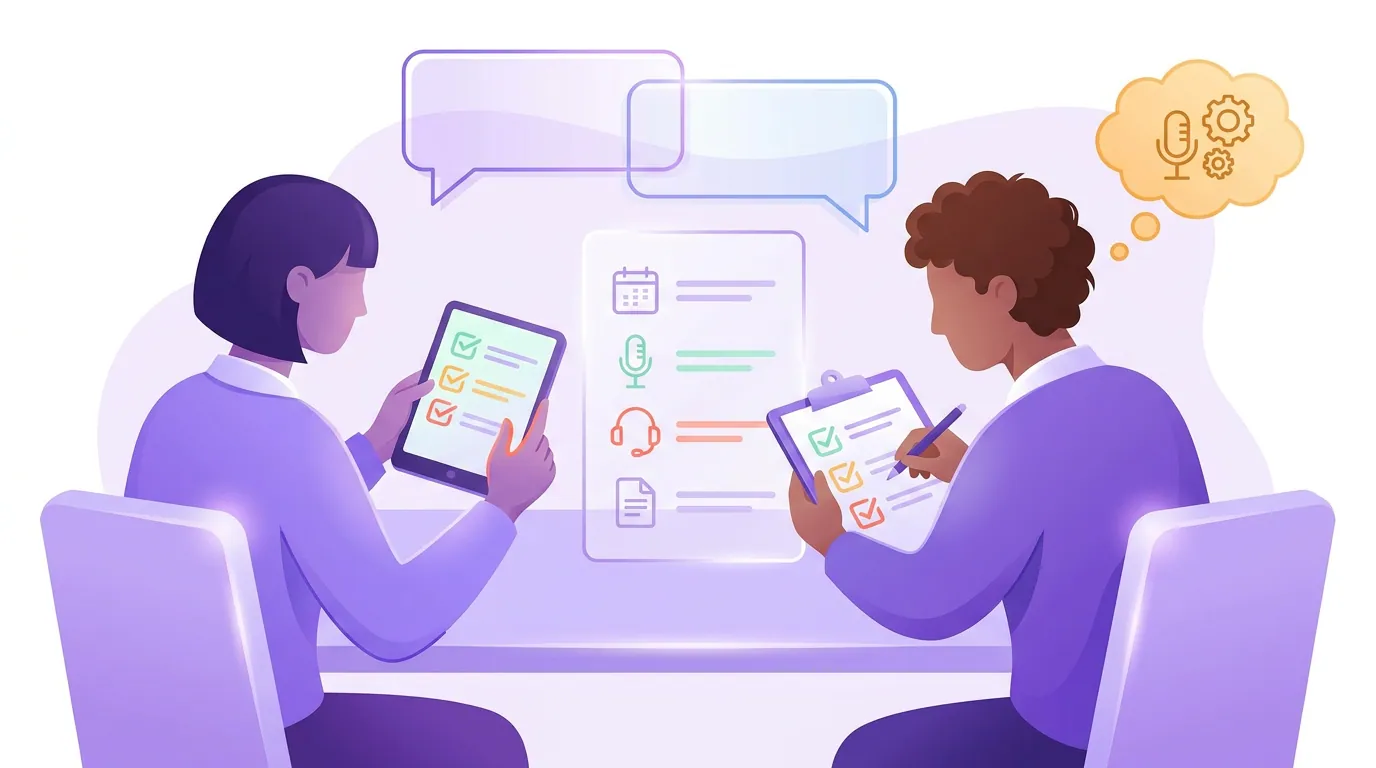
The pre-record conflict checklist
Settle these six points in a shared doc before you record. None take long, and each one is a fight you don't want to have at 11pm on publish day.
- Canonical owner and episode link. Which feed hosts the version that clips and external links point to. Write the agreed URL slug now, even before the file exists.
- Publishing model and date. Simultaneous, delayed, or single-canonical, plus the exact day and time both feeds go live. If delayed, name both dates.
- Intro, outro, and ad reads. Whose intro plays? Most co-hosts keep a shared cold open, then each feed appends its own outro and house ad reads to its copy. Agree the run-time impact so neither version drifts.
- Sponsor conflict. Check that neither show's current sponsor competes with the other's. A finance show's brokerage sponsor inside an episode that re-airs on a rival brokerage's sponsored show is a contract problem. Catch it before, not after.
- Metadata and titling. Agree the episode title, the guest/co-host credit, the description's first two lines (the part apps truncate to), and the cover art treatment. Decide if each feed localizes the title to its own audience.
- Evergreen vs dated. If the conversation references "this week's news," it ages fast and a delayed re-release looks stale. If it's evergreen, you can re-promote it for months. Choose the framing on the call, not in the edit.
Print this, fill it in together on a 15-minute call, and your producer (or future self) will thank you. The whole point of a joint episode is that it's low-effort relative to its reach, don't let undecided details turn it into a week of email.
How should you record a joint episode?
Record once, in video, with both hosts on a remote recording tool that captures separate local tracks for each speaker. Separate tracks let either show fix levels independently, and video gives both of you the source for vertical clips later. One file, two clean tracks, one shared edit, then each feed adds its own bookends.
A few specifics that matter:
- Use local-track recording, not a captured Zoom call. Tools that record each participant's audio locally (rather than streaming the call) give you uncompressed, separate tracks. If one host's mic clips, you fix only that track. A single mixed-down call recording can't be repaired the same way.
- Record video even if both shows are audio-only. Video is the raw material for clips, and clips are where the cross-audience growth happens. With clips driving an estimated 20–40% of new audience for video shows (Podcast Studio Glasgow), shooting video once is the cheapest growth decision in the whole production.
- Agree one shared master edit. The conversation should be edited once, by one person, to one version. Then each feed appends its own intro and outro to that master. Two separate edits of the same talk is wasted work and creates two slightly different episodes, a headache for clips and a confusing experience if a listener hears both.
- Mark the clip moments live. When something lands on the call, one of you notes the timestamp. You'll thank yourselves when it's time to cut clips and you have a list instead of a 45-minute re-listen.

The clip-distribution plan for both audiences
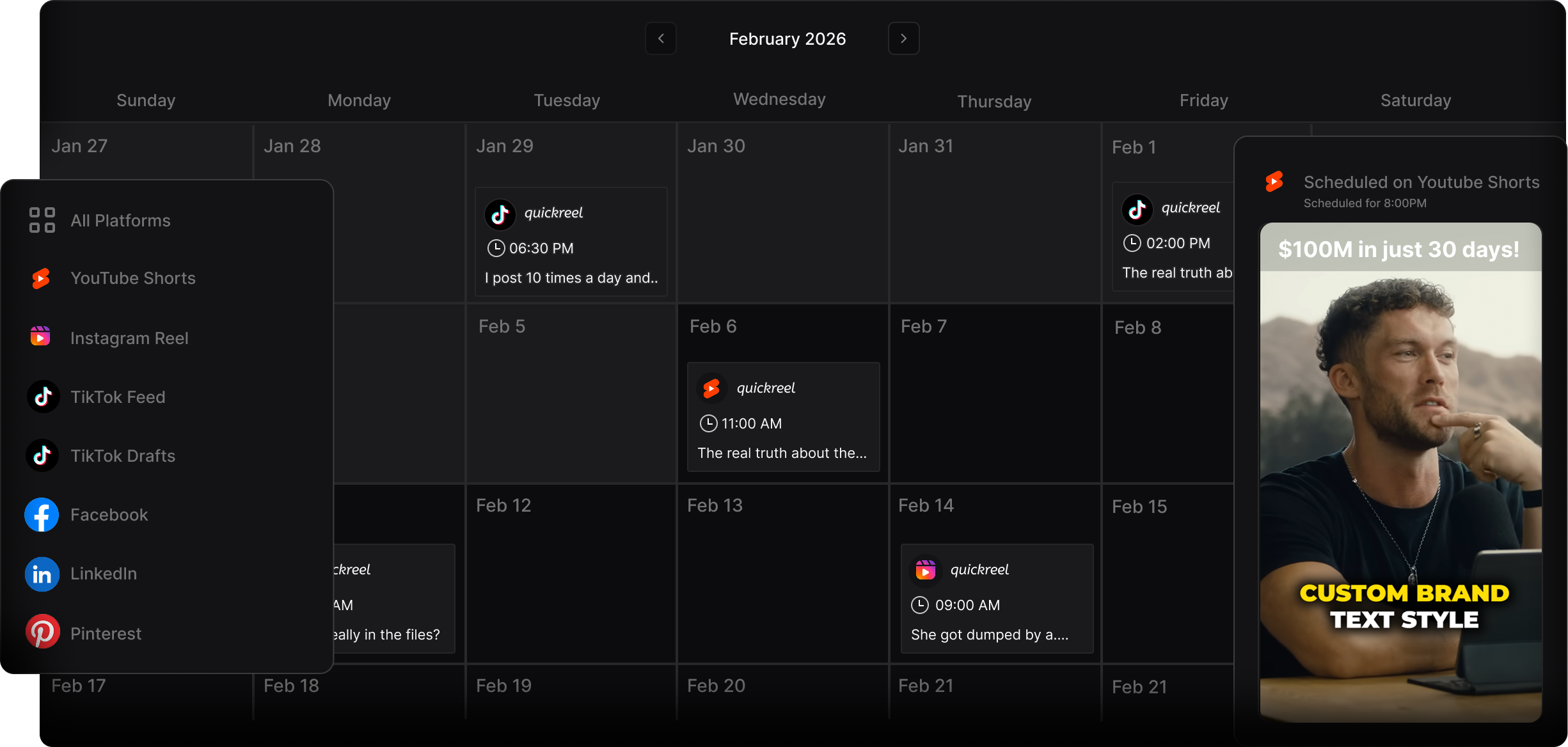
The episode is half the play. The clips are how each show's audience discovers the other host, and they only work if each clip sends viewers to the right feed. Cut two clip sets from the one recording: one batch that highlights Host A and points to Show A's feed, one batch that highlights Host B and points to Show B's. Same conversation, two homes.
This is where co-hosts leave the most growth on the table. They cut five clips, both hosts post the same five, and every clip's caption is ambiguous about which show to follow. Instead, split deliberately:
Why split this way: a viewer who discovers the clip through Show B's audience should be nudged toward Show A (the show they don't yet follow), and vice versa. The cross-promotion only converts if the clip a stranger sees points them somewhere new. Lead each clip with whichever host is the "draw" for that audience, caption it with that host's hook, and end on a clear "follow [Show] for more."
This is also where social distribution earns its keep. As of 2025, 57% of listeners rely on social media for podcast recommendations, the first time social passed friends and family (InsideRadio). The joint episode lives in two feeds; the clips live in two social audiences. The clips are what carry one host's name into the other's followers.
Common mistakes (and the fix)
These are the failures I see most often when two shows try to co-produce an episode.
- Both feeds publish at different times by accident. One host gets excited and ships early, so the "simultaneous" launch isn't. Fix: set a shared scheduled publish time in both hosting platforms and confirm it the day before.
- No agreed canonical link, so clips split traffic. Two hosts post the same clip pointing to two different episode pages. Fix: settle the canonical owner and URL on the pre-record call; both can still promote their own feed in their own words.
- Mismatched run times after each adds their own ads. Show A's copy is 44 minutes, Show B's is 51 because of extra house ads, and a clip's timestamp no longer lines up across versions. Fix: edit one shared master, append bookends only, and cut clips from the master file before either feed's ads go in.
- Same five clips, same captions, both feeds. No host-specific framing, so neither audience is nudged to the show they don't follow. Fix: cut two clip sets, each leading with one host and ending on that show's follow CTA.
- Recorded audio-only, then wished for video. The episode does fine but there's nothing to clip for social, where most of the cross-audience growth lives. Fix: always record video, even for an audio-first show. It costs nothing extra and it's the raw material for every clip.
- Sponsor conflict surfaces after publish. A competing brand's read inside a re-aired episode breaches one show's contract. Fix: item 4 on the checklist, confirm no sponsor overlap before recording.
Frequently asked questions
Is a joint episode the same as having someone on as a guest? No. A guest spot publishes on one feed; the host interviews the guest for their own audience. A joint episode is co-produced and publishes on both feeds, so each show's audience hears the conversation and each host gets exposure to the other's listeners. The shared distribution is the whole point.
Should both shows really upload the same audio file? Usually yes, under the simultaneous dual-publish model, both feeds host their own copy so both get the download credit and the day-one launch. The trade-off is two separate RSS items for one conversation, which is why you designate one canonical owner for clips and external links. If you'd rather keep clean single-source analytics, use the single-canonical model and have the second feed link out instead.
How do downloads get counted if both feeds publish it? Each feed counts the downloads its own listeners generate; there's no shared total. That's a feature of simultaneous dual-publish, both shows see real engagement from their own audience. It does mean you can't quote a single combined download number for the episode, so report them separately.
How many clips should we make from one joint episode? Cut two clip sets, one per host, rather than a single shared batch. A 40-minute conversation typically holds enough 30-to-90-second moments for a week or two of posts per show (a directional rule of thumb, not a fixed count). Lead each set with the host who's the draw for that audience, and end on that show's follow CTA.
What if one show is much bigger than the other? Use the lead-feed-with-delayed-re-release model. The larger show publishes first and owns the canonical link; the smaller show re-airs a week or two later to its own audience. The smaller show still gets the full episode and the bigger host's name in its feed, and the bigger show protects its launch slot. Just keep the conversation evergreen so the delayed release doesn't feel stale.
Where do new listeners actually come from after a joint episode? Mostly from the clips, not the feed swap itself. The in-feed episode reaches people who already subscribe to one show; the clips carry each host's name into the other host's social audience, now the top source of podcast recommendations (57%, per Coleman Insights/Amplifi Media). For more on picking partners whose audience will actually convert, see how to find podcasts to cross-promote with. That's why the two-clip-set split is the part that converts.

Before you record: the one-page version
A joint episode is the most efficient cross-promotion you can run, because one conversation does the work of a swap, a guest spot, and a week of clips at once. The production isn't hard. It just rewards deciding the details up front: pick a publishing model, name the canonical owner, run the six-point conflict checklist, record once in video, and cut two clip sets that point each audience to the show they don't yet follow.
If you're still choosing partners, start with the fit work in how to find the right podcasts to cross-promote with, then warm the relationship with a lighter format first, a trailer swap or a feed drop, before you commit to co-producing. When you're ready to pitch the joint episode itself, the cold pitch template for getting bigger shows to swap adapts cleanly.
And whichever feed the new listeners land on, capture them before they drift. Set up a podcast email list from zero and a 5-email welcome sequence so a joint-episode spike turns into subscribers both shows keep.