
Growing a Parenting Podcast for Listeners With No Time


Grow a parenting podcast by building it for the way parents actually listen: in short, interrupted windows, with a baby crying or a school run ending mid-sentence. Make episodes resumable through clear chaptering, lead every clip with the takeaway in the first three seconds, and segment your show by your listener's stage, newborn, toddler, school-age, teen, instead of the broad word "parenting." Stage beats genre for growth.
Most parenting shows lose listeners not because the advice is bad but because the format ignores the audience's reality. A 75-minute meandering episode assumes an hour of uninterrupted attention your listener does not have. A title like "Episode 47: Chatting About Mom Life" tells a sleep-deprived parent nothing about whether this is worth their next ten free minutes. This guide fixes both, with a listening-window map, an episode structure built for interruption, and a stage-segmentation framework that turns a generic parenting show into one a specific parent can't stop sending to friends.
How do you grow a parenting podcast when listeners have no time?
You grow it by designing around fragmented attention instead of fighting it. Keep episodes scannable and resumable: tight runtimes, chaptered segments with timestamped titles, and a clear payoff stated up front so a parent who gets three minutes still leaves with something. Then segment by parenting stage so each episode speaks to one specific person, not "parents" in general.
The core constraint is real and worth naming plainly. A parent's day is not short on minutes, it is short on uninterrupted minutes. The listening happens in the cracks: a 6 a.m. feed, the drive to drop-off, fifteen minutes of folding laundry during a nap, the wind-down after bedtime. Each window is short and prone to ending without warning. A show built for one long sitting bleeds those windows; a show built for them owns them.
One honest caveat on that map: it is a model of how parents tend to live, not a measurement of your listeners' behavior. Your own analytics will show where people actually drop off. Pull your average-completion data, most hosts (Spotify for Podcasters, Apple Podcasts Connect) show consumption and drop-off, and you will likely see the same pattern: a cliff somewhere in the first ten minutes, not a clean finish at the end.
What's the right episode length and structure for parents?
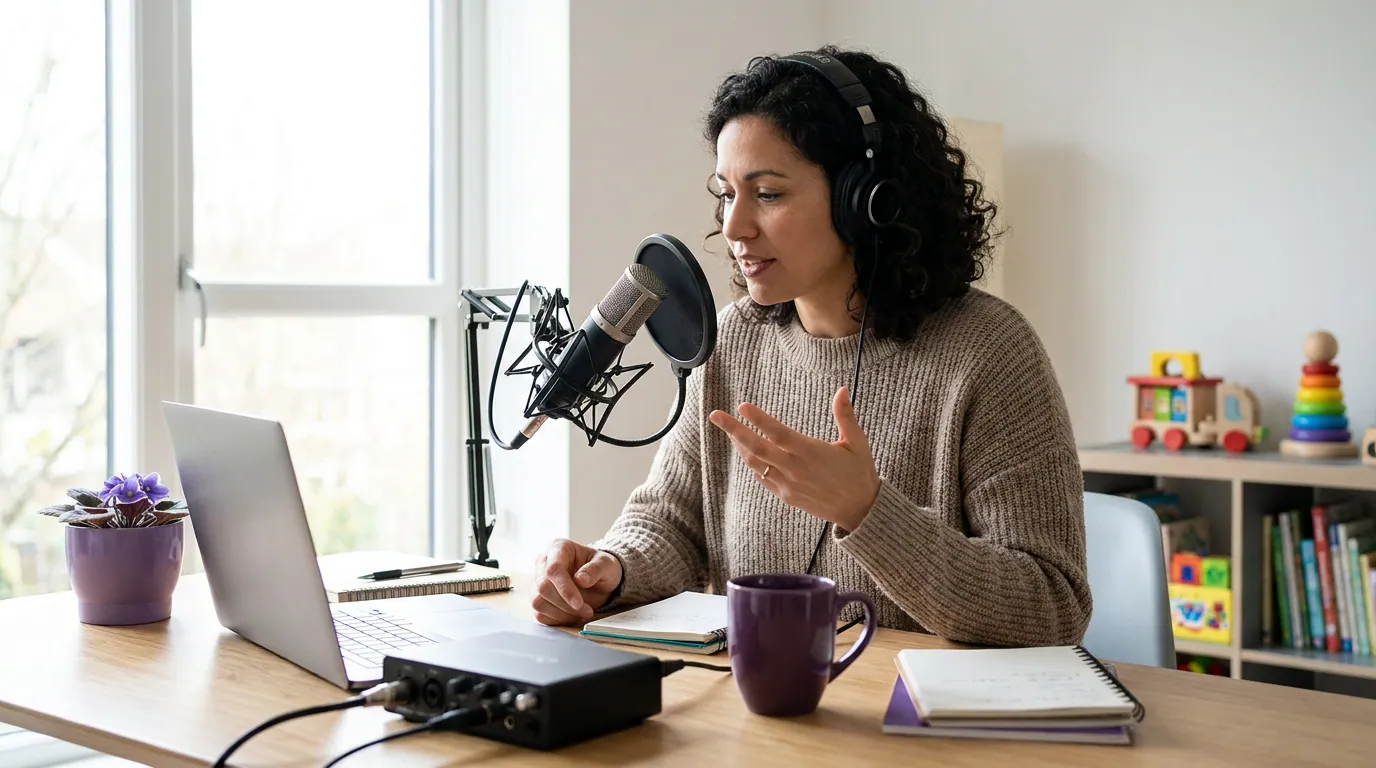
Two formats work, and both respect the windows. Run either tight 12-to-20-minute single-topic episodes that fit one window whole, or longer 35-to-50-minute episodes that are chaptered into three or four named segments a listener can resume between interruptions. Avoid the in-between unchaptered 60-minute ramble, it is too long for one window and too shapeless to re-enter.
Chaptering is the underused move. Most podcast apps (Apple Podcasts, Spotify, Pocket Casts, Overcast) support chapter markers, and they turn a long episode into a menu. A parent who lost the thread during a tantrum can glance at "12:30, the actual sleep-training script" and jump straight back. Without chapters, re-entry means scrubbing blindly, and most people just don't return.
Structure each episode so the value survives interruption:
- Front-load the payoff. State the single most useful thing in the first 60 seconds. If a parent only gets the cold open, they should still walk away with one usable idea. Save the story for after the takeaway, not before it, the same discipline behind a strong podcast cold open hook applies here, minus the comedy.
- Name your chapters like search results. "Segment 2: how to handle the 4 a.m. wake-up" beats "Part Two." The title is doing the work of telling a tired brain whether to keep going.
- Make each segment self-contained. A listener should be able to drop in at chapter three without having heard one and two. Self-contained segments are also exactly what clip well later.
- Close every segment with one action. Not five tips, one. A parent with no time can act on one thing tonight. Five things become zero.
Why segment by parenting stage instead of "parenting" broadly?
Because "parenting" is not a niche, it is six different niches that share a word. A newborn parent and a parent of a 15-year-old have almost nothing in common in their day, their searches, or their crises. A show that speaks to one stage with precision grows faster than a show that speaks to all stages vaguely, because precision is what gets a clip saved and a friend tagged.
This is the single most important growth decision a parenting show makes, and most skip it. Parenting is a crowded, broad category, so "tips for parents" disappears into the feed. "How to survive the newborn fourth trimester on no sleep" finds the exact person living it, and that person shares it inside their own stage-specific group chats and Facebook groups, where your real distribution lives. (For context on the scale of the medium: US podcast listening hit a record, with roughly 55% of the 12+ population listening monthly per Edison Research's Infinite Dial 2025, a large audience, but one you reach by being specific, not broad.)
You do not have to pick one stage forever. You pick one primary stage to be known for, and you let your back catalog serve the others. The decision table below maps each stage to its dominant crisis, its best content angle, and where its listeners cluster online.
| Stage | Listener's dominant crisis | Best content angle + where they cluster |
|---|---|---|
| Newborn (0–12 mo) | Sleep, feeding, identity loss | Short, reassuring "you're not failing" episodes; new-parent Facebook groups, Reddit r/NewParents |
| Toddler (1–3 yr) | Tantrums, boundaries, potty training | Scripted "say this not that" segments; daycare and mom-group chats |
| School-age (4–10 yr) | Behavior, screens, school stress | Practical routines and homework systems; school WhatsApp groups, Pinterest |
| Tween/teen (11–17 yr) | Communication, anxiety, autonomy | Expert interviews, calm reassurance; parent forums, Instagram saves |
| Special focus | Neurodivergence, single parenting, multiples | Deep, specific community building; niche subreddits and Discords |
The pattern across that table: pick the stage you have genuine first-hand or interviewed expertise in, and go narrow enough that a parent in that stage feels you are talking only to them. You can widen later. Starting wide is how most parenting shows stay invisible.
How clips grow a parenting show (and the honest limits)
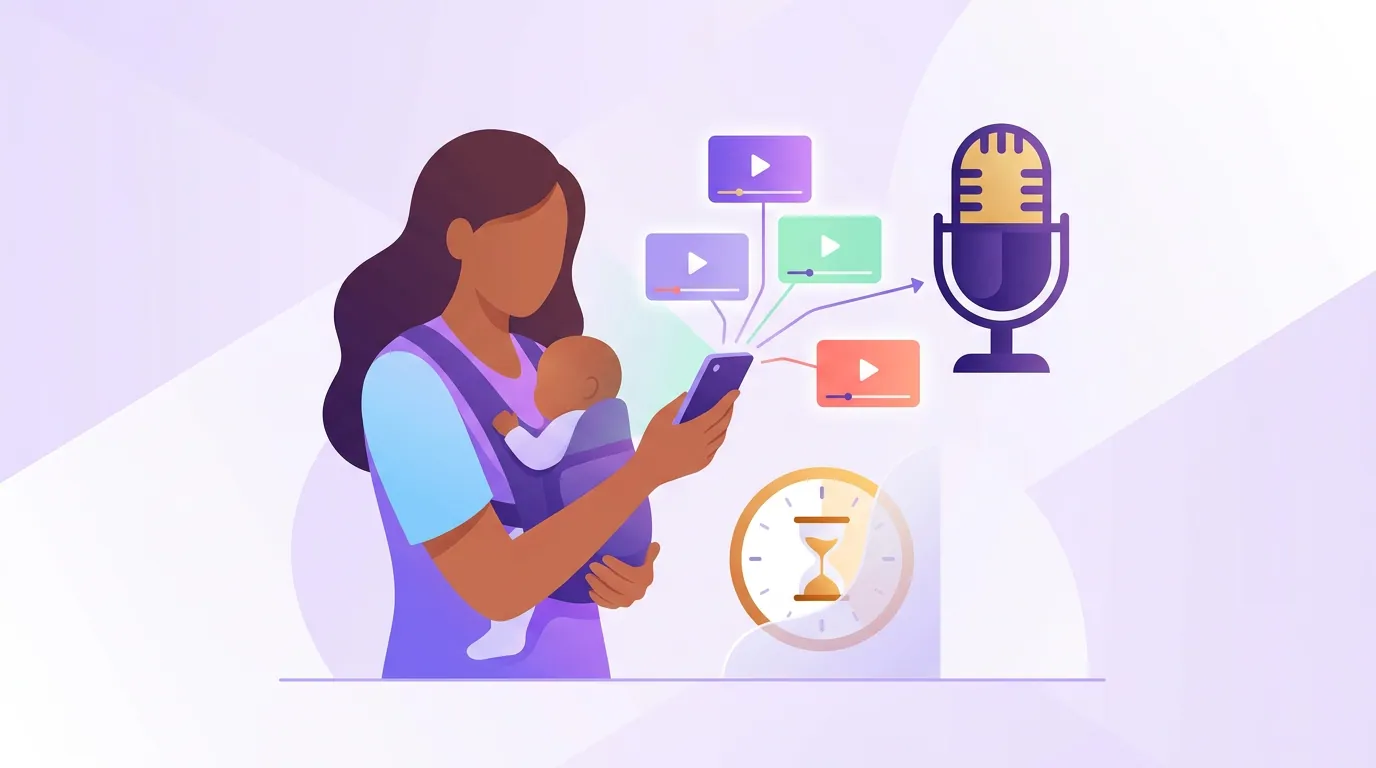
Clips are the front door, because discovery moved off the playground and onto the feed. Pull several short clips from each episode, lead each one with the takeaway in the first three seconds, caption everything, and post into the stage-specific corners of social where your parents already gather. The clip earns the click; the chaptered episode keeps them.
The discovery shift is documented. Social clips now drive podcast discovery more than friends and family, 57% of listeners rely on social media for recommendations versus 54% on word of mouth (InsideRadio), and 53% of new US weekly listeners now prefer to watch a podcast rather than only listen (Backlinko). For parents who scroll one-handed during a feed, a 30-second clip answering "how do I get a toddler to stay in bed" is exactly the format that gets saved and sent.
Now the honest limits. Clipping can lift discovery reach by 2 to 5x (Podcast Studio Glasgow), but that figure comes from a production studio with an interest in the result, so treat it as directional, not a promise. Reach is also not the same as subscribers, a viral toddler-tantrum clip can rack up views from people who will never download a full episode. And most social video plays on mute (Digiday has reported figures from 75% of mobile views to 85% of Facebook video), so the on-screen captions carry your whole message. A parenting tip nobody can hear is a parenting tip nobody acts on.
Common mistakes that stall parenting podcast growth
- Episodes too long and unchaptered. A 70-minute ramble with no chapter markers cannot be re-entered after an interruption, so it does not get finished, and unfinished episodes do not convert to loyal listeners. Either go tight (under 20 minutes) or chapter the long ones into resumable named segments.
- Speaking to "all parents." The widest possible audience is the hardest to reach. A clip for "parents" gets ignored; a clip for "exhausted newborn parents at 3 a.m." gets saved. Pick a primary stage and own it before you widen.
- Burying the takeaway behind a story. Parents listening in a 10-minute window will quit before a slow open. Lead with the usable thing; the story supports it. This is the same self-contained-clip logic that makes comedy clips travel, payoff first.
- Over-promising on high-stakes topics. Parenting is sensitive ground, sleep, health, behavior. "This one trick fixes tantrums" erodes trust the same way over-claiming sinks a show built on credibility. Name what is individual, cite real sources, and resist the absolute claim.
- Growing only on rented feeds. A clip can get throttled the week you need it most. Move your most engaged parents to a channel you control, start a podcast email list from zero and put a real welcome sequence behind it so you reach them directly, not at an algorithm's mercy.
- Ignoring guest reach. Pediatric sleep consultants, child psychologists, and veteran parents bring their own stage-specific audiences. The audience-borrowing logic behind a show that grows by booking guests first works especially well in parenting, where listeners trust named experts.
FAQ
How do you grow a parenting podcast? Build for fragmented attention and segment by stage. Keep episodes either tight (12–20 minutes) or chaptered into resumable named segments, front-load the takeaway, and focus the show on one parenting stage, newborn, toddler, school-age, or teen, instead of "parenting" broadly. Then clip each episode and post into the social corners where that stage of parent already gathers. Precision grows faster than generality.
How long should a parenting podcast episode be? Either 12–20 minutes for a single-topic episode that fits one listening window whole, or 35–50 minutes chaptered into three or four named segments a parent can resume after an interruption. Avoid the unchaptered 60-minute middle ground, too long for one window, too shapeless to re-enter. Chaptering matters more than exact length.
Should a parenting podcast focus on one age stage? Yes, pick one primary stage to be known for. A newborn parent and a teen parent have almost nothing in common day to day, so a stage-specific show speaks to a real person and gets shared inside that stage's group chats and forums. Your back catalog can still serve other stages, but lead with one.
Do clips actually bring new parenting listeners? They help, with caveats. Social clips now drive podcast discovery more than friends and family (57% versus 54%, InsideRadio), and 53% of new US weekly listeners prefer to watch (Backlinko). Consistent clipping can lift reach 2 to 5x (Podcast Studio Glasgow), though that comes from a production studio, so treat it as directional. Reach is not the same as subscribers, design clips to convert, not just to be seen.
How many clips should I make from each parenting episode? Around five strong clips, each a single clear idea, one sleep script, one tantrum reframe, one reassurance. Caption every one, since most social video plays on mute (75–85%, per Digiday reporting), and lead the first three seconds with the takeaway. Post each into the stage-specific community it fits best rather than blasting all five everywhere.