
Growing a Daily News Podcast on Habit, Not Hype


A daily news podcast grows by becoming a habit, not by going viral. Pick one drop time and hit it every single day. Open every episode by answering "the one thing you need to know" in the first five seconds. Then track the metrics that prove reliability, on-time rate and return rate, instead of chasing a spike. A news show people set their morning around beats one that trended last Tuesday.
That is the whole strategy, and it runs against most podcast growth advice. The standard playbook is built for interview and entertainment shows: cut a killer moment, hope it travels, repeat. News is different. Your listener does not come back because last Thursday's episode was great. They come back because at 6 a.m. your show is there, the way coffee is there. You are competing for a slot in someone's routine, and routines are won by reliability, not by brilliance.
News is the #2 podcast genre in the US by listenership, behind only comedy (Statista). The audience is huge and it already has a daily-information habit, from cable, from a newsletter, from a feed they refresh. Your job is to capture that existing habit, not manufacture a new one. The growth question for a news show is not "how do I get a hit" but "how do I become the thing they reach for at the same time every day."
Why daily news is a habit problem, not a virality problem
A news listener's loyalty is structural. They are not deciding episode by episode whether to listen, they have decided, once, to make your show part of a daily slot, and now they are on autopilot. That autopilot is the asset. Break the appointment and you break the autopilot, and you have to win them back the hard way. Keep it, and you grow even on slow news days.
This is the opposite of how entertainment shows work, where each episode re-earns the listen on quality. It is closer to how a newspaper or a morning radio segment works: predictable cadence, predictable format, predictable length. The format being predictable is a feature for news, not staleness. Your listener wants to know they will get the day's stories in twelve minutes before the train arrives.
It also changes what a failure looks like. The biggest growth killer for any podcast is podfade, nearly half of all shows never make it past their first three episodes Amplifi Media, and the single best predictor of survival is publishing consistency. Other niches lean on different engines entirely, a true-crime show grows on the pull of an unfolding story, a business show on the guests it books, but news grows on showing up. For a daily show that consistency pressure is multiplied by seven. A daily news pod that ships five days a week and then goes dark for a long weekend has trained its audience that the appointment is unreliable. Consistency is not just survival here. It is the entire growth mechanism.
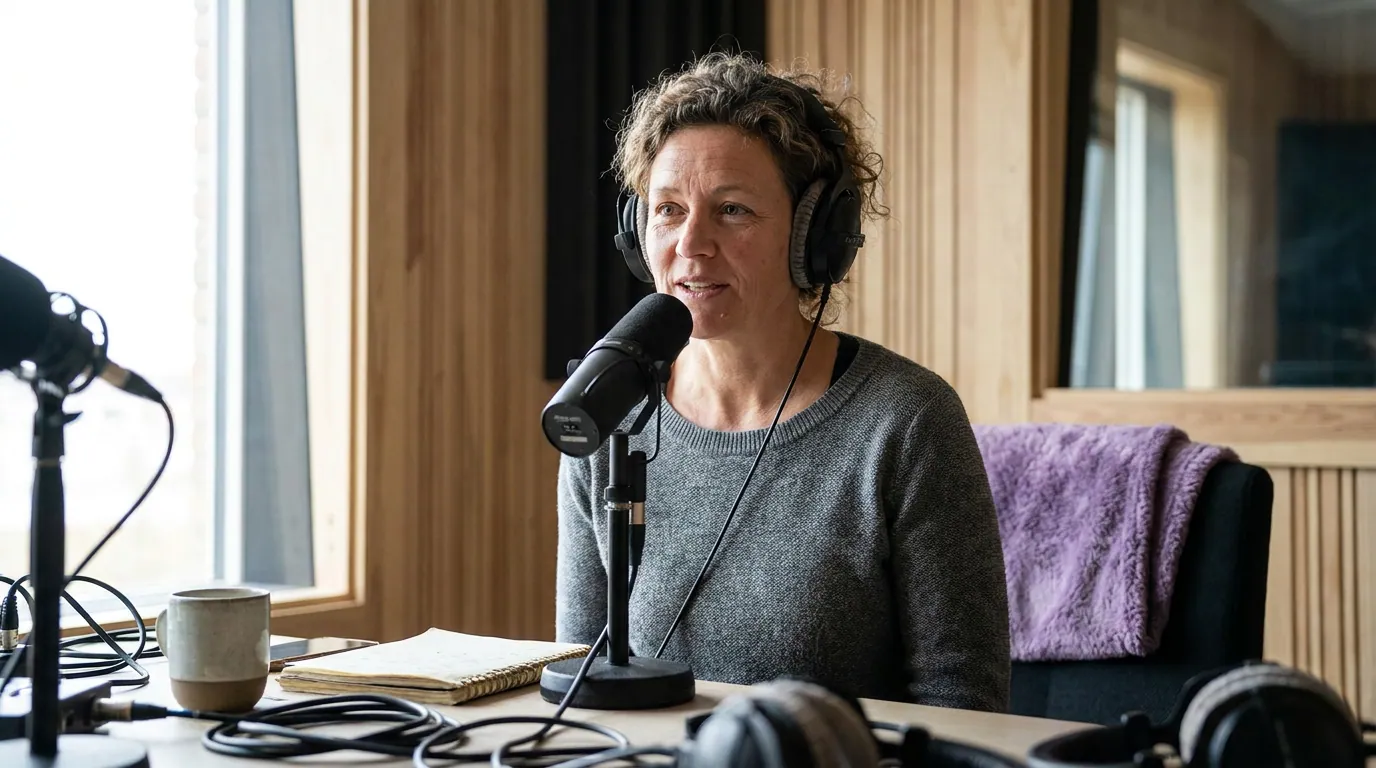
How do you keep a daily news podcast consistent without burning out?
Shrink the format until you can produce it on your worst day, then never break the cadence. Set a fixed runtime (eight to fifteen minutes is the daily sweet spot), a fixed segment order, and a fixed drop time. Build a one-day buffer so a bad morning never means a missed drop. The format you can sustain at 11 p.m. when you are exhausted is the right format.
Daily output is the part that crushes solo hosts. The way through it is templating, not heroics:
- Lock a fixed segment skeleton. Same order every day: cold open with the headline, two-to-three story blocks, one "why it matters" take, sign-off with tomorrow's drop time. A skeleton means you fill slots instead of inventing structure at dawn.
- Set a hard runtime ceiling. Decide on, say, twelve minutes and edit to it. A predictable length is part of the habit, listeners slot you into a known gap in their day. Sprawling episodes break the slot.
- Build a one-episode buffer. Record tomorrow's evergreen-leaning segments today. The buffer is what saves the streak when you are sick, traveling, or the news breaks at midnight.
- Batch the production you can. Intro, outro, music beds, caption templates, and your standard lower-third graphics should be set once and reused. Spend your daily energy on the news, not the furniture.
- Write the cold open last, fast. Once the stories are in, the open writes itself, it is just the single most important thing in plain language. Do not agonize over it.
The reliability this buys is the growth engine. A show that has dropped at 6 a.m. for ninety straight days has something no viral clip can buy: trust that it will be there tomorrow.
The "one thing you need to know" open
Lead every episode by answering the day's single most important question in the first five seconds, before any music, branding, or "welcome back." A news listener is deciding in those seconds whether you are worth their slot today. Give them the payoff immediately, "Here's the one thing you need to know this morning: [the headline]", then earn the next ten minutes with the detail.
This does two jobs at once. It respects the habit listener who just wants the answer, and it is the only open that survives being cut into a clip. The same first five seconds that hooks your feed subscriber is the hook on the social clip that brings in the next subscriber. You write it once; it works in two places.
It is also answer-first, which is exactly how new listeners and the platforms both reward you. Front-loading the substance beats the classic radio cold open that teases for thirty seconds before saying anything. For a muted scroller, and most social video is watched on mute, commonly cited at 75-to-85% (Verizon Media/Sharethrough reported ~75%; Digiday reported ~85% of Facebook video muted, both publisher-reported and directional), the captioned headline in the first frame is the entire pitch.
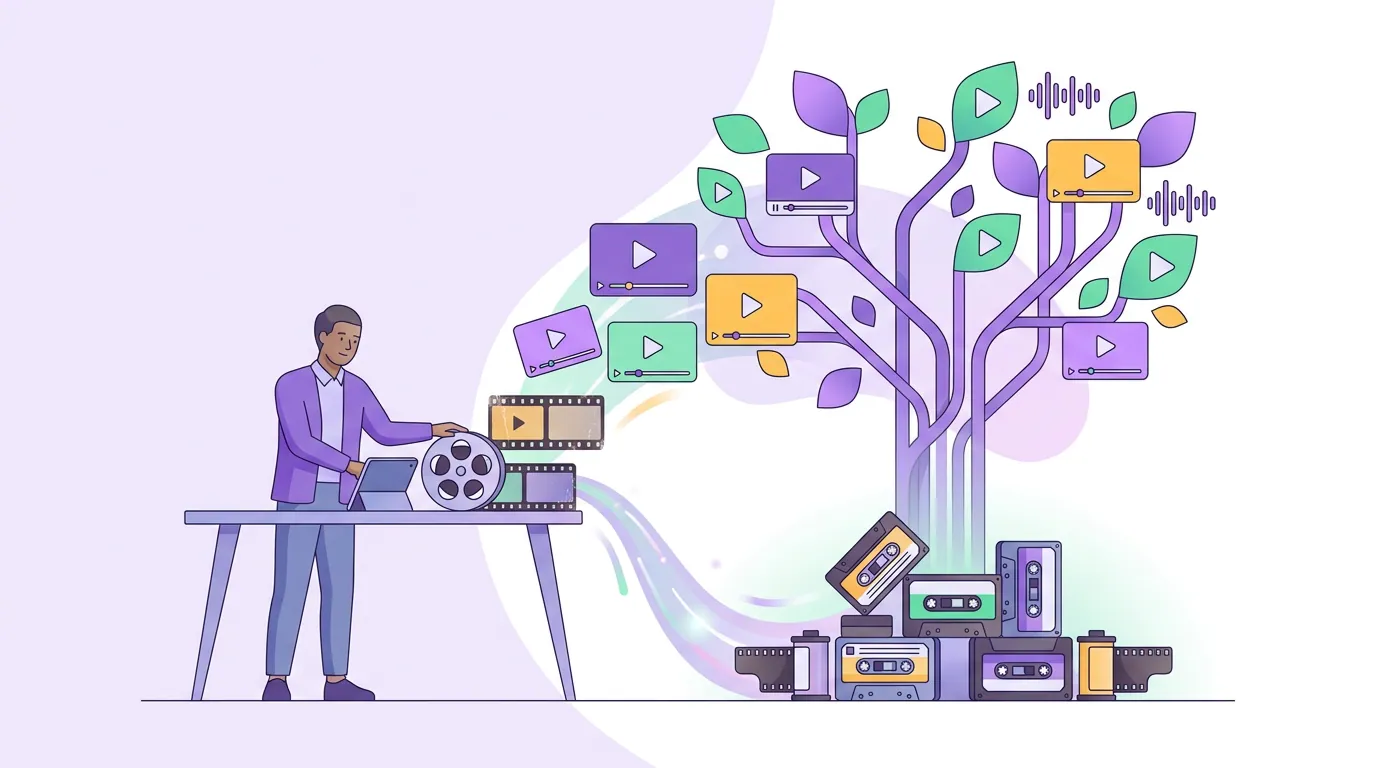
How clips grow a news show when the news is already old
Clips bring new listeners to the appointment, but only if you treat them as the day's evidence, not as ads. Post the sharpest "here is what happened and why it matters" moment within hours, while the story is hot. The clip's job is to prove your show is a fast, clear read on today, so the viewer subscribes for tomorrow, not to listen to today's episode.
Short video clips now drive more podcast discovery than recommendations from friends and family, the first time that has happened (Inside Radio). Clips also drive an estimated 20-to-40% of new audience for video shows and can lift reach two-to-five times (Podcast Studio Glasgow). Both figures are directional ranges, not promises, but for a genre where discovery is the whole growth problem, the direction matters.
A few rules specific to news clips: keep them 20-to-60 seconds (the workable podcast clip range is 30-to-90 seconds per castmagic; news skews short because the story is the payoff), date nothing you cannot post same-day, and never sacrifice accuracy for a punchier cut, a wrong clip in a news feed is a credibility wound, not a vanity-metric miss. Virality without accuracy is worse than no clip at all. The mechanics of cutting a clip that travels are the same as in our comedy clips growth guide; the discipline about facts is yours.
The reliability metrics other genres ignore
Track on-time drop rate, day-over-day return rate, and listener streak length, not download spikes. These three numbers measure whether you are becoming a habit, which is the only growth that compounds for a daily news show. A viral episode that does not lift your return rate did nothing for the business. A boring month that holds your return rate at 60% is winning.
Most growth advice points you at downloads and chart position. Those are lagging, noisy, and easy to game with one good clip. For a daily show, the leading indicators live in retention. Here is the scorecard I would put on the wall:
| Metric | What it tells you | Why news shows must watch it |
|---|---|---|
| On-time drop rate | % of days you published at your set time | The appointment is the product; a missed slot trains listeners the show is unreliable |
| Day-over-day return rate | % of yesterday's listeners who come back today | The truest measure of habit; rising return rate means the slot is sticking |
| Listener streak length | How many consecutive days a listener returns | Long streaks are autopilot loyalty, the asset that grows you on slow news days |
Watch-time and retention data sit inside YouTube Studio, Spotify for Creators, and Apple Podcasts Connect; build your own day-over-day view from them. The point is the frame: you are running an appointment business, so you measure appointments kept. The deeper mechanics of holding attention inside an episode are in our guide to improving listener retention.
The most durable version of the habit lives off-platform. A daily email, "today's one thing you need to know," with the episode link, turns a feed subscriber into a direct relationship no algorithm can throttle. If you have not started one, our walkthrough on building a podcast email list from zero is the place to begin.

Common mistakes that quietly kill daily news shows
- Treating a missed drop as harmless. It is not. One skipped morning dents the on-time rate that the whole habit rests on. Buffer so it never happens; if it does, acknowledge it and reset the streak deliberately.
- Burying the lede behind a cold open. Thirty seconds of music and "welcome back, it's a beautiful Tuesday" trains the habit listener to skip and the scroller to swipe. Lead with the fact.
- Letting runtime float. An eight-minute Monday and a twenty-six-minute Tuesday break the slot you fought to claim. Pick a ceiling and hold it.
- Posting stale clips. A clip about yesterday's news, posted tomorrow, signals you are slow, the opposite of what a news brand sells. Same-day or skip it.
- Chasing a viral take over an accurate one. A wrong fact in a news clip costs trust you cannot rebuild with volume. Accuracy is the brand.
- Optimizing for downloads instead of return rate. Downloads spike and reset. For a daily show, the listener who comes back tomorrow is worth more than ten who tried you once.
What tools actually help here
For the daily clip, an AI clipper that finds and captions candidates fast is the difference between posting same-day and not posting at all, and same-day is the whole game for news. The honest caveat applies: every AI clipper still needs roughly 20-to-40% human review, and for news that review must include a fact check, because the tool does not know the difference between an accurate cut and a misleading one.
QuickReel fits the daily-cadence problem well because it goes from a YouTube URL or upload to several captioned, vertical clips in a few minutes, which keeps clipping inside your tight news window. The free tier (about one episode's worth of credits) is enough to test whether same-day clips actually move your return rate before you commit to anything. For audio-only daily shows that need captioned audiograms, a dedicated audiogram tool may suit you better, pick the workflow that removes the most steps between your episode and a posted clip.
FAQ
How long should a daily news podcast be? Eight to fifteen minutes for most daily formats. That length fits a commute or a coffee break, the routine slots a habit listener gives you, and it is sustainable to produce seven days a week. Keep the runtime predictable so listeners can reliably fit you into the same gap each day.
How often should I post clips from a daily news podcast? At least one same-day clip per episode, posted within hours while the story is current. Daily news clips have a short shelf life, so cadence matters more than polish, a fast, accurate clip beats a beautiful one posted tomorrow. If you can sustain it, pull the single sharpest moment from each episode and post it across your platforms.
Should a news podcast be on YouTube? Yes. YouTube is now the #1 US podcast platform, and most consumers use it for podcasts (Backlinko). For news, the captioned vertical clip is your main discovery tool, and YouTube Shorts plus a full long-form upload give you both the hook and the destination. Cross-post the same clip to Reels, TikTok, and X.
How do I grow a news podcast that isn't going viral? You are likely growing exactly as you should be. News grows on the staircase, not the spike: a rising day-over-day return rate and a high on-time drop rate compound into a bigger audience over months. Hold the appointment, keep the open sharp, post same-day clips, and judge yourself on retention, not on chart position.
Is daily really better than weekly for a news podcast? Daily builds a stronger habit because daily is how people consume news, but only if you can sustain the cadence. A reliable weekly news show beats an erratic daily one every time, a broken appointment is worse than a less frequent one. Start at the cadence you can hold without missing, then increase it.