
A Podcast's First 1,000 YouTube Subscribers


A thousand YouTube subscribers is the gate to monetization, but it is only one of two locks. To turn on ad revenue you need 1,000 subscribers and 4,000 valid public watch hours in the last 12 months, or 10 million Shorts views in 90 days (YouTube Partner Program, official help). Most podcasters chase the subscriber number and forget the second one. Reaching 1,000 is the moment to start treating your show as a YouTube channel, not an audio feed with a video file attached.
That reframe is the whole game. A podcaster thinks in episodes, RSS feeds, and download charts. YouTube thinks in thumbnails, watch time, and a subscriber relationship that means something different from an Apple follow. The shows that cross 1,000 fastest are the ones that stop porting audio habits onto a video platform and start playing YouTube's actual game, long episodes to bank watch hours, clips and Shorts to win subscribers, and a feed that a viewer can navigate without your RSS.
Why does YouTube matter so much for podcasts now?
Because it is where podcast audiences moved. YouTube reported more than a billion monthly podcast viewers in early 2025 (Variety), and 53% of new US weekly listeners now say they prefer to watch a podcast, up from 30% in April 2022 (Backlinko). For a growing show, YouTube is no longer a secondary mirror of your audio feed. It is increasingly the front door.
That shift changes the milestone. On Apple or Spotify, "subscribers" is a soft follow with no public gate behind it. On YouTube, 1,000 is a hard, named threshold with money on the other side, and a second number standing next to it that audio metrics never trained you to watch.
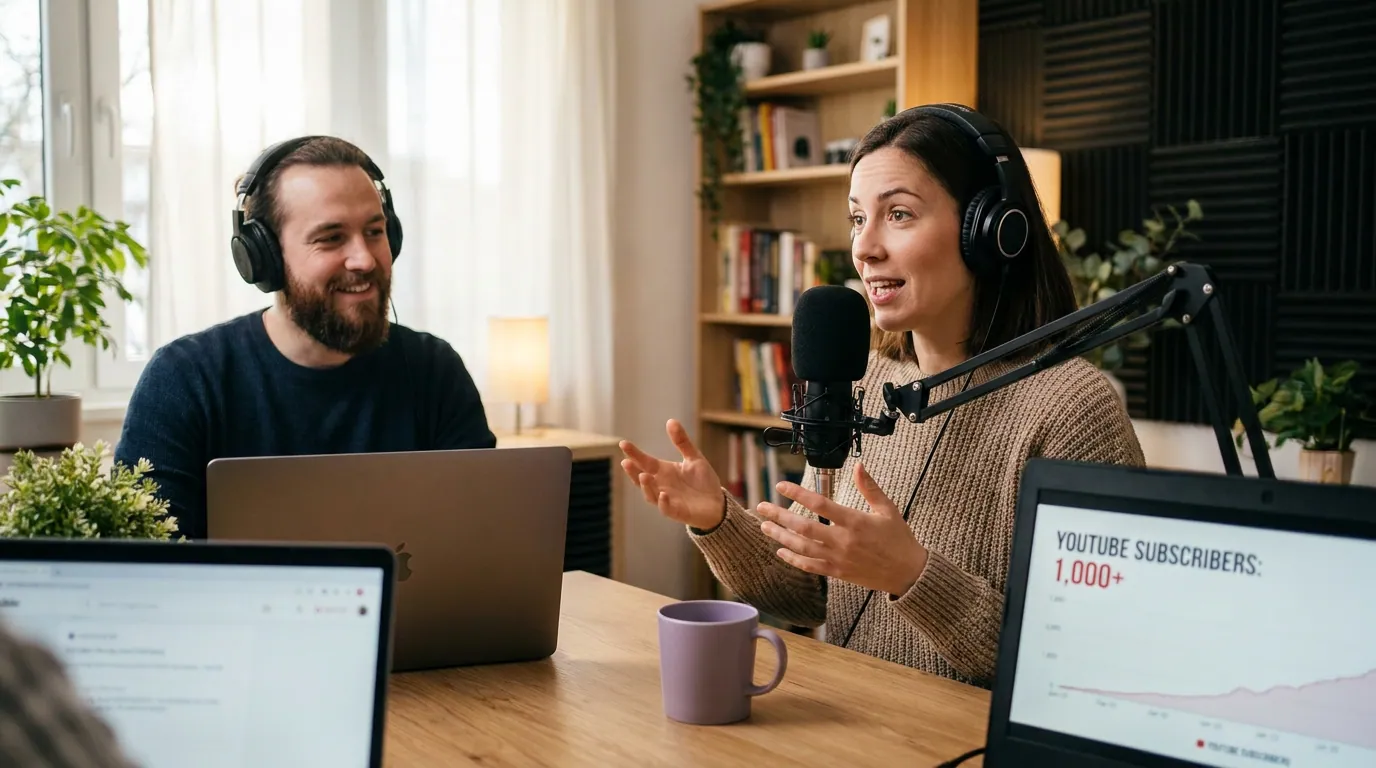
Is 1,000 YouTube subscribers good for a podcast?
Yes, and it is harder than it sounds. Most channels never reach 1,000 subscribers at all; estimates for the average time to get there cluster around 15 to 22 months of consistent uploading, with a practical range of roughly 3 to 18 months depending on niche and cadence (BerryViral). Crossing it means you have built something most people who start a channel never do.
The honest caveat on those timelines: they come from creator-growth firms aggregating channels they track, not from official YouTube data, and the spread between sources is wide. Read 15 to 22 months as "this takes real, sustained work," not as a promise or a deadline. A focused niche show that publishes weekly and clips every episode can beat the average; a channel without a clear lane often never arrives.
If you have already done this on the audio side, if you climbed from your first 100 listeners through 500 to 1,000 podcast listeners, YouTube subscribers are a different, slower currency, because a view does not equal a subscribe. People will watch ten of your clips before they ever tap subscribe. That gap is the work.
The two-meter dashboard (the framework audio hosts skip)
Here is the mental model that fixes most stalled podcast channels. You are not filling one tank. You are filling two, and they take different fuel.
- The subscriber meter is won by reach and a clear reason to come back. Clips and Shorts farm it, because they put you in front of strangers who have never heard your show.
- The watch-hours meter is won by retention and length. Full episodes farm it, because a 45-minute video that holds someone for ten minutes banks far more hours than a 40-second Short that loops twice.
Most podcasters upload only full episodes and wonder why subscribers crawl. A smaller group, fresh from short-form advice, upload only clips and Shorts and wonder why their watch hours stay near zero. Neither single track gets you through both locks. The mix does.
The watch-hours math, in plain numbers
Watch hours feel intimidating until you do the arithmetic. A 45-minute episode held to 25% average view duration earns about 11 minutes of watch time per viewer. At 100 views, that one episode banks roughly 18 watch hours. Publish weekly, grow the audience over a year, and the long-form tank fills on its own, this is the part audio length actually helps with, because nobody is watching a 40-second Short for 11 minutes.
The catch worth stating: Shorts-feed watch time does not count toward the 4,000-hour threshold (YouTube Partner Program, official help). So if your channel is all clips and Shorts, your watch-hours meter can read near zero even with strong view counts. That is the single most common reason a podcast channel hits 1,000 subscribers and still cannot monetize. Full episodes are not optional if the 4,000-hour path is your route.
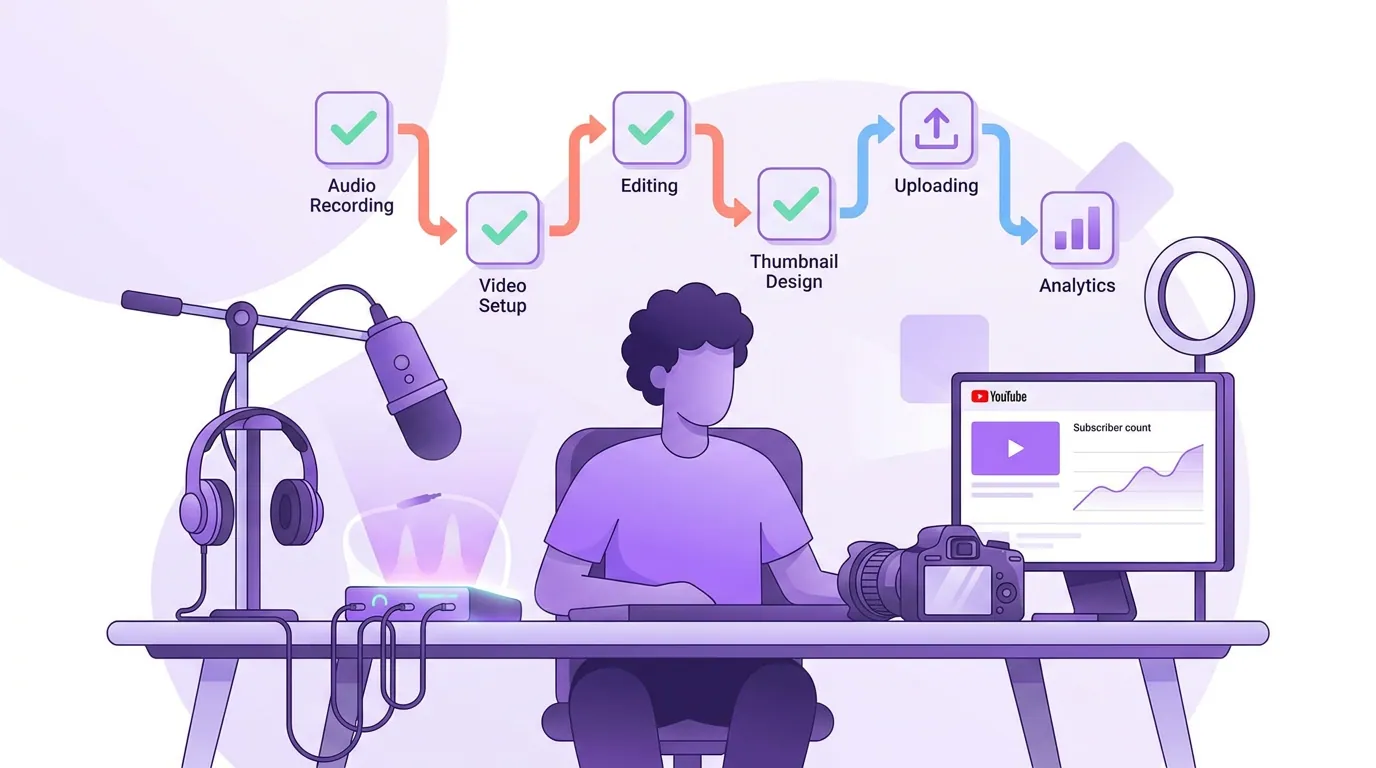
The audio-host-to-YouTuber checklist
The habits that grew your audio feed are not the habits that grow a channel. Work through this list in order, each item closes a gap between how a podcaster thinks and how YouTube actually ranks and recommends.
- Publish the full episode as a real video, not a static waveform. Even two cameras on a plain background outperform an audiogram, because YouTube's recommendation engine and your thumbnail both need a face. If you record audio-only, at minimum show the hosts on screen.
- Treat the thumbnail and title as the episode, not the packaging. On Apple, the artwork barely matters. On YouTube, the thumbnail decides whether the video is opened at all. Write the title for what a stranger searches, not for your loyal listener who already knows the in-jokes.
- Post three to five Shorts a week from each episode. Shorts are your discovery engine and your fastest path to subscribers. One episode holds enough 30-to-90-second moments to feed a week, pull the strongest, caption them, and let them do the reaching.
- End every video pointing to the next video, not "thanks for listening." YouTube rewards sessions. A specific end screen, "watch this one next", keeps a new viewer on your channel and is what converts a watcher into a subscriber.
- Capture an email address you own. A subscribe is rented from the algorithm; an email is yours. Even a few hundred addresses become a launch button for every episode, start with a podcast email list from zero and warm new arrivals with a five-email welcome sequence.
- Read your two meters weekly, not just the sub count. Open YouTube Studio and check watch hours alongside subscribers. If subs climb but hours stall, you are over-indexed on Shorts, ship more full episodes. If hours climb but subs stall, your reach is thin, ship more clips.
Clips do the heavy lifting on items 3 and 6, which is why social video now drives podcast discovery more than personal recommendations: 57% of listeners rely on social media for podcast recommendations, the first time it passed friends and family (InsideRadio, "The State of Video Podcasting 2025"). The strangers a clip reaches are the subscribers a full episode never will.
What 1,000 subscribers actually gets you
The honest answer: the ability to earn, plus a steadier base, not a payday on day one. Once you clear both locks and pass review, ad revenue and fan-funding features open up, but at 1,000 subscribers that revenue is small. The real prize is structural. You have proof the channel works, a recommendation engine that now has enough signal to push your videos, and a subscriber base that returns on its own instead of being summoned one episode at a time.
It is also fragile if it sits on the wrong meter. A channel that hit 1,000 on Shorts alone, with an empty watch-hours tank, can stall at the gate for months. A channel with deep watch hours and thin subscribers leaves reach on the table. Treat 1,000 as base camp, the way a sustained 500 weekly listeners is sturdier than a one-week spike, then keep both meters moving.
Mark it. Cut a short highlight reel from your best moment of the run, post it as a Short, and pin it to the channel, a small celebration that doubles as a front door for the next thousand.
FAQ
How many subscribers does a podcast need to make money on YouTube? 1,000 subscribers to enter the YouTube Partner Program, but only alongside 4,000 valid public watch hours in the last 12 months, or 10 million Shorts views in 90 days (YouTube Partner Program, official help). The subscriber count alone does nothing; the second number gates it just as hard, and Shorts-feed watch time does not count toward the 4,000 hours.
How long does it take a podcast to get 1,000 YouTube subscribers? Estimates cluster around 15 to 22 months of consistent uploading, with a practical range of roughly 3 to 18 months depending on niche and cadence (BerryViral). Those figures come from creator-growth firms, not official YouTube data, so treat them as directional. Channels that clip every episode and publish weekly tend to beat the average.
Should I upload full episodes or clips to grow on YouTube? Both, deliberately. Full episodes bank the watch hours you need to monetize and build trust; clips and Shorts win the subscribers, because they reach strangers your episodes never touch. A channel of only clips can hit 1,000 subscribers with almost no watch hours and still be locked out of monetization.
Do YouTube Shorts count toward the 4,000 watch hours? No. Watch time from Shorts in the Shorts Feed does not count toward the 4,000-hour long-form threshold (YouTube Partner Program, official help). Shorts views can qualify you on a separate path, 10 million in 90 days, but for most podcasts the realistic route to 4,000 hours is full episodes, not Shorts.
Are YouTube subscribers different from podcast listeners? Yes, and the gap matters. A YouTube subscribe follows the channel inside one algorithm-driven feed, while an Apple or Spotify follow lives in an RSS-based app. A view never equals a subscribe, people watch many clips before tapping subscribe, so YouTube subscribers grow more slowly than your audio audience, even when total reach is larger.