
Your Podcast's First 100 Email Subscribers


Your first 100 email subscribers matter more than your first 10,000 platform followers, because email is the only audience you own outright. A follower is rented from an algorithm that can throttle your reach overnight; an address is yours to message whenever you publish. Reaching 100 is the point where you stop borrowing attention and start banking it.
That sounds like a marketing slogan until you watch a platform change its rules. A show with 8,000 Instagram followers and zero emails has nothing the day a feed update buries its posts. A show with 100 engaged subscribers can email every one of them about the new episode and expect a real fraction to listen. The milestone is small in number and large in what it changes.
Is 100 email subscribers good for a podcast?
Yes, 100 is the threshold where an email list becomes a working distribution channel rather than a spreadsheet. Below roughly 50 names you can't tell signal from noise; at 100 you have enough people to see open rates stabilize, test a subject line, and reliably move a chunk of listeners to a new episode on demand. It is a real asset, not a vanity count.
The honest framing: 100 emails is harder to reach than 100 followers, and that difficulty is exactly why it's worth more. A follow costs one tap; handing over an email is a deliberate trade. So this milestone arrives slower than a social count, and the people behind it are several times more likely to actually act on what you send.
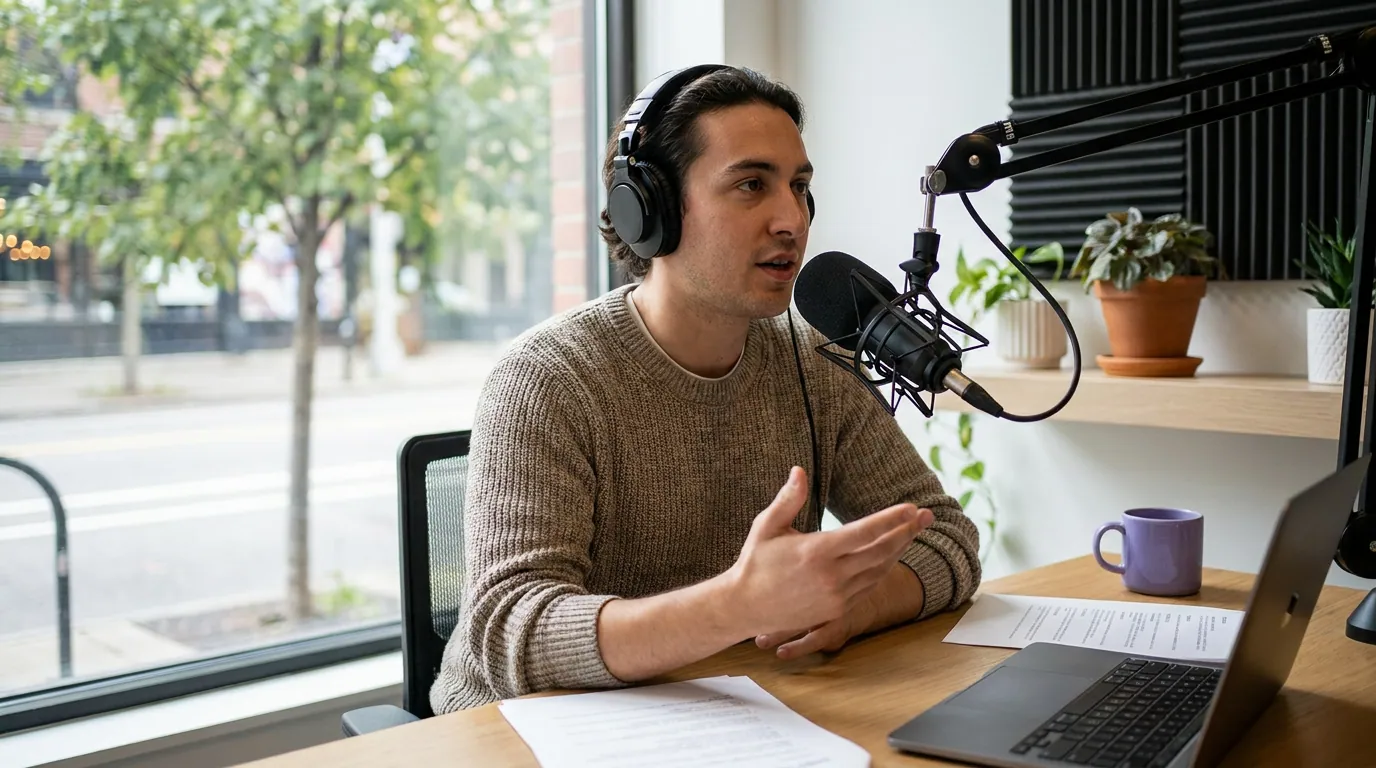
Why the owned-audience milestone beats a follower count
A platform follower is a loan. The feed decides whether your post reaches them, and that decision changes without notice, reach gets throttled, formats fall out of favor, an account gets restricted. You built the audience; the platform controls the connection. Email inverts that. Once someone gives you their address, no third party stands between your message and their inbox.
The reach gap is the part most hosts underestimate. Mailchimp's published benchmarks put the average open rate across all senders at 35.63%, and a tight, opted-in niche list typically runs at the high end of that (Mailchimp email benchmarks). Organic social reach for a small account is a single-digit fraction of followers on a good day. So 100 subscribers who open at roughly 35% put your episode in front of about 35 attentive people every time, a number a 1,000-follower account rarely matches without paying.
There's a discovery angle too, and it cuts both ways. 57% of listeners now rely on social media for podcast recommendations, just ahead of friends and family at 54% (InsideRadio, "The State of Video Podcasting 2025"). Social is how new people find you; email is how you keep them. Treat the platforms as the top of the funnel and the list as the floor that catches everyone who's ready to commit.
The audio problem: you can't tap a podcast
Here is the constraint nobody mentions when they tell you to "build a list." In a podcast, there is no link to click. A listener has both hands on the wheel or both feet on a run. They can't tap a button, fill a form, or copy a URL in the moment you ask. Every "subscribe to my newsletter" said into a mic dies unless you give it a path that survives the listener's hands being busy.
Three workarounds do the heavy lifting. None is clever; all three are about removing friction for someone who can't act right now.
- Pick one short, memorable URL and say it identically every episode. Not "the link in my show notes." A real spoken address,
yourshow.com/free, repeated word-for-word so it lodges in memory the way a radio jingle does. Repetition is the whole game; a path heard once and never again converts nobody. - Pin the signup link to the first line of every show notes. Most listeners who act do it later, in the app, scrolling notes. If your form link sits under a wall of timestamps and sponsor copy, it loses. Put it above everything, every time.
- Lead the offer with a clip, because a clip is tappable. This is the one path that closes the loop in the moment. A vertical clip on social carries your offer on screen and a real link in the post, so the person who can't tap your audio can tap your clip. That's why clipping and list-building belong in the same workflow, not separate to-do lists.
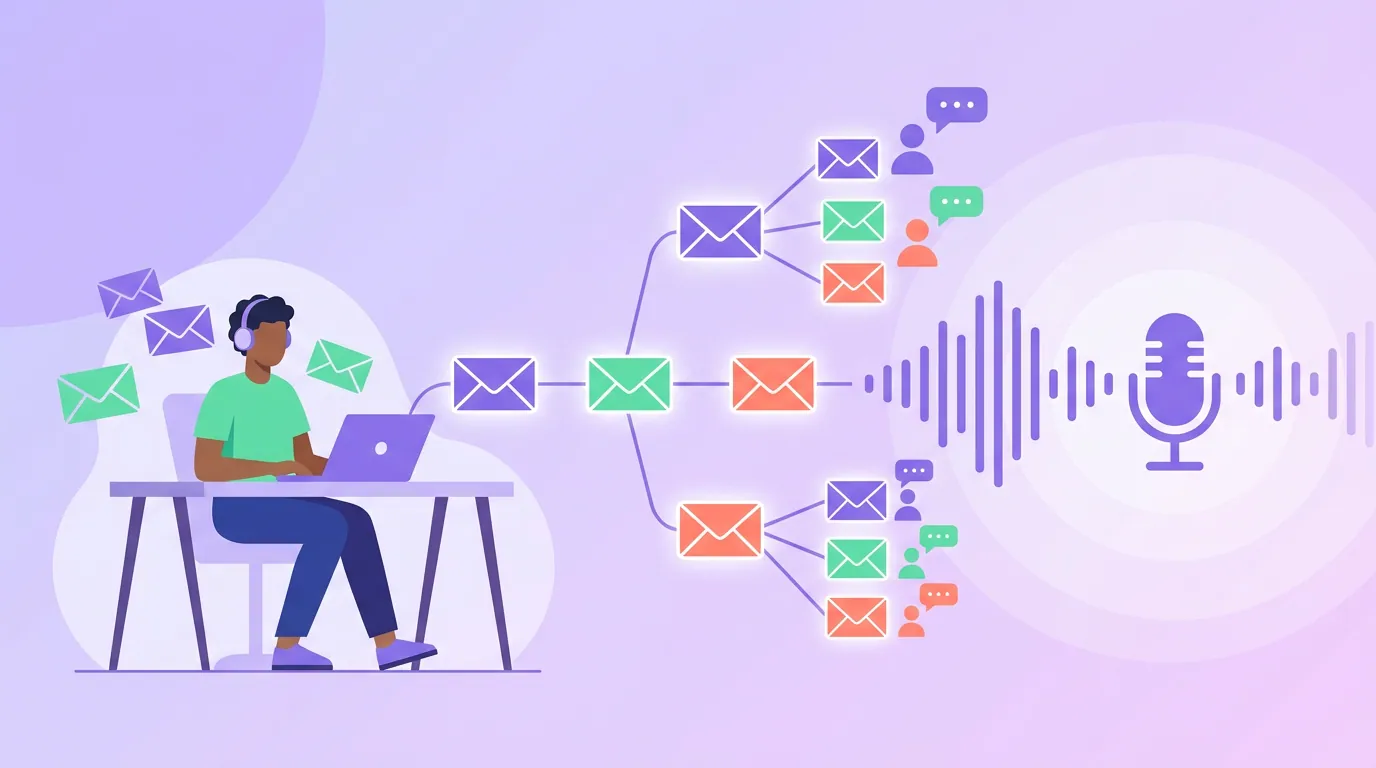
What can 100 engaged emails actually do?
Reaching 100 changes what you can actually do, not just the size of a number. Concretely, four levers switch on at this point: a launch button for every episode, direct listener feedback, an honest pitch for guests and sponsors, and the first seed of a paid tier. Here's what each one means in practice.
- A launch button for every episode. Instead of hoping the algorithm surfaces your new drop, you announce it to 100 people who asked to hear from you, the most reliable first-hour bump you can engineer.
- Direct feedback that isn't a comment section. Reply to a welcome email and you learn why people subscribed, what they want next, and which guest landed. That's product research a follower count can't give you.
- A guest and sponsor talking point that's honest. "I send a newsletter to an engaged list" carries more weight in a pitch than a follower screenshot, because everyone knows followers can be hollow and an opted-in list rarely is.
- The seed of a paid tier. Memberships, bonus feeds, and courses are sold to lists, not feeds. You're not selling anything at 100, but the channel that eventually does is the one you're building now.
None of this requires 1,000 passive downloads. A show can rack up downloads and still have no way to ask its audience for a single thing. The point of the milestone is leverage, and 100 owned contacts is where leverage starts.
The 100-subscriber milestone checklist
If you're not at 100 yet, this is the short, concrete list to get there, and to make sure the names you collect are worth having. Work it top to bottom.
- Stand up a list and one signup page before your next episode. Any tool works; don't shop for a week. The detailed setup, tool choice, form, the welcome email, lives in how to start a podcast email list from zero. Done beats perfect.
- Offer one specific reason to subscribe. "Join my newsletter" converts poorly. A concrete lead magnet, the resource you mention on the show, a one-page guide, the bonus clip, gives a busy listener a reason to do the work of typing an address.
- Say your one URL, the same way, in every episode. Bake it into your outro so you never forget. Consistency here compounds exactly like publishing consistency does.
- Pin the link to the top of every show notes and your social bios. Remove the friction for the after-listen tap.
- Run a clip under every episode with the offer on screen. The tappable path. This is also how new listeners discover you in the first place, since social clips drive discovery more than referrals now.
- Send something the first week, then keep a rhythm. A list you never email goes cold and stops opening. A short welcome sequence does the early heavy lifting so a new subscriber doesn't forget who you are.
The first 20 are the hard ones; they come from people who already like the show. The next 80 come from the system above running quietly under every episode. Once it's built, the list grows whether or not you think about it that week.

What 100 feels like (and what to do next)
Smaller than you pictured and steadier than you'd guess. There's no confetti at subscriber 100, but there is a quiet shift in how you think about every release. You stop publishing into a void and start publishing to people you can name. The first reply to a newsletter, from a real listener who took the time, tends to land harder than any download chart.
Mark it, then keep the system running. The same habits that got you here, one spoken URL, a clip under every episode, a list you actually email, are what carry you toward your first 1,000 listeners and, eventually, 500 weekly listeners as a sustained number. A list doesn't replace reach. It makes every unit of reach you earn stick.
FAQ
Is 100 email subscribers good for a podcast? Yes. At 100 your list stops being a spreadsheet and becomes a working channel, enough people to stabilize open rates, test a subject line, and reliably move a share of listeners to a new episode on demand. It's harder to reach than 100 followers because an email is a deliberate trade, which is exactly why those 100 people are worth more.
Why is an email list better than social followers for a podcast? You own the connection. A platform decides whether your post reaches a follower and can throttle that overnight; an email lands in the inbox with no algorithm in between. Email also gets opened at a rate organic social can't touch for a small account, Mailchimp's all-sender average open rate is 35.63%. Use social to be found and email to keep the people you find.
How do I collect emails when listeners can't click anything in audio? Route around the constraint. Say one short, memorable URL the same way every episode, pin the signup link to the first line of your show notes for the after-listen tap, and run a social clip with the offer on screen, the clip is the only one of the three a listener can act on in the moment. Repetition across all three is what converts.
How long does it take to get 100 email subscribers? There's no fixed timeline, and the first 20 are the slowest because they come from people who already follow the show. After that, a steady system, a clear lead magnet, one spoken URL, a clip under every episode, grows the list passively. Pace depends on download volume and how compelling your reason-to-subscribe is, not on episode count alone.
What should I send my first 100 subscribers? Start with a short welcome that delivers whatever you promised at signup, then keep a predictable rhythm tied to your episodes. A list you never email goes cold and stops opening within weeks. A simple welcome sequence handles the critical first two weeks; after that, a brief note with each new episode is enough to keep the channel warm.