
A Simple Agreement Checklist for Podcast Swaps


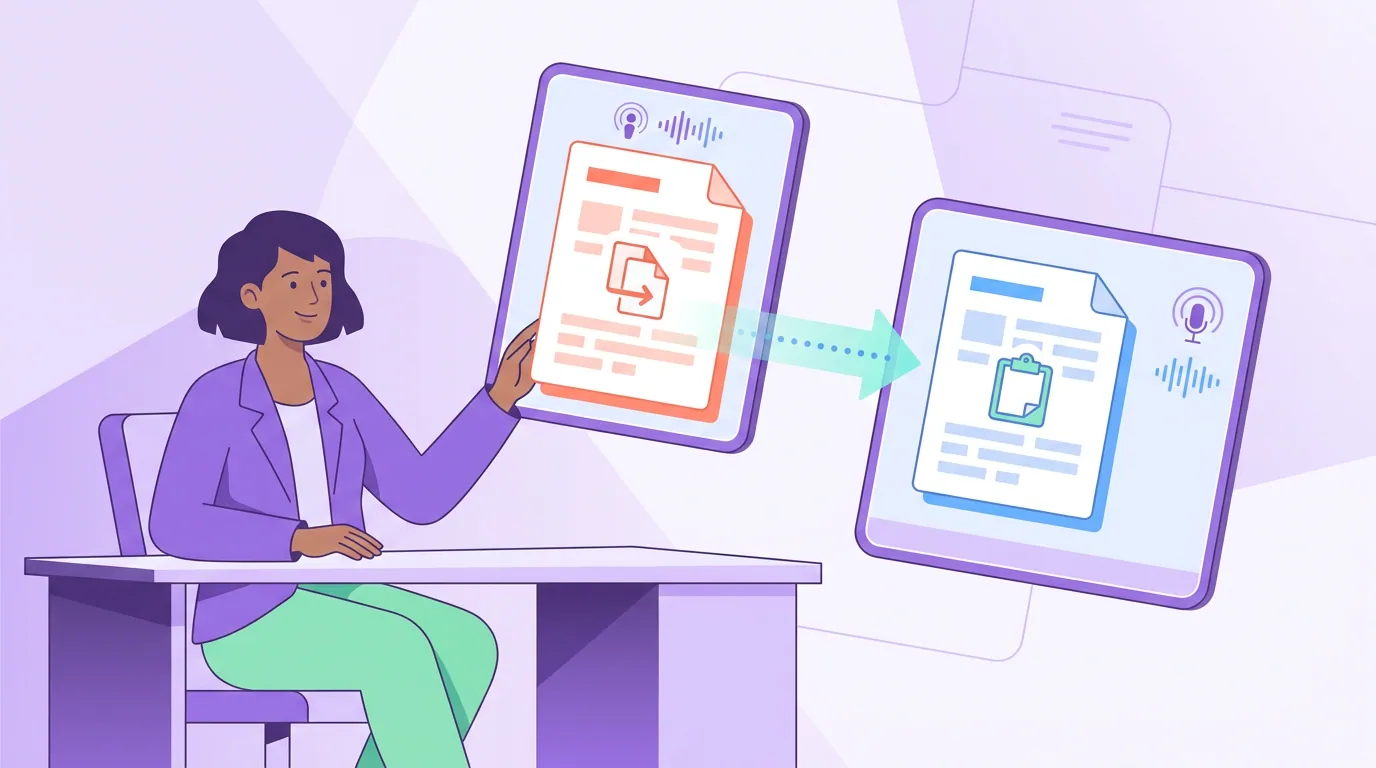
A podcast cross promotion agreement is six lines, not a contract: who delivers what, on which dates, in what format, for how long it runs, how you'll both track it, and what happens if someone misses. Write those six down in the DM where you agreed to swap, get a "yes," and you've turned a handshake into a deal.
Most swaps fall apart not because someone was dishonest but because nothing was ever pinned. One host runs the promo in episode 12 as agreed; the other "forgets," runs a shorter version three weeks late, or never runs it at all, and there's no shared record of what was promised, so nobody can even name the problem. The fix is not a lawyer. It is a short, plain-language checklist you paste into the same thread where you said yes. Below is that checklist, a fill-in template, and the one clause most hosts skip that prevents the most common dispute.
What should a podcast cross-promotion agreement include?
A podcast cross-promotion agreement should name six things: the exact deliverable (a read, a clip, a feed drop), the publish dates for each side, the format and specs, the run window, how both sides track results, and a makegood rule for a missed promo. Keep it plain, a DM or email, no legal template.
That is the whole thing. The reason to write it down isn't distrust; it's that a swap is two busy people relying on memory across a few weeks, and memory is where swaps die. A written line item gives each side a checklist to publish against and a neutral record if something slips. It also makes you a better partner, hosts who pin terms get a reputation for being easy to swap with, and easy-to-swap-with is how you get the next yes.

Why a written swap beats a handshake
A written swap beats a handshake because it survives a busy month. Nearly half of podcasts stop at three episodes or fewer Amplifi Media, so the host you're swapping with is, statistically, juggling more than they can finish, and a vague agreement is the first thing to slip. A one-paragraph record costs five minutes and removes the single most common cause of a swap going sideways: two different memories of what was agreed.
It also protects the relationship. When a promo doesn't run, an unwritten swap leaves you guessing whether you were ghosted or just forgotten, and an awkward "hey, did you ever run mine?" message that can sour a partnership. A written term turns that into a neutral, friendly nudge: "Looks like the ep-14 read got missed, want to roll it into 15?" No accusation, just a shared list. The partners worth keeping appreciate the structure.
Before you reach the agreement stage, you need the right partner. Audience overlap and a steady publishing cadence matter more than raw size, work through how to find the right podcasts to cross-promote with first, then send a pitch using the cold pitch that gets bigger shows to swap promos. The agreement is what you send once they've said yes.
The six terms, in plain language
Here is each term with the exact thing to write. Pin them in this order; the order moves from "what" to "what if," which is how a clean agreement reads.
- Deliverable, what each side actually runs. Be concrete: "a 30-second host-read promo," "a 60-second feed drop of your trailer," "one captioned vertical clip posted to my Instagram." A swap can be a read, a feed drop, a trailer, or a social clip, name which, because "a promo" means five different things to five hosts.
- Dates, the episode and the day. "Mine runs in your episode 41, publishing March 6; yours runs in my episode 22, publishing March 9." Tie each promo to a numbered episode and a date, not "next month." This single line prevents most misses.
- Format and specs, length, placement, and who produces it. State the length (30s, 60s), the placement (pre-roll, mid-roll, post-roll), and who writes and records each spot. Offering to write and produce both is the friction-remover that gets you a faster yes, and it guarantees the read says what you want.
- Run window, how long it stays live, and show notes. "The read stays in the published episode permanently; the show-notes link stays for the life of the episode." For social, name the window: "the clip stays up, not deleted after a week." Decide whether each side adds a link in show notes, that link often outlives the audio.
- Tracking, how you'll both see what worked. Give each side a unique URL (a
/podcastnamelanding page or a UTM link) or a spoken promo code. Without it, neither of you can tell whether the swap moved anything, and you'll repeat swaps that don't work. Discovery now runs through recommendations like these, 57% of listeners rely on social media for podcast recommendations, the first time it surpassed friends and family (InsideRadio, "The State of Video Podcasting 2025"), so it's worth knowing which partner actually sends listeners. - Makegood, what happens on a miss. The term everyone skips. Agree up front: if a side runs late, misses, or under-delivers, they owe a makegood, usually re-running in the next episode plus one extra placement. This turns a disappointment into a fixable line item instead of a falling-out. More on the exact wording below.
The copy-paste agreement template
Paste this into the thread where you both agreed, fill the brackets, and ask for a "confirmed" reply. That reply is your record.
Quick swap terms so we're both covered, confirm if this looks right: Deliverable: I run a [30s] host-read for [Their Show]; you run a [30s] host-read for [Your Show]. I'll write and record both drafts; tweak yours however you like. Dates: Yours runs in my ep [22], publishing [Mar 9]. Mine runs in your ep [41], publishing [Mar 6]. Format: [30s], mid-roll, plus a link in show notes for the life of the episode. Run window: Stays in the published episode permanently; show-notes link stays up. Tracking: I'll use [yourshow.com/theirshow]; send me your tracked link and I'll use that for yours. If one of us misses: we re-run in the next episode plus one extra placement, no hard feelings. Good to go? Reply "confirmed" and I'll send my draft this week.
That message is the entire agreement. It is friendly, it is specific, and it gives both sides a list to publish against. For a heavier collaboration than a read, the same six terms scale up, a feed drop swap just changes the deliverable and run window, and a trailer swap is the lightest version of the same template.
The makegood clause, spelled out
The makegood is the clause that separates a casual swap from an accountable one, and it's the one almost everyone leaves out. It answers the question that causes every cross-promotion fight: what happens when someone doesn't deliver? Decide it before anyone's annoyed, when both sides are still goodwill, and a miss becomes a known process instead of a relationship-ender.
A fair default: if a side misses, runs late, or under-delivers, they re-run in their next episode plus one extra placement (a show-notes pin, a second read, or a social post). The extra placement compensates for the timing the other side lost. If someone misses twice, the swap is over and you've learned who not to partner with, cheaply, before you've staked a feed drop on them. Write the makegood as one warm sentence, like the template line above, and it does its job without ever sounding like a threat.

Common mistakes that sink a swap agreement
- Agreeing to "a promo" with no length or placement. "A promo" can mean a 10-second mention or a 60-second mid-roll, and the gap is where resentment grows. Name the seconds and the slot.
- Leaving dates open. "Sometime next month" never happens. Tie each promo to a numbered episode and a publish date; this one fix prevents most misses on its own.
- No tracking, then guessing. Without a unique link or code, you can't tell a good partner from a dud, so you keep doing swaps that don't move anyone. Buzzsprout's data puts the top 50% of episodes at just 28+ downloads in the first week (Buzzsprout global stats, note these skew indie, since Buzzsprout hosts under a tenth of all podcasts), so a swap that adds even a few dozen engaged listeners is worth confirming it happened.
- Skipping the makegood. Without it, a miss has no resolution but an awkward chase. The clause turns the worst case into a one-line fix.
- Pitching before you can deliver. A swap is a promise to publish on a date; if your own cadence is shaky, you can't keep it. Build a steady release rhythm before you go asking, reliability is the real currency, and clips help you keep cadence without burning out (Podcast Studio Glasgow notes clips can be your real growth engine when production stays consistent).
FAQ
Do I need a legal contract for a podcast swap? No. A podcast swap is a small, mutual favor, not a paid sponsorship, so a plain-language paragraph with the six terms, deliverable, dates, format, run window, tracking, makegood, is enough. Save formal contracts for paid ad buys or revenue-sharing deals. For a free swap, a confirmed DM is the right weight.
What's a fair makegood if someone misses a promo? A re-run in their next episode plus one extra placement, such as a show-notes pin or a second read, to make up for the timing the other side lost. If a partner misses twice, treat the swap as over rather than chasing a third time. Agree the makegood up front, while both of you are still in goodwill, so a miss never feels like a betrayal.
How do I track whether a swap actually worked? Give each side a unique tracking link (a dedicated landing page or a UTM-tagged URL) or a spoken promo code, and check the traffic and signups it drove. Without a tracked link you're guessing, and you'll keep repeating swaps that move no one. The point of tracking is to find the two or three partners worth swapping with again.
Should I send the agreement before or after the swap is agreed? After. The pitch earns the yes; the agreement confirms the details once they've said yes. Sending six terms cold reads as heavy and transactional. Once a host has agreed in principle, the checklist is a welcome relief, it shows you're organized and easy to work with, which is how you earn the next swap.
Can I use the same agreement for a feed drop or trailer swap? Yes. The six terms cover every swap shape; you just change the deliverable and run window. A feed drop swaps a full episode segment and needs a longer run window; a trailer swap is the lightest version with a short, evergreen clip. The structure, what, when, how, how long, how tracked, what if, stays identical.