
Best Podcast Mixers by Hosts and Guest Count


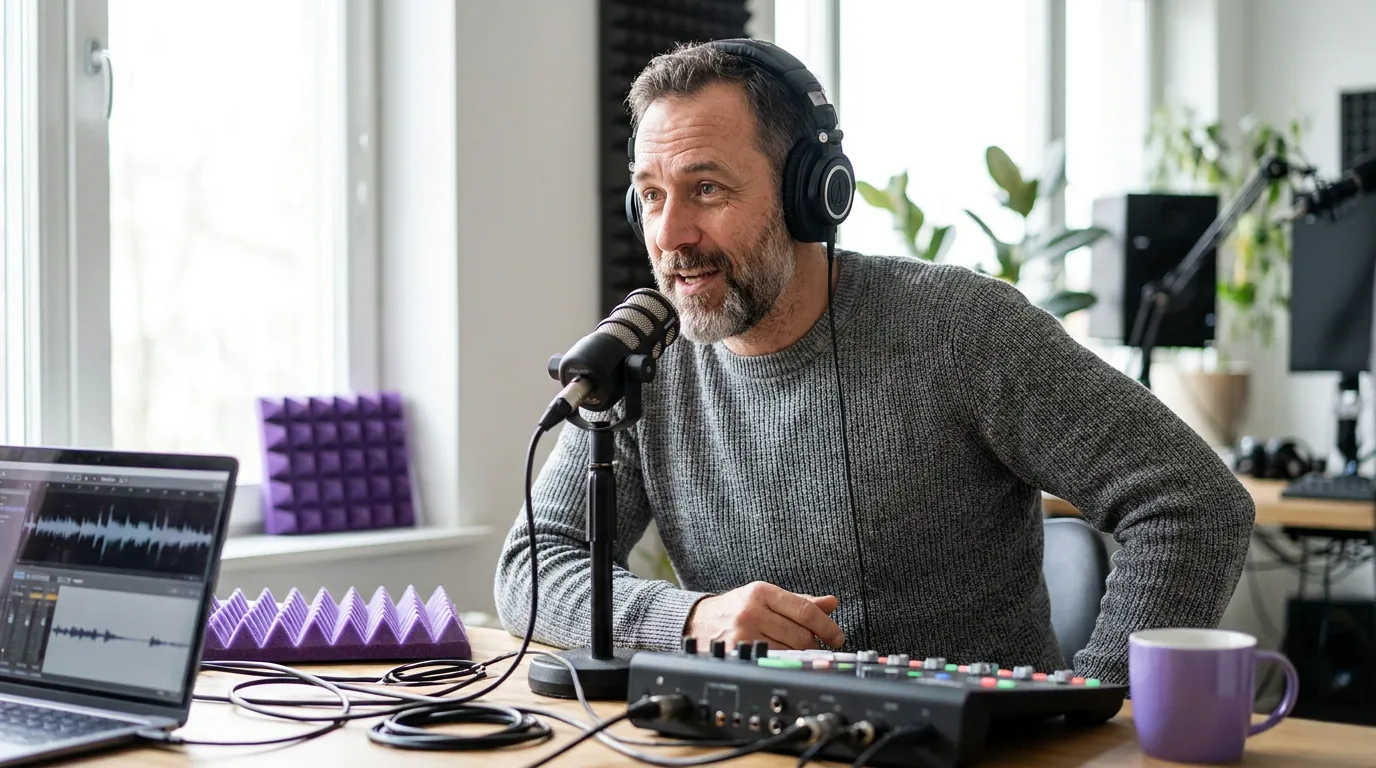
One number picks your mixer: how many mics you'll run at once, hosts plus in-room guests. Solo or two-person, get the Zoom PodTrak P4next (~$180) or RØDECaster Duo (~$500). Three to four mics, the Tascam Mixcast 4 (~$500) or RØDECaster Pro II (~$595). Five or six, the Zoom PodTrak P8 (~$500). Everything else is a tiebreaker.
Most "best podcast mixer" lists rank these five consoles head to head on feature count, which is the wrong frame. You are not choosing a winner; you are choosing the smallest console that fits your room. A four-input board can't run a five-person panel, and a six-input board is dead weight and wasted money on a solo show. So this guide organizes the picks by mic count first, then sorts ties by the two things that actually differ: whether you need to record without a computer, and how much hands-on mixing you want. Prices were checked against manufacturer and major-retailer pages in mid-2026; retailer sales move them, so treat the figures as street-price anchors.
Why mic count is the deciding variable
An all-in-one podcast mixer is really a stack of three things in one box: mic preamps with XLR inputs, a recorder, and a USB audio interface. The recorder and the interface are roughly comparable across these five. The hard ceiling, the thing you physically cannot work around, is the number of XLR mic inputs. Three guests plus a host need four inputs, full stop. No firmware update adds a fifth jack.
That makes the buying logic simple. Count the most people you'll ever seat at one mic each, add a small margin, and buy the smallest console that covers it. Buying "room to grow" past that is how people end up with a six-channel board feeding two mics. If you're still on a single USB mic and a laptop, you may not need a mixer at all yet, a USB-versus-XLR gut check comes first.
The full comparison table
| Console | XLR mic inputs | Best for · mid-2026 street price |
|---|---|---|
| Zoom PodTrak P4next | 4 | Solo to 4-person on a budget · ~$180 |
| RØDECaster Duo | 2 | Solo or co-host who wants real faders · ~$498 |
| Tascam Mixcast 4 | 4 | 3–4 mics, simplest touchscreen · ~$499 |
| Zoom PodTrak P8 | 6 | Panels and roundtables · ~$500 |
| RØDECaster Pro II | 4 | 3–4 mics, deepest production · ~$595 |
All five run at least 4 inputs except the Duo (2), and all five double as USB audio interfaces. The split that matters most after input count: the two Zoom PodTrak units record to SD and run on batteries with no computer, while the Tascam needs wall power and the two RØDECaster boards are built around a touchscreen and onboard DSP. More on that tiebreaker below.
1–2 mics: Zoom PodTrak P4next or RØDECaster Duo
If you record solo, with a co-host, or with one in-room guest, you need two to four inputs. Two consoles fit that brief, and they could not be more different.
Zoom PodTrak P4next, ~$180, the value pick
The PodTrak P4next is the current version of Zoom's entry console, listed at $179.99 at Sweetwater, and it gives you four XLR inputs with up to +70dB of clean gain, four headphone outputs, a phone/USB input for call-in guests, sound pads, and battery power (Sweetwater; Zoom). The "next" revision adds onboard AI noise reduction, tone shaping, and voice compression, and bumps recording to 24-bit/48kHz over the original P4's 16-bit/44.1kHz (Zoom).
It's the cheapest way to get four real mic preamps and a standalone recorder in one box, which is why it shows up on so many first-rig lists. For two people it has headroom to spare; for four people it works fine, just without faders.
Pros: Four XLR inputs at ~$180; per-channel switchable +48V phantom power, so you can mix condenser and dynamic mics freely; runs on AA batteries with no computer; per-input gain and mute; +70dB gain handles demanding dynamic mics; phone-in for remote guests. Cons: No faders, you set levels with small knobs, not slides; no built-in touchscreen or fader workflow like the RØDECaster boards; far fewer onboard effects and pads than the production consoles (Zoom).
RØDECaster Duo, ~$498, faders in a small footprint
The RØDECaster Duo gives you only two XLR/combo inputs, but it is a genuine production console at half the desk size of its big sibling: four physical faders plus virtual channels, a 5.5-inch touchscreen, six SMART pads, and a built-in receiver for RØDE wireless mics (RØDE). It records at 24-bit/48kHz to microSD, USB, or a computer. Sweetwater lists the console at $498 (Sweetwater).
The Duo exists for one buyer: the solo host or co-host pair who wants hands-on faders and APHEX processing without paying for, or finding desk space for, six channels. The catch is in the name, two mic inputs. The moment you regularly seat a third person at a mic, you've outgrown it. And here's the awkward part of its pricing: at ~$498 it costs about the same as the four-input Mixcast 4 (~$499), so you're paying a two-mic price for two-mic capacity. Buy it for the faders in a small footprint, not to save money.
Pros: Real faders in a compact body; 24-bit/48kHz; built-in RØDE wireless receiver; APHEX effects (Aural Exciter, Big Bottom, Compellor); deep customization. Cons: Only two XLR inputs, a hard cap; costs nearly triple the four-input P4next and about the same as the four-input Mixcast 4; the shorter faders feel cramped next to the Pro II (RØDE).
3–4 mics: Tascam Mixcast 4 or RØDECaster Pro II
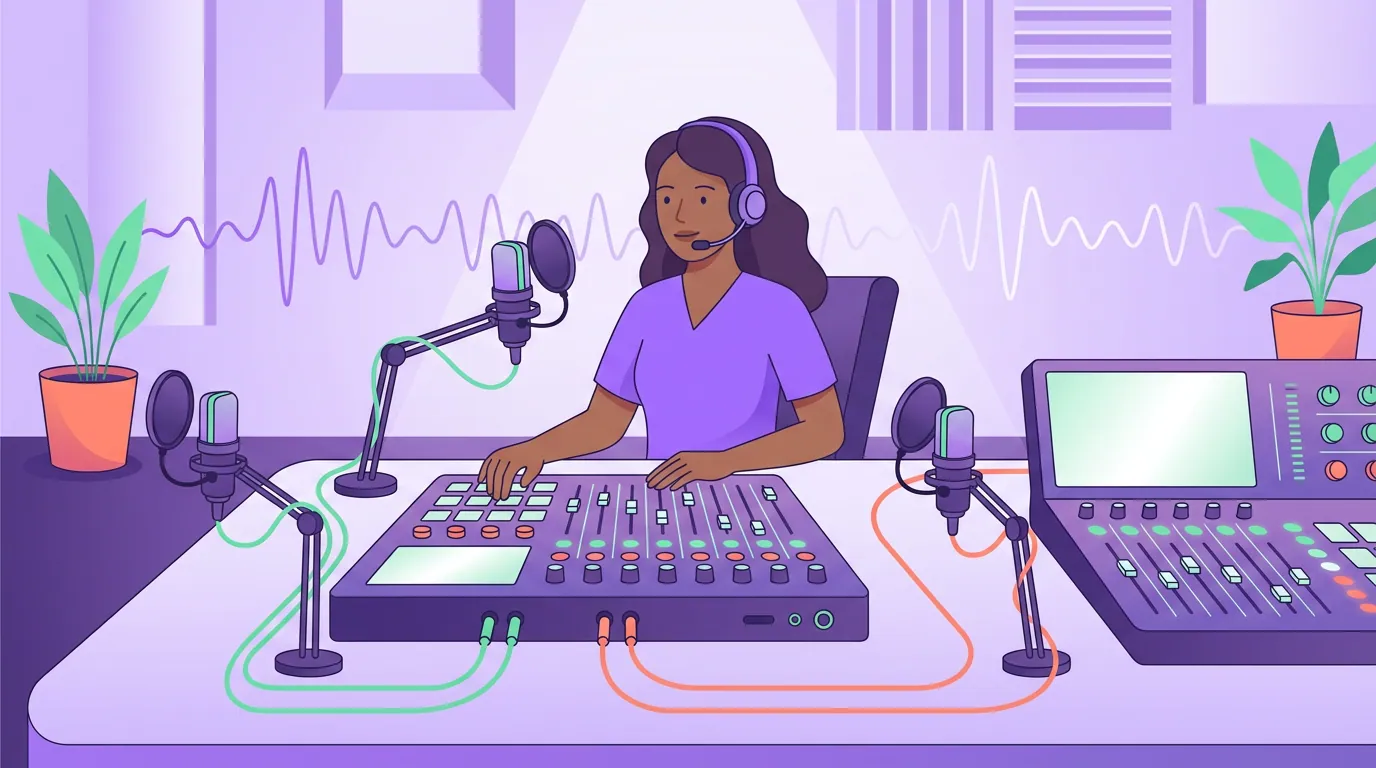
Host plus two or three in-room guests is the most common interview setup, and two four-input consoles own this tier. Both have four inputs; they differ on power, polish, and price.
Tascam Mixcast 4, ~$499, the easiest touchscreen
The Mixcast 4 carries four XLR/TRS combo inputs, each with its own preamp and phantom power, a clear 5-inch touchscreen, eight color-coded sound pads, and a mix-minus function for echo-free call-in guests over Bluetooth, USB, or a TRRS cable (Tascam). It records WAV at 24-bit/48kHz to SD and works as a 14-in/2-out USB interface. Sweetwater lists it at $499, though price-tracking aggregators have spotted it new for as low as ~$399 (The Podcast Consultant).
The one limitation to plan around: there's no battery or USB power option despite the USB-C port, you must use the included 12V PSU (The Podcast Consultant). So this is a desk console, not a go-bag recorder. If you record in one fixed spot, that's a non-issue.
Pros: Four inputs with per-channel phantom power; large, plain-English touchscreen; strong mix-minus for remote guests; bundled podcast editing software. Cons: Needs wall power, no battery, not portable; loading custom samples to the pads is fiddly; mic preamps are good-for-podcasting, not audiophile-grade (The Podcast Consultant).
RØDECaster Pro II, ~$595, the deepest production board
The Pro II is the flagship of this group and the most capable console under $600. It has four XLR/quarter-inch combo inputs with RØDE's Revolution preamps (up to 76dB of gain), six physical faders plus virtual channels, eight banks of customizable SMART pads, APHEX DSP, dual USB-C ports, and multitrack recording of up to 16 channels to a computer (RØDE). Sweetwater lists the console at $595 in black ($619 white); the ~$678 you'll see on some listings is the console bundled with a dust cover, not the bare unit (Sweetwater).
Same four-input ceiling as the Mixcast 4, so it does not buy you more people in the room. And at ~$595 it's now only about $96 over the Mixcast's $499, a smaller gap than this board's reputation suggests. What that ~$100 buys is production depth: stronger Revolution preamps that drive hungry dynamic mics without a booster, two more physical faders, far more programmable pads, and multitrack-to-computer flexibility. If you produce a polished, effects-heavy show or stream as well as record, that depth earns its keep at this price. If you just want four clean mics recorded, the Mixcast 4 or even the P4next does the core job for less.
Pros: Best preamps and most faders in the group; huge pad system; multitrack USB recording; ideal for shows with music, effects, and live streaming. Cons: Most expensive here at ~$595; still only four inputs; more screen and menu depth than a simple interview show needs (RØDE).
5–6 mics: Zoom PodTrak P8
If you run a panel, a roundtable, or a busy interview show that regularly seats four guests plus a host, you need six inputs, and the Zoom PodTrak P8 is the only all-in-one under $700 that delivers them. It has six XLR inputs, each with its own gain knob, mute, and individually switchable phantom power, six faders, six independent headphone outputs each with its own volume control (the per-guest monitoring the cheaper P4next can't match), a mix-minus phone/Bluetooth input, sound pads, and onboard editing on a 4.3-inch touchscreen (Zoom; The Podcast Consultant). It runs on four AA batteries, the only console here that records six mics with no wall power. Street price is about $499 (The Podcast Consultant).
Be honest about the tradeoffs Sound on Sound flagged: the P8 records at 16-bit/44.1kHz (not 24-bit), has no panning, and its USB interface sends the computer only a two-channel stereo mix of all six inputs, so for multitrack work to a DAW you record to the SD card, not over USB (Sound on Sound). For a six-person panel captured to SD, none of that matters. But if you only ever run three or four mics, note that the Pro II now costs only about $95 more (~$595) and records 16-track 24-bit over USB, so the P8 only makes sense once you actually need the fifth and sixth input.
Pros: Six XLR inputs with per-channel phantom power; six headphone outs so every guest monitors independently; battery power; onboard editing; strong value at ~$500. Cons: 16-bit/44.1kHz only; no panning; USB output is stereo-mix only, not multitrack; overkill below five mics (Sound on Sound).
The second variable: standalone vs computer-tethered
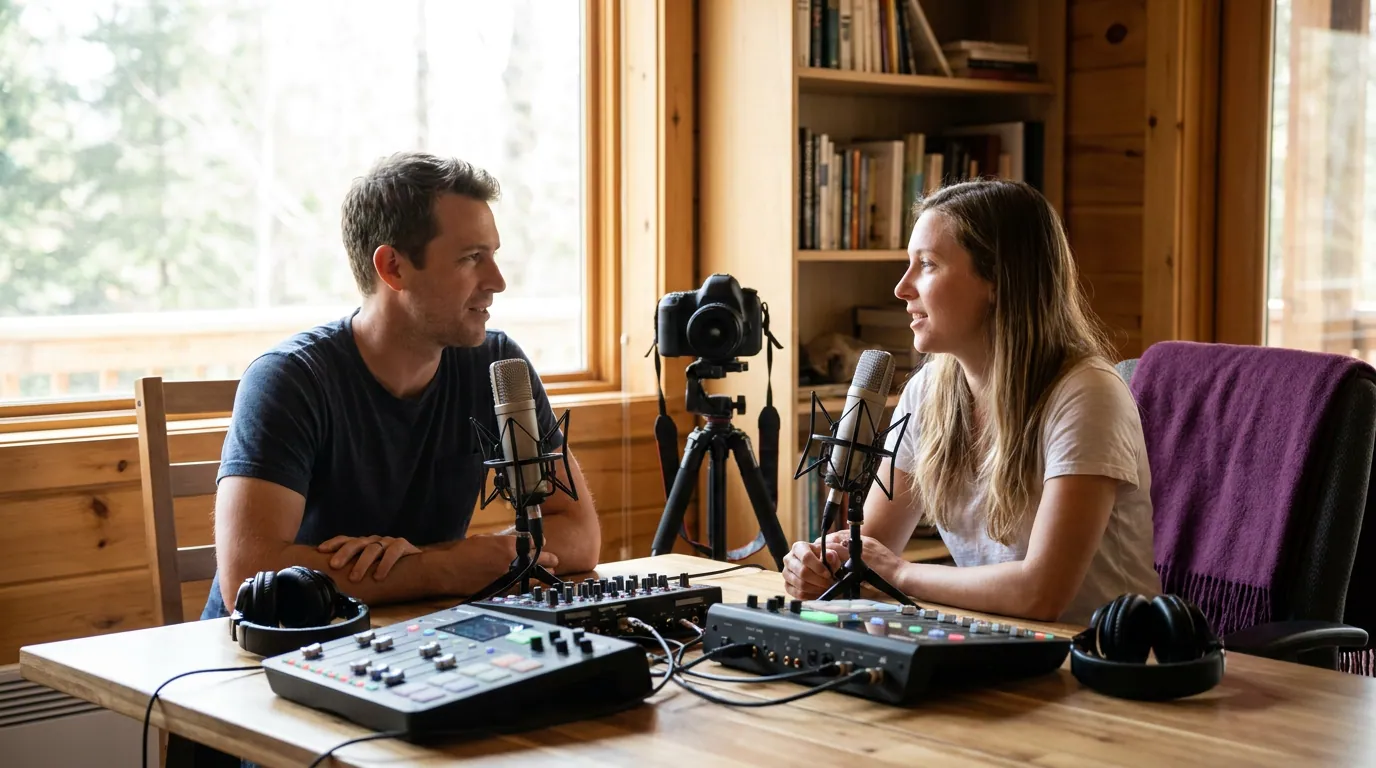
Once mic count narrows you to one or two consoles, the next question breaks most ties: do you need to record without a laptop? All five work as USB interfaces into a computer, but only the two Zoom PodTrak boards and the Tascam record fully standalone to a card, and only the Zoom units add battery power. The Tascam needs wall power; the RØDECaster boards record to card or computer but are built around their touchscreen workflow.
How we picked these
Four criteria, in order. First, XLR mic-input count, because it's the only spec you cannot work around, it sets the largest show you can record. Second, standalone recording and power, the most common real-world tiebreaker between same-input consoles. Third, verified mid-2026 street price from manufacturer and major-retailer pages, not list price. Fourth, production depth, faders, pads, DSP, multitrack, which matters only after the first three are satisfied.
We left out general-purpose music mixers (Mackie, Yamaha, Behringer) on purpose. They mix beautifully but don't record standalone, lack mix-minus for clean call-in audio, and turn a simple podcast into a routing project. These five are purpose-built podcast consoles, which is what the search is really after.
The thing no spec sheet will tell you: Ausha's gear-cost breakdown budgets $150–$500 for a podcast mixer, but the gap between a $180 console and a $595 one is smaller than the gap between a noisy untreated room and a quiet one. A $500 P8 in an echoey kitchen sounds worse than a $180 P4next in a closet full of coats. Spend on the room and on good dynamic mics for an untreated space before you spend up the console ladder.
Who should buy what
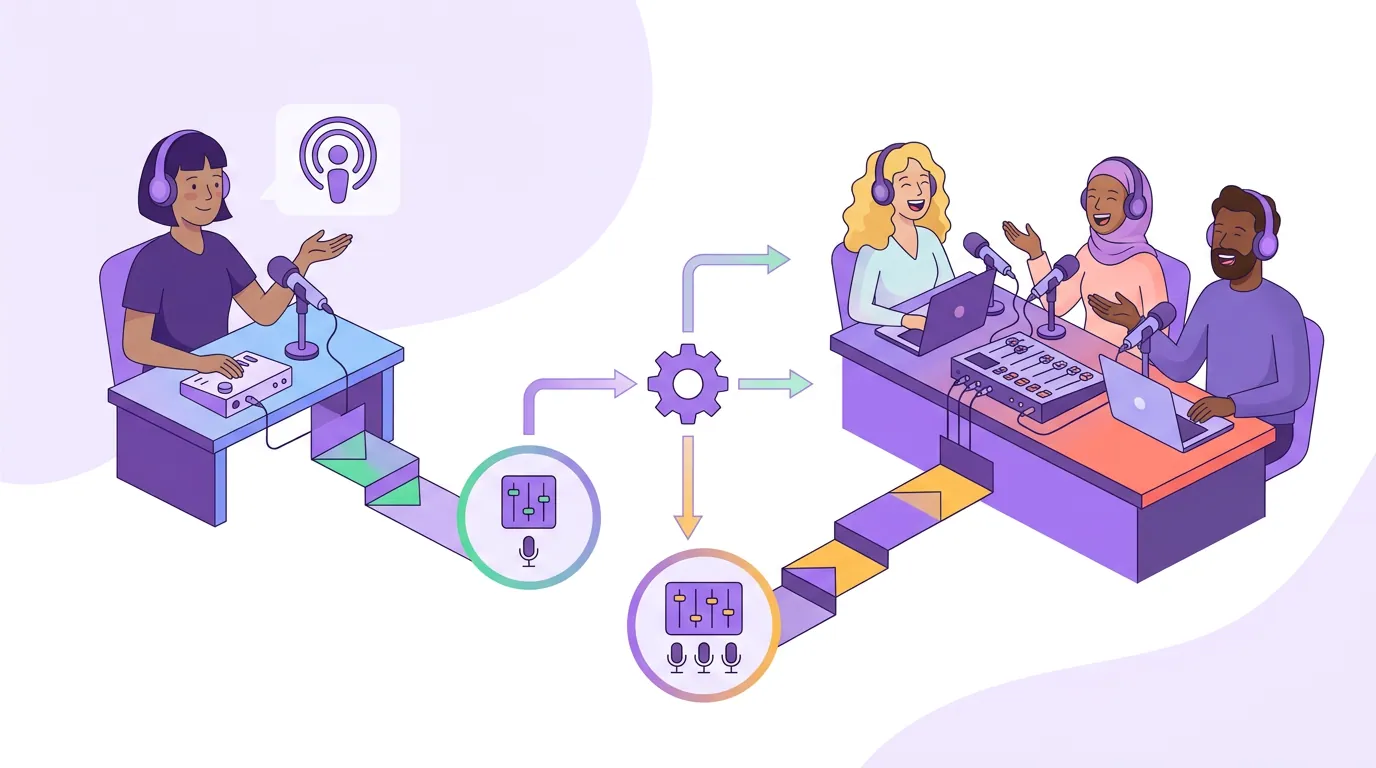
- Solo or co-host, want the cheapest path to real preamps: Zoom PodTrak P4next (~$180). Four inputs you may grow into, battery power, no laptop required.
- Solo or co-host, want hands-on faders and effects: RØDECaster Duo (~$498). Just know it caps at two mic inputs.
- Host plus 2–3 guests, want the simplest console: Tascam Mixcast 4 (~$499). Plug-in-and-go touchscreen, as long as you record at a desk.
- Host plus 2–3 guests, want the deepest production and streaming: RØDECaster Pro II (~$595).
- Panels and roundtables, five or six mics: Zoom PodTrak P8 (~$500). The only sub-$700 board with six inputs.
Whatever you pick, plan the show before the signal chain. A repeatable episode structure and a clear call on scripting versus outlining move retention more than any fader ever will. And if you're not sure you need a console at all yet, the budget mic guide and the hybrid USB/XLR mics that grow with your show cover the step before this one.
FAQ
How many XLR inputs do I actually need? One per microphone in the room at once, count your hosts plus in-room guests. Two people need two inputs (a Duo works); a host with three guests needs four (Mixcast 4 or Pro II); a five-or-six-person panel needs six (PodTrak P8). Remote call-in guests come in over the phone/USB channel and don't use an XLR input.
Do I need a mixer, or just an audio interface? If you record one or two mics and edit on a computer, an interface is often enough. A mixer earns its place when you want standalone recording with no laptop, mix-minus for call-in guests, sound pads for intros and stingers, and per-person headphone monitoring. See USB vs XLR mics for the step before this decision.
Is the RØDECaster Pro II worth ~$95 more than the Tascam Mixcast 4? Only if you'll use the depth. Both record four mics cleanly. At ~$595 the Pro II is now about $95 over the ~$499 Mixcast 4, and that buys two more physical faders, stronger Revolution preamps (up to 76dB gain), far more programmable pads, and 16-track USB recording (RØDE). For a music-heavy or streamed show, it's worth it; for a straight four-mic interview, the Mixcast 4 does the core job for less.
Why does the 6-input Zoom P8 cost less than the 4-input RØDECaster Pro II? Price tracks production depth, not input count. The P8 (~$500) maximizes inputs and portability but records at 16-bit/44.1kHz with a stereo-only USB output (Sound on Sound). The Pro II (~$595) has fewer inputs but better preamps, more faders, and 16-track 24-bit USB recording. You're paying for different things.
Can these mixers record remote guests cleanly? Yes, the Mixcast 4, both PodTrak units, and both RØDECaster boards include a mix-minus function that feeds your remote guest everyone's audio except their own, preventing echo. Bring the guest in over Bluetooth, USB, or a phone cable depending on the model (Tascam).