
Best Podcast Mic for a Bare, Untreated Room


The best podcast mic for a bare, untreated room is a cardioid dynamic mic used close to your mouth, for most people the Samson Q2U (~$70) or the RODE PodMic ($99). Dynamic mics are less sensitive than condensers, so they hear your voice and ignore the echo off your hard walls. The model matters less than where you put it.
If you rent, or you record in a kitchen, a spare bedroom, or a home office with bare floors and flat walls, you cannot bolt foam to the ceiling. That is fine. The whole problem of an untreated room, boxy echo, hollow reverb, the sound that screams "recorded in a closet", is solved more by your mic's pickup pattern and your distance from it than by anything you can spend. This list picks for that situation specifically, then gives you the technique that does the heavy lifting.
The fast verdict: best mics for an untreated room
Every pick here is a cardioid dynamic, chosen for how well it rejects sound coming from the sides and rear, the reflections off your walls. Prices are real retail figures verified in June 2026; hardware drifts less than software, but check the listing before you buy.
| Your situation | Pick | Price (verified June 2026) |
|---|---|---|
| Most people, want it to grow | Samson Q2U | ~$70 (USB + XLR) |
| Same job, Audio-Technica build | Audio-Technica ATR2100x-USB | ~$70–$80 (USB + XLR) |
| Worst room, want it to sound easy | RODE PodMic | $99 (XLR only) |
| Plug-and-play with onboard noise control | Shure MV7+ | $299 (USB-C + XLR) |
| Live, loud, or shared space | Shure SM58 | ~$99–$109 (XLR) |
This is one slice of the equipment picture. For the wider map across $50, $150, and $400 setups, see best podcast mics by budget tier. This page is only about one constraint: a room you cannot treat.
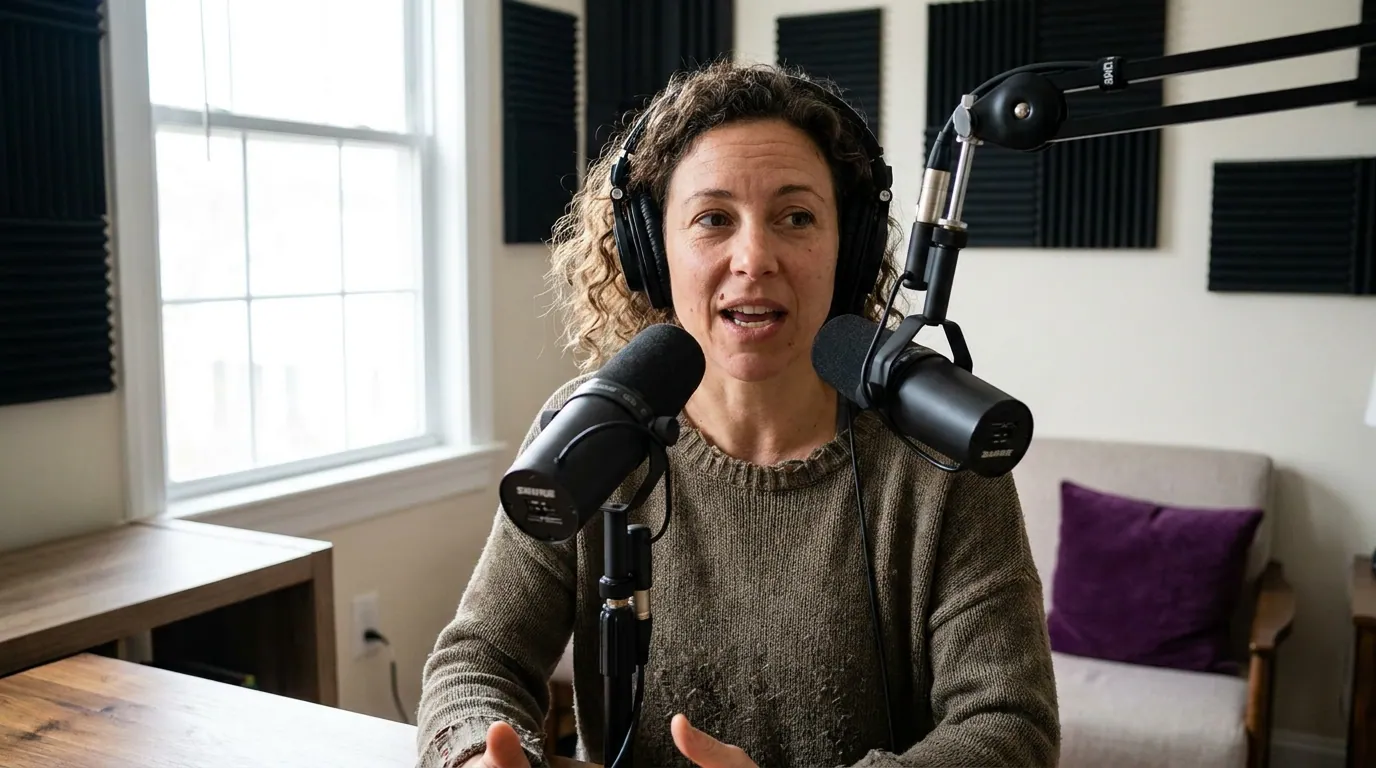
Why a dynamic cardioid is the right tool for a bare room
A microphone has two jobs in an untreated room: hear your voice clearly and ignore everything else. Dynamic cardioid mics do both because of how they are built, not because of a feature you pay extra for.
Dynamics are deliberately less sensitive. A condenser mic is a precision instrument that captures faint detail from across the room, wonderful in a treated studio, a liability when "across the room" means a bare wall throwing your voice back at you. A dynamic mic needs sound to be loud and close before it reacts, so the quiet reflections never make it into the recording (Hollyland). The same low sensitivity means it shrugs off a humming fridge, a laptop fan, and traffic two rooms away.
Cardioid is the heart-shaped pickup pattern that points where you do. It captures sound from directly in front at full level, drops off to the sides, and rejects the most from directly behind, sound from the sides and rear is largely rejected (Sonarworks), with the 180-degree figure on a typical cardioid spec sheet sitting around 20 dB below on-axis. Point the back of the mic at your worst wall and that wall's echo is the quietest thing in the room.
Here is the honest caveat almost no roundup states: a cardioid rejects rear and side reflections, but it still hears the reflections coming from the front and near-sides. Polar pattern decides which directions a mic listens to; the room decides what sound arrives from those directions. The two work together. A dynamic cardioid does not make an untreated room disappear, it makes it quiet enough that most listeners never notice, especially once you close the distance. That is why the next section matters more than the mic you choose.
The distance dial: the free upgrade that beats any model
Spend nothing and improve your audio more than a $200 mic upgrade would: get closer to the mic and turn the gain down to match. A dynamic cardioid records the ratio of your voice to the room. Move from a foot away to a fist away and your voice gets dramatically louder while the room stays the same, so the room shrinks in the mix without you touching a thing.
There is a bonus. As you get close to a cardioid, the bass in your voice rises, the proximity effect. Broadcasters close-mic on purpose for exactly this warm, full sound (Sonarworks). You are not fighting your mic; you are using the thing it was designed to do.
Three free moves, in order of impact:
- Get a fist's distance from the mic and drop your gain so you are not peaking. This single change fixes most "my room sounds hollow" complaints.
- Point the mic's back at your worst surface. A bare wall, a window, or a flat door, put it behind the mic where rejection is strongest.
- Record facing something soft. A bookshelf, a hung blanket, an open wardrobe, even a stack of pillows on the desk in front of you. You are not treating the room; you are killing the one reflection a cardioid still hears.
There is a well-worn truth in equipment circles, and it holds here: the gap between a $150 and a $1,500 setup is smaller than the gap between bad mic technique in a noisy room and good technique in a treated one (QuickReel equipment framing, drawn from industry consensus). The distance dial is most of that gap, and it costs nothing.

The five picks, by room and budget
Best for most untreated rooms: Samson Q2U (~$70)
The Q2U is the easiest yes for a bare room on a budget. It is a cardioid dynamic with both USB and XLR, so you plug straight into your laptop today and add an interface later without rebuying. The box includes a tripod stand, both cables, and a foam windscreen (Ausha pegs the budget tier this mic anchors at $70–$300 all-in).
What's good: the dynamic capsule rejects room echo and background hum well; close-miking is forgiving thanks to the included windscreen; nothing else to buy to start.
The honest con: plosives (hard P and B sounds) can pop if you speak straight into it, so angle slightly off-axis or add a $10 pop filter. The stock tripod is short, fine close on a desk, no substitute for a boom arm that lets you get the fist-distance position right.
Buy it if: you record in an untreated room, want one mic that grows with the show, and budget is real.
Same job, Audio-Technica tuning: ATR2100x-USB (~$70–$80)
The ATR2100x-USB is the Q2U's twin rival and sometimes the better buy depending on the week's price. It is also a USB-plus-XLR cardioid dynamic with the same record-now, upgrade-later logic. Audio-Technica lists it with a 24-bit/192 kHz converter, a headphone jack with level control, a desk stand, and three cables (USB-C to C, USB-C to A, and XLR) in the box (Audio-Technica).
What's good: modern USB-C connection; clean, clear voice; the same dual-output flexibility that makes the Q2U a safe first mic.
The honest con: the included desk stand is flimsy, and over XLR the mic runs low-gain, so it wants a clean preamp. The body is a touch fat, it does not fit a standard SM58 clip, so check before buying a separate stand.
Buy it if: you want a hybrid for an untreated room and prefer Audio-Technica's sound, or it is simply cheaper than the Q2U when you look.
Both of these are hybrids, which is the smart default for a first mic, keep the mic when you outgrow USB. The trade-off in full is in hybrid USB/XLR mics that grow with your show.
Worst room, want it easy: RODE PodMic ($99)
If your room is genuinely bad, bare floors, high ceiling, glass, the PodMic is the mic that makes it sound easy. It is an all-metal cardioid dynamic with a tight pattern that RODE credits with "superior room noise rejection"; it has an internal pop filter and an internally suspended capsule, so two accessory purchases are already done. RODE lists it at $99 (RODE). The catch is in the spec line: it is XLR only.
What's good: rich, broadcast-grade voice with very little processing; excellent rejection of everything that is not directly in front of it; near-indestructible build.
The honest con: XLR-only means the true cost is closer to $200 once you add an audio interface and a cable, because an analog mic cannot reach your computer on its own. RODE also sells a PodMic USB at $199 that adds onboard USB-C, a preamp, and DSP, better for plug-and-play, but well over a budget figure. Do not confuse the two.
Buy it if: you already own an interface (or a RODECaster), your room is the problem you cannot fix, and you want the mic that forgives it.
The USB-versus-XLR fork is the single biggest decision in this purchase, USB vs XLR mics, which to buy and when to switch covers it before you spend.
Plug-and-play with onboard noise control: Shure MV7+ ($299)
This is the splurge that does the room work in software. The MV7+ is a cardioid dynamic with both USB-C and XLR, inspired by the studio-standard SM7B, and it adds two things an untreated room loves: Shure's Voice Isolation Technology, which separates your voice from background sound, and a real-time Denoiser that strips ambient noise as you record (Shure). Major retailers list it at $299.
What's good: dynamic rejection plus onboard processing tackles an imperfect room at the source; Auto Level Mode keeps your volume steady even if you drift off the fist-distance position; USB plug-and-play with an XLR path for later.
The honest con: $299 is four Q2Us. The onboard denoiser is a real help, but lean on it too hard and your voice can sound processed, it is a safety net, not a substitute for getting close. You are paying for convenience and the upgrade ceiling, not for better fundamental rejection than a $99 dynamic.
Buy it if: you want to plug in, sit down, and have the software smooth over a room you cannot treat, and you do not mind paying for that.
Live, loud, or shared space: Shure SM58 (~$99–$109)
The SM58 is the most over-built vocal mic in the world, and that is precisely why it belongs on an untreated-room list. It is a cardioid dynamic with aggressive off-axis rejection and a neutral, uncolored sound, listed at $109 at Sweetwater (used and street pricing dips toward $80–$99) (Sweetwater). Its tailored vocal response and built-in spherical wind ball keep it controlled even handheld and up close. It is the mic for a kitchen table next to a fridge, or recording with a live audience.
What's good: legendary durability; excellent at ignoring sound that is not directly in front of it; a neutral signal that is easy to mix and survives travel.
The honest con: XLR only, so the interface math applies again; the neutral voicing flatters your voice less than the PodMic, and the built-in wind ball does not stop close-mic plosives, so budget for a pop filter and a shock mount.
Buy it if: your space is loud or shared, you need a mic that ignores chaos, or you record live and want something indestructible.
How I evaluated these
I weighed the picks on what actually decides recording quality in a room you cannot treat, in this order:
- Pickup pattern and sensitivity. Every recommendation is a cardioid dynamic. That combination, directional plus deliberately low sensitivity, is the only one that reliably ignores wall reflections and background noise without treatment (Hollyland).
- Rear and side rejection. I favored mics with a tight cardioid pattern and clean off-axis sound, so the echo behind and beside you stays quiet.
- Connection and true cost. USB hybrids that record on their own ranked above XLR-only mics that need a ~$100 interface, because a renter starting out should not pay twice.
- Forgiveness. Built-in pop filters, shock mounts, and onboard processing earned points, because an untreated-room setup should have as few failure points as possible.
Prices are verified retail figures from RODE's, Audio-Technica's, Shure's, and Sweetwater's own listings in June 2026. I avoided any number I could not source to a named page. A note on the SM7B: it is the legendary untreated-room studio mic, but at $439 (Shure) and needing a lot of clean preamp gain, it is an upgrade target, not a starter pick, which is why it is not on the main list.
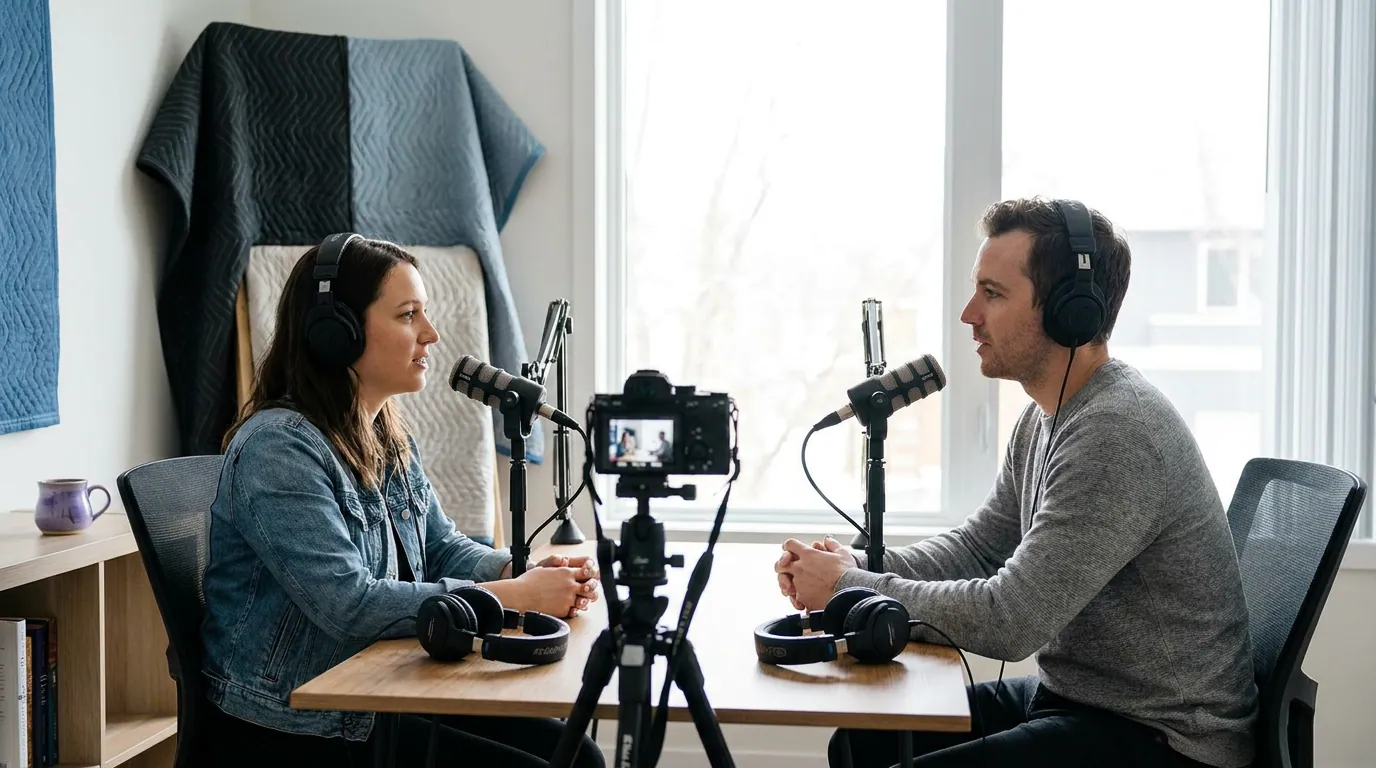
What no mic will fix
Hardware has limits. A cardioid dynamic hides a hard-walled room; it does not silence a barking dog, a slamming door, or a loud HVAC cycle that kicks on mid-sentence. Three things stay your job:
- Loud, intermittent noise. Schedule around the dishwasher and the school run. A mic cannot un-hear a sudden bang directly in front of it.
- A truly cavernous space. A garage or an empty high-ceilinged room throws too much reflection even at a fist's distance. Move to the smallest, most furnished room you have, a closet of clothes is the cheapest "studio" there is.
- Inconsistent levels. Drift away from the mic and the room creeps back in. A boom arm that holds the mic close keeps you honest.
Once the recording is clean and consistent, the next thing that moves the needle is structure, not gear, a repeatable format keeps listeners through the episode. See a repeatable episode structure that keeps listeners and, if you are deciding how much to plan before you hit record, scripting vs. outlining for your show.
Frequently asked questions
Do I really need acoustic treatment, or is the right mic enough?
For most home podcasters, the right mic plus good technique is enough. A cardioid dynamic used a fist's distance away records mostly your voice and very little room, which is what treatment would otherwise buy you (Hollyland). Treatment helps in a bad room, but it is the second purchase, not the first.
Why not a condenser mic if it sounds higher quality?
A condenser captures far more of the room, exactly wrong without treatment. Its high sensitivity that flatters a vocal in a studio will reveal every reflection and the hum of your fridge in a bare room. For an untreated space, a dynamic's lower sensitivity is the feature, not a compromise (Hollyland).
How close should I sit to the mic in an untreated room?
About a fist's distance, roughly 10 centimeters, with your gain turned down to match. That close, your voice overwhelms the room in the recording, and a cardioid's proximity effect adds warmth (Sonarworks). Add a pop filter so the closeness does not cause plosives.
Is a $300 Shure MV7+ worth it over a $70 Samson Q2U for a bad room?
Only if you want the convenience. Both are cardioid dynamics with similar rejection, so the fundamental room-hiding is comparable. The MV7+ adds onboard denoising and auto-leveling that smooth over an imperfect setup (Shure), useful, but it is paying for software help and an upgrade ceiling, not better physics.
Will a budget mic limit my podcast's growth?
No. Every mic here clears the audio-quality floor when used close and correctly. Growth is driven by publishing consistently and by being discoverable, not by the price of your microphone. Spend your energy on a steady release schedule and on getting episodes in front of new people.
For the full menu of equipment options once you are ready, see best podcast mic under $100, tested by use case.