
Best Closed-Back Headphones for Recording a Podcast


For tracking, buy the Sony MDR-7506 (~$90), flat, neutral, and sealed, so it surfaces breath, plosives, and room tone at their true level and leaks almost nothing into your mic. For long edit sessions, the Beyerdynamic DT 770 Pro 80-ohm (~$170) or Audio-Technica ATH-M50x (~$160) trade a little neutrality for comfort. All four are closed-back, which is the part you can't skip.
Most "best podcast headphones" lists rank five cans in one flat order, which hides the real decision: recording and editing are two different jobs that reward opposite priorities. A pair that wins for marathon editing often loses for clean tracking, because tracking wants brutal honesty and editing wants a head that doesn't ache at hour three (Resonate Recordings). So this guide splits the picks by job, names verified mid-2026 street prices from retailer pages, and starts with the one rule that matters more than any model: closed-back, always, for recording.
Why closed-back is non-negotiable for recording
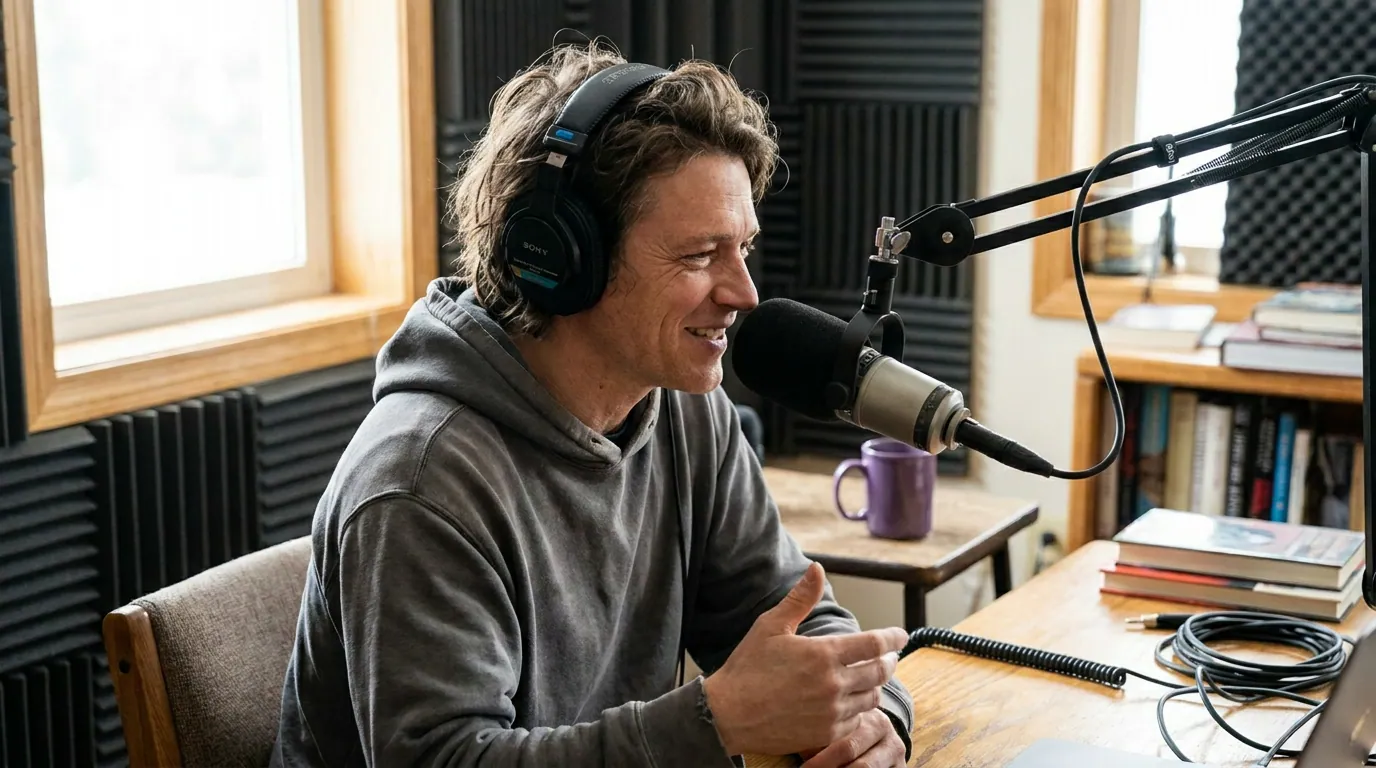
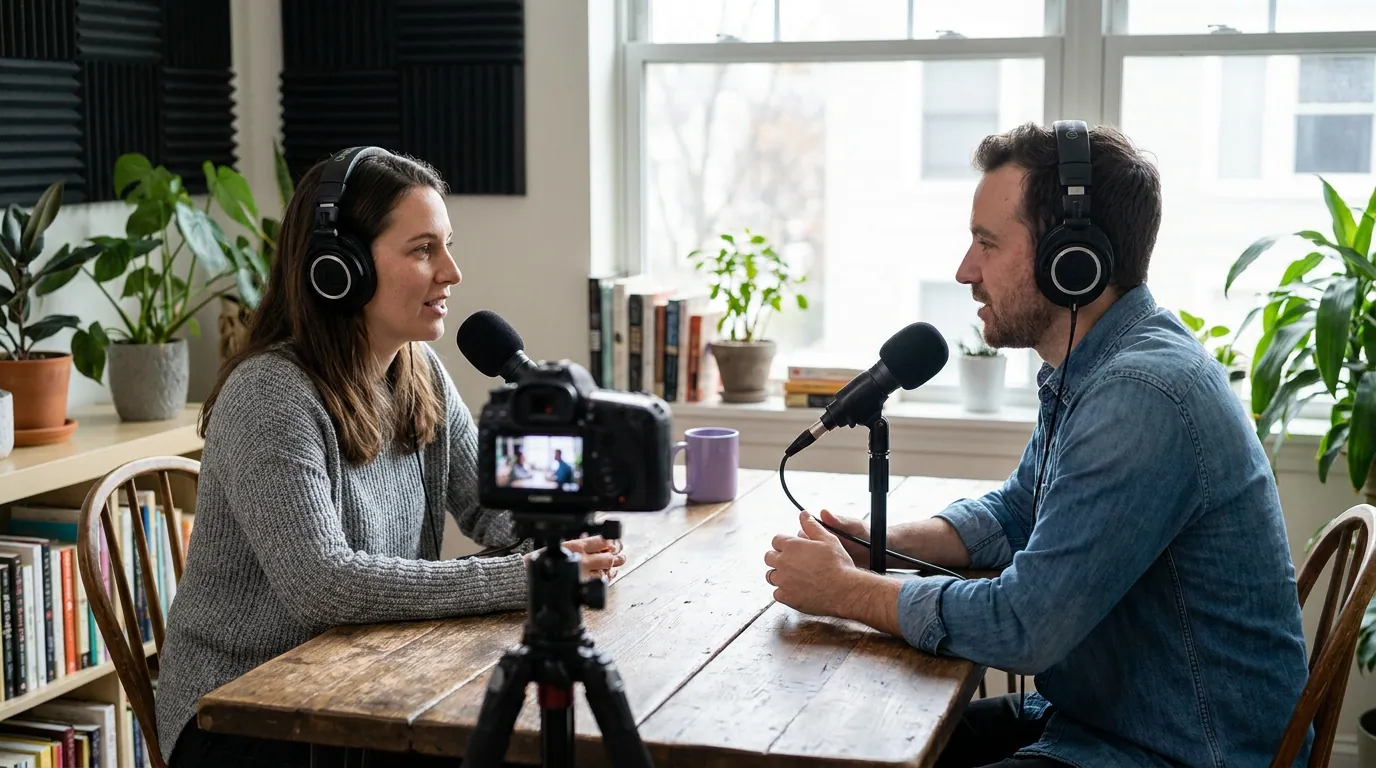
Closed-back headphones have a solid, sealed ear cup that traps your monitoring audio inside, so a nearby microphone only records your voice. Open-back cups are vented with a grille, they sound more natural, but that escaping audio leaks straight into a sensitive mic, printing a faint echo of the other speaker under your every word. There is no workaround. Record with closed-back (Sweetwater).
This is the single most common headphone mistake new podcasters make: they buy a comfortable open-back pair for the price, wear it while recording an interview, and only discover the bleed in the edit, a low click-track-like ghost of the guest's voice tucked under the host's mic. By then the take is contaminated. The guideline studio engineers repeat is blunt: record with closed-backs, mix with open-backs (Sweetwater). For podcasting, where most people own one pair and use it for everything, that means closed-back wins by default.
The pick-by-job table
| The job | The pick | Why it wins this job |
|---|---|---|
| Tracking / recording | Sony MDR-7506 (~$90) | Flat, neutral, sealed; surfaces voice problems instead of flattering them |
| Mixing / edit review | Beyerdynamic DT 770 Pro 80-ohm (~$170) | Velour pads stay cool for hours; reveals vocal-band detail for clean edits |
| Long-session comfort | Audio-Technica ATH-M50x (~$160) | Detachable cable, plush pads; colored bass makes hours of listening easier |
| Cheapest clean track | Sennheiser HD 280 Pro (~$80) | Maximum passive isolation under $100; zero mic bleed |
Every pick is closed-back, over-ear, and wired. Wired matters: Bluetooth adds latency that makes monitoring your own voice feel like a slight delay, which throws off your delivery (The Podcast Consultant). Get your mic sorted first, pair any of these with a pick from the best podcast mics by budget tier, or start with a budget mic under $100, then choose headphones by the job you do most.
For tracking: Sony MDR-7506 (~$90)
The Sony MDR-7506 is the closest thing to a default answer for recording a podcast. It has been the broadcast and studio monitoring standard since 1991, and its flat, neutral response is the feature: it won't flatter your voice, so you hear breath noise, mouth clicks, plosives, and room echo at their real level while you record (Podcast Pontifications). Catch those during the take and you spend far less time in the edit.
It's also easy to live with. Its low impedance and high sensitivity mean it drives cleanly off any audio interface, laptop, or phone without an amp, and at about 230 grams it stays light through long sessions (Crutchfield). The sealed cups leak very little, so a sensitive mic picks up your voice and not your monitoring.
Pros: Flat, accurate response that exposes recording problems; light and amp-free; sealed isolation; 30-plus years of broadcast proof. Cons: The cable is fixed and coiled, not detachable, and it's the part that usually fails before the drivers do (RTINGS). The ear pads also flake and peel over a couple of years; replacement pads run about $20.
Honest take: if you buy one pair and record more than you mix, buy this. The neutrality that makes it "boring" for music listening is exactly what makes it right for voice.
For mixing and edit review: Beyerdynamic DT 770 Pro 80-ohm (~$170)
When the job shifts from capturing audio to scrutinizing it, comfort and detail matter more than portability. The Beyerdynamic DT 770 Pro is the comfort champion of closed-back studio cans, its breathable velour ear pads stay cool through six-hour edit blocks where pleather pads turn into a heat trap (SoundGuys). For listening back to an episode and hunting edit points, that comfort directly translates to staying sharp longer.
Buy the right impedance. The DT 770 Pro comes in 32-, 80-, and 250-ohm versions, and they're not just a power-draw difference, the drivers differ. The 250-ohm version needs a dedicated headphone amp to reach useful volume; the 80-ohm version drives loud enough straight from a computer or interface and is the standard recommendation for podcasters (Beyerdynamic support). Street price for the 80-ohm runs roughly $150–$200 depending on retailer and sale timing (Sweetwater).
Pros: The most comfortable closed-back here for six-hour sessions; velour pads breathe; handcrafted with replaceable parts; reveals vocal-band detail for clean edits. Cons: Bulky and non-folding, so it's poor for travel; the 250-ohm version traps buyers who don't have an amp; pricier than the Sony. It's also tuned a touch warm, so it's better for music engineers who also podcast than for someone who only needs voice.
For long-session comfort: Audio-Technica ATH-M50x (~$160)
The Audio-Technica ATH-M50x is one of the best-selling studio headphones in the world, and it earns the "comfort and convenience" slot for podcasters who wear cans for hours and want one upgrade the Sony lacks: a detachable cable, it ships with three (a coiled, a long straight, and a short straight) (Audio-Technica). When the cable fails, you swap it instead of the whole headphone.
The catch for podcasting is its sound signature. The M50x has a slightly V-shaped tuning, boosted bass, a shimmer up top, which makes it more enjoyable for music and more comfortable across a long day, but that bass lift can mask low-frequency problems (a rumbly room, a plosive) that the flat MDR-7506 would surface immediately (RTINGS). For final critical listening, that coloration is a liability; for sitting through a two-hour edit without fatigue, it's a feature.
Pros: Detachable cable, plush pads, excellent build, easy to drive; the most versatile pick if you also produce music. Cons: Colored bass hides exactly the kind of low-end flaws you want to catch; not the pick for a final accuracy check; runs a bit pricier than the Sony.
The budget clean-track pick: Sennheiser HD 280 Pro (~$80)
If your only goal is recording a clean track in a less-than-quiet room for the least money, the Sennheiser HD 280 Pro is the value answer at under $100. Sennheiser rates it at up to 32 dB of passive ambient-noise attenuation (Sennheiser HD 280 Pro spec), the strongest seal of this group, which means heavy isolation against mic bleed and the most help blocking a noisy environment while you record. Its 64-ohm impedance drives off any interface or laptop, and it's built like a tank.
Pros: Cheapest pick; the strongest isolation here; accurate midrange and treble for voice editing; famously durable. Cons: Strong clamping force is the price of that isolation, it gets tiring sooner than the DT 770 or M50x, so it's a tracking tool more than a marathon-edit headphone (SoundGuys). The cable is non-detachable.
How we picked these
Four criteria, in order: closed-back design (mandatory, open-back is disqualified for recording, full stop), flat response for tracking accuracy weighed against comfort for long sessions depending on the job, drivability without an amp (every pick runs off a laptop or interface, which is why we steer you to the 80-ohm DT 770), and verified mid-2026 street price from manufacturer and major-retailer pages, not list price. We split the picks by job rather than ranking five cans in one order, because tracking and editing reward opposite traits.
The honest verdict worth repeating: the gap between a $150 and a $1,500 setup is smaller than the gap between bad mic technique in a noisy room and good technique in a treated one. Audio engineers who mix podcasts routinely use $100 headphones, not $1,000 ones (Resonate Recordings). Don't overspend on the cans; spend the attention on getting close to the mic and killing the echo behind you.
Headphones are the last piece of the chain, the bigger gear decisions are the mic and how you connect it. If you're still weighing connection types, the USB vs XLR mic decision and hybrid USB/XLR mics that grow with your show are worth reading before you spend.

Who should buy what
- Recording more than editing, want one pair: Sony MDR-7506 (~$90). Flat, sealed, proven.
- You do long edit and mix sessions: Beyerdynamic DT 770 Pro 80-ohm (~$170). Cool velour pads win the hours.
- You also produce music and want a swappable cable: Audio-Technica ATH-M50x (~$160).
- Lowest price, noisy room, maximum isolation: Sennheiser HD 280 Pro (~$80).
Whatever you pick, plan the show before the gear. A repeatable episode structure that keeps listeners and a clear call on scripting versus outlining move retention more than any headphone upgrade.
FAQ
Can I record a podcast with open-back headphones? No, not while a microphone is live near you. Open-back cups are vented, so your monitoring audio escapes and the mic records it as bleed, a faint echo of the other speaker under your voice (Sweetwater). Use closed-back for recording; save open-back for mixing in a quiet room.
Do I need a headphone amp for podcasting? Usually not. The Sony MDR-7506, Sennheiser HD 280 Pro (64Ω), ATH-M50x (38Ω), and the 80-ohm DT 770 Pro all drive loud enough from a laptop or audio interface. Only the 250-ohm DT 770 Pro really wants a dedicated amp (Beyerdynamic support), which is why we point podcasters to the 80-ohm.
Sony MDR-7506 or Audio-Technica ATH-M50x? The MDR-7506 is flatter and better for catching recording problems; the M50x has boosted bass that's more enjoyable to listen to and adds a detachable cable, plus more comfort over long sessions (RTINGS). Tracking-first: Sony. Long-edit-and-music: Audio-Technica.
Are wireless headphones fine for recording? No. Bluetooth adds latency, so monitoring your own voice arrives with a slight delay that throws off your delivery (The Podcast Consultant). Use wired closed-back headphones for recording.
Do I really need two pairs? Only if you do a lot of both jobs. If you split your time evenly between tracking and editing, the ideal is one sealed pair for recording (MDR-7506) and one comfortable pair for editing (DT 770 Pro). If you can buy one, buy closed-back, it's the only pair that does both jobs acceptably.